
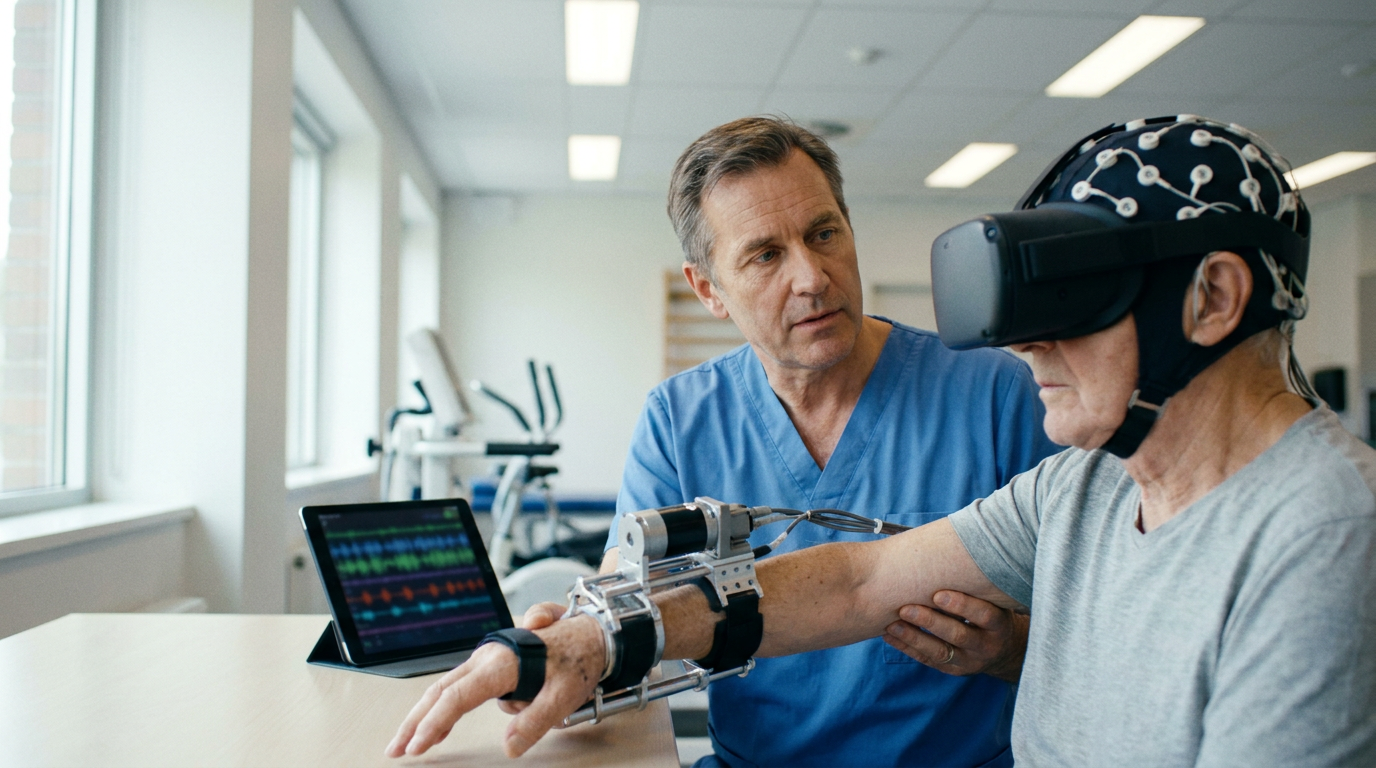
- The study investigated whether remission of major depressive disorder symptoms with intermittent theta-burst stimulation reflects anhedonia improvement.
- Fifty major depressive disorder patients with anhedonia were stratified into high- and low-anhedonia groups, receiving two weeks of iTBS.
- Following iTBS, the low-anhedonia group showed full recovery of SHAPS scores and alpha power, unlike the high-anhedonia group.
- The authors concluded that remission of depressive and anxiety symptoms does not guarantee recovery from anhedonia.
- These findings suggest distinct neurophysiological responses to iTBS, potentially informing personalized treatment strategies for anhedonia subtypes.
Anhedonia in Major Depressive Disorder: Refining Treatment Approaches
Major depressive disorder (MDD) remains a leading cause of disability, with many patients failing to achieve full remission with standard therapies [1]. While non-invasive brain stimulation techniques like repetitive transcranial magnetic stimulation (rTMS) and intermittent theta-burst stimulation (iTBS) offer effective options for reducing depressive symptoms [2, 3, 4], predicting individual response is an ongoing challenge [5]. A key factor complicating treatment is anhedonia, the reduced capacity to experience pleasure, which often persists even when other depressive symptoms improve [6]. This clinical observation suggests that standard protocols may not adequately target the specific neurobiology of anhedonia, creating a need to understand how this symptom dimension influences treatment outcomes.
Stratifying Anhedonia Phenotypes in MDD
To investigate the link between anhedonia and treatment response, a recent study sought to identify distinct neurophysiological profiles in MDD. A central challenge for clinicians is that remission on standard scales like the Hamilton Depression (HAMD) and Hamilton Anxiety (HAMA) scales may not capture recovery from anhedonia, which is measured specifically by the Snaith-Hamilton Pleasure Scale (SHAPS). Given the inconsistent evidence for rTMS in treating anhedonia, the researchers used a more granular approach to stratify patients before assessing their response to intermittent theta-burst stimulation (iTBS), a high-frequency form of rTMS. The study design aimed to isolate how the severity of anhedonia relates to underlying brain function and treatment outcomes.
Baseline Neurophysiological Signatures of Anhedonia
The study examined neurophysiological phenotypes, or observable brain-based characteristics, using two common techniques. The first, resting-state electroencephalogram (EEG) spectra, measures the brain's baseline electrical rhythms. The second, functional connectivity, assesses the degree of synchronized communication between different brain regions. Using these tools, the researchers enrolled 50 MDD patients with anhedonia and classified them based on their baseline SHAPS scores into a high-anhedonia (HA) group (n=25) and a low-anhedonia (LA) group (n=25). A cohort of 25 healthy controls (HC) served as a non-depressed comparison. All patients received a 2-week course of iTBS applied to the left dorsolateral prefrontal cortex, a critical hub for mood regulation. Clinical and EEG assessments were performed at baseline and after treatment to track changes.
Divergent Treatment Responses to iTBS
Before treatment, baseline EEG analysis revealed distinct neurophysiological signatures linked to anhedonia severity. A primary finding was that both patient groups (HA and LA) exhibited lower alpha power compared to the healthy control group. Alpha power, an EEG signal in the 8-12 Hz range, is thought to reflect cortical inhibition and efficient information processing, and its reduction is a common finding in depression. However, the pattern of this deficit differed significantly between the anhedonia subgroups. The LA group showed region-specific deficits in alpha power, whereas the HA group displayed more widespread, bilateral reductions. This suggests that while both groups have altered brain rhythms, the neurobiological burden in severe anhedonia may be more diffuse and profound, potentially indicating a more entrenched pathophysiology.
Implications for Personalized MDD Treatment
The two anhedonia subgroups demonstrated markedly different outcomes following the 2-week iTBS protocol. The low-anhedonia (LA) group showed a robust and comprehensive response. Their HAMD, HAMA, and, importantly, SHAPS scores all recovered to the levels of the healthy control group. This clinical improvement was mirrored in their neurophysiology: their alpha power deficits normalized, and they exhibited increased functional connectivity between frontal, central, and posterior brain regions. In stark contrast, the high-anhedonia (HA) group had a partial and discordant response. Although their HAMD and HAMA scores improved, their SHAPS scores remained elevated, indicating that their anhedonia persisted. Neurally, their alpha power deficits did not resolve, and they developed decreased bilateral connectivity, particularly in the right hemisphere. These findings deliver a critical clinical message: remission of general depressive and anxiety symptoms does not necessarily indicate recovery from anhedonia.
References
1. He X, Gao X. Efficacy and safety of repetitive transcranial magnetic stimulation for major depressive disorder in Chinese patients: A systematic review and meta-analysis.. Medicine. 2025. doi:10.1097/MD.0000000000044663
2. Mutz J, Vipulananthan V, Carter B, Hurlemann R, Fu CH, Young A. Comparative efficacy and acceptability of non-surgical brain stimulation for the acute treatment of adult major depressive episodes: A systematic review and network meta-analysis of 113 randomised clinical trials. bioRxiv. 2018. doi:10.1101/426866
3. Pu L, Li Y, Deng Z, et al. Comparative effects of intermittent theta-burst stimulation and sequential bilateral rTMS on depression and emotion regulation in major depressive disorder: a randomized controlled trial.. Frontiers in neuroscience. 2026. doi:10.3389/fnins.2026.1756383
4. Kishi T, Ikuta T, Sakuma K, et al. Theta burst stimulation for depression: a systematic review and network and pairwise meta-analysis. Molecular Psychiatry. 2024. doi:10.1038/s41380-024-02630-5
5. Jin , Qin P, Xia A, et al. NEUROPHYSIOLOGICAL AND NEUROIMAGING MARKERS OF REPETITIVE TRANSCRANIAL STIMULATION TREATMENT RESPONSE IN MAJOR DEPRESSIVE DISORDER: A SYSTEMATIC REVIEW AND META-ANALYSIS OF PREDICTIVE MODELING STUDIES. International Journal of Neuropsychopharmacology*. 2025. doi:10.1093/ijnp/pyae059.243
6. Imbert L, Neige C, Dumas M, Bensafi M, Mandairon N, Brunelin J. Combining pleasant Olfactory and BRAin stimulations in treatment-resistant depression (COBRA): study protocol for a randomized controlled trial. Frontiers in Psychology. 2024. doi:10.3389/fpsyg.2024.1451096