For Doctors in a Hurry
- Clinicians lack established reference ranges for regional brain volumes in very preterm infants who show normal neurodevelopmental outcomes at term-equivalent age.
- Researchers conducted a cross-sectional study using 3-Tesla MRI to analyze 26 brain regions in 55 infants born before 32 weeks.
- Male infants exhibited significantly larger volumes in the putamen (p=0.031) and hippocampus (p=0.003) compared to female infants in this cohort.
- The study provides sex-stratified centiles for brain volumes, noting that gestational age at birth correlates weakly with these term-equivalent measurements.
- These normative data may help clinicians identify atypical brain development early, potentially guiding timely interventions for vulnerable preterm populations.
Quantifying Regional Neurodevelopment in the Very Preterm Infant
Infants born very preterm, defined as those born before 32 weeks of gestation, face a heightened risk of adverse neurodevelopmental outcomes that can persist into adulthood [1, 2]. While conventional magnetic resonance imaging can identify major structural injuries, subtle alterations in white matter microstructure and regional volumes often go undetected despite their significant impact on future executive function and processing speed [3, 4]. Current predictive tools, such as the General Movements Assessment and term-corrected magnetic resonance imaging, are valuable for identifying cerebral palsy but offer less clarity regarding broader cognitive trajectories [5]. Long-term studies indicate that early volumetric reductions in the cerebellum, hippocampus, and corpus callosum correlate with decreased general cognitive functioning throughout childhood and adolescence [2]. Consequently, there is a critical clinical need for objective, standardized metrics to evaluate whether a preterm infant's brain development is tracking within an expected range. A recent study utilizes automated segmentation to establish these necessary reference values at term-equivalent age, providing a quantitative baseline for clinical assessment.
Automated Volumetric Analysis in a Healthy Preterm Cohort
To establish reference ranges for regional brain volumes, researchers conducted a cross-sectional study of normally developing very preterm infants who were free of brain injury. The final cohort consisted of 55 infants, including 24 male and 31 female participants, all born at a gestational age of less than 32 weeks. The study group had a median gestational age of 29.4 weeks, with an interquartile range of 27.6 to 31.0 weeks. To ensure the reference data reflected healthy maturation, inclusion required that each infant possess structurally normal magnetic resonance imaging at term-equivalent age and demonstrate normal neurodevelopmental outcomes confirmed up to 2 years of age.
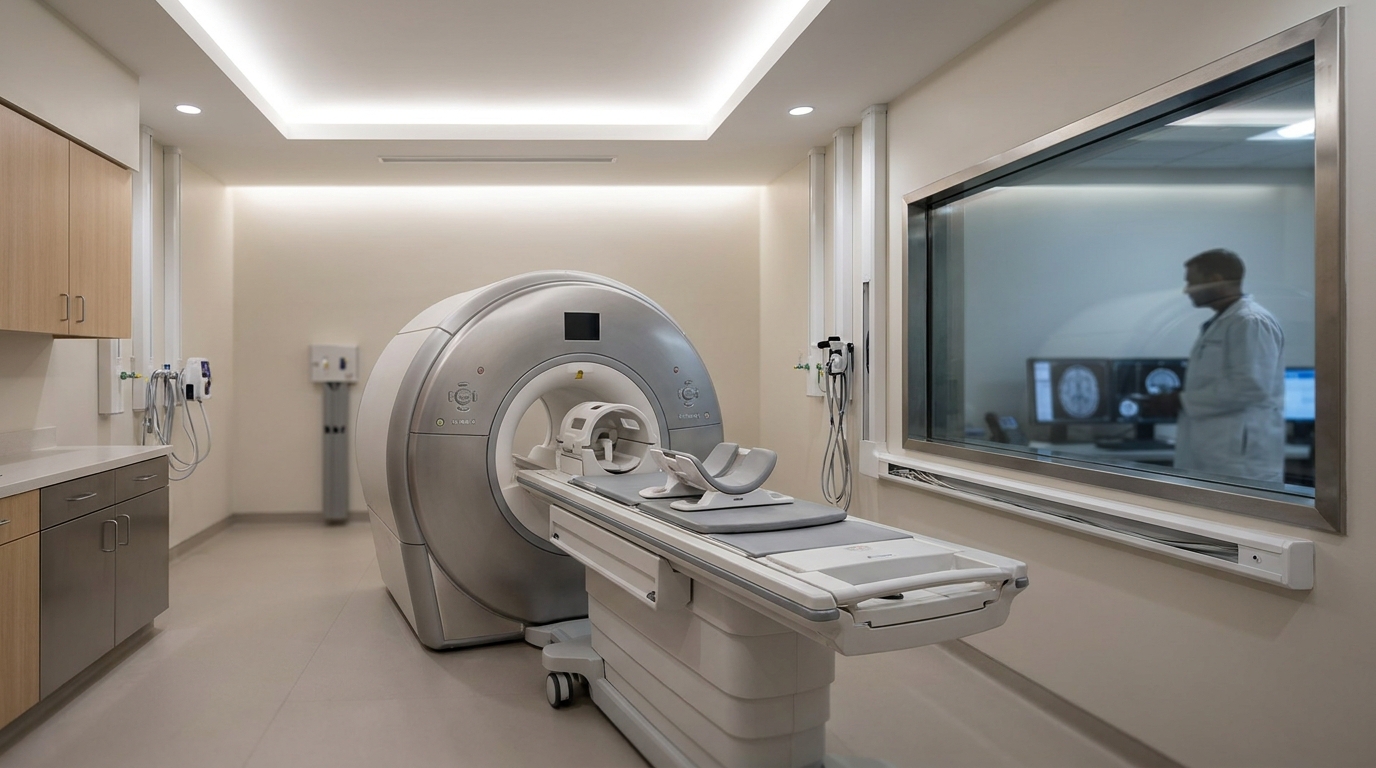
To quantify brain development, the team utilized 3-Tesla MRI scans processed through Infant FreeSurfer, a fully automated segmentation tool. This software relies on automated brain segmentation, a computer-based method that partitions an imaging scan into distinct anatomical regions without requiring manual tracing, yielding precise volumetric data for 26 regional brain structures. To maintain high technical consistency, all MRI scans were acquired on the same scanner. Furthermore, the researchers implemented a rigorous quality control protocol in which only scans of the highest quality, as confirmed by expert consensus, were included in the final analysis. By establishing these baseline metrics in a healthy preterm population, the study provides clinicians with a standardized tool to evaluate whether an individual infant's regional brain growth is deviating from expected trajectories at term-equivalent age.
Sex-Specific Reference Ranges and Gestational Age Correlations
The researchers established a comprehensive set of reference volumes and sex-stratified centiles ranging from the 3rd to the 97th percentile for 26 distinct brain regions. These normative ranges allow clinicians to plot an individual infant's regional brain volumes against a standardized distribution, similar to how height and weight are tracked on pediatric growth charts. To determine if biological sex influenced these volumetric distributions, the authors utilized Mann-Whitney U tests, a statistical method used to compare differences between two independent groups when the data may not follow a normal distribution. This analysis revealed that sexual dimorphism is present even at term-equivalent age in the preterm population. Specifically, male infants had significantly larger volumes of the putamen (p=0.031), a basal ganglia structure involved in motor control and learning, and significantly larger volumes of the hippocampus (p=0.003), a region critical for memory formation and emotional regulation.
In addition to sex differences, the study explored associations between regional brain volumes and gestational age at birth to determine if the timing of preterm delivery influenced brain size by the time the infants reached their expected due date. The researchers assessed these relationships using Pearson correlations, a statistical measure that quantifies the strength of a linear relationship between two continuous variables. The results indicated that gestational age showed weak or no correlations with regional brain volumes at term-equivalent age. This finding suggests that for very preterm infants who do not suffer from overt brain injury and who achieve normal neurodevelopmental outcomes by age 2, the actual week of birth between 24 and 32 weeks gestation may not be the primary driver of regional brain volume at term. Instead, these data imply that when the ex-utero environment supports healthy development, regional brain growth may follow a relatively consistent trajectory regardless of the exact degree of prematurity.
Clinical Application for Early Developmental Screening
The study establishes normative data on regional brain volumes in a well-defined cohort of 55 normally developing very preterm infants who were born at a median gestational age of 29.4 weeks and were confirmed to be without brain injury at term-equivalent age. By utilizing automated segmentation to define the volumes of 26 brain regions in infants who demonstrated normal neurodevelopmental outcomes at 2 years of age, the researchers have created a rigorous baseline for healthy development in this highly vulnerable population. These data provide a reference for future research on early brain development, allowing clinicians to move beyond qualitative visual inspections of MRI scans toward a quantitative, evidence-based assessment of neonatal neuroanatomy.
The clinical relevance of these reference ranges centers on the ability to identify subtle growth impairments that may not be captured by standard structural imaging. The findings may support studies investigating whether deviations from typical brain development can be detected at term-equivalent age, providing a critical window of opportunity to inform early interventions for infants whose regional volumes fall outside the established 3rd to 97th percentile centiles. By identifying these deviations early, pediatricians and neurologists can better determine the timing and necessity of targeted developmental supports, potentially improving long-term functional outcomes for very preterm infants who remain at risk for cognitive or motor delays despite the absence of overt white matter injury.
References
1. Kelly CE, Shaul M, Thompson DK, et al. Long-lasting effects of very preterm birth on brain structure in adulthood: A systematic review and meta-analysis.. Neuroscience and biobehavioral reviews. 2023. doi:10.1016/j.neubiorev.2023.105082
2. Kieviet JFD, Zoetebier L, Elburg RMV, Vermeulen RJ, Oosterlaan J. Brain development of very preterm and very low-birthweight children in childhood and adolescence: a meta-analysis.. Developmental medicine and child neurology. 2012. doi:10.1111/j.1469-8749.2011.04216.x
3. Pannek K, Scheck SM, Colditz PB, Boyd RN, Rose SE. Magnetic resonance diffusion tractography of the preterm infant brain: a systematic review.. Developmental medicine and child neurology. 2014. doi:10.1111/dmcn.12250
4. Bando N, Sato J, Vandewouw M, et al. Early nutritional influences on brain regions related to processing speed in children born preterm: A secondary analysis of a randomized trial.. JPEN - Journal of Parenteral and Enteral Nutrition. 2024. doi:10.1002/jpen.2669
5. Bosanquet M, Copeland L, Ware RS, Boyd RN. A systematic review of tests to predict cerebral palsy in young children. Developmental Medicine & Child Neurology. 2013. doi:10.1111/dmcn.12140