For Doctors in a Hurry
- Researchers investigated why clinical response to fluoxetine varies in youth and whether brain drug concentrations or neurochemical levels predict improvement.
- This study evaluated 52 patients aged 12 to 21 using magnetic resonance spectroscopy to quantify brain fluoxetine and neurometabolite levels.
- Higher N-acetylaspartate-to-creatine ratios predicted anxiety response with an odds ratio of 3.39 (95% CI 1.46 to 10.1, p=0.012).
- The authors concluded that brain fluoxetine concentrations do not correlate with clinical response, whereas neurometabolic markers provide better predictive value.
- Measuring N-acetylaspartate may help identify a non-responder phenotype in youth who fail to improve despite receiving high fluoxetine doses.
The Challenge of Pediatric Psychopharmacology
Adolescent major depressive disorder remains a significant clinical challenge characterized by suboptimal treatment success rates and a complex risk-benefit profile [1, 2]. While selective serotonin reuptake inhibitors are standard first-line interventions, clinicians must navigate concerns regarding increased risks of suicidality and aggression in younger populations compared to adults [3]. Current prescribing often relies on empirical trial and error or pharmacogenetic guidelines that focus on metabolic enzymes, yet these tools frequently fail to predict which patients will achieve remission [4]. Furthermore, animal models suggest that chronic exposure to these agents during the highly plastic period of adolescence may induce distinct neurobiological changes not observed in the adult brain [5]. Understanding the precise relationship between drug exposure and the underlying neural environment is essential for moving beyond standardized dosing strategies. A recent study utilizing advanced neuroimaging now examines whether drug concentrations in the brain actually drive clinical outcomes in this vulnerable demographic, raising important questions about how physicians monitor and adjust pediatric antidepressant therapy.
Quantifying Intracerebral Drug Exposure
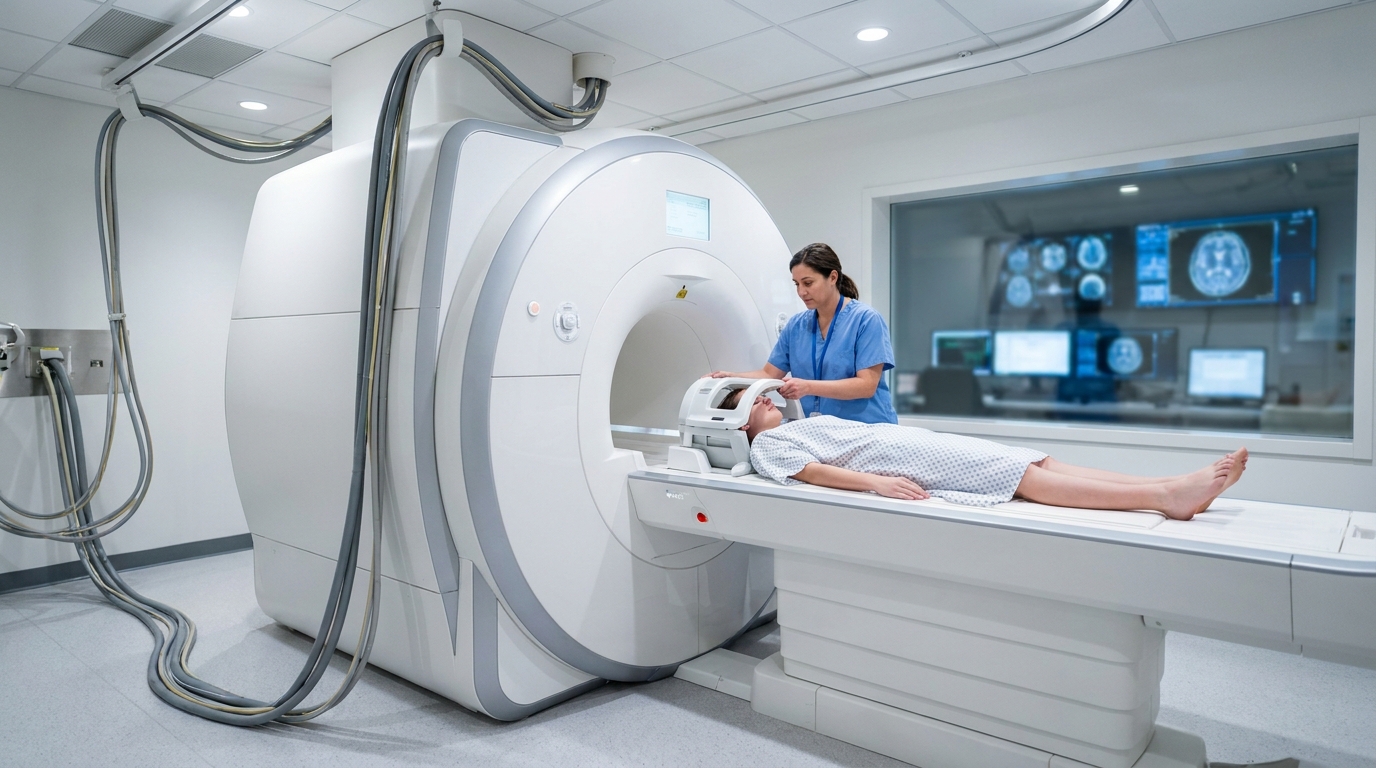
To investigate how medication distributes within the central nervous system, researchers evaluated a cohort of 52 youth aged 12 to 21 years diagnosed with depressive and anxiety disorders who were actively receiving fluoxetine treatment. The team utilized multimodal neuroimaging at 3Tesla, specifically employing fluorine magnetic resonance spectroscopy (19F-MRS), an imaging technique that detects fluorine atoms to directly measure drug levels in living tissue. They paired this with proton magnetic resonance spectroscopy (1H-MRS) to assess local neurometabolites. By using 19F-MRS, the investigators quantified brain fluoxetine concentrations directly, offering a localized view of drug exposure that standard blood draws cannot provide. Alongside neuroimaging, the researchers measured plasma fluoxetine and norfluoxetine concentrations and conducted targeted pharmacogenetic testing for CYP2D6 and ABCB1 genotypes, which govern drug metabolism and blood-brain barrier transport. The imaging revealed that brain fluoxetine concentrations were 8-fold to 49-fold higher than plasma concentrations, confirming massive accumulation of the drug within neural tissues. However, even after accounting for the administered dose, dose-normalized brain concentrations of fluoxetine varied up to 13-fold among participants. This extreme variability was primarily driven by plasma concentration and dose, while the CYP2D6 and ABCB1 genotypes exerted only small effects. For clinicians, this indicates that standard systemic blood levels and genetic metabolic profiles are imprecise reflections of the actual drug concentration reaching a pediatric patient's brain.
Dissociation Between Drug Concentration and Efficacy
Despite the massive accumulation of fluoxetine in neural tissue, the study uncovered a stark disconnect between drug levels and therapeutic outcomes. The data showed that neither brain nor plasma fluoxetine concentrations were associated with clinical response, as measured by reductions in anxiety and depression severity. This finding challenges the common clinical assumption that achieving a specific concentration of medication in the target organ will reliably yield a clinical benefit. While clinicians increasingly look to pharmacogenetic panels to guide prescribing, the finding that CYP2D6 and ABCB1 genotypes had only small effects on brain fluoxetine variation further complicates the picture. These genetic markers did not account for the substantial 13-fold differences observed in dose-normalized brain levels. Ultimately, the lack of correlation between intracerebral drug levels and symptom improvement suggests that systemic exposure is an inadequate proxy for the complex neural adaptations required to achieve remission. For practicing physicians, this underscores that simply driving more drug into the brain does not guarantee efficacy, pointing to the need for biomarkers that reflect actual neurobiological changes rather than mere drug presence.
Shifting focus from drug presence to brain tissue health, the researchers utilized 1H-MRS to measure the chemical composition of the central nervous system. They specifically analyzed the N-acetylaspartate-to-creatine ratio (NAA/Cr), a well-established neuroimaging surrogate for neuronal viability and metabolic integrity. While raw drug concentrations failed to correlate with symptom improvement, NAA/Cr emerged as a significant predictor of clinical response. The data revealed that clinical responders showed higher NAA/Cr than non-responders, indicating that the underlying metabolic state of the neurons is a far more critical determinant of efficacy than the sheer volume of medication delivered. The statistical relationship between this metabolic marker and clinical outcomes was particularly robust for anxiety symptoms. For every 0.1-unit increase in NAA/Cr (for example, rising from 1.5 to 1.6), the odds of an anxiety response increased substantially (OR = 3.39, 95% CI [1.46, 10.1], p=0.012). Furthermore, NAA/Cr distinguished responders from non-responders with 84% sensitivity and 57% specificity. This diagnostic performance yielded an area under the receiver operator curve of 0.71 (p=0.01), a statistical metric confirming the marker's ability to reliably differentiate between patients who will and will not improve. For the practicing psychiatrist or pediatrician, these findings suggest that future diagnostic tools might rely on assessing neuronal integrity to objectively gauge a patient's capacity for recovery, rather than depending solely on symptom checklists or standard drug monitoring.
Diminishing Returns at Higher Dosages
The study also investigated the physiological consequences of dose escalation in patients who failed to show clinical improvement, uncovering a concerning trend. Among non-responders, fluoxetine doses greater than 40 mg were associated with lower NAA/Cr levels. This inverse relationship suggests that in patients who do not initially benefit from the medication, simply increasing the dosage does not improve the neurochemical environment. Instead, higher doses in this specific subgroup were linked to a decline in the exact metabolic marker that the researchers identified as essential for a positive clinical response. These findings point to a potential fluoxetine-non-responder phenotype characterized by diminished neurometabolic returns, representing a clinical state where the brain is fundamentally unable to translate higher drug concentrations into therapeutic cellular changes. For the practicing clinician, this provides a crucial biological context for treatment resistance. It indicates that the lack of response in some youth is likely rooted in underlying metabolic limitations rather than insufficient drug exposure. Consequently, for pediatric patients who do not respond to standard regimens, reflexively escalating the fluoxetine prescription beyond 40 mg may fail to overcome these biological barriers and could paradoxically correlate with further reductions in neuronal metabolic integrity.
References
1. He Y, Gan X, Li X, et al. Sequenced treatment alternatives to relieve adolescent depression (STAR-AD): a multicentre open-label randomized controlled trial protocol. BMC Psychiatry. 2023. doi:10.1186/s12888-023-05221-w
2. He Y, Xian Y, Li X, et al. Sequenced treatment alternatives to relieve adolescent depression: A pragmatic clinical trial.. Journal of Affective Disorders. 2026. doi:10.1016/j.jad.2026.121511
3. Sharma T, Guski LS, Freund N, Gøtzsche PC. Suicidality and aggression during antidepressant treatment: systematic review and meta-analyses based on clinical study reports. BMJ. 2016. doi:10.1136/bmj.i65
4. Bousman C, Stevenson JM, Ramsey LB, et al. Clinical Pharmacogenetics Implementation Consortium (CPIC) Guideline for CYP2D6, CYP2C19, CYP2B6, SLC6A4, and HTR2A Genotypes and Serotonin Reuptake Inhibitor Antidepressants. Clinical Pharmacology & Therapeutics. 2023. doi:10.1002/cpt.2903
5. Kryst J, Majcher-Maślanka I, Chocyk A. Effects of chronic fluoxetine treatment on anxiety- and depressive-like behaviors in adolescent rodents – systematic review and meta-analysis. Pharmacological Reports. 2022. doi:10.1007/s43440-022-00420-w