For Doctors in a Hurry
- Researchers investigated the systemic gaps in sudden cardiac arrest preparedness among professional football stakeholders in the low-resource setting of Cameroon.
- This cross-sectional survey evaluated 745 participants, including 536 players and 90 referees, during the 2024/2025 professional football season.
- Data showed 66.4 percent of participants had poor knowledge, while only 12 percent felt confident performing cardiopulmonary resuscitation.
- The study concluded that significant barriers, including legal concerns for 78.3 percent of respondents, hinder effective emergency cardiac response.
- Clinicians should advocate for compulsory resuscitation training and improved access to automated external defibrillators to strengthen the survival chain.
The Fragile Chain of Survival in Competitive Sport
Sudden cardiac arrest remains the primary cause of exercise-related mortality, frequently presenting as shockable ventricular arrhythmias that require immediate intervention [1]. While the global survival rate for out-of-hospital cardiac arrest has improved over the last four decades, these gains are heavily concentrated in high-income regions where bystander response is robust [2]. Clinical evidence confirms that rapid defibrillation by non-medical personnel within three minutes of collapse can achieve survival rates as high as 74 percent [3]. Conversely, survival outcomes remain critically poor in regions where access to automated external defibrillators and basic life support training is limited [4, 5]. A recent study conducted in Cameroon examines the specific knowledge gaps and structural barriers that hinder emergency cardiac response within African professional football, highlighting vulnerabilities that directly impact patient mortality on the field.
Cross-Sectional Assessment of Professional Leagues
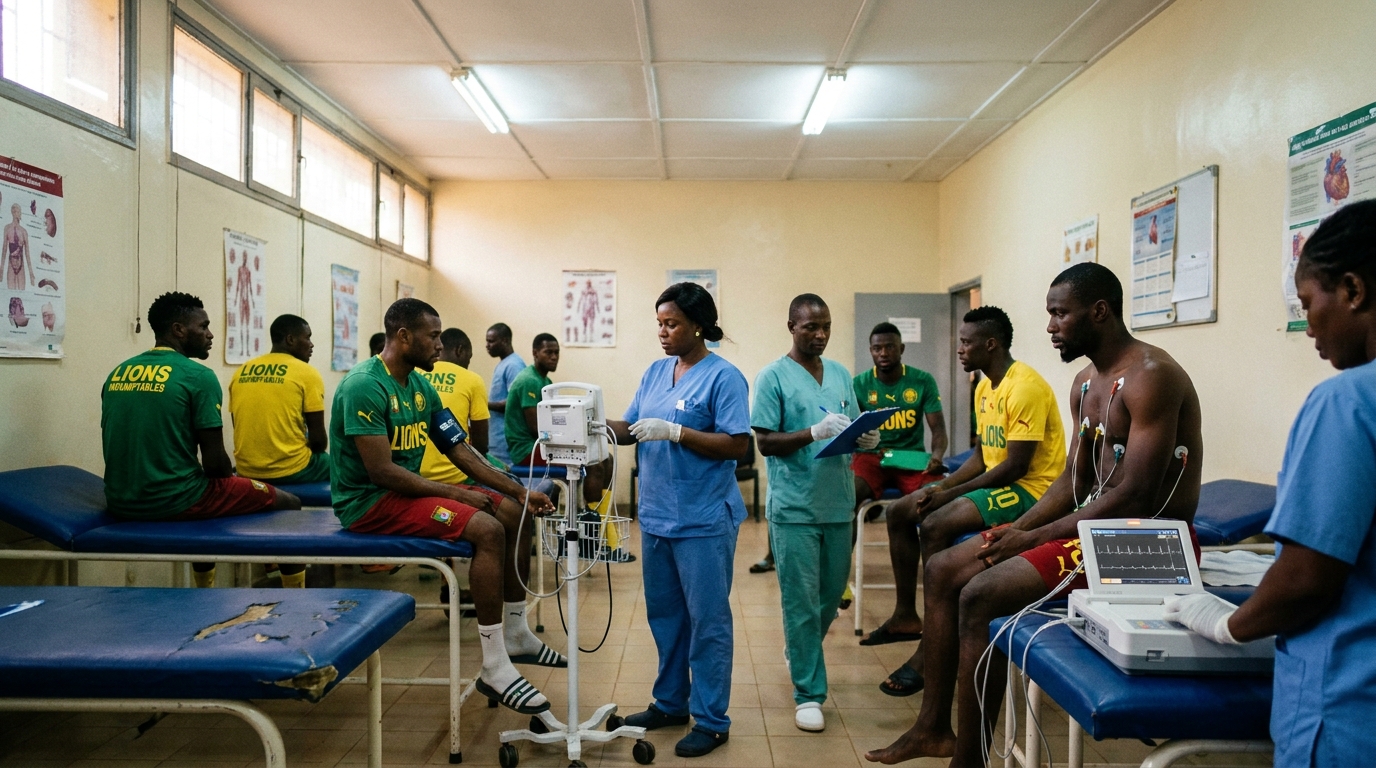
To evaluate the current state of emergency cardiac care within African sports, researchers conducted a cross-sectional survey during the 2024/2025 season. This formative assessment took place across five pre-competition medical centers in Cameroon, which serve as the clinical sites responsible for the mandatory health screenings of professional athletes. The study focused on the highest levels of competition, recruiting personnel from the Elite 1 and Elite 2 men's leagues as well as the Female Super League. To ensure the findings reflected the perspectives of established professionals rather than novices, the inclusion criteria required all participants to have a minimum of two or more seasons of professional experience.
The study enrolled a total of 745 participants, providing a robust sample size to identify systemic vulnerabilities across different roles. This cohort consisted of 536 players, 90 referees, 84 coaches, and 35 physiotherapists, all of whom act as potential first responders during a match-day emergency. Data collection relied on a validated questionnaire adapted from international guidelines, allowing the authors to measure sociodemographic data alongside specific domains of knowledge, attitudes, and practices regarding sudden cardiac arrest. The researchers performed a descriptive data analysis with subgroup comparisons using SPSS V.20 (a standard statistical software package used to determine if preparedness levels differed significantly between players, coaches, and medical staff). For sports medicine physicians, understanding these baseline metrics is essential for designing targeted interventions that actually reach the personnel on the pitch.
Deficits in Knowledge and Clinical Confidence
The survey results indicate a profound lack of foundational medical understanding regarding the leading cause of death in athletes. Specifically, 66.4% of participants demonstrated poor knowledge of sudden cardiac arrest, failing to correctly identify the signs, symptoms, or immediate management protocols required when a player collapses. This deficit in theoretical knowledge is compounded by a lack of practical self-efficacy. Only 12% of participants reported confidence in cardiopulmonary resuscitation (CPR) or automated external defibrillator (AED) use, suggesting that the vast majority of professional football personnel in Cameroon feel unequipped to intervene during the critical first minutes of a cardiac event. For the clinician, these figures represent a significant breakdown in the chain of survival, as the window for successful defibrillation and resuscitation narrows rapidly after the onset of ventricular arrhythmia.
When analyzing the data by professional role, the researchers identified a particularly concerning trend among match officials. Referees showed the lowest preparedness scores among all stakeholder groups, a finding that highlights a significant clinical vulnerability during live matches. Because referees are often the closest individuals to a player at the moment of collapse, they serve as the de facto first responders who must recognize the emergency and initiate the response. Their lack of preparedness, characterized by the lowest scores in knowledge and practical readiness compared to players, coaches, and physiotherapists, represents a critical failure in the emergency response infrastructure. Without the ability of the nearest official to provide immediate care, the likelihood of a positive neurological and survival outcome for an athlete in cardiac arrest diminishes substantially.
Psychological and Legal Barriers to Intervention
The clinical impact of sudden cardiac arrest is profound, as it remains the leading cause of sport-related death worldwide. Despite the high stakes of these events, survival outcomes for sudden cardiac arrest in Africa are critically poor, reflecting a systemic failure to implement effective resuscitation protocols. The researchers found that technical knowledge deficits are compounded by significant psychological and perceived legal obstacles among stakeholders. While approximately one-third of participants expressed positive attitudes toward sudden cardiac arrest intervention, this willingness to help is frequently undermined by specific anxieties regarding the consequences of bystander action.
The study identified two primary deterrents that prevent personnel from initiating life-saving measures. Specifically, 66.3% of participants cited fear of harm as a self-reported barrier to providing cardiopulmonary resuscitation, suggesting a widespread concern that improper technique might exacerbate a player's condition. Furthermore, an even larger majority of 78.3% of participants cited legal concerns as a barrier to intervention. For the practicing physician, these data points illustrate that improving survival rates in low-resource settings requires more than just equipment procurement. It necessitates robust legal protections, such as Good Samaritan laws, alongside targeted education to mitigate the fears that paralyze potential first responders during a cardiac emergency.
Systemic Failures in Emergency Infrastructure
The clinical utility of sudden cardiac arrest protocols depends entirely on the transition from theoretical knowledge to practical application, yet the study reveals a profound disconnect in the Cameroonian professional leagues. The researchers found that only 33.4% of participants reported good practices regarding the management of sudden cardiac arrest, a metric that encompasses the actual implementation of life-saving steps during an emergency. This deficit in practical application is compounded by a lack of necessary infrastructure. The assessment identified significant gaps in access to automated external defibrillators (AEDs), which are portable electronic devices that automatically diagnose life-threatening cardiac arrhythmias and apply electrical therapy. Furthermore, there was a widespread lack of cardiopulmonary resuscitation training and a critical deficiency in emergency action plan awareness (pre-determined protocols that coordinate the response of personnel during a medical crisis).
These findings suggest that the current state of athletic medicine in Cameroon is insufficient to meet international safety standards. The researchers noted that the critical gaps in sudden cardiac arrest preparedness identified in Cameroonian football likely extend across Africa and other similar low-resource environments. For the clinician advising sports organizations or managing athlete health in these regions, the data underscore a systemic vulnerability where the survival chain (the sequence of rapid actions, from early recognition to defibrillation, that maximize the chance of survival following cardiac arrest) is broken at multiple points. To address these vulnerabilities, the authors recommend the implementation of compulsory cardiopulmonary resuscitation and AED training for all stakeholders, ensuring the immediate availability of automated external defibrillators at all venues, and the creation of enforceable emergency action plans to strengthen the survival chain and align regional practices with global clinical benchmarks.
References
1. Grubic N, Hill B, Phelan D, Baggish A, Dorian P, Johri AM. Bystander interventions and survival after exercise-related sudden cardiac arrest: a systematic review.. British journal of sports medicine. 2022. doi:10.1136/bjsports-2021-104623
2. Yan S, Gan Y, Jiang N, et al. The global survival rate among adult out-of-hospital cardiac arrest patients who received cardiopulmonary resuscitation: a systematic review and meta-analysis. Critical Care. 2020. doi:10.1186/s13054-020-2773-2
3. Valenzuela TD, Roe DJ, Nichol G, Clark L, Spaite DW, Hardman RG. Outcomes of Rapid Defibrillation by Security Officers after Cardiac Arrest in Casinos. New England Journal of Medicine. 2000. doi:10.1056/nejm200010263431701
4. Ting JXR, Ng T, Eng S, et al. Abstract 323: Global Prevalence Of Cardiopulmonary Resuscitation And Automated External Defibrillator Training: A Systematic Review And Meta-analysis. Circulation. 2022. doi:10.1161/circ.146.suppl_1.323
5. Michelland L, Murad MH, Bougouin W, et al. Association between basic life support and survival in sports-related sudden cardiac arrest: a meta-analysis.. European heart journal. 2023. doi:10.1093/eurheartj/ehac586