
- Current topical corticosteroid treatment for vulvar lichen sclerosus (VLS)-related introital stenosis is ineffective for some patients.
- This retrospective study evaluated a combined surgical procedure in 35 women with VLS-related introital stenosis.
- 88.5% of patients reported satisfaction, and 85.7% significantly reduced corticosteroid use (p<0.002).
- The authors conclude this combined surgical approach offers a viable solution for severe VLS-related vulvar stenosis.
- This procedure may provide a surgical option for patients with VLS-related introital stenosis refractory to medical therapy.
Addressing Refractory Vulvar Lichen Sclerosus: Beyond Topical Corticosteroids
Vulvar lichen sclerosus (VLS) is a chronic inflammatory dermatosis that frequently presents with pruritus, pain, and progressive scarring. For many patients, this leads to anatomical changes such as introital stenosis, which can severely impair sexual function and quality of life [1, 2]. While potent topical corticosteroids are the established first-line treatment, a subset of patients either fails to respond or develops severe stenosis despite therapy, creating a significant clinical challenge [2, 3]. Although other treatments like topical calcineurin inhibitors or laser therapy exist, management of advanced anatomical distortion often requires surgical consideration, a step historically viewed with caution due to recurrence risks [4, 3]. This gap in care highlights the need for durable and effective interventions for patients with severe, refractory VLS.
A Surgical Strategy for Severe Introital Stenosis
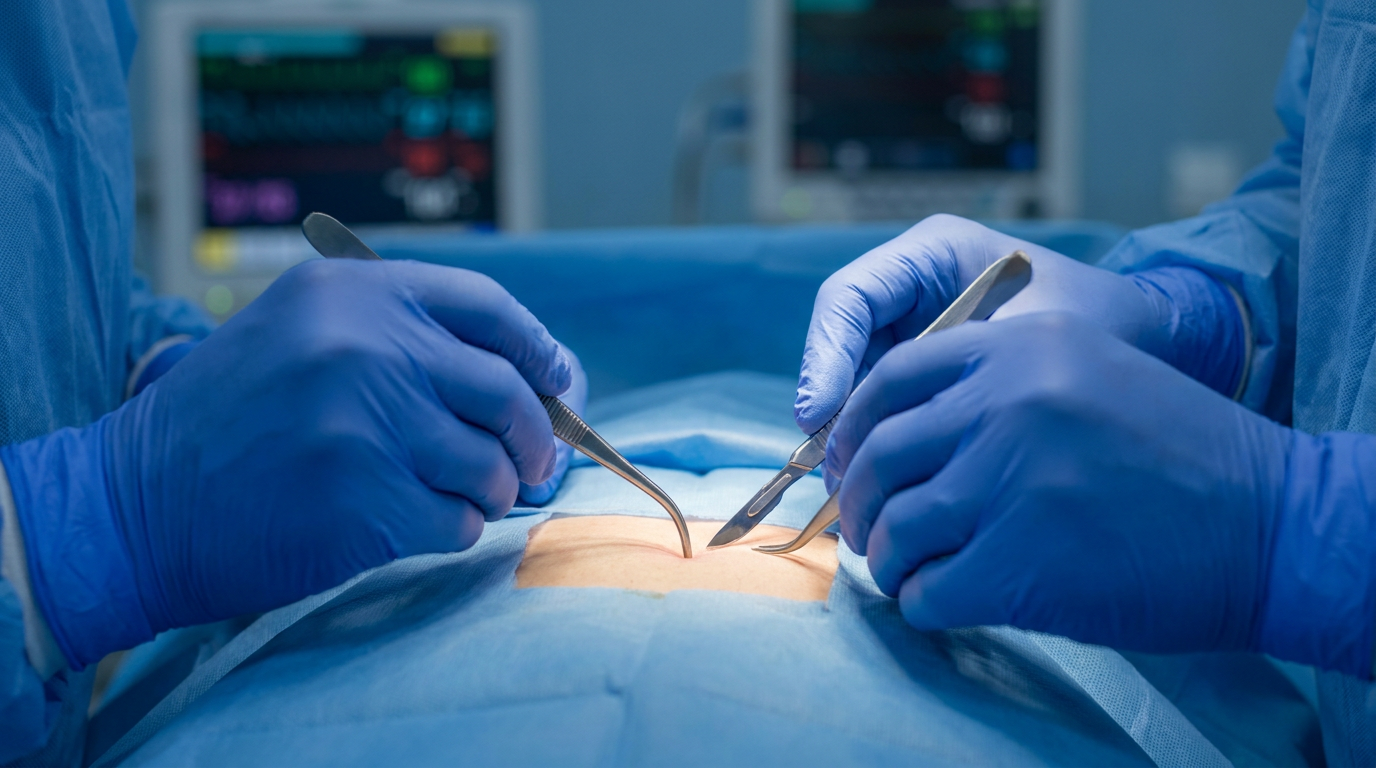
To address severe introital stenosis in patients with vulvar lichen sclerosus, researchers evaluated a multi-component surgical procedure. The technique was designed not only to correct the physical narrowing but also to improve the underlying tissue health. The procedure combines three distinct elements: vulvar widening via perineal flap transposition, which involves moving healthy, pliable tissue to enlarge the vaginal opening; rigottomy, a surgical incision that releases the constricting scar tissue; and autologous fat grafting. The addition of fat grafting is intended to restore lost subcutaneous volume and improve tissue quality and vascularity, potentially mitigating scar formation and enhancing long-term pliability.
Study Design and Patient Cohort
The investigators conducted a retrospective analysis of 35 women with VLS-related introital stenosis who underwent the combined surgical procedure between 2010 and 2019. The patient cohort was diverse in age, ranging from 18 to 85 years. A key strength of the study design was its long-term evaluation period; a unified follow-up was conducted in 2021, allowing for an observation window of up to eleven years post-surgery for some participants. At follow-up, the researchers assessed a comprehensive set of outcomes, including patient satisfaction, symptom severity, sexual function, quality of life, psychological well-being, objective changes in vulvar architecture, and the frequency of post-surgical topical corticosteroid use.
Clinical Outcomes: Patient Satisfaction and Functional Improvements
The surgical intervention yielded substantial benefits across multiple domains. Overall, 88.5% of patients reported being satisfied with the procedure. This high satisfaction rate was supported by objective improvements in patient-reported outcomes. The study found statistically significant improvements in VLS symptoms, psychological well-being, and overall quality of life at both 6 and 12 months post-surgery (p<0.05 for all). These findings suggest the procedure effectively alleviates not only the physical discomfort of the condition but also its associated psychosocial burden. While sexual function also improved, the authors note this change was not statistically significant across all items of the assessment questionnaire, indicating that while the physical barrier to intercourse may be resolved, other factors can continue to influence sexual health.
Anatomical and Treatment Burden Reductions
In addition to patient-reported benefits, the procedure demonstrated measurable success in restoring physical structure and reducing treatment dependence. Post-surgical evaluation showed that vulvar architecture was improved in 60% of cases, providing objective evidence that the intervention can reverse some of the anatomical damage caused by chronic VLS. Perhaps most significantly for long-term management, the study documented a sharp decline in the need for medication. The requirement for topical corticosteroids was significantly reduced (p<0.002). Following the surgery, 85.7% of patients reported either no longer needing corticosteroids or using them only on-demand. This reduction in treatment burden is clinically important, as it minimizes patient exposure to potential long-term side effects of chronic steroid use, such as skin atrophy, and simplifies the daily management of their condition.
Considerations and Clinical Implications
For clinicians managing patients with severe VLS-related introital stenosis refractory to first-line therapies, this combined surgical approach presents a viable treatment pathway. The data suggest that the procedure, which integrates perineal flap transposition, rigottomy, and fat grafting, can produce high patient satisfaction alongside significant, durable improvements in symptoms, quality of life, and physical anatomy. The marked reduction in corticosteroid dependence is a particularly compelling outcome for this chronic condition. Clinicians should, however, interpret these findings within the context of the study's limitations, including its retrospective design and a relatively small sample size of 35 women. Despite these constraints, the long-term follow-up, extending up to eleven years, provides valuable evidence of the procedure's durability. While larger, prospective trials are needed for definitive validation, this study offers a strong rationale for considering this comprehensive surgical intervention for select patients whose quality of life is severely impacted by treatment-resistant VLS.
References
1. Clarke L, Leatherland R, Simpson RC. A systematic review of the barriers to diagnosis of vulval lichen sclerosus in primary care. Clinical and Experimental Dermatology. 2025. doi:10.1093/ced/llaf481
2. Brambilla M, Boero V, Loreto ED, et al. Vulvar Widening Through Perineal Flap Transposition, Rigottomy, And Fat Grafting For Vulvar Lichen Sclerosus. Plastic & Reconstructive Surgery. 2026. doi:10.1097/prs.0000000000013214
3. Yordanov A, Tantchev L, Kostov S, Slavchev S, Strashilov S, Vasileva P. Vulvar leukoplakia: therapeutic options. Menopausal Review. 2020. doi:10.5114/pm.2020.99570
4. Sirotkina MA, Potapov A, Loginova MM, et al. Evaluation of Skin Recovery after Fractional CO2 Laser Treatment of Vulvar Lichen Sclerosus Using Multimodal Optical Coherence Tomography. Sovremennye tehnologii v medicine. 2024. doi:10.17691/stm2024.16.4.02