
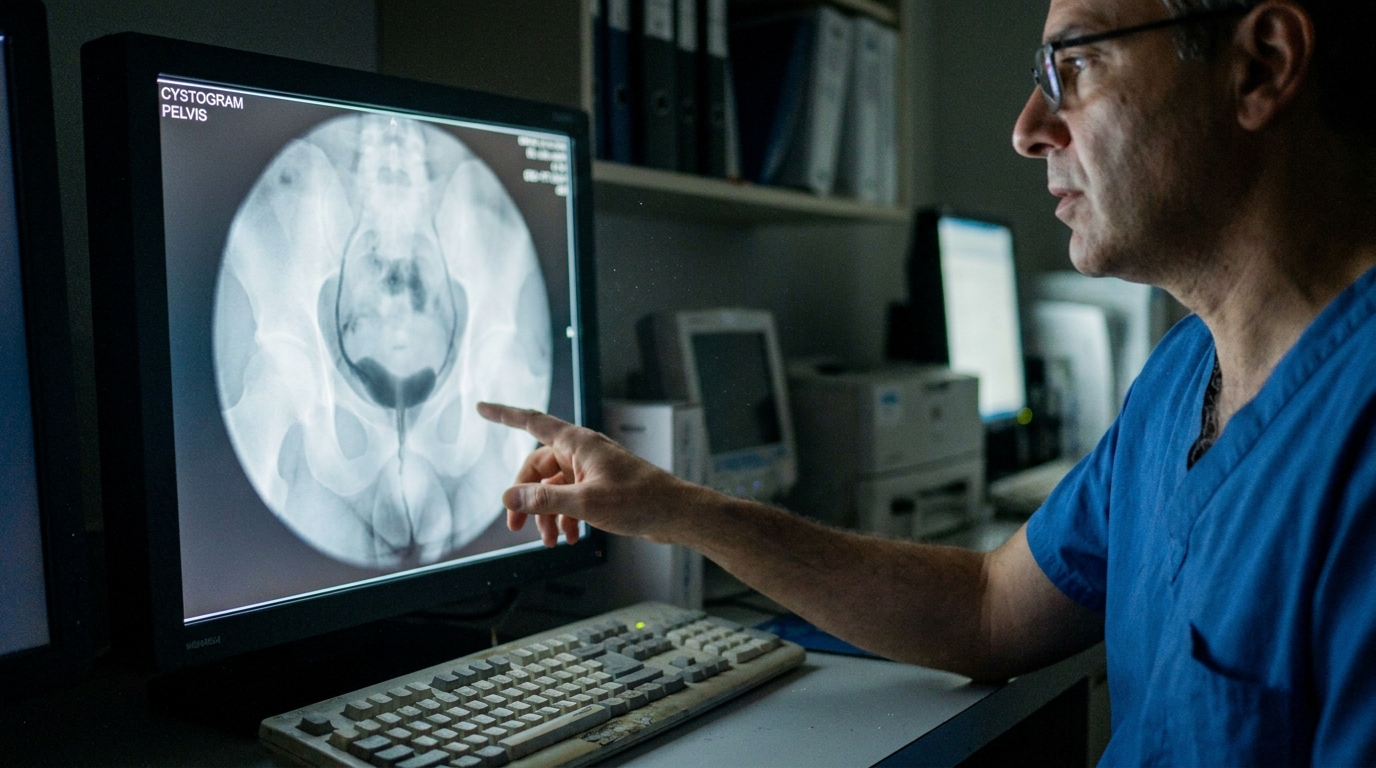
- Researchers investigated whether early postoperative cystography (imaging of the bladder) reduces catheter duration and infection rates after traumatic bladder repair.
- This retrospective study analyzed 118 patients with full-thickness bladder injuries treated at Level I and II trauma centers from 2017 to 2024.
- Early imaging at seven days or less reduced catheter duration to 7 days and infection rates to 6.9 percent (p=0.02).
- The authors concluded that early cystography facilitates faster catheter removal and lowers infection risks without increasing the rate of detected urinary leaks.
- Clinicians should consider performing cystography within one week post-repair to minimize catheter-associated complications even in patients with high-grade bladder injuries.
Optimizing the Postoperative Timeline for Traumatic Bladder Repair
Traumatic bladder injuries present significant management challenges in the setting of polytrauma and pelvic fractures, which are associated with a 5.6-fold increase in the odds of late sepsis (OR 5.6, p = 0.02) [1, 2]. While current guidelines provide clear directives for the initial surgical repair of intraperitoneal and complex extraperitoneal ruptures, they offer limited consensus regarding the optimal postoperative imaging strategy and the ideal timing for catheter removal [3, 4, 5]. This lack of standardized follow-up leads to wide practice variations; for instance, trauma services may remove catheters significantly earlier than urology services (11 days versus 17 days, p = 0.006) for simple repairs [5]. Because prolonged catheterization is a well-documented risk factor for morbidity, including catheter-associated urinary tract infections (CAUTIs) and secondary stone formation, refining the recovery protocol is essential for improving patient outcomes [6, 2]. A retrospective study of 118 patients evaluates how early postoperative cystography (a radiologic examination of the bladder using contrast media to check for leaks) performed at seven days or fewer influences these clinical milestones [7]. The findings indicate that early imaging was associated with a reduced median catheter duration of 7 days compared to 14 days in the late imaging group (p < 0.01) and significantly lower infection rates of 6.9% versus 30% (p = 0.02) without increasing the risk of detecting a persistent urinary leak [7].
Analysis of Injury Patterns and Patient Selection
The researchers conducted a retrospective review of trauma registry data from a university-based Level I and II trauma system spanning the years 2017 to 2024. This analysis provides Level III evidence for therapeutic care management and focused on a cohort of 118 patients who sustained full-thickness bladder injuries. All included patients underwent cystorrhaphy (the surgical suturing of the bladder wall to repair a defect). To ensure the findings specifically reflected bladder healing and catheter management, the authors excluded patients who suffered in-hospital mortality or those with concomitant injuries to the ureters or urethra, as these complications necessitate different postoperative drainage and imaging strategies. The study population predominantly consisted of individuals who experienced high-energy trauma, with 86 patients (71.9%) sustaining blunt force injuries. When categorizing the anatomical nature of the damage, the researchers identified 62 patients (52.5%) with isolated intraperitoneal ruptures, which typically require formal surgical repair due to the risk of urine leaking into the abdominal cavity. Another 39 patients (33.1%) presented with isolated extraperitoneal injuries, while 17 patients (14.4%) suffered from combined intraperitoneal and extraperitoneal injuries. By including this diverse range of full-thickness injuries, the study provides a comprehensive look at how early imaging affects the recovery trajectory across the most common presentations of traumatic bladder rupture seen in clinical practice.
Comparing Imaging Protocols Across Injury Severities
The study stratified the 118 patients into three distinct cohorts based on the timing of their initial postoperative cystography. Of the total population, 29 patients (24.6%) underwent early imaging, defined as occurring within 7 days or fewer of the surgical repair. A larger group of 70 patients (59.3%) received late imaging, occurring at 8 days or more postoperatively, while 19 patients (16.1%) underwent no postoperative imaging at all. This stratification allowed the researchers to evaluate whether the timing of the first check for a leak influenced the total duration of catheterization and the subsequent risk of infection. A critical finding in the baseline comparison was that the early cystography cohort actually presented with more severe trauma than the late cohort. Specifically, the early imaging group had a significantly higher proportion of grade 4 bladder injuries as defined by the American Association for the Surgery of Trauma (AAST), which involves a full-thickness laceration extending into the trigone or bladder neck. These high-grade injuries accounted for 79.3% of the early cohort compared to 45.7% of the late cohort (p < 0.01). Despite this disparity in injury grade, the researchers found no significant differences between the cohorts regarding patient demographics, the mechanism of injury, overall injury severity scores, associated injuries, or the specific surgical management strategies employed. This lack of confounding clinical differences suggests that the observed benefits of early imaging were not merely a result of healthier patients being selected for earlier testing.
Impact on Catheter Duration and Infection Rates
The timing of postoperative imaging significantly influenced the clinical course of recovery, particularly regarding the duration of indwelling catheterization. The researchers found that early postoperative imaging was associated with a median catheter duration of 7 days, with an interquartile range (IQR) of 6 to 10 days. In contrast, patients who underwent late imaging remained catheterized for a median of 14 days (IQR 11 to 18 days), a difference that reached high statistical significance (p < 0.01). This one-week reduction in catheter use is clinically relevant, as it minimizes the period during which the urinary tract is vulnerable to external pathogens and mechanical irritation. This reduction in catheterization time translated into a substantial decrease in the incidence of catheter-associated urinary tract infections (CAUTIs). In the cohort that received early imaging, the rate of CAUTIs was 6.9%, whereas the rate climbed to 30% in the late imaging group (p = 0.02). These data suggest that a proactive imaging strategy within the first seven days post-repair allows for earlier catheter removal, thereby mitigating the risk of infectious complications that often prolong hospital stays and require additional antibiotic therapy. The study also compared the early imaging group to patients who received no postoperative cystography at all. Even in this comparison, the benefits of a structured early imaging protocol were evident. Early postoperative cystography was associated with a median catheter duration of 7 days (IQR 6 to 10) compared to 10 days (IQR 9 to 15) for patients who received no cystography (p < 0.01). These findings indicate that without the objective confirmation of healing provided by early imaging, clinicians may be more hesitant to remove catheters, leading to longer durations of use even when no imaging-related delays occur.
Safety Profile and Leak Detection Rates
A primary clinical concern when considering early postoperative imaging is the potential for false negatives or the failure to detect persistent urinary leaks before the bladder has sufficiently healed. However, the study data indicate that performing cystography within the first seven days does not compromise the accuracy of the assessment. The researchers found that the rates of urinary leak on initial postoperative imaging were 3.5% in the early group and 8.6% in the late group, a difference that was not statistically significant (p = 0.67). These results suggest that early imaging is just as reliable as delayed imaging for identifying patients who require continued catheterization due to incomplete healing. The safety profile of early cystography is particularly noteworthy given that the early imaging cohort actually contained a higher proportion of complex injuries compared to the late group. Despite the prevalence of more severe trauma in the early cohort, the low and statistically comparable leak rate confirms that a seven-day window provides an adequate interval for the initial assessment of the surgical repair. For the practicing clinician, these findings support the use of early cystography as a safe and effective tool for facilitating earlier catheter removal. By adopting this accelerated timeline, physicians can reduce the burden of prolonged catheterization and lower infection rates, even in cases of high-grade bladder trauma, without increasing the risk of missing a clinically significant leak.
References
1. Lumen N, Sharma D, Abu-Ghanem Y, et al. Multiple Injuries to the Lower Urinary Tract: Two Cases and Comparison with the EAU Guidelines. Case Reports in Urology. 2018. doi:10.1155/2018/3216527
2. Albaddai N, Al-Kohlany K, Shamsan A, et al. A prospective study on the management of urinary bladder injuries in a military hospital in Yemen. BMC Urology. 2025. doi:10.1186/s12894-025-01863-y
3. Ruf C, Kluth LA, Wahlen S, Breuing J, Nestler T. Initial surgical management of injuries to the urogenital tract in patients with polytrauma and/or severe injuries: a systematic review and clinical practice guideline update. European Journal of Trauma and Emergency Surgery. 2025. doi:10.1007/s00068-025-02847-1
4. Reddy D, Laher AE, Moeng MS, Adam A. Bladder trauma: a guideline of the guidelines. British Journal of Urology. 2023. doi:10.1111/bju.16236
5. Wilson DJ, Melin I, Shah N, O'Connor RC, Carver T. Investigating the timing of catheter removal after traumatic bladder injury: a single-institution 12-year experience. Trauma Surgery & Acute Care Open. 2025. doi:10.1136/tsaco-2024-001693
6. Wang X, Guo X, Tang Z, Ying X, Tang C, Shen R. Secondary bladder stone caused by delayed penetration of the bladder by a pubic fracture: A case report and literature review. Experimental and Therapeutic Medicine. 2024. doi:10.3892/etm.2024.12455
7. Holliday T, Wiseman JE, Cain CD, et al. Early cystography after traumatic bladder repair is associated with shorter catheter duration and fewer CAUTIs without increased detection of postoperative leaks. The Journal of Trauma: Injury, Infection, and Critical Care. 2026. doi:10.1097/ta.0000000000005042