For Doctors in a Hurry
- Clinicians often struggle to determine if frailty influences treatment outcomes for patients with sudden sensorineural hearing loss.
- The researchers conducted a retrospective cohort study of 185 adult patients stratified by the 5-Factor Modified Frailty Index.
- Higher frailty scores showed no significant impact on audiometric outcomes, with all p-values exceeding 0.05 across comparisons.
- The authors concluded that frailty does not correlate with hearing recovery following steroid treatment for this condition.
- Physicians may safely individualize treatment plans for frail patients without expecting inferior hearing improvement compared to others.
Frailty and Therapeutic Decision Making in Acute Auditory Loss
Sudden sensorineural hearing loss remains a high-stakes clinical challenge, as it is a major contributor to years lived with disability and a recognized risk factor for the development of dementia [1, 2, 3]. The management of this condition is increasingly complicated by the global aging population, where sensory deficits often coexist with frailty and a decline in intrinsic capacity (the composite of an individual’s physical and mental abilities, including cognition, locomotion, and sensory domains) [4]. Chronic inflammation and oxidative stress are thought to drive both the pathogenesis of age-related hearing loss and the systemic vulnerabilities seen in frail patients [5, 6]. While clinicians must balance the urgency of steroid administration with the risks posed by a patient's comorbidities, recent evidence indicates that frailty scores do not significantly correlate with hearing recovery outcomes, suggesting that treatment may be safely individualized without compromising audiometric results [7]. This retrospective cohort study now examines how frailty indices influence treatment selection and whether these baseline deficits ultimately dictate the success of hearing restoration.
Cohort Characteristics and Frailty Stratification
To investigate the relationship between systemic vulnerability and steroid efficacy, researchers conducted a retrospective cohort study at a tertiary-care institution involving 185 adult patients (at least 19 years of age) presenting with unilateral sudden sensorineural hearing loss between January 1, 2017, and May 24, 2023. The study utilized the 5-Factor Modified Frailty Index (a validated clinical tool that assesses five specific comorbidities: diabetes mellitus, hypertension, congestive heart failure, chronic obstructive pulmonary disease, and functional status) to quantify the physiological reserve of each participant. This index allows clinicians to move beyond chronological age and instead categorize patients based on their cumulative health deficits. Demographic analysis revealed that baseline frailty was not uniformly distributed; female patients were significantly less frail than male patients (P = .004), and younger patients were significantly less frail than older patients (P < .001). By stratifying the cohort using this index, the authors sought to determine if these baseline physiological reserves influenced the clinical decision to administer oral prednisone, intratympanic dexamethasone, or a combination of both.
Impact of Frailty on Steroid Delivery Methods
The study identified a clear association between frailty scores and treatment selection for sudden sensorineural hearing loss, reflecting a cautious approach to systemic therapy in vulnerable populations. Clinicians managed the condition using oral prednisone, intratympanic dexamethasone (steroids injected directly into the middle ear to bypass systemic circulation), or combination therapy. Data analysis revealed that patients with higher frailty scores (a score of 2 or greater on the index) were less likely to receive oral steroids compared to their less frail counterparts, with utilization rates of 59.6% and 82.8%, respectively (P = .004). This suggests that physicians frequently prioritize the avoidance of systemic side effects, such as glycemic instability or blood pressure elevation, in patients with lower physiological reserves. In contrast, the delivery of local therapy remained stable regardless of systemic health; patients with higher frailty scores were equally likely to receive intratympanic steroids as those with lower scores (P = 1.000). Furthermore, patients classified as frail (a score of 1 or greater) were not more likely to receive intratympanic steroids alone compared to combination therapy (P = .220), indicating that frailty does not automatically necessitate a shift toward local monotherapy. The clinical profile of frailer patients often included complex metabolic concerns, as higher frailty scores were significantly associated with metabolic syndrome (a cluster of conditions including hypertension, dyslipidemia, and insulin resistance) with a significance level of P = .002. While specific treatment patterns in diabetic patients could not be isolated due to individualized care, the findings highlight that frailty scores significantly influence the route of steroid administration.
Audiometric Outcomes and Clinical Prognosis
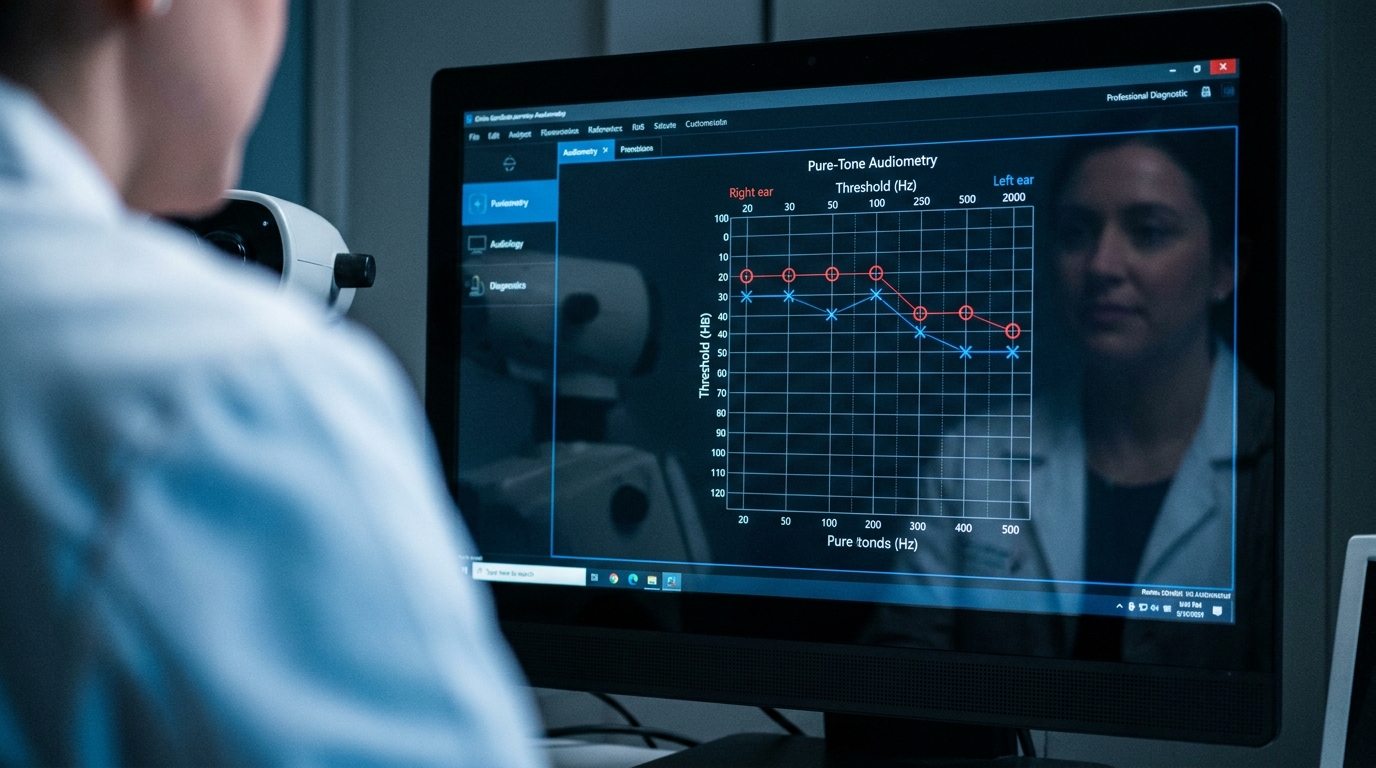
The primary objective of the study was to determine if systemic vulnerability influenced the efficacy of steroid therapy by measuring post-treatment changes in three key areas: pure-tone average (the average of hearing sensitivity at specific frequencies), speech reception threshold (the lowest intensity at which a patient can identify 50 percent of spoken words), and word recognition scores (the percentage of words correctly identified at a comfortable volume). Despite the observed variations in steroid delivery, the researchers found that no significant differences were observed in audiometric outcomes (pure-tone average, speech reception threshold, or word recognition scores) based on patient frailty scores across all comparisons (P values greater than .05). This lack of association suggests that the physiological decline associated with aging and multimorbidity does not inherently limit the inner ear's capacity for functional recovery. Clinical complexity also failed to predict recovery; while the number of comorbidities increased significantly with higher frailty scores (P < .001), these concurrent medical issues did not directly correlate with hearing outcomes. Furthermore, the presence of vestibular symptoms did not appear to be linked to the patient's overall physiological state; dizziness did not correlate with frailty or treatment outcomes (P = .650), and vertigo similarly showed no correlation (P = .200). For the practicing clinician, these findings provide an evidence-based rationale for individualizing treatment protocols. Because the study did not find a significant association between frailty scores and treatment outcomes, physicians can confidently adjust steroid delivery methods to mitigate systemic risks without compromising the patient's chance of hearing recovery. In cases where high-dose oral prednisone may be contraindicated, prioritizing intratympanic delivery appears to be a viable strategy that maintains audiometric efficacy while preserving patient safety.
References
1. Trpchevska N, Freidin MB, Broer L, et al. Genome-wide association meta-analysis identifies 48 risk variants and highlights the role of the stria vascularis in hearing loss. The American Journal of Human Genetics. 2022. doi:10.1016/j.ajhg.2022.04.010
2. Förster CY, Shityakov S, Scheper V, Lenarz T. Linking Cerebrovascular Dysfunction to Age-Related Hearing Loss and Alzheimer’s Disease—Are Systemic Approaches for Diagnosis and Therapy Required?. Biomolecules. 2022. doi:10.3390/biom12111717
3. Tai S, Shen C, Wang L, Chien C. Association of sudden sensorineural hearing loss with dementia: a nationwide cohort study. BMC Neurology. 2021. doi:10.1186/s12883-021-02106-x
4. Li Y, Chen Y, Chen Y, et al. Intrinsic capacity and stroke risk in a multiple cohort study. Nature Communications. 2026. doi:10.1038/s41467-026-70524-x
5. Sun S, Zhao Q, He H, Liu Y, Nie Y, You Z. Pathophysiological insights and therapeutic developments in age-related hearing loss: a narrative review. Frontiers in Aging Neuroscience. 2025. doi:10.3389/fnagi.2025.1657603
6. Chester J, Johnston E, Walker DP, et al. A Review on Recent Advancement on Age-Related Hearing Loss: The Applications of Nanotechnology, Drug Pharmacology, and Biotechnology. Pharmaceutics. 2021. doi:10.3390/pharmaceutics13071041
7. Adwer LM, Higgins RC, Lyden E, Maxwell AK. Frailty and Steroid Treatment Outcomes in Patients with Sudden Sensorineural Hearing Loss. Annals of Otology Rhinology & Laryngology. 2026. doi:10.1177/00034894261435264