For Doctors in a Hurry
- This study investigated if a home-based brain stimulation protocol could enhance stress resilience in healthy adults, addressing a need for scalable interventions.
- Thirty-one healthy adults completed ten self-administered transcranial direct current stimulation sessions over two weeks, targeting the left dorsolateral prefrontal cortex.
- Adherence was high at 98%, and while subjective stress appraisal was significantly reduced, no significant changes in anxiety or physiological markers were observed.
- The researchers concluded the home-based protocol is feasible and safe, but the absence of a control group warrants cautious interpretation of its effects.
- Future research requires controlled trials and exploration of longer protocols in populations with heightened stress vulnerability before considering clinical application.
Probing Neuromodulation for Stress Resilience
The demand for effective non-pharmacologic interventions is growing across multiple medical disciplines, from managing chronic pain to mitigating distress in critically ill patients [1, 2]. Among the strategies being explored is non-invasive brain stimulation, such as transcranial direct current stimulation (tDCS), which aims to modulate neural activity in targeted cortical regions. Research has already established that tDCS protocols can influence autonomic nervous system function, a core component of the physiological stress response, as measured by changes in heart rate variability [3]. Concurrently, the delivery of healthcare is increasingly moving beyond clinic walls, with evidence supporting the use of mobile and remote technologies for managing health behaviors and chronic conditions [4]. This convergence of neuromodulation and remote care raises a key question: could a home-based brain stimulation protocol be a viable approach for proactively building resilience against stress?
Protocol for Remote Prefrontal Modulation
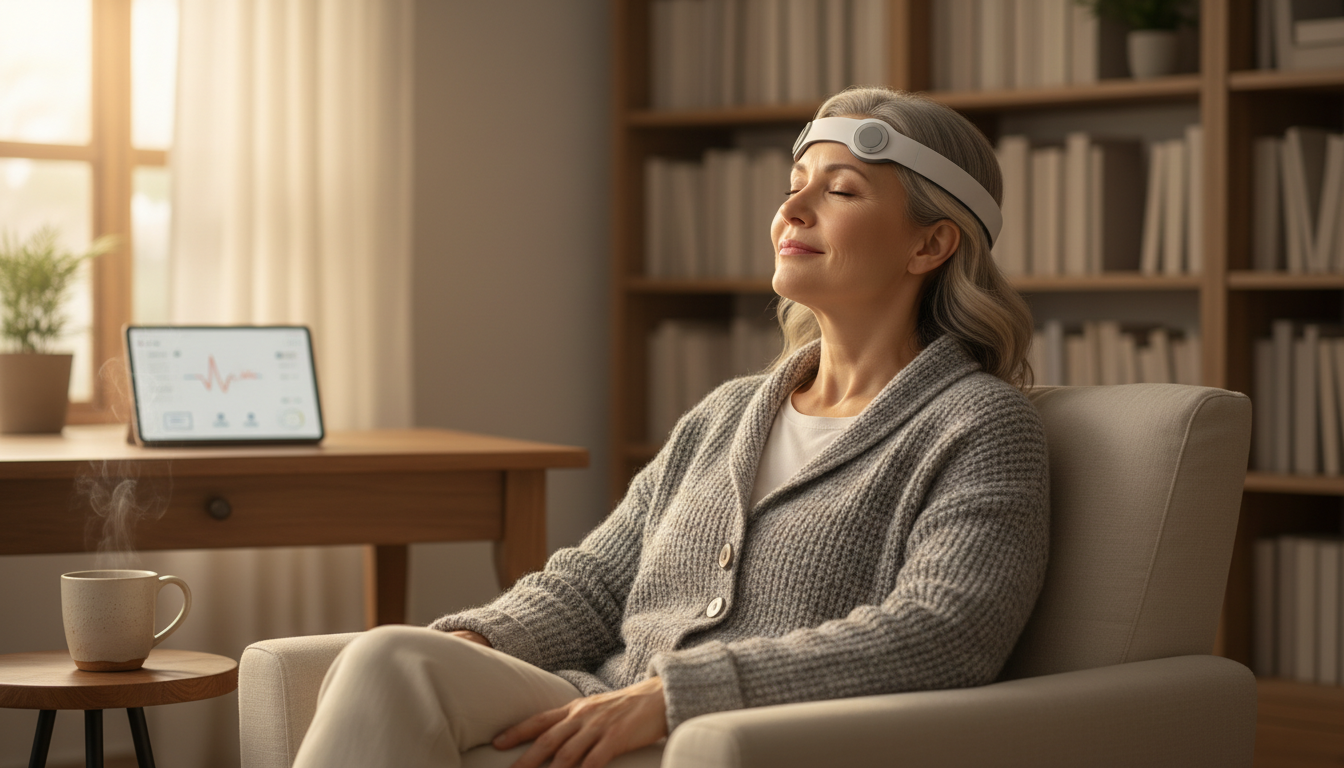
To evaluate a potential strategy for proactive stress management, this study investigated the feasibility, safety, and preliminary effects of a home-based protocol using transcranial Direct Current Stimulation (HB-tDCS). This non-invasive neuromodulation technique applies a low-level electrical current to the scalp to modulate the excitability of underlying cortical neurons. The intervention was designed to enhance stress resilience in a cohort of 31 healthy, middle-aged adults. The protocol specifically targeted the left dorsolateral prefrontal cortex (L-DLPFC), a region integral to executive control and the regulation of mood, which is often implicated in the pathophysiology of stress-related disorders. The L-DLPFC acts as a top-down regulator of the amygdala, and modulating its activity may improve a patient's ability to cognitively reappraise stressful stimuli. Participants self-administered ten sessions of tDCS over a concentrated two-week period in their own homes. To ensure safety and proper execution, all sessions were monitored remotely by the research team. The study found this remote, self-administered model to be highly viable. Adherence to the protocol was 98 percent, with no serious adverse events reported and only four of the 31 participants experiencing mild, transient side effects. Minimal technical issues were encountered, supporting the feasibility of this approach for potential future, larger-scale deployment in primary care or wellness settings.
Safety and Adherence in a Home Setting
A primary determinant of success for any remotely delivered therapy is patient engagement and the technical reliability of the equipment. In this study, the home-based tDCS protocol demonstrated high feasibility on both fronts. Participants completed the ten self-administered sessions with an adherence rate of 98 percent, a figure that suggests the two-week regimen was well-tolerated and manageable for individuals in a non-clinical setting. This high level of compliance was further supported by the report of minimal technical issues encountered during the remote sessions. For clinicians considering the future application of such technologies, these findings indicate that the logistical barriers to self-administered neuromodulation may be low, provided there is a framework for remote monitoring to guide the patient through the setup. Beyond feasibility, the safety profile of the intervention was a key outcome. The study confirmed a high degree of safety for this specific protocol targeting the left dorsolateral prefrontal cortex. Throughout the two-week intervention period, no serious adverse events were reported by any of the 31 participants. The treatment was also well-tolerated, with mild, transient side effects occurring in only four individuals. While the specific nature of these side effects was not detailed, their limited incidence and temporary duration contribute to a favorable preliminary safety assessment. This safety and tolerability data is essential, establishing a foundation for subsequent, larger-scale controlled trials to more definitively assess efficacy in both healthy and clinical populations.
Divergence Between Subjective and Physiological Stress
To evaluate the impact of the two-week intervention, the researchers administered a stress induction paradigm to the 31 participants both before and after the treatment period. This testing framework utilized multiple metrics to capture the multidimensional nature of the stress response. Autonomic arousal was measured via pupillometry (a technique that tracks changes in pupil dilation as a proxy for autonomic nervous system activity). Simultaneously, the researchers monitored the sympathetic nervous system response through electrodermal activity (EDA), which quantifies skin conductance changes resulting from sweat gland activation. To complement these biological data points, the paradigm also required participants to provide subjective stress and anxiety ratings, allowing for a direct comparison between physiological reactivity and the internal perception of the stressor. The analysis of these pre- and post-intervention measures revealed a distinct separation between subjective experience and objective physiological markers. The researchers reported a significant reduction in acute stress appraisal, which is the subjective perception of stress, following the ten sessions of stimulation. Despite this improvement in how participants perceived the stressor, the intervention did not appear to influence other psychological or biological domains. Specifically, no significant changes were observed in anxiety scores, and no significant changes were observed in physiological markers, including the measurements obtained through pupillometry and electrodermal activity. These findings suggest that while prefrontal modulation may mitigate the cognitive burden of stress, the underlying autonomic and sympathetic nervous system responses remained unchanged in this study population.
Clinical Feasibility and Study Limitations
The global burden of psychiatric illness is substantial, as mental health disorders, especially anxiety and depression, affect nearly one billion people worldwide. Because chronic stress plays a major role in the onset and severity of these conditions, clinicians require scalable tools to intervene before subclinical distress transitions into diagnosable pathology. The results of this investigation support the feasibility and safety of home-based transcranial Direct Current Stimulation (HB-tDCS) as a potential method for delivering neuromodulation outside of traditional clinic environments. By demonstrating that middle-aged adults can safely self-administer the protocol with high adherence, the study suggests a pathway for expanding access to preventive mental health care. Despite the high level of participant compliance, the clinical evidence for efficacy remains preliminary. While the intervention reduced how participants subjectively perceived stress, it demonstrated limited psychophysiological impact, with no significant changes observed in objective markers such as pupillometry or electrodermal activity. Furthermore, the researchers noted that the study was limited by the absence of a control group, such as a sham-stimulation arm (a placebo condition where the device is applied but no active current is delivered). This lack of a comparator makes it difficult to distinguish the effects of the prefrontal stimulation from a placebo response or the natural habituation that occurs when participants are repeatedly exposed to the same stress-induction paradigm. These limitations, alongside the lack of change in standardized anxiety scores, indicate that while the home-based delivery model is technically viable, more rigorous controlled trials are necessary to confirm its therapeutic impact.
References
1. Chou R, Deyo R, Friedly J, et al. Nonpharmacologic Therapies for Low Back Pain: A Systematic Review for an American College of Physicians Clinical Practice Guideline. Annals of Internal Medicine. 2017. doi:10.7326/M16-2459
2. Devlin JW, Skrobik Y, Gélinas C, et al. Clinical Practice Guidelines for the Prevention and Management of Pain, Agitation/Sedation, Delirium, Immobility, and Sleep Disruption in Adult Patients in the ICU. Critical Care Medicine. 2018. doi:10.1097/ccm.0000000000003299
3. Ko D, Lee H, Kim D, Park Y, Kang N. Transcranial direct current stimulation improves heart rate variability: A systematic review and meta-analysis.. Progress in neuro-psychopharmacology & biological psychiatry. 2024. doi:10.1016/j.pnpbp.2024.111072
4. Free C, Phillips G, Galli L, et al. The Effectiveness of Mobile-Health Technology-Based Health Behaviour Change or Disease Management Interventions for Health Care Consumers: A Systematic Review. PLoS Medicine. 2013. doi:10.1371/journal.pmed.1001362