
- The study addressed the uncertain clinical significance of low-level FLT3-ITD microclones in acute myeloid leukemia.
- Researchers conducted a post-hoc analysis of 1,733 newly diagnosed acute myeloid leukemia patients from the BIG-1 trial.
- FLT3-ITD microclones were detected in 17.4% of patients and increased relapse risk (sHR 1.50, 95% CI 1.18-1.91).
- The authors concluded that both FLT3-ITD microclones and macroclones are independently associated with increased relapse risk.
- These findings support integrating next-generation sequencing based FLT3-ITD detection into acute myeloid leukemia diagnostic and prognostic workflows.
Refining Risk Assessment in FLT3-Mutated Acute Myeloid Leukemia
Accurate risk stratification is the cornerstone of managing acute myeloid leukemia (AML), guiding decisions from chemotherapy intensity to transplant eligibility [1]. While cytogenetics and established molecular markers like high-burden FLT3 internal tandem duplications (FLT3-ITD) are integral to current risk models, a significant number of patients still relapse, suggesting that our prognostic tools remain incomplete [2, 3, 4]. The use of measurable residual disease (MRD) detection has improved relapse prediction, but identifying patients at high risk from the moment of diagnosis is a persistent challenge [3, 5, 6]. A recent analysis now provides compelling evidence on the prognostic weight of low-level FLT3-ITD variants, questioning whether current testing thresholds are sufficient to capture the full spectrum of relapse risk.
Uncertainty Around Low-Level FLT3-ITD Variants
The presence of FLT3 internal tandem duplications is a well-documented adverse prognostic factor in AML. Clinical guidelines and treatment decisions, such as the use of FLT3 inhibitors, are heavily influenced by the detection of so-called "macroclones." These are defined by a high allelic ratio (AR), the proportion of mutated DNA sequences, of ≥0.05, indicating a large subpopulation of leukemic cells carries the mutation. However, a clinical gray area has persisted regarding low-level FLT3-ITD subclones, often termed "microclones." The prognostic significance of these variants, which exist at a lower allelic ratio, has been unclear, partly because conventional detection methods lacked the sensitivity to reliably identify and quantify them. This has left clinicians uncertain whether these small subclones represent a genuine relapse risk or a clinically insignificant finding.
Study Design and Microclone Detection
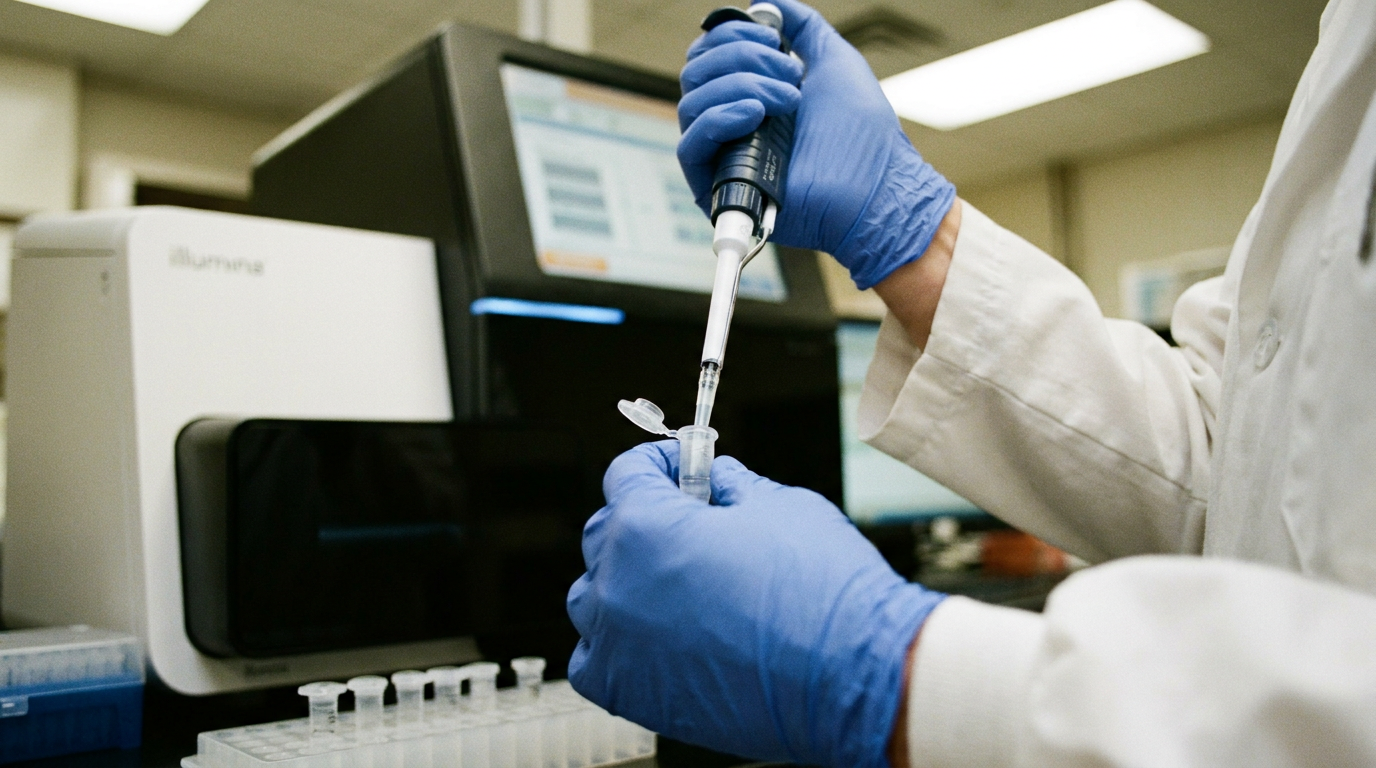
To clarify the role of these low-level variants, researchers performed a post-hoc analysis, a retrospective examination of data from a completed study, using samples from 1,733 patients with newly diagnosed AML enrolled in the BIG-1 trial (NCT02416388). The investigation utilized next-generation sequencing (NGS), a highly sensitive DNA sequencing technology capable of detecting mutations present in a very small fraction of cells. The study defined FLT3-ITD microclones as those with an allelic ratio between 0.0004 and 0.05. Using this precise method, the researchers found that FLT3-ITD microclones were present in 17.4% of patients who were otherwise considered negative for FLT3-ITD macroclones. This finding reveals a substantial, previously underappreciated patient population harboring these low-level mutations.
Relapse Risk Across FLT3-ITD Subtypes
The study's central finding is that the presence of FLT3-ITD microclones confers a substantial and independent risk of relapse. After adjusting for confounding variables like age, white blood cell count, other mutations, and treatment type, microclones were associated with a significantly increased relapse risk, with a sub-hazard ratio (sHR) of 1.50 (95% CI 1.18-1.91). A sub-hazard ratio is a statistical measure used in survival analysis to estimate the risk of one particular event, in this case relapse, while accounting for other competing events like death. This risk escalated with higher mutational burden: low-AR macroclones had an sHR of 1.98 (1.50-2.62), and high-AR macroclones had an sHR of 2.33 (1.69-3.22). Most strikingly, the 2-year cumulative incidence of relapse in patients with microclones was 45.1% (95% CI 38.3-51.6), a rate nearly identical to the 42.5% (95% CI 37.0-47.9) seen in patients with established macroclones. Both groups had a much higher relapse rate than patients without any detectable FLT3-ITD, whose 2-year incidence was 29.4% (95% CI 26.6-32.3).
Impact in NPM1-Mutated AML and Clonal Evolution
The investigators also explored the impact of these variants in the common clinical context of NPM1-mutated AML. In this specific subgroup, the presence of either microclones or macroclones was linked to higher levels of measurable residual disease (MRD) and a correspondingly increased risk of relapse. Interestingly, after statistical adjustment for MRD levels, the FLT3-ITD status no longer had an independent effect on overall survival. This suggests that in NPM1-mutated AML, MRD may be a more direct and powerful driver of ultimate survival outcomes than the initial FLT3-ITD status. To understand the biology behind relapse, the study also analyzed paired samples taken at diagnosis and again at relapse. This analysis revealed that in 41.8% of patients who relapsed after initially having only a microclone, the relapse was driven by a dominant macroclone. This finding provides strong evidence that these small, low-level subclones are not dormant but can actively expand to drive disease recurrence.
Clinical Implications and Future Directions
These findings directly challenge current AML risk stratification by demonstrating that FLT3-ITD microclones, previously of uncertain significance, carry a relapse risk comparable to that of well-established macroclones. The data suggest that a significant number of patients, the 17.4% found to have microclones, may be misclassified as lower risk by current testing standards. The near-identical 2-year relapse rates for microclone (45.1%) and macroclone (42.5%) carriers underscore the need to integrate highly sensitive next-generation sequencing into the standard diagnostic workflow for all AML patients. The evidence of clonal evolution, where 41.8% of microclone-positive relapses emerge as macroclones, further solidifies the argument that these variants are clinically actionable. This research calls for prospective trials to determine if patients with FLT3-ITD microclones would benefit from targeted therapies like FLT3 inhibitors. The authors suggest these data are compelling enough to warrant consideration of microclones in future revisions of the European LeukemiaNet (ELN) risk stratification guidelines.
References
1. Döhner H, Estey EH, Grimwade D, et al. Diagnosis and management of AML in adults: 2017 ELN recommendations from an international expert panel. Blood. 2016. doi:10.1182/blood-2016-08-733196
2. Grimwade D, Walker HM, Oliver F, et al. The Importance of Diagnostic Cytogenetics on Outcome in AML: Analysis of 1,612 Patients Entered Into the MRC AML 10 Trial. Blood. 1998. doi:10.1182/blood.v92.7.2322
3. Olivieri J, Angelucci E, Cairoli R, et al. A Modified-Delphi Consensus on the Management of Patients with FLT3-Mutated AML.. Cancers. 2026. doi:10.3390/cancers18050770
4. Kottaridis P, Gale RE, Frew ME, et al. The presence of a FLT3 internal tandem duplication in patients with acute myeloid leukemia (AML) adds important prognostic information to cytogenetic risk group and response to the first cycle of chemotherapy: analysis of 854 patients from the United Kingdom Medical Research Council AML 10 and 12 trials. Blood. 2001. doi:10.1182/blood.v98.6.1752
5. Thomas X, Elhamri M, Deloire A, Heiblig M. Antibody-based therapy for acute myeloid leukemia: a review of phase 2 and 3 trials.. Expert opinion on emerging drugs. 2022. doi:10.1080/14728214.2022.2094365
6. Pachika P, Shahzad M, Khanam R, et al. Outcomes with Venetoclax in Relapsed Acute Myeloid Leukemia after Allogenic Hematopoietic Stem Cell Transplantation: A Systemic Review and Meta-Analysis. Blood. 2021. doi:10.1182/blood-2021-145492