
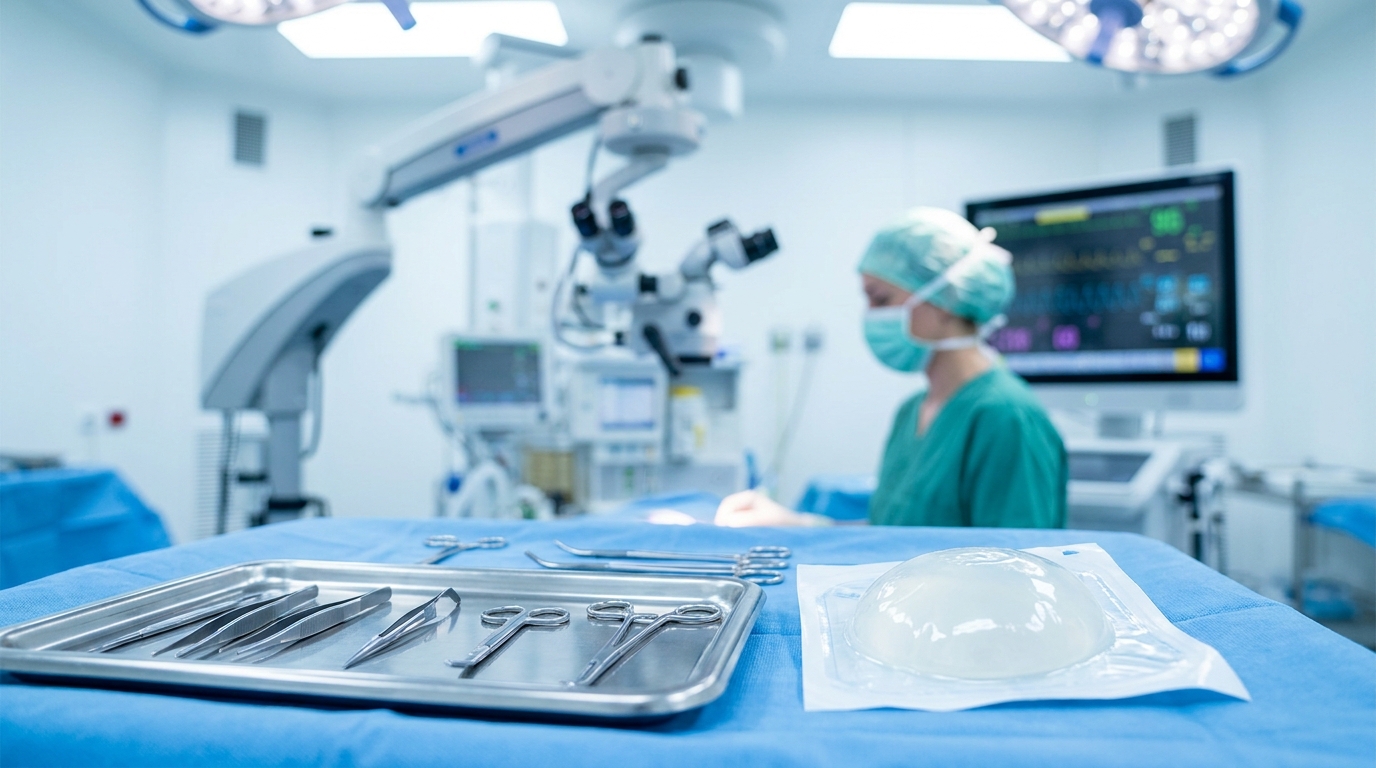
- Researchers investigated temporal trends in reimbursement and physician effort valuation between implant-based and autologous free flap breast reconstruction procedures.
- This retrospective study analyzed 27,106 unilateral breast reconstruction cases from a national surgical database between the years 2009 and 2021.
- Implant procedures yielded 11.94 work relative value units (a measure of physician effort) per hour versus 6.29 for flaps (p < 0.001).
- The authors concluded that free flap reconstruction remains significantly undervalued despite recent increases in reimbursement per hour (p < 0.01).
- Persistent valuation disparities may disincentivize microsurgical options, potentially limiting institutional support and patient access to autologous breast reconstruction.
Economic Sustainability in Post-Mastectomy Reconstruction
Breast cancer remains the most prevalent malignancy among women in the United States, with incidence rates continuing to rise even as mortality rates decline [1, 2]. As the survivor population grows, clinical focus has expanded beyond oncologic control to include the long-term psychosocial benefits of restorative surgery [3, 4]. Research indicates that patients undergoing breast reconstruction experience a lower risk of postoperative depression compared to those who receive a total mastectomy alone [5]. Despite these benefits, the choice between autologous and implant-based techniques is often complicated by differences in surgical morbidity and long-term outcomes [6]. While clinical techniques have advanced, the financial framework governing these procedures plays a decisive role in institutional support and patient access. A recent longitudinal analysis evaluates whether current reimbursement models accurately reflect the time and complexity required for modern reconstructive surgery, raising important questions about how economic incentives shape clinical practice.
Quantifying Physician Effort via the wRVU Framework
The financial valuation of surgical procedures in the United States is primarily dictated by the work relative value unit (wRVU), a metric established by the Centers for Medicare and Medicaid Services (CMS) to quantify the complexity, technical skill, and mental effort required of a physician. To assess how this valuation has evolved for breast reconstruction, researchers conducted a retrospective analysis using the National Surgical Quality Improvement Program (NSQIP) database, covering a 13-year period from 2009 to 2021. This longitudinal study aimed to identify temporal trends in both wRVU and actual Medicare reimbursement, providing a data-driven look at the economic incentives that may influence surgical choice in clinical practice. The study categorized reconstructive procedures into two primary groups based on Current Procedural Terminology (CPT) codes. Implant-based reconstructions were identified using CPT codes 19340, 19342, and 19357, while autologous free flap procedures were captured under CPT code 19364. By sourcing annual wRVU and reimbursement data directly from the CMS, the authors calculated compound annual growth rates (a statistical measure used to determine the mean annual growth rate over a specified time period) for both wRVU per hour and reimbursement per hour. This approach allowed for a precise comparison of how the financial return on physician effort has shifted for these distinct surgical modalities over more than a decade.
Disparities in Operative Time and Hourly Valuation
The researchers analyzed a substantial cohort of 27,106 cases to establish a baseline for surgical efficiency and physician compensation across different reconstructive modalities. A primary driver of the valuation gap is the stark difference in surgical duration between the two approaches. The study found that implant-based reconstruction had a significantly shorter median operative time of 1.4 hours, whereas free flap reconstruction required a median operative time of 6.77 hours. This nearly five-fold increase in duration for autologous procedures reflects the inherent complexity of microsurgical tissue transfer, which requires meticulous vessel dissection and anastomosis (the surgical connection between two blood vessels). When these operative times were translated into productivity metrics, the disparity in physician compensation became evident. Implant-based reconstruction yielded a median of 11.94 wRVUs per hour, a figure that represents the effort-based reimbursement rate for the surgeon. In contrast, free flap reconstruction yielded a median of 6.29 wRVUs per hour, a difference that was statistically significant (p < 0.001). For the practicing clinician, these data points illustrate that despite the higher technical demands and longer duration of microsurgery, the current reimbursement framework provides nearly double the hourly value for simpler, implant-based procedures. This baseline financial gap suggests that the wRVU system may not adequately account for the intensive labor required in autologous breast reconstruction, potentially skewing hospital resource allocation away from complex microsurgery.
Temporal Trends and the Impact of Surgical Efficiency
The longitudinal analysis of reconstructive trends reveals a concerning shift in the economic viability of certain implant-based procedures. Specifically, immediate tissue expander reconstruction (CPT 19357) demonstrated increasing operative times over the 13-year study period, a trend that reached statistical significance (p < 0.01). This increase in surgical duration occurred alongside a simultaneous decline in financial productivity for the surgeon. The researchers found that immediate tissue expander reconstruction showed declining wRVUs per hour and reimbursement per hour (p < 0.01). For the practicing plastic surgeon, this means that the most common form of breast reconstruction is becoming more time-intensive while offering diminishing financial returns per unit of time spent in the operating room. In contrast, the economic profile of autologous procedures showed signs of improvement, though these gains were driven by surgical performance rather than policy changes. Both immediate and delayed free flap reconstruction (CPT 19364) showed a significant increase in reimbursement per hour (p < 0.01) between 2009 and 2021. The data indicate that this increase in reimbursement per hour for free flap reconstruction was primarily driven by decreased operative time (p < 0.01). This suggests that while the CMS has not substantially increased the base valuation of these codes, microsurgical teams have effectively raised their own hourly rate by becoming more efficient and shortening the duration of the procedure. Despite these documented improvements in surgical efficiency, a substantial gap in compensation persists. The study concludes that free flap breast reconstruction remains undervalued compared to implant-based procedures, as the hourly wRVU and reimbursement rates for microsurgery still do not reach parity with faster implant alternatives. This persistent disparity in valuation is clinically relevant because it may disincentivize the more complex microsurgical options. When institutional support and physician compensation favor less time-intensive procedures, it can create systemic barriers that limit patient access to autologous reconstruction, even when it may be the clinically preferred option for a patient's long-term recovery.
References
1. DeSantis C, Ma J, Gaudet MM, et al. Breast cancer statistics, 2019. CA A Cancer Journal for Clinicians. 2019. doi:10.3322/caac.21583
2. Fitzmaurice C, Allen CA, Barber RM, et al. Global, Regional, and National Cancer Incidence, Mortality, Years of Life Lost, Years Lived With Disability, and Disability-Adjusted Life-years for 32 Cancer Groups, 1990 to 2015. JAMA Oncology. 2016. doi:10.1001/jamaoncol.2016.5688
3. Siegel RL, DeSantis C, Virgo KS, et al. Cancer treatment and survivorship statistics, 2012. CA A Cancer Journal for Clinicians. 2012. doi:10.3322/caac.21149
4. DeSantis C, Lin CC, Mariotto AB, et al. Cancer treatment and survivorship statistics, 2014. CA A Cancer Journal for Clinicians. 2014. doi:10.3322/caac.21235
5. Padmalatha S, Tsai Y, Ku H, et al. Higher Risk of Depression After Total Mastectomy Versus Breast Reconstruction Among Adult Women With Breast Cancer: A Systematic Review and Metaregression.. Clinical breast cancer. 2021. doi:10.1016/j.clbc.2021.01.003
6. Anbiyaiee A, Dari MAG, Anbiyaee O, Anbiyaiee A. Breast Reconstruction after Mastectomy in Women with Breast Cancer: A Systematic and Meta-Analysis Review.. World journal of plastic surgery. 2020. doi:10.29252/wjps.9.1.3