For Doctors in a Hurry
- Clinicians lack reliable biomarkers to identify patients at high risk for relapse after chimeric antigen receptor T-cell therapy for mantle cell lymphoma.
- Researchers retrospectively analyzed 37 patients with relapsed mantle cell lymphoma treated with brexucabtagene autoleucel using high-throughput sequencing for measurable residual disease.
- Patients with detectable residual disease at day 28 had inferior progression-free survival (10.9 versus 51.5 months; Hazard Ratio 3.99; p=0.002).
- The study concluded that serial monitoring of measurable residual disease identifies relapse a median of 6.5 months before imaging via positron emission tomography.
- Early molecular monitoring provides a sensitive prognostic tool that may guide post-infusion surveillance and consolidation strategies for high-risk patients.
The Challenge of Sustained Remission in Mantle Cell Lymphoma
Mantle cell lymphoma remains a clinically heterogeneous malignancy where patients frequently face poor outcomes after the failure of covalent Bruton tyrosine kinase inhibitors, with an estimated median progression-free survival of only 7.6 months (95% CI: 3.9, 14.6) on subsequent standard therapies [1, 2]. While CD19-directed chimeric antigen receptor (CAR) T-cell therapy has altered the treatment landscape for relapsed or refractory disease, a meta-analysis indicates that the pooled prevalence of relapse within 12 months of infusion remains high at 61% (95% CI: 43%, 78%) [3, 4]. Current surveillance relies heavily on periodic positron emission tomography-computed tomography (PET-CT) imaging, yet this modality often fails to correlate with long-term progression-free survival (p = 0.35) in the early post-infusion period [5, 6]. Management is further complicated by a 61.2% (95% CI: 54.2, 67.8) incidence of immune effector cell-associated neurotoxicity syndrome (a clinical spectrum of neurologic deficits ranging from confusion to seizures) following brexucabtagene autoleucel administration [6, 7]. To address the limitations of standard imaging, a recent study evaluates whether tracking measurable residual disease (the persistence of small numbers of cancer cells below the detection limit of conventional microscopy) using next-generation sequencing can provide a more sensitive surveillance tool to guide post-infusion care [5].
Quantifying Residual Disease via High-Throughput Sequencing
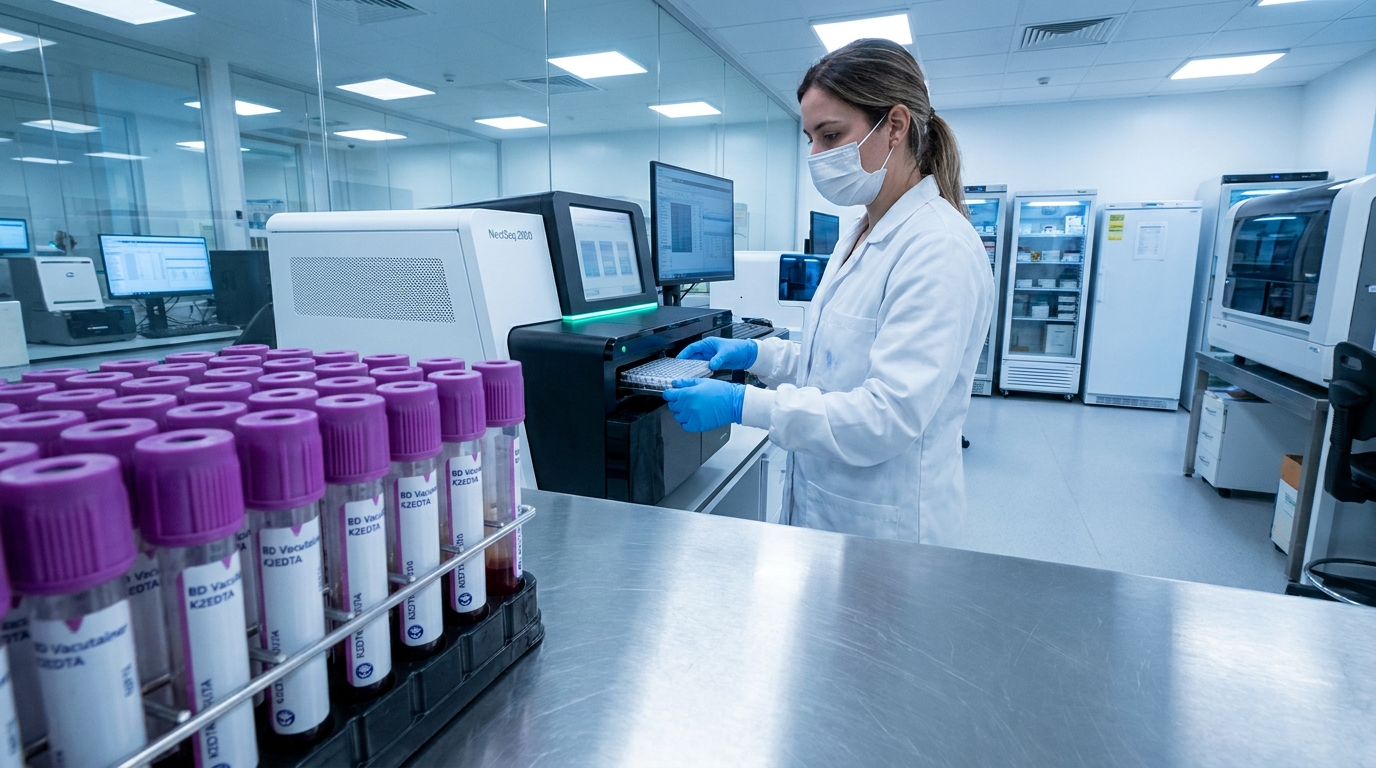
The researchers conducted a retrospective analysis of 37 patients with relapsed or refractory mantle cell lymphoma who underwent treatment with brexucabtagene autoleucel. To track the presence of malignant cells with higher precision than standard imaging, the study utilized next-generation immunoglobulin high-throughput sequencing to assess measurable residual disease (the small number of cancer cells that remain in the body during or after treatment). This molecular monitoring was performed using peripheral blood mononuclear cells, which are immune cells with a single round nucleus such as lymphocytes and monocytes, extracted from the patient's blood samples. A primary requirement for this molecular tracking is clonotype identification, the process of identifying the unique genetic sequence of the patient's cancer cells to serve as a specific biomarker. The study found that this identification was successful in 36 of 37 patients, demonstrating that the vast majority of individuals with mantle cell lymphoma have a detectable molecular signature that can be monitored over time. This high success rate is critical for clinicians, as it suggests that nearly all patients receiving this therapy are candidates for molecular surveillance. The study followed a rigorous longitudinal testing schedule to evaluate the clinical utility of these molecular markers at various stages of treatment. Assessments occurred before lymphodepletion (the preparatory chemotherapy given to reduce the patient's own T-cells before infusion), at 1-month and 3-months post-infusion, and every 3 months thereafter. By collecting data at these specific intervals, the researchers were able to compare the timing of molecular relapse against traditional clinical milestones and imaging results.
Pre-Treatment Tumor Burden and Bridging Therapy
The researchers first evaluated the impact of bridging therapy (the administration of interim treatment to stabilize disease while CAR T-cells are manufactured) on the baseline tumor burden. Pre-lymphodepletion measurable residual disease levels were significantly lower in patients receiving bridging therapy compared to those who did not, with median values of 337 (range 0 to 198,449) versus 21,213 (range 1 to 788,251), respectively (p = 0.04). This finding suggests that bridging interventions effectively reduce the molecular disease burden prior to the initiation of lymphodepleting chemotherapy and subsequent cellular infusion. The study also examined whether the disease state immediately preceding lymphodepletion could serve as a prognostic indicator for long-term outcomes. Undetectable measurable residual disease before lymphodepletion trended toward improved progression-free survival, showing a median survival that was not yet reached compared to 28.5 months for patients with detectable disease (Hazard Ratio 5.2; p = 0.07). While the p-value did not reach the standard threshold for statistical significance, the fivefold increase in the hazard ratio suggests that the pre-treatment molecular tumor burden may influence the durability of the response to brexucabtagene autoleucel, potentially helping oncologists identify which patients might require closer monitoring.
Day 28 Molecular Status as a Superior Prognostic Indicator
While CD19-directed CAR T-cell therapy has significantly altered the management of relapsed or refractory mantle cell lymphoma, durability remains a clinical challenge. Data indicate that more than 40% of patients with relapsed or refractory mantle cell lymphoma relapse within one year of CD19-directed CAR T-cell therapy, necessitating more precise tools to identify those at high risk for early treatment failure. The timing of molecular assessment proved critical for clinical prediction in this cohort. Patients with detectable measurable residual disease at Day 28 post-infusion had inferior progression-free survival compared with those with undetectable disease, with a median survival of 10.9 months versus 51.5 months (Hazard Ratio 3.99; p = 0.002). This stark difference in outcomes suggests that Day 28 measurable residual disease status serves as an early predictor of long-term outcomes for patients receiving brexucabtagene autoleucel. By identifying molecular evidence of disease persistence just four weeks after infusion, clinicians may be able to risk-stratify patients long before clinical progression occurs. In contrast, standard imaging at the same time point failed to provide similar prognostic clarity. The researchers observed that Day 28 PET-CT response did not correlate with progression-free survival, yielding a p-value of 0.35 and a Hazard Ratio of 1.8. This lack of statistical correlation highlights a significant limitation of current imaging protocols, as a negative PET-CT scan shortly after CAR T-cell therapy may provide a false sense of security while underlying molecular disease persists. These findings suggest that incorporating high-throughput sequencing of peripheral blood at the one-month mark offers a more sensitive and reliable method for monitoring treatment response than traditional metabolic imaging.
Extending the Window for Clinical Intervention
The clinical utility of molecular surveillance extends beyond a single time point, offering a significant lead time over traditional radiographic assessments. By conducting serial assessments every three months following the initial post-infusion period, the researchers demonstrated that molecular signals often precede clinical evidence of treatment failure. Specifically, longitudinal measurable residual disease monitoring identified relapse a median of 6.5 months before PET-CT in 15 out of 18 relapsing patients. This substantial window between molecular detection and radiographic confirmation suggests that high-throughput sequencing can identify failing remissions long before they become visible on standard imaging or manifest as symptomatic disease. Given the high rate of late treatment failure in this population, these findings indicate that early and serial measurable residual disease monitoring serves as a sensitive prognostic and surveillance tool in brexucabtagene autoleucel treated mantle cell lymphoma. For the practicing oncologist, the integration of molecular tracking into routine post-infusion care can provide a more granular view of a patient's disease status. Because the molecular relapse was identified more than half a year before PET-CT evidence in the majority of cases, this approach offers a critical opportunity for clinicians to consider early intervention or consolidation strategies before the tumor burden reaches a level detectable by conventional imaging.
References
1. Wu JJ, Wade SW, Itani T, et al. Unmet needs in relapsed/refractory mantle cell lymphoma (r/r MCL) post-covalent Bruton tyrosine kinase inhibitor (BTKi): a systematic literature review and meta-analysis.. Leukemia & lymphoma. 2024. doi:10.1080/10428194.2024.2369653
2. Minson A, Hamad N, Butler J, et al. A Phase II, Open-Label, Single Arm Trial to Assess the Efficacy and Safety of the Combination of Tisagenlecleucel and Ibrutinib in Mantle Cell Lymphoma (TARMAC). 2020. doi:10.1182/blood-2020-138946
3. Zinzi A, Gaio M, Liguori V, et al. Late relapse after CAR-T cell therapy for adult patients with hematologic malignancies: A definite evidence from systematic review and meta-analysis on individual data.. Pharmacological research. 2023. doi:10.1016/j.phrs.2023.106742
4. Wang M, Goy A, Munoz JL, et al. Five-Year Outcomes of Patients (Pts) with Relapsed/Refractory Mantle Cell Lymphoma (R/R MCL) Treated with Brexucabtagene Autoleucel (Brexu-cel) in ZUMA-2 Cohorts 1 and 2. Blood. 2024. doi:10.1182/blood-2024-198018
5. Ananth S, Agarwal N, Sahaf B, et al. Post CAR ‐T Measurable Residual Disease Monitoring in Mantle Cell Lymphoma Enables Early Detection of Disease Relapse. American Journal of Hematology. 2026. doi:10.1002/ajh.70343
6. Thirugnanam A, Donthineni K, Mammi M, et al. Chimeric antigen receptor T-cell therapy and immune effector cell-associated neurotoxicity syndrome: A meta-analysis.. Critical reviews in oncology/hematology. 2026. doi:10.1016/j.critrevonc.2025.105095
7. Han MW, Jeong SY, Suh CH, et al. Incidence of immune effector cell-associated neurotoxicity among patients treated with CAR T-cell therapy for hematologic malignancies: systematic review and meta-analysis. Frontiers in Neurology. 2024. doi:10.3389/fneur.2024.1392831