For Doctors in a Hurry
- Clinicians require evidence based strategies to manage infected traumatic wounds complicated by antimicrobial resistance during active warfare.
- This multiarm multistage platform trial enrolled 350 observational patients and targets 150 participants for its initial interventional phase.
- The researchers implemented a standardized framework to evaluate multiple device and therapeutic interventions simultaneously in a conflict zone.
- The authors conclude that this platform facilitates feasible data collection and standardized enrollment for treating complex traumatic wounds.
- Future studies using this master protocol aim to identify interventions that optimize clinical outcomes for hospitalized patients.
Optimizing Clinical Outcomes for Complex Traumatic Wound Infections
Managing complex traumatic wounds in active conflict zones presents a formidable clinical challenge, driven by high infection risk and the rise of antimicrobial resistance [1]. These injuries, often characterized by extensive tissue destruction and environmental contamination, are a primary contributor to patient morbidity and mortality [1]. Similar challenges with high complication rates and a lack of standardized protocols exist even in controlled settings, such as post-cranioplasty management [2]. Historically, the logistical difficulties of conducting rigorous research during active war have limited the evidence available to guide wound care. A new study details a standardized clinical trial framework designed to evaluate multiple therapeutic strategies simultaneously under these demanding conditions, aiming to generate high-quality data where it is most needed [1].
A Multiarm Framework for High-Acuity Research
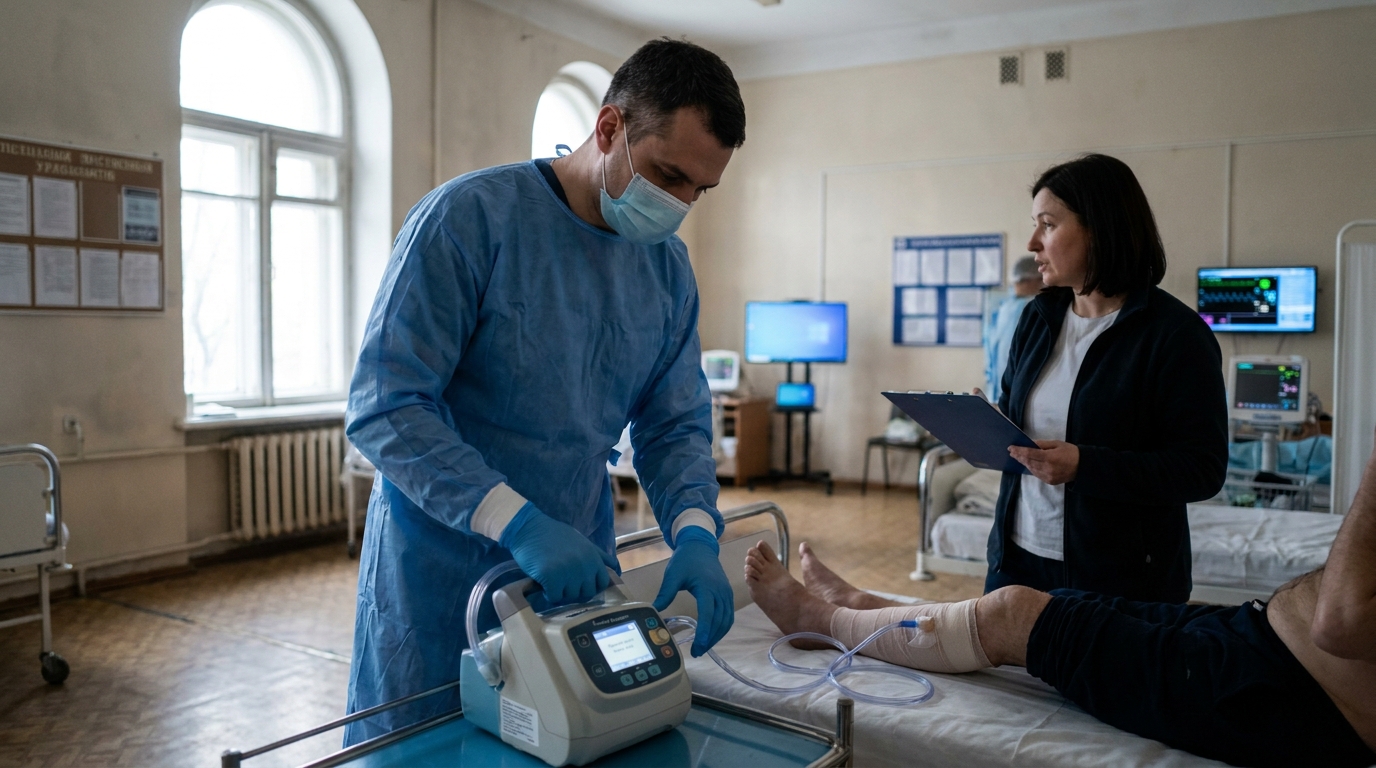
To address the urgent need for evidence-based wound care in conflict zones, investigators have developed the Prevention and Treatment Clinical Trials for Antimicrobial Resistance Research to Improve Outcomes of Traumatic Wounds in Ukraine (PACT-ARROW). This initiative is built on a multiarm multistage (MAMS) platform, a type of adaptive trial design that permits the simultaneous evaluation of several different interventions against a single, common control group. This structure is far more efficient than conducting separate, sequential trials, a critical advantage in a resource-limited environment. The framework is designed to assess the safety, efficacy, and effectiveness of both medical devices and therapeutic agents for patients hospitalized in Ukraine with acute traumatic wounds.
The primary objective of the PACT-ARROW protocol is to improve the existing standard of care by concurrently studying multiple interventions. To ensure scientific rigor and patient safety, a platform steering committee reviews all potential therapies. This committee assesses each proposed intervention for its alignment with the protocol's mission, promoting only those with sufficient preclinical or clinical evidence to warrant testing in a formal trial. This gatekeeping function ensures that clinical resources in a war setting are focused on the most viable treatments, with the ultimate goal of reducing the high rates of morbidity and mortality associated with complex traumatic wound infections.
Current Enrollment and Implementation Progress
Deploying a sophisticated clinical trial platform within an active conflict zone required navigating complex regulatory and ethical landscapes. The investigators report that the PACT-ARROW protocol has successfully obtained local and national ethics approval in both the United States and Ukraine, establishing a robust oversight framework compliant with international standards. This dual-national approval was a critical step, creating a viable and ethical pathway for conducting high-level research in military and civilian hospitals where standard research infrastructure is often compromised.
The project began with a foundational prospective observational cohort, known as ARROW, which has already enrolled over 350 patients. This initial phase is crucial for documenting the natural history of these injuries and establishing a baseline for current treatment outcomes. Building on the data from this cohort, a corresponding interventional trial has recently begun enrollment, with a targeted size of 150 patients. This arm will directly test specific devices and therapies against the established standard of care. The researchers also report that expansion of interventions and target populations is planned, ensuring the platform can adapt to new clinical challenges and therapeutic opportunities as the conflict evolves.
Adapting Clinical Trial Rigor to Conflict Zones
The PACT-ARROW framework was designed to confront the clinical reality that traumatic wound infections, especially in the context of rising antimicrobial resistance, are a major driver of poor outcomes in war. To maintain scientific integrity under such conditions, the platform employs standardized patient enrollment criteria across all sites and treatment arms. This standardization is essential for minimizing confounding variables common in chaotic settings, thereby producing more reliable and generalizable data for clinicians. The study is classified as a protocol designed to generate Level I evidence, reflecting its aim to meet the highest tier of clinical research quality despite the environmental challenges.
Recognizing the logistical constraints of an active war, the study's outcomes are tailored to what is feasible for data collection without overburdening strained medical personnel and infrastructure. This pragmatic approach increases the likelihood that the trial will be completed successfully and yield actionable data. The platform's flexible design is intended to apply to a broad set of interventions, from wound care devices to systemic therapies, while focusing on relevant, patient-centered outcomes. This adaptability ensures the protocol can evolve to address emerging clinical needs and provide evidence that directly informs decisions impacting patient recovery and survival.
References
1. Bills CB, Hochheimer CJ, Roberts SC, et al. Design and implementation of an international multiarm, multistage master protocol for trials of complex traumatic wound care during active war in Ukraine. The Journal of Trauma: Injury, Infection, and Critical Care. 2026. doi:10.1097/ta.0000000000005017
2. Li Z, Guo Y, Yang SW, et al. Outcomes of post-operative drain use after cranioplasty surgery – a systematic review and meta-analysis. Acta Neurochirurgica. 2026. doi:10.1007/s00701-025-06766-3