For Doctors in a Hurry
- Clinicians lack data on how specific traction methods influence long-term incisional hernia rates following open abdomen management.
- This retrospective study analyzed 143 trauma and emergency surgery patients treated with either combined fascial traction or negative pressure therapy.
- Combined traction achieved 94.1% primary closure compared to 72.4% with negative pressure alone, with a 61.3% reduction in fascial gap.
- The researchers concluded that combined fascial traction significantly improves closure rates and lowers the 12-month incidence of incisional hernias.
- Clinicians should consider fascial traction for patients with gaps exceeding 10 centimeters to reduce the 3.71 hazard ratio for hernia.
Mitigating the Morbidity of the Open Abdomen
Managing the open abdomen after damage control laparotomy remains a formidable challenge for trauma and emergency surgeons, as visceral edema and fascial retraction often preclude immediate closure [1, 2]. While negative pressure wound therapy has become a standard of care for temporary abdominal coverage, achieving definitive primary myofascial closure during the index hospitalization is essential to minimize morbidity [1, 3]. Failure to restore fascial continuity frequently necessitates complex secondary reconstructions or results in planned ventral hernias, which carry significant long-term burdens for the patient [4]. Current evidence suggests that incorporating dynamic fascial traction into negative pressure systems may improve closure rates without increasing the risk of enteroatmospheric fistulas (an abnormal connection between the bowel and the atmosphere through an open abdominal wound) [1, 5]. However, the long-term impact of these traction techniques on the incidence of incisional hernias remains poorly characterized in the clinical literature. A new retrospective cohort study investigates whether a noninvasive traction approach can bridge this gap in care.
Comparing Traction and Negative Pressure Protocols
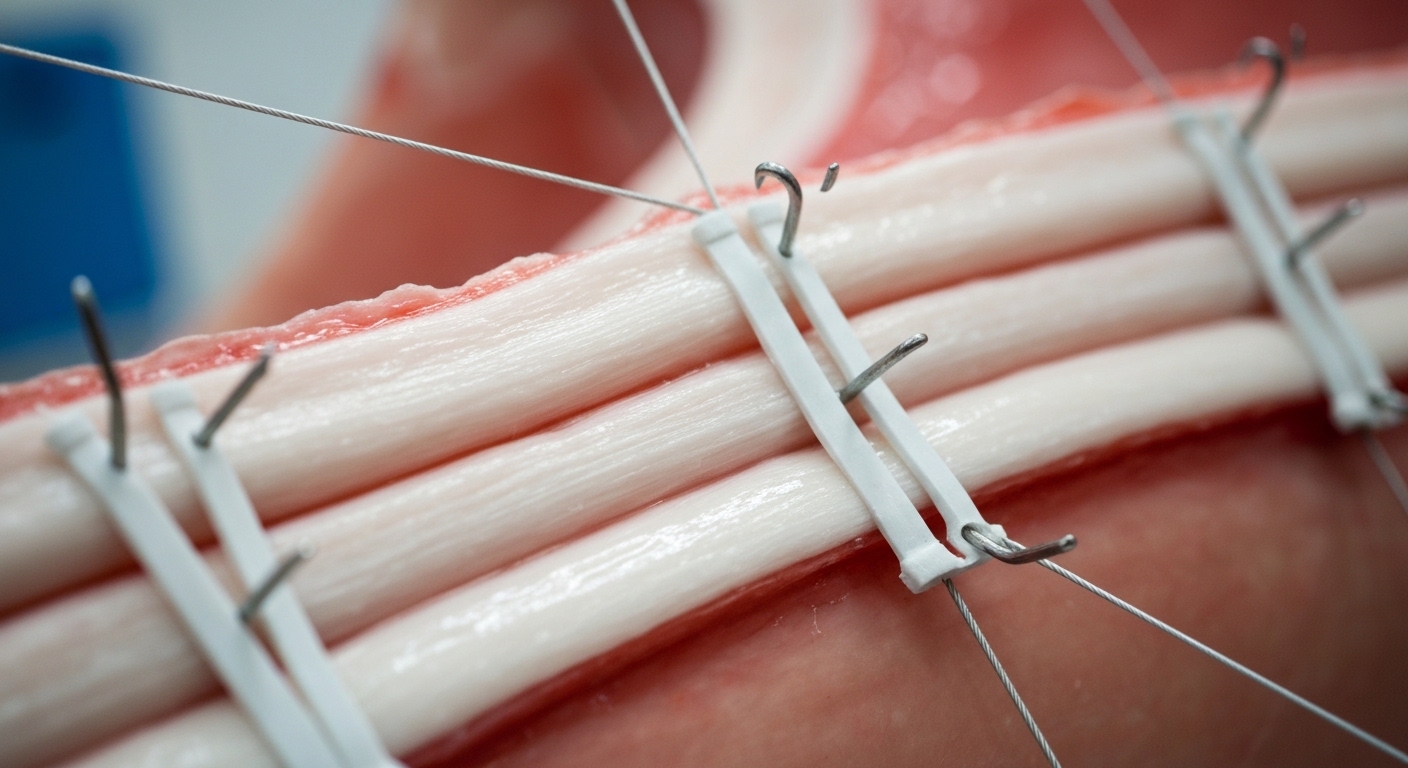
Open abdomens represent a significant source of morbidity and mortality in trauma and emergency general surgery. While fascial traction has been shown to improve primary closure of the open abdomen, clinical reports regarding the incidence of incisional hernias following such closures remain scarce. To address this data gap, researchers conducted a retrospective comparative study providing Level IV evidence that evaluated factors associated with primary fascial closure and the development of incisional hernias. The study cohort included 143 patients who underwent midline laparotomies for trauma and emergency general surgery between January 2019 and October 2024 at a single level 1 trauma center. The researchers analyzed two distinct management groups: 85 patients (59.4%) treated with a noninvasive fascial traction device (AbClo) used in conjunction with a negative pressure wound therapy system (AbThera), and 58 patients (40.6%) who received the negative pressure wound therapy system alone. The study utilized univariate regression models (a statistical method used to determine the relationship between a single predictor variable and an outcome) to identify specific factors associated with the development of incisional hernias. The primary outcomes measured across both cohorts included the fascial width at the time of the closure attempt, the rate of primary closure (defined as achieving direct fascia-to-fascia apposition), and the subsequent incidence of incisional hernias. By comparing the combination of noninvasive fascial traction and negative pressure wound therapy against negative pressure alone, the study sought to quantify how mechanical traction influences the physical dimensions of the abdominal wall defect and the long-term integrity of the surgical repair.
Bridging the Fascial Gap
The integration of noninvasive fascial traction significantly improved the likelihood of achieving definitive abdominal wall restoration. In the cohort receiving the combination of the traction device and negative pressure wound therapy, primary closure rates reached 94.1%, compared to 72.4% in the group treated with negative pressure therapy alone. This represents an absolute risk difference for primary closure of 21.7% (95% CI: 9.5 to 34.8) and a relative risk of 1.30. These data suggest that the mechanical advantage provided by the traction device helps overcome the lateral retraction of the oblique muscles, which often prevents fascia-to-fascia apposition in complex open abdomen cases. The study also quantified the physical impact of traction on the abdominal wall defect by measuring the fascial width, which is the distance between the medial edges of the rectus abdominis muscles. Fascial widths were significantly narrower in successful closures, measuring an average of 6.0 cm, whereas unsuccessful closure attempts were characterized by a mean width of 11.9 cm (P < 0.001). When comparing the two treatment protocols, the researchers found that the use of the traction device in conjunction with negative pressure therapy resulted in a 61.3% reduction in gap size (P < 0.001). Specifically, the fascial widths in the combination group were reduced to a mean of 4.0 cm, while the group receiving negative pressure alone maintained a much wider mean gap of 10.2 cm (P < 0.001). These findings indicate that the primary clinical benefit of the traction device is its ability to facilitate a narrower defect, making fascia-to-fascia closure more technically feasible. By maintaining medial tension on the fascial edges, the device counteracts the natural tendency of the abdominal wall to retract during the open phase of management. For the clinician, this reduction in fascial width from 10.2 cm to 4.0 cm represents a critical shift in the surgical landscape, moving the patient toward a successful primary closure and away from the long-term complications associated with a persistent abdominal wall defect.
Long-Term Reduction in Incisional Hernia Risk
The clinical utility of achieving primary closure is ultimately measured by the long-term integrity of the abdominal wall. In this study, the cumulative incidence of incisional hernias for the entire cohort was 28.8% at 12 months and 36.4% at 24 months. However, these rates differed sharply when stratified by the management strategy used during the open abdomen phase. The researchers found that the 12-month incidence of incisional hernias was 14.1% in patients treated with the combination of fascial traction and negative pressure wound therapy, compared to 63.1% in those treated with negative pressure therapy alone (P < 0.0001). This substantial divergence suggests that the mechanical stabilization provided by the traction device during the acute phase of care has lasting implications for the durability of the fascial repair. The analysis also identified a critical threshold for surgical success related to the dimensions of the abdominal wall defect. A fascia width of 10 cm or greater was found to increase the risk of subsequent hernia development with a hazard ratio of 3.71, a statistical measure indicating that patients with wider gaps were more than three times as likely to experience a failure of the abdominal wall over time. By effectively narrowing this gap, the combination of the traction device and negative pressure wound therapy achieved a relative risk reduction in hernia risk of 60.7%. Furthermore, the absolute risk reduction in hernia risk was 24.8 with the combined therapy, underscoring the clinical impact of this intervention on postoperative morbidity. Ultimately, these data demonstrate that the management of open abdomens with the combination of fascial traction and negative pressure wound therapy improved fascial closure and reduced incisional hernias compared to negative pressure therapy alone. For the practicing surgeon, these findings emphasize that the method of temporary abdominal closure is not merely a bridge to the next operation, but a primary determinant of long-term patient outcomes. By mitigating lateral retraction and facilitating a narrower fascial gap, clinicians can significantly lower the high burden of incisional hernias typically associated with emergency general surgery and trauma laparotomies.
References
1. Mahoney EJ, Bugaev N, Appelbaum R, et al. Management of the open abdomen: A systematic review with meta-analysis and practice management guideline from the Eastern Association for the Surgery of Trauma.. The journal of trauma and acute care surgery. 2022. doi:10.1097/TA.0000000000003683
2. Sharrock AE, Barker T, Yuen HM, Rickard R, Tai N. Management and closure of the open abdomen after damage control laparotomy for trauma. A systematic review and meta-analysis.. Injury. 2016. doi:10.1016/j.injury.2015.09.008
3. Cristaudo A, Jennings S, Gunnarsson R, Costa AD. Complications and Mortality Associated with Temporary Abdominal Closure Techniques: A Systematic Review and Meta-Analysis. The American Surgeon. 2017. doi:10.1177/000313481708300220
4. Petersson P, Petersson U. Dynamic Fascial Closure With Vacuum-Assisted Wound Closure and Mesh-Mediated Fascial Traction (VAWCM) Treatment of the Open Abdomen—An Updated Systematic Review. Frontiers in Surgery. 2020. doi:10.3389/fsurg.2020.577104
5. Cristaudo A, Jennings S, Gunnarsson R, DeCosta A. Complications and Mortality Associated with Temporary Abdominal Closure Techniques: A Systematic Review and Meta-Analysis.. The American surgeon. 2017.