For Doctors in a Hurry
- Clinicians lack clarity on how oral microbiota dysbiosis, or microbial imbalance, contributes to the development of autism spectrum disorder.
- The researchers conducted a narrative review synthesizing current evidence regarding oral microbiome alterations in individuals with autism spectrum disorder.
- Studies show enrichment of periopathogenic taxa like Porphyromonas and Tannerella in populations diagnosed with autism spectrum disorder.
- The authors conclude that oral dysbiosis may influence neurodevelopment through systemic inflammation and the production of neuroactive metabolites.
- Targeting the oral microbiome may eventually provide new diagnostic biomarkers or therapeutic strategies for managing autism spectrum disorder.
The Oral-Gut-Brain Axis in Neurodevelopmental Pathology
Autism spectrum disorder remains a complex clinical challenge characterized by persistent social communication deficits and restricted behavioral patterns [1, 2]. While genetic factors are well established, attention has increasingly turned to the bidirectional communication between the resident microbiota and the central nervous system, a pathway known as the microbiota-gut-brain axis [3, 4]. Although much of this research has focused on intestinal dysbiosis (an imbalance in microbial communities that disrupts homeostasis) and its correlation with gastrointestinal comorbidities in these patients, the oral cavity represents a significant yet under-examined microbial reservoir [5, 6]. Chronic oral dysbiosis is known to impair mucosal barriers, potentially triggering systemic inflammation and neuroinflammatory responses that may influence cognitive function [7, 8]. A recent synthesis of evidence now clarifies how specific shifts in the oral microbial community may contribute to the pathophysiology of this neurodevelopmental condition.
Characterizing the ASD Oral Microbiome Signature
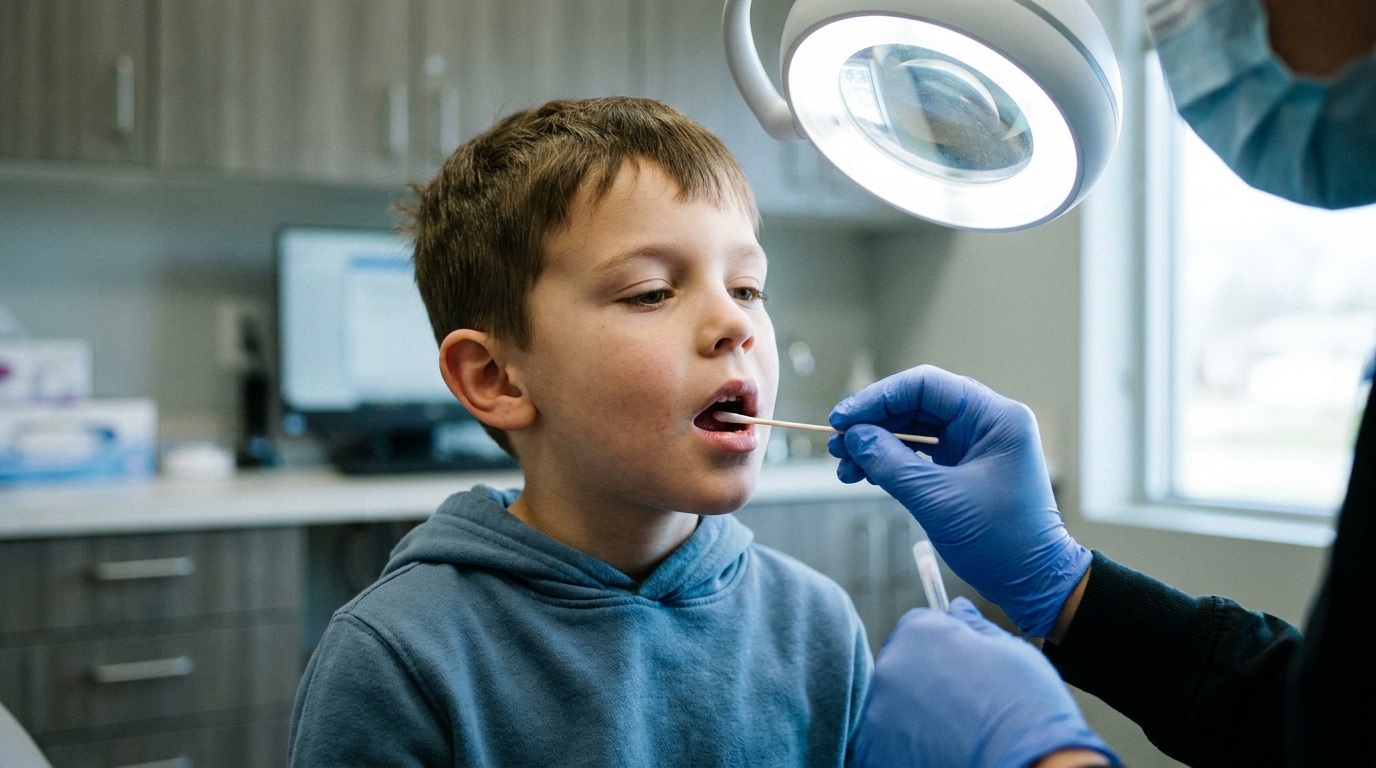
The identification of objective biological markers is a priority in a field that traditionally relies on behavioral observation for diagnosis. A recent narrative review indicates that individuals with autism spectrum disorder consistently exhibit distinct oral microbiota dysbiosis across studies, suggesting a stable microbial signature associated with the condition. Specifically, the researchers identified that periopathogenic taxa (bacteria typically associated with inflammatory gum disease and periodontal tissue destruction), such as Porphyromonas and Tannerella, are enriched in autism spectrum disorder populations. These specific organisms are known in clinical dentistry for their ability to evade host immune responses and promote local inflammation, but their prevalence in this population suggests a broader systemic relevance. For the practicing clinician, these findings indicate that the oral cavity is not merely a site of local dental concern but a significant reservoir of microbes that may influence systemic health. By establishing these specific microbial shifts, the review highlights the potential for using oral swabs as a non-invasive method for identifying early biomarkers, which could eventually assist in clinical screening and the development of targeted interventions to improve neurodevelopmental outcomes.
Mechanisms of Neuroinflammation and Behavioral Impact
The oral cavity may serve as a significant environmental driver of pathology through the induction of systemic immune activity. The study indicates that oral dysbiosis may trigger systemic inflammation through Interleukin-6 (IL-6) and Tumor Necrosis Factor-alpha (TNF-alpha) signaling pathways. These pro-inflammatory cytokines (signaling proteins that mediate the immune response) are known to modulate the permeability of the blood-brain barrier and influence microglial activation, which refers to the immune cells of the central nervous system becoming primed or overactive. This process can alter the neural environment during critical periods of development. In addition to inflammatory signaling, the researchers found that oral microbes generate neuroactive metabolites (biochemical substances produced by bacteria that can enter the circulation and interact with the nervous system) that can influence neurodevelopmental processes. These metabolites may act as neurotransmitter precursors or analogs, directly interfering with typical signaling pathways in the brain. The functional impact of these microbial products is further supported by animal studies where experimental models show autism spectrum disorder-associated oral microbiota can induce autism-like behaviors in mice, providing a causal link between the presence of specific oral pathogens and behavioral phenotypes such as social avoidance and repetitive movements.
Clinical Implications for Diagnosis and Intervention
While gut microbiome alterations have been well documented in autism spectrum disorder, the oral microbiota has received comparatively less attention despite its established roles in systemic inflammation and immune regulation. The researchers suggest that the oral cavity represents a distinct but interconnected compartment of the human microbiome that may exert significant influence over neurodevelopmental trajectories. Because the oral cavity is more accessible than the gastrointestinal tract, it presents a unique opportunity for clinical monitoring and targeted treatment. The researchers argue that understanding microbial shifts may help identify early biomarkers and guide oral health interventions to improve outcomes in autism spectrum disorder populations. These biomarkers could potentially allow for earlier screening or more precise stratification of patients based on their inflammatory profiles. Furthermore, integrating rigorous oral health protocols into standard care may address systemic issues that exacerbate behavioral symptoms. Looking toward future clinical applications, the study concludes that modulating the oral microbiome offers potential avenues for biomarkers and therapeutic strategies. This modulation could involve the use of targeted probiotics, prebiotics, or specific antimicrobial agents designed to restore a healthy microbial balance and reduce the prevalence of periopathogenic taxa. By addressing oral dysbiosis, clinicians may be able to mitigate the systemic inflammatory signals, such as Interleukin-6 and Tumor Necrosis Factor-alpha, that impact the central nervous system and affect the quality of life for patients.
References
1. Burch K, Sahyoun AM, Abutineh S, et al. From Mouth to Mind: Investigating Oral Microbial Contributions to Autism Spectrum Disorder.. Neuroscience and biobehavioral reviews. 2026. doi:10.1016/j.neubiorev.2026.106702
2. Jiang C, Lin L, Long S, et al. Signalling pathways in autism spectrum disorder: mechanisms and therapeutic implications. Signal Transduction and Targeted Therapy. 2022. doi:10.1038/s41392-022-01081-0
3. Cryan JF, O’Riordan KJ, Cowan CS, et al. The Microbiota-Gut-Brain Axis. Physiological Reviews. 2019. doi:10.1152/physrev.00018.2018
4. Loh JS, Mak WQ, Tan L, et al. Microbiota–gut–brain axis and its therapeutic applications in neurodegenerative diseases. Signal Transduction and Targeted Therapy. 2024. doi:10.1038/s41392-024-01743-1
5. Fakhruddin KS, Kamal I, Maglaperidze T, Marya A, Samaranayake L, Porntaveetus T. Autism and the Oral Microbiome: A Systematic Review of Host-microbial Interactions and Diversity.. International dental journal. 2025. doi:10.1016/j.identj.2025.100957
6. Huang Y, Liang Q, Shen Y, Chen J, Xu W. Oral microbiome dysbiosis in autism spectrum disorder: the oral-gut-brain axis and future perspectives: a narrative review.. Frontiers in microbiology. 2026. doi:10.3389/fmicb.2026.1783810
7. Cao D, Yang J, He Y, et al. Altered oral microbiome composition in mental disorders: a systematic review and meta-analysis.. Journal of oral microbiology. 2025. doi:10.1080/20002297.2025.2541828
8. Borrego-Ruiz A, Borrego JJ. Human oral microbiome and its influence on mental health and brain disorders.. AIMS microbiology. 2025. doi:10.3934/microbiol.2025013