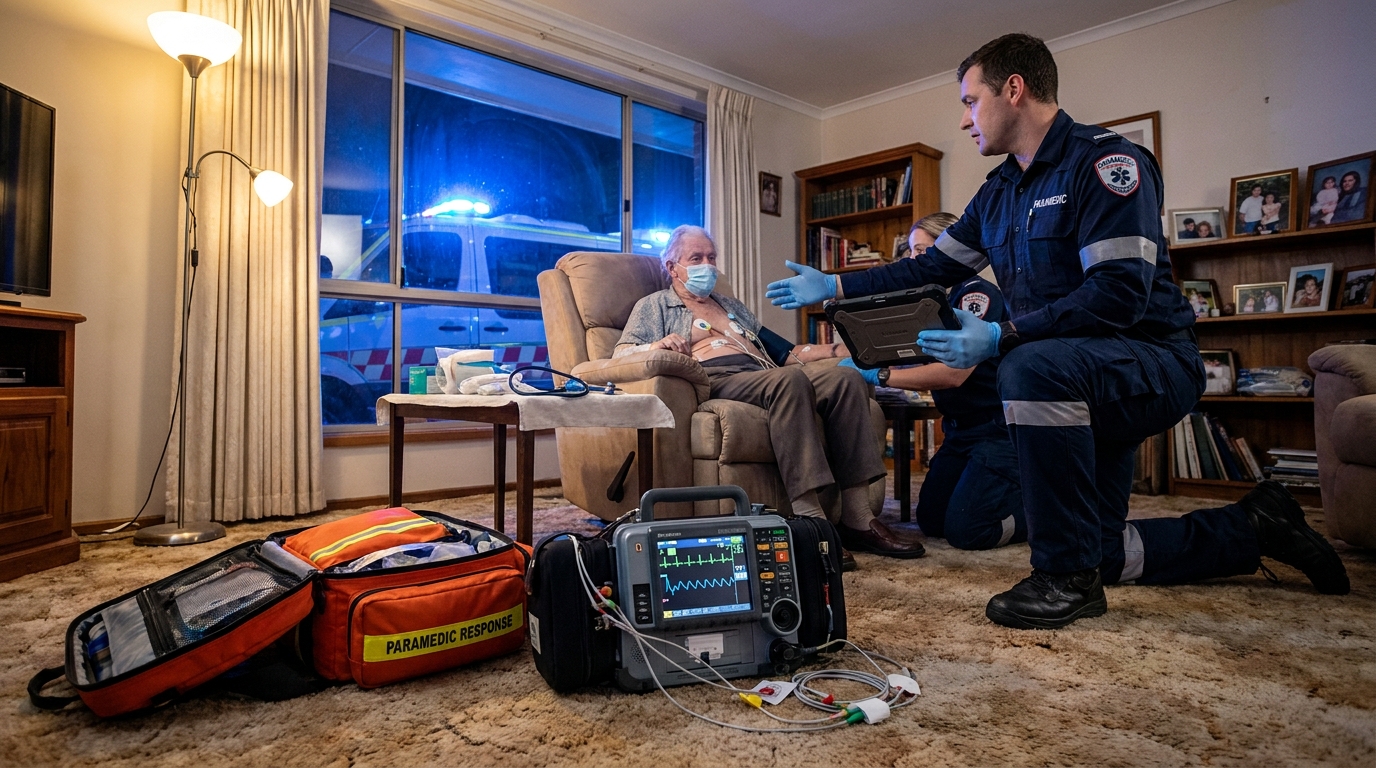
- Researchers investigated how paramedics utilize treat and discharge directives for resolved seizures, hypoglycemia, and supraventricular tachycardia to reduce emergency department pressures.
- This retrospective cohort study analyzed 1,596 patients in Ontario who met objective medical criteria for potential prehospital discharge by paramedics.
- Paramedics discharged only 2.2 percent of eligible patients, while 68.0 percent were transported to emergency departments for further care.
- The researchers concluded that paramedic initiated discharge remains infrequent but significantly reduces median call durations from 87 to 45 minutes.
- Future research must evaluate the safety and system level impact of these directives to optimize emergency department resource utilization.
Optimizing Prehospital Management for Transient Medical Events
Emergency departments face persistent pressure from high-acuity conditions that require rapid identification and specialized systems of care [1, 2, 3]. However, many prehospital encounters involve transient events, such as resolved seizures or hypoglycemia, that may not require hospital-based stabilization [4, 5, 6]. While current clinical practice guidelines emphasize early management to reduce morbidity, the logistical burden of transporting every patient can lead to significant system-level delays [2, 7, 8]. To reduce unscheduled hospital visits, health systems have explored integrated care pathways (structured multidisciplinary care plans that detail essential steps for specific clinical problems) [6, 9]. A recent retrospective cohort study examines the real-world utilization of paramedic treat-and-discharge directives (protocols allowing emergency medical services to treat patients on-site and release them without transport) to determine their impact on operational efficiency and emergency department resources. This analysis is particularly relevant given that non-conveyance rates in general patient populations can range from 3.7 percent to as high as 93.7 percent depending on the clinical context [5].
Identifying Candidates for Prehospital Discharge
To determine which patients could safely avoid emergency department transport, researchers conducted a retrospective cohort study (an observational analysis of existing historical data to identify outcomes within a specific group) using paramedic records from southwestern Ontario. The study period spanned from June 1, 2023, to November 15, 2024, providing a comprehensive look at prehospital care patterns over nearly 18 months. The investigators screened all 9-1-1 calls using objective criteria derived from established medical directives to identify patients whose acute symptoms had stabilized prior to hospital arrival. The analysis focused on three specific clinical scenarios defined by provincial protocols: resolved seizures, resolved hypoglycemia (low blood glucose that has returned to normal levels following intervention), and resolved supraventricular tachycardia (a rapid heart rate originating above the ventricles that has converted to a normal sinus rhythm). By applying these clinical parameters to the paramedic records, the researchers identified 1,596 patients who were potentially eligible for paramedic discharge. For practicing physicians, this cohort represents a population that frequently contributes to emergency department crowding despite having conditions that are often transient and clinically stable by the time of assessment. Isolating these specific cases highlights the gap between patients who meet the clinical criteria for safe community discharge and those who are ultimately transported. Understanding the characteristics of this group is essential for refining prehospital protocols, ensuring that emergency department beds and diagnostic resources are reserved for patients with ongoing instability or undifferentiated pathology.
Discrepancies in Protocol Utilization and Patient Disposition
Despite the availability of specific directives for managing stable patients in the community, the study found that paramedic-initiated discharge was used infrequently, occurring in only 35 (2.2%) of the 1,596 eligible cases. This low rate of formal discharge stands in stark contrast to the volume of patients who were still moved into the hospital system. Among the cohort of patients who met the clinical criteria for prehospital discharge, 1,085 (68.0%) were transported to an emergency department. This high transport rate suggests that first responders may still default to traditional care models even when patients meet the objective stability requirements for community-based management. For the practicing physician, this indicates that current prehospital protocols are failing to divert a significant portion of emergency department volume for these transient conditions, leading to unnecessary triage bottlenecks. The disposition of patients varied significantly based on the underlying medical event, revealing distinct patterns in how different conditions are managed in the field. Patients with seizure had the highest rate of transport at 72.0%. This likely reflects a lower threshold for hospital-based evaluation following a neurological event, as paramedics and patients may fear recurrent seizure activity or underlying structural causes. In contrast, patients with hypoglycemia demonstrated a transport refusal rate of 58.9%, the highest among the studied groups, likely because diabetic patients are often familiar with managing their own blood glucose once stabilized. Across the entire eligible population, 474 (29.7%) patients refused transport. This figure represents a substantial portion of the cohort who did not receive a formal paramedic discharge but also did not enter the emergency department. These findings highlight a discrepancy between protocol-driven discharge and patient-led refusal, suggesting that while the formal directives are underutilized, many patients are already opting out of hospital transport independently.
Quantifying the Burden of Unnecessary Emergency Transport
The operational impact of prehospital discharge protocols is most evident in the reduction of ambulance turnaround times and the preservation of emergency department resources. According to the study, patients discharged by paramedics had a median call duration of 45 minutes, representing a significant time savings for emergency medical services. In contrast, patients transported to the emergency department had a median call duration of 87 minutes, nearly doubling the time paramedics were committed to a single event. This suggests that paramedic-initiated discharge was associated with shorter call durations and avoided subsequent emergency department utilization, directly increasing the availability of ambulances for higher-acuity calls in the community. For the 1,085 patients who were transported, the researchers analyzed the downstream effects on hospital resources using linked emergency department data, which were available for 494 patients. These data revealed that the mean emergency department length of stay for transported patients was 6 hours and 20 minutes, a substantial time investment for conditions that had already resolved in the field. During this period, the mean wait time for physician assessment exceeded 1.5 hours. These delays occurred despite the fact that the majority of these patients required no acute hospital intervention. Ultimately, 70.2% of the transported patients were discharged from the emergency department, and another 13.4% left before completing care, likely due to prolonged wait times for a resolved complaint. The financial implications of these avoidable transports are also notable for hospital administrators and health system planners. The researchers found that the average emergency department visit cost was $461 Canadian dollars, a figure that excludes physician billing and represents only the baseline facility and nursing costs. When multiplied across the hundreds of patients who met the criteria for prehospital discharge but were transported anyway, these costs represent a significant burden on the healthcare system. By quantifying these metrics, the findings demonstrate that while the current utilization of discharge directives is low, the potential to reduce emergency department crowding, shorten wait times, and lower system costs is substantial if more eligible patients can be safely managed in the community.
References
1. Jauch EC, Saver JL, Adams HP, et al. Guidelines for the Early Management of Patients With Acute Ischemic Stroke. Stroke. 2013. doi:10.1161/str.0b013e318284056a
2. Vignatelli L, Tontini V, Meletti S, et al. Clinical practice guidelines on the management of status epilepticus in adults: A systematic review. Epilepsia. 2024. doi:10.1111/epi.17982
3. Connolly ES, Rabinstein AA, Carhuapoma JR, et al. Guidelines for the Management of Aneurysmal Subarachnoid Hemorrhage. Stroke. 2012. doi:10.1161/str.0b013e3182587839
4. Aldharman SS, Alayed FT, Almutairi FA, et al. Intramuscular Versus Intravenous Treatment of Status Epilepticus: A Systematic Review. Cureus. 2023. doi:10.7759/cureus.38212
5. Ebben RH, Vloet L, Speijers RF, et al. A patient-safety and professional perspective on non-conveyance in ambulance care: a systematic review. Scandinavian Journal of Trauma Resuscitation and Emergency Medicine. 2017. doi:10.1186/s13049-017-0409-6
6. Watson A, McConnell D, Coates V. Reducing unscheduled hospital care for adults with diabetes following a hypoglycaemic event: which community-based interventions are most effective? A systematic review. Journal of Diabetes & Metabolic Disorders. 2021. doi:10.1007/s40200-021-00817-z
7. Evans L, Rhodes A, Alhazzani W, et al. Surviving Sepsis Campaign: International Guidelines for Management of Sepsis and Septic Shock 2021. Critical Care Medicine. 2021. doi:10.1097/ccm.0000000000005337
8. Anderson JL, Adams CD, Antman EM, et al. ACC/AHA 2007 Guidelines for the Management of Patients With Unstable Angina/Non–ST-Elevation Myocardial Infarction. Circulation. 2007. doi:10.1161/circulationaha.107.181940
9. Cummins E, Royle P, Snaith A, et al. Clinical effectiveness and cost-effectiveness of continuous subcutaneous insulin infusion for diabetes: systematic review and economic evaluation. Health Technology Assessment. 2010. doi:10.3310/hta14110