For Doctors in a Hurry
- Clinicians need to understand if central auditory processing deficits contribute to neurodevelopmental risks in children with perinatally acquired HIV.
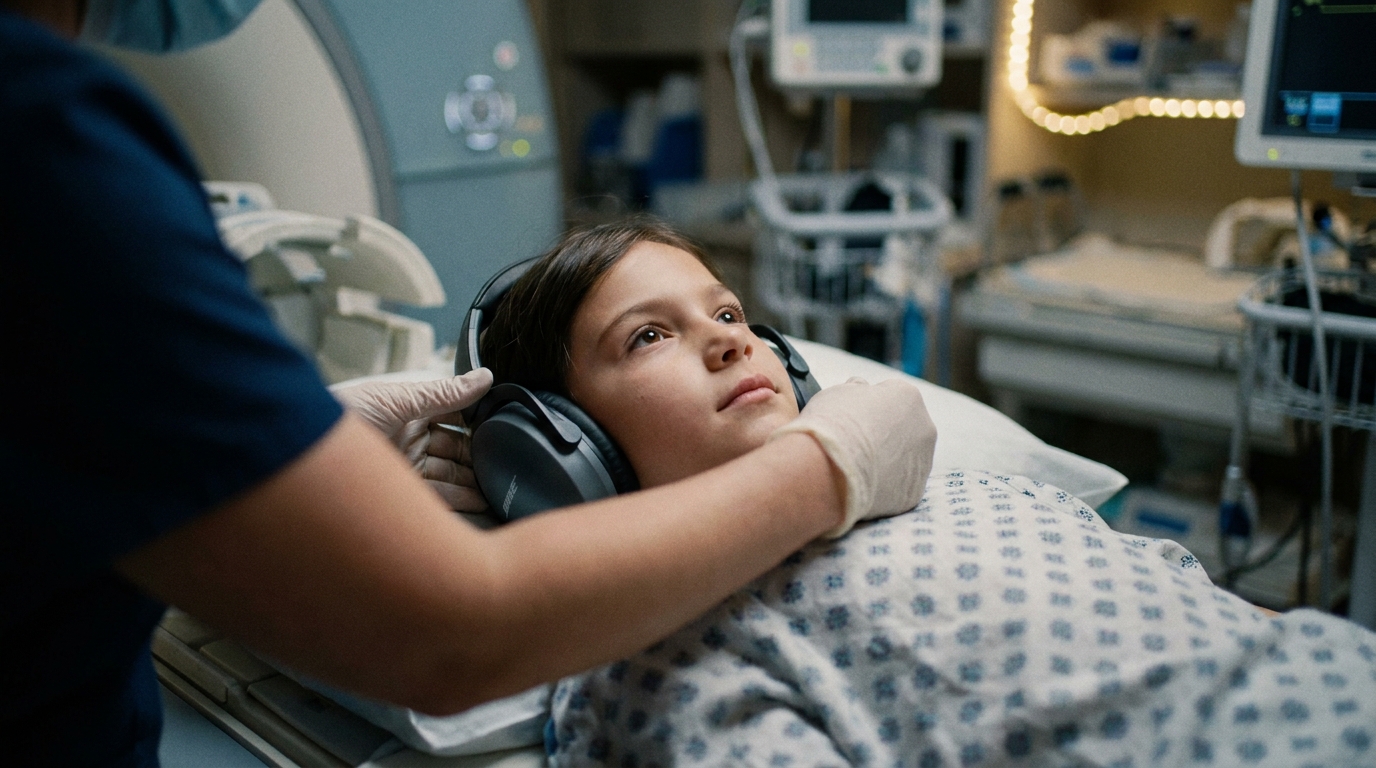
- The study used functional MRI to measure neural responses to pure tones in 108 children aged 11 years.
- Children with HIV showed significantly reduced bilateral auditory cortex responses across all tested frequencies compared to uninfected controls.
- The researchers concluded that HIV infection leads to alterations within the central auditory system despite normal peripheral hearing.
- Physicians should consider central auditory dysfunction as a potential factor in the language and academic difficulties of these patients.
The Hidden Burden of Central Auditory Dysfunction in Pediatric HIV
While combination antiretroviral therapy has significantly improved survival rates for children with perinatally acquired HIV, neurodevelopmental delays and neuroimaging abnormalities remain prevalent in this population [1]. Chronic HIV infection in the central nervous system can lead to persistent neuronal dysregulation (a disruption of normal nerve cell signaling and function) and compromised neurocognition despite pharmacological management [2]. Clinicians frequently observe deficits in attention, executive function, and memory, yet the underlying neural mechanisms driving these specific sensory and cognitive vulnerabilities are not fully understood [1]. Establishing objective biomarkers (measurable biological indicators of a disease state) through neuroimaging is essential for identifying children at risk for long-term academic and social difficulties [2]. A recent study now provides a detailed analysis of how the central auditory system processes sound in these patients, offering a potential explanation for hearing-related challenges that occur in the absence of overt peripheral hearing loss.
Mapping Neural Responses to Pure-Tone Stimulation
The researchers evaluated a total of 108 11-year-old children to investigate the neurological underpinnings of auditory processing in the context of chronic infection. This cohort was divided into 60 children with perinatally acquired HIV and 48 children without HIV who served as a control group. Notably, all 60 children in the HIV-positive group were receiving antiretroviral therapy, reflecting a clinically relevant population of patients whose viral loads are typically managed but who may still harbor persistent neurodevelopmental risks. To visualize how these children process sound, the investigators utilized functional MRI, a neuroimaging technique that measures brain activity by detecting changes in blood flow and oxygenation levels in active neural tissue, a physiological marker known as the blood-oxygen-level-dependent response.
During the functional MRI sessions, participants were exposed to a series of auditory stimuli designed to map the responsiveness of the auditory cortex (the region of the temporal lobe responsible for processing sound) across the frequency spectrum. The researchers utilized pure tones at three distinct levels: a low frequency of 500 Hz, a middle frequency of 1,500 Hz, and a high frequency of 4,000 Hz. By using these specific frequencies, the study aimed to determine if the central auditory system in children with HIV exhibits differential activation patterns compared to their uninfected peers, even when peripheral hearing thresholds might appear within normal clinical limits. This experimental design allowed for a precise characterization of both the spatial extent and the magnitude of neural activation in response to basic sensory input, providing a baseline for comparing central auditory function between the two groups.
Diminished Cortical Activation Despite Subclinical Peripheral Findings
The clinical assessment of hearing in children with HIV often presents a paradox where standard audiometry fails to capture functional deficits. In this study, children with HIV demonstrated modestly elevated hearing thresholds (the minimum sound level a person can detect) at several frequencies compared to the control group. Despite these higher thresholds, the researchers found that the prevalence of clinically defined hearing loss did not differ between the HIV and control groups. This suggests that while peripheral sensitivity may be slightly reduced, it often remains within a range that would be considered normal in a standard clinical encounter. However, the functional MRI data revealed that these subtle peripheral findings do not reflect the full extent of auditory impairment. Across the entire cohort of 108 children, pure-tone stimulation elicited robust bilateral activation of the auditory cortices. The researchers observed that both the spatial extent and the magnitude of this neural activation decreased as the tone frequency increased from 500 Hz to 4,000 Hz across all participants, a standard physiological pattern of auditory processing.
The most significant finding was that children with HIV exhibited significantly reduced bilateral auditory cortex responses across all frequencies relative to the control group. This diminished neural responsiveness indicates a fundamental difference in how the central nervous system processes sound in the context of perinatally acquired HIV. To confirm that these findings were not driven by demographic or physical variables, the investigators adjusted their models for various factors. These group differences in auditory cortex responses persisted after accounting for sex and handedness, which are known to influence brain lateralization (the tendency for some neural functions to be specialized to one side of the brain) and functional activity. Most importantly for the practicing clinician, the group differences remained significant even after excluding children with clinically defined hearing loss from the analysis. This suggests that the reduction in cortical activation is a primary central nervous system manifestation of the disease rather than a secondary consequence of peripheral auditory damage, highlighting a potential neurodevelopmental vulnerability that persists despite effective antiretroviral therapy.
Compensatory Mechanisms and Clinical Implications
The relationship between peripheral hearing sensitivity and central neural activity in this cohort suggests that standard clinical measures may not fully capture the neurological status of children with HIV. When the researchers analyzed the correlation between hearing thresholds and the magnitude of brain activity, they found that associations between hearing thresholds and auditory cortex activation were generally weak across the cohort. This lack of a robust correlation indicates that the diminished cortical responses observed in the 60 children with HIV are not simply a direct reflection of their peripheral hearing sensitivity, but rather represent a distinct alteration in central auditory processing.
A notable exception to this trend was identified at the highest frequency tested. In children with HIV specifically, poorer hearing at 4,000 Hz was associated with stronger auditory cortex activation, a correlation not observed at lower frequencies or in the control group. The researchers concluded that this association at 4,000 Hz in children with HIV is consistent with a compensatory neural response, suggesting that the brain may increase its metabolic or electrical effort to process auditory signals that are peripherally degraded. This finding implies that the central nervous system in children with HIV may undergo functional reorganization to maintain sensory processing, even as the primary auditory cortex shows an overall reduction in responsiveness.
For the practicing clinician, these findings underscore the necessity of looking beyond the audiogram when assessing neurodevelopmental risk in pediatric HIV. Because the group differences in auditory cortex responses remained significant even after excluding children with clinically defined hearing loss, a standard hearing screen may provide a false sense of security regarding a child's communicative health. These central auditory processing deficits, which persist despite early initiation of antiretroviral therapy, may serve as an underlying mechanism for the speech, language, and academic struggles frequently encountered in this patient population. Identifying these subtle functional impairments early could be critical for implementing targeted educational and rehabilitative interventions that address the central, rather than just the peripheral, components of auditory health.
References
1. Khobo IL, Robertson F, Laughton B, Meintjes EM. Associations between Neuroimaging Measures and Cognitive Performance in Children, Adolescents, and Youth Living With HIV—a Systematic Review. Current HIV/AIDS Reports. 2025. doi:10.1007/s11904-025-00760-1
2. Zondo S, Cockcroft K, Ferreira‐Correia A. Brain plasticity and adolescent HIV: A randomised controlled trial protocol investigating behavioural and hemodynamic responses in attention cognitive rehabilitation therapy. MethodsX. 2024. doi:10.1016/j.mex.2024.102808