
- The study addressed the clinical question of whether physical frailty is associated with incident epilepsy, a relationship not previously established.
- This prospective cohort study included 421,383 UK Biobank participants, free of neurologic conditions at baseline, followed for a mean of 13.2 years.
- Compared to nonfrail individuals, prefrailty was associated with a 1.29-fold higher hazard (95% CI 1.19-1.40) and frailty with a 1.81-fold higher hazard (95% CI 1.54-2.13) of incident epilepsy.
- The authors concluded that physical frailty is significantly associated with a higher incidence of epilepsy, with specific frailty components like slow gait speed and low grip strength contributing.
- These findings suggest that assessing physical frailty could help identify individuals at increased risk for developing epilepsy, potentially informing targeted preventative strategies.
Frailty and Neurological Health: A Broader Connection
Physical frailty, a clinical syndrome defined by diminished physiological reserve and heightened vulnerability to stressors, is a familiar concern in patient management, particularly in aging populations [1]. While its association with outcomes like cardiovascular disease and cognitive decline is well established [2, 3, 4], its connection to other neurological disorders has been less clear. Frailty is understood to involve systemic processes, including chronic inflammation, metabolic dysregulation, and impaired organ function, that can affect global health [5, 6]. A recent large-scale prospective cohort study now provides substantial evidence linking physical frailty to a significantly higher incidence of epilepsy. The investigation found that frail individuals had a multivariable-adjusted hazard ratio of 1.81 (95% CI 1.54-2.13) for developing epilepsy compared to their nonfrail peers [7]. This finding suggests that the systemic nature of frailty may directly influence the risk of seizure disorders, prompting a closer look at the relationship for comprehensive patient care [8, 9].
Study Design and Participant Characteristics
To clarify the relationship between physical frailty and new-onset epilepsy, investigators analyzed data from a large, prospective cohort. The study drew from the UK Biobank, including 421,383 participants who were free of epilepsy, Parkinson disease, dementia, stroke, or migraine at baseline. This careful selection was critical for ensuring that pre-existing neurological conditions did not confound the results, allowing for a clear assessment of incident epilepsy. Each participant's frailty status was determined using a modified Fried frailty phenotype model, a standardized tool that assesses five components: unintentional weight loss, self-reported exhaustion, low physical activity, slow gait speed, and low grip strength. Based on this assessment, individuals were categorized as nonfrail, prefrail, or frail. The researchers then tracked the cohort for new epilepsy diagnoses, which were ascertained via linked health records. To quantify the association, they used Cox proportional hazard models, a standard statistical method for analyzing time-to-event data, to calculate hazard ratios (HRs) and 95% confidence intervals (CIs).
Frailty Status and Epilepsy Risk
The analysis revealed a distinct, graded association between the degree of frailty and the risk of developing epilepsy over a mean follow-up of 13.2 years, during which 2,752 incident epilepsy cases were recorded. Compared with nonfrail individuals, those in a state of prefrailty showed a significant increase in risk. The multivariable-adjusted hazard ratio for incident epilepsy among prefrail participants was 1.29 (95% CI 1.19-1.40). The risk was even more pronounced for those meeting the criteria for frailty. For frail individuals, the hazard ratio for developing epilepsy was 1.81 (95% CI 1.54-2.13). These findings establish a clear dose-response relationship, where greater frailty corresponds to a higher likelihood of an epilepsy diagnosis, suggesting that frailty status itself is a clinically relevant risk factor.
Individual Frailty Components as Risk Factors
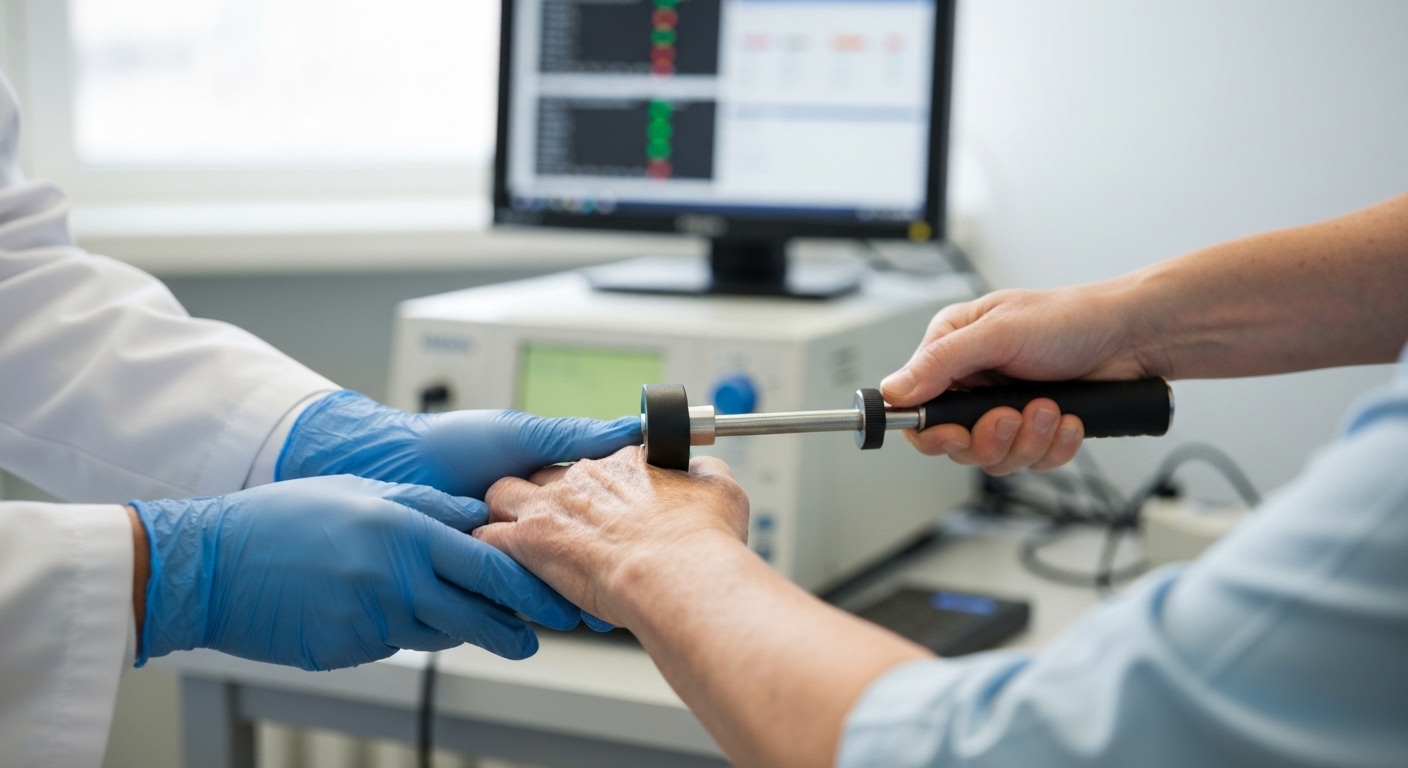
Delving deeper than the composite frailty score, the researchers examined how each of the five individual components contributed to epilepsy risk. Four of the five components were independently associated with a higher hazard of incident epilepsy, highlighting specific clinical signs that may signal increased susceptibility. The strongest individual predictor was slow gait speed, which conferred a hazard ratio of 1.46 (95% CI 1.29-1.65). Other components also carried significant risk: low grip strength was associated with an HR of 1.19 (95% CI 1.08-1.32), self-reported exhaustion with an HR of 1.18 (95% CI 1.06-1.32), and weight loss with an HR of 1.17 (95% CI 1.06-1.29). From a clinical perspective, these results are particularly salient, as they represent simple, observable markers that can be assessed in a standard physical examination and may help identify patients who warrant closer neurological monitoring.
Exploring Biological Pathways
To understand the potential mechanisms driving this association, the investigators explored which biological processes might connect systemic frailty to the development of epilepsy. They employed hypothesis-driven mediation analyses, a statistical approach designed to determine if a third variable, such as a blood biomarker, helps explain the relationship between an exposure (frailty) and an outcome (epilepsy). The biomarker analyses identified several physiological domains associated with both frailty and incident epilepsy. These included markers of liver and kidney function, immune-inflammatory response, endocrine activity, and hematologic profiles. The study estimated that these biological factors collectively explained a meaningful portion of the observed risk, accounting for approximately 18.57% (95% CI 13.18%-26.83%) of the frailty-epilepsy association. Furthermore, several metabolic biomarkers related to lipoprotein particle size, amino acids, ketone bodies, and lipids were identified as potential contributors. These findings provide preliminary insight into a shared pathophysiology, suggesting that the systemic insults reflected in frailty, such as chronic inflammation and metabolic dysregulation, may also contribute to a state of increased neuronal excitability or lower seizure threshold.
References
1. Lan X, Li H, Wang Z, Chen Y. Frailty as a predictor of future falls in hospitalized patients: A systematic review and meta-analysis. Geriatric Nursing. 2019. doi:10.1016/j.gerinurse.2019.01.004
2. Albasheer O, Abdelwahab Sİ, Zaino M, et al. The impact of social isolation and loneliness on cardiovascular disease risk factors: a systematic review, meta-analysis, and bibliometric investigation. Scientific Reports. 2024. doi:10.1038/s41598-024-63528-4
3. Mentis AA, Dardiotis E, Efthymiou V, Chrousos GP. Non-genetic risk and protective factors and biomarkers for neurological disorders: a meta-umbrella systematic review of umbrella reviews. BMC Medicine. 2021. doi:10.1186/s12916-020-01873-7
4. Sanders L, Hortobágyi T, Karssemeijer EG, Zee EAVD, Scherder E, Heuvelen MJGV. Effects of low- and high-intensity physical exercise on physical and cognitive function in older persons with dementia: a randomized controlled trial. Alzheimer s Research & Therapy. 2020. doi:10.1186/s13195-020-00597-3
5. Cryan JF, O’Riordan KJ, Cowan CS, et al. The Microbiota-Gut-Brain Axis. Physiological Reviews. 2019. doi:10.1152/physrev.00018.2018
6. Lane MM, Davis JA, Beattie S, et al. Ultraprocessed food and chronic noncommunicable diseases: A systematic review and meta‐analysis of 43 observational studies. Obesity Reviews. 2020. doi:10.1111/obr.13146
7. Hu W, Liu T, Tian G, et al. Associations and Potential Biological Pathways Between Physical Frailty and Epilepsy Incidence: A Large-Scale Prospective Cohort Study.. Neurology. 2026. doi:10.1212/WNL.0000000000218071
8. Wittenberg E, James LP, Prosser LA. Spillover Effects on Caregivers’ and Family Members’ Utility: A Systematic Review of the Literature. PharmacoEconomics. 2019. doi:10.1007/s40273-019-00768-7
9. Sing S, Syurina EV, Peters RMH, Putri AI, Zweekhorst M. Non-Communicable Diseases-Related Stigma: A Mixed-Methods Systematic Review. International Journal of Environmental Research and Public Health. 2020. doi:10.3390/ijerph17186657