
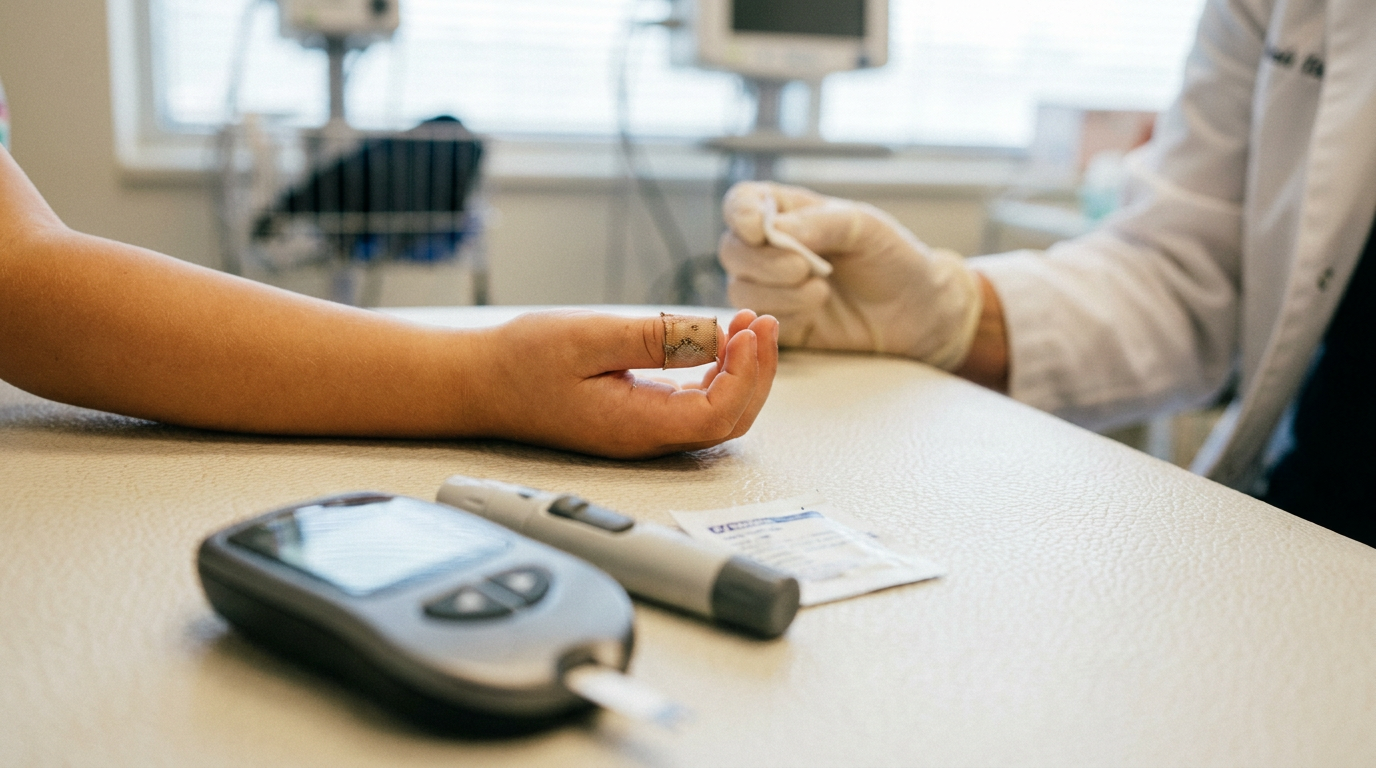
- The study addressed the need to estimate early-stage type 1 diabetes prevalence and progression in children.
- This population-based screening study enrolled 220,476 children aged 1.75 to 10.99 years in Bavaria, Germany.
- Early-stage type 1 diabetes prevalence was 0.3% (95% CI, 0.28%-0.32%), with 36.2% progressing to clinical disease in five years.
- The researchers concluded that general population screening identifies early-stage type 1 diabetes with consistent progression rates.
- These findings support considering type 1 diabetes screening beyond genetically selected populations to inform therapy trials.
Uncovering Early Type 1 Diabetes in Childhood
Type 1 diabetes is a chronic autoimmune condition that often presents acutely with diabetic ketoacidosis, yet the underlying autoimmune process begins months or years earlier [1]. Identifying individuals during this presymptomatic phase is a key goal for implementing disease-modifying therapies and preventing metabolic crises [2, 3, 4, 5]. While screening has often focused on high-risk groups, such as those with a family history, the actual prevalence of early-stage disease in the general pediatric population has been less clear [6]. A large, population-based study in Germany now provides precise estimates of the prevalence of presymptomatic type 1 diabetes in young children and tracks their progression to clinical disease.
Study Design and Participant Cohort
This ambitious population-based screening study aimed to estimate the prevalence of early-stage (stage 1 or 2) type 1 diabetes and quantify the rate of progression to clinical (stage 3) disease. The investigation, conducted in Bavaria, Germany, from February 2015 to July 2025, integrated screening into routine pediatric care. A network of 716 primary care pediatricians performed the screening, which initially involved a single test for children aged 1.75 to 5.99 years. The protocol later expanded to include up to two screenings for children aged 1.75 to 10.99 years, reflecting an evolving understanding of the disease's onset. Families of children identified with early-stage disease were offered comprehensive support, including diabetes education and longitudinal monitoring, through 18 specialized diabetes centers. The study enrolled a substantial cohort of 220,476 children, with a median age of 3.1 years (interquartile range, 2.2-5.0 years); 106,952 (48.7%) of the participants were female. The trial is registered as NCT04039945 on ClinicalTrials.gov.
Defining Early-Stage Type 1 Diabetes and Key Outcomes
The study's diagnostic approach centered on the measurement of islet autoantibodies, the serological hallmark of the autoimmune process that precedes clinical type 1 diabetes. A diagnosis of early-stage disease required the presence of two or more autoantibodies against key targets (insulin, glutamic acid decarboxylase, islet antigen-2, or zinc transporter 8), confirmed in consecutive blood samples. This definition allowed for a standardized classification of presymptomatic disease. The researchers further stratified these children into two distinct stages based on their metabolic status. Stage 1 was defined by the presence of autoimmunity with persistent normoglycemia. Stage 2 represented a more advanced presymptomatic phase, characterized by autoimmunity accompanied by dysglycemia. The study's primary outcomes were the prevalence of these early stages and the rate of progression to stage 3, defined as the onset of clinical, symptomatic type 1 diabetes.
Prevalence of Presymptomatic Disease
The screening program yielded a clear estimate of the burden of presymptomatic type 1 diabetes in the general pediatric population. From the initial screenings, 590 children were found to have early-stage type 1 diabetes, resulting in an adjusted population frequency of 0.3% (95% CI, 0.28%-0.32%). This suggests that for every 1,000 young children screened, approximately three will have detectable, multi-autoantibody-positive presymptomatic disease. When broken down by stage, the prevalence was 0.23% for stage 1 (autoimmunity with normoglycemia) and 0.06% for stage 2 (autoimmunity with dysglycemia). The study also demonstrated the utility of serial testing; among 11,726 children who underwent a repeat screening after a median of 3.3 years, 29 additional cases were identified. This finding highlights that the autoimmune process can initiate throughout early childhood and that a single point-in-time screening will not identify all future cases.
Progression to Clinical Type 1 Diabetes
Tracking the cohort over time provided crucial prognostic data for clinicians and families. During a median follow-up of 5.7 years, 212 children diagnosed with early-stage disease at their first screening progressed to clinical (stage 3) diabetes. An additional 5 children diagnosed at rescreening also progressed to clinical disease. For comparison, 43 children who had not been identified with early-stage disease also developed clinical diabetes during the follow-up period, a reminder of the challenges in timing any screening program perfectly. The study's key finding on progression was that the five-year rate of progression from any early stage to clinical diabetes was 36.2% (95% CI, 31.2%-40.8%). This corresponds to a steady annualized progression rate of 9.6%. This figure provides a concrete metric for counseling families about the risk of developing symptomatic disease once multiple autoantibodies are confirmed.
Family History and Clinical Implications
A clinically significant finding emerged when researchers analyzed the impact of family history on disease progression. The analysis revealed that progression rates from early-stage to clinical diabetes were not significantly different between children with and without a first-degree family history of the disease (P = .54). This result challenges the common assumption that a positive family history, while increasing the absolute risk of developing autoantibodies, also predicts a faster progression to clinical disease once autoimmunity is established. The implications for clinical practice are direct. The findings suggest that general population screening is an effective method for identifying children in the early stages of type 1 diabetes and that the risk of progression is substantial regardless of family history. This evidence supports the expansion of screening programs beyond genetically selected populations and provides a strong rationale for including children from the general population in trials of disease-modifying therapies aimed at delaying or preventing the onset of stage 3 type 1 diabetes.
References
1. Miller KD, Nogueira L, Mariotto AB, et al. Cancer treatment and survivorship statistics, 2019. CA A Cancer Journal for Clinicians. 2019. doi:10.3322/caac.21565
2. Members AF, Camm AJ, Kirchhof P, et al. Guidelines for the management of atrial fibrillation: The Task Force for the Management of Atrial Fibrillation of the European Society of Cardiology (ESC). European Heart Journal. 2010. doi:10.1093/eurheartj/ehq278
3. Mach F, Baigent C, Catapano AL, et al. 2019 ESC/EAS Guidelines for the management of dyslipidaemias: lipid modification to reduce cardiovascular risk. European Heart Journal. 2019. doi:10.1093/eurheartj/ehz455
4. Flaxman S, Bourne R, Resnikoff S, et al. Global causes of blindness and distance vision impairment 1990–2020: a systematic review and meta-analysis. The Lancet Global Health. 2017. doi:10.1016/s2214-109x(17)30393-5
5. Allotey J, Fernandez S, Bonet M, et al. Clinical manifestations, risk factors, and maternal and perinatal outcomes of coronavirus disease 2019 in pregnancy: living systematic review and meta-analysis. BMJ. 2020. doi:10.1136/bmj.m3320
6. Hughes K, Bellis MA, Hardcastle KA, et al. The effect of multiple adverse childhood experiences on health: a systematic review and meta-analysis. The Lancet Public Health. 2017. doi:10.1016/s2468-2667(17)30118-4