For Doctors in a Hurry
- Clinicians need to know if maternal prenatal depression alters the initial oral microbial colonization of newborns during vaginal delivery.
- The researchers analyzed data from 324 mother and newborn pairs enrolled in the Kuopio Birth Cohort Study in Finland.
- Statistical analysis revealed no significant associations between maternal depressive symptoms and newborn oral microbial diversity or specific bacterial composition.
- The authors concluded that prenatal depression does not measurably influence the oral microbial exposure of infants at birth.
- Physicians should not assume that maternal depression during pregnancy directly alters the initial oral microbiome of the newborn.
Maternal Mental Health and the Neonatal Microbiome
The assembly of the infant microbiome during delivery represents a critical window for establishing the microbiota-gut-brain axis, a bidirectional communication system that regulates immune, metabolic, and neurodevelopmental homeostasis [1, 2]. Disruptions in this early microbial colonization have been linked to long-term risks for pediatric obesity, allergic diseases, and neurodevelopmental disorders [3, 4, 5]. While prenatal maternal stress is known to influence fetal outcomes through neuroendocrine and inflammatory pathways, emerging research has focused on whether maternal psychological distress also alters the vertical transmission of beneficial bacteria [6, 7]. Given that up to one-fifth of pregnant women experience depressive symptoms, understanding the stability of this microbial transfer is essential for clinical risk assessment and prenatal counseling [8]. A new study now offers clinical evidence regarding how maternal affective symptoms influence the oral microbial exposure of infants at the moment of birth.
Cohort Characteristics and Sequencing Methodology
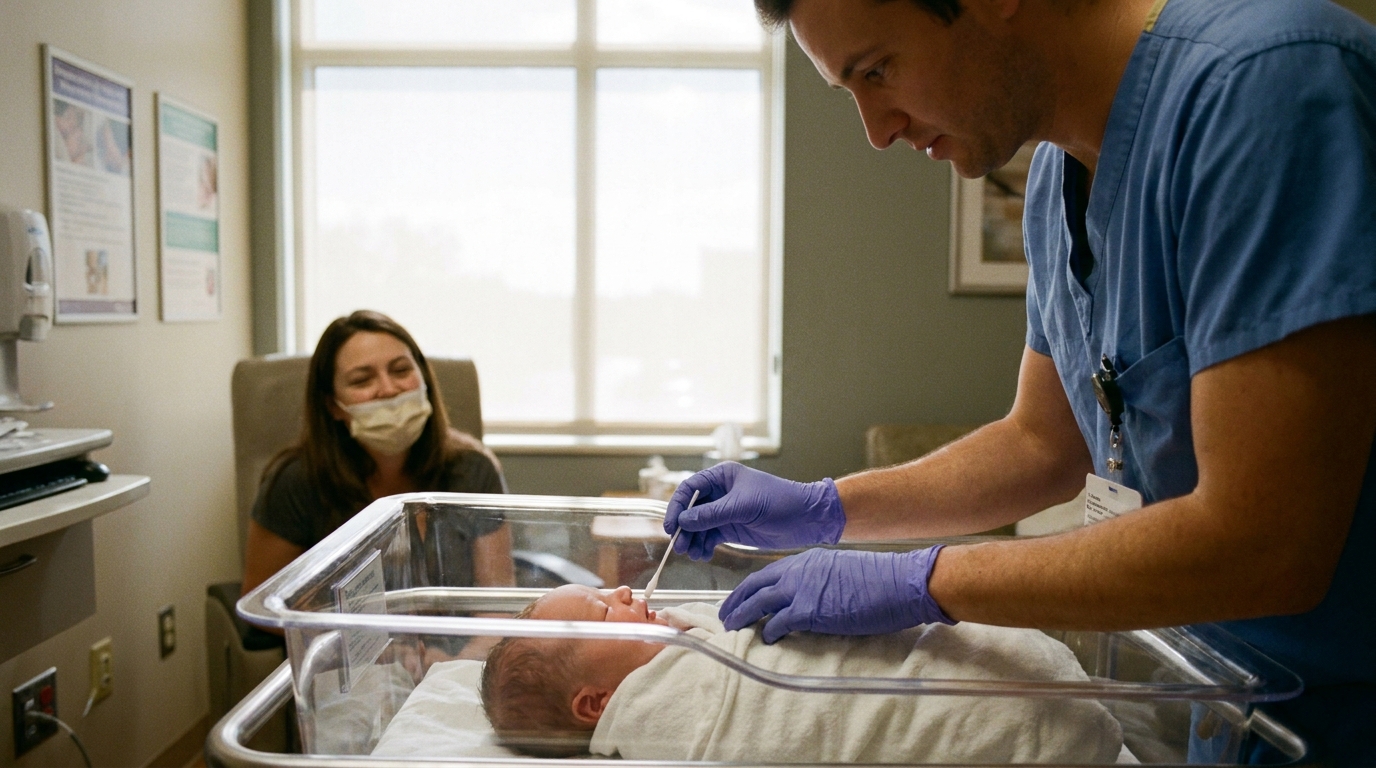
Researchers conducted a secondary analysis of 324 mother-newborn pairs participating in the Kuopio Birth Cohort Study in Eastern Finland to determine if maternal depressive and anxiety symptoms correlate with alterations in the oral microbial exposure of infants during vaginal birth. To assess maternal psychological status, the study utilized the Edinburgh Postnatal Depressive Scale (EPDS), a validated 10-item self-report tool used to identify women experiencing perinatal depression. These assessments were performed during the first and third trimesters of pregnancy, allowing the authors to capture the potential impact of maternal distress at different stages of fetal development. Immediately following birth, researchers collected oral swab samples from the neonates to evaluate the initial bacterial exposure. This was quantified using 16S rRNA gene amplicon sequencing, a laboratory technique that identifies and counts bacterial taxa by targeting a specific, highly conserved genetic region common to all bacteria. The analysis focused on alpha diversity (the variety and richness of bacterial species within a single sample) and beta diversity (the difference in microbial community composition between different samples). Furthermore, the study examined the relative abundances of individual taxa at the genus and phylum levels, ensuring that both broad community structures and specific bacterial groups, such as Lactobacillus, were scrutinized for any associations with prenatal maternal mental health.
Statistical Analysis and Confounding Variables
To evaluate the relationship between maternal psychological health and the neonatal oral environment, the researchers constructed linear regression models designed to correlate prenatal symptoms with microbial outcomes. In these models, maternal depressive symptoms served as the exposure variables, while the various microbial measures functioned as the outcome variables. This statistical framework allowed the authors to isolate the specific impact of maternal mood on the diversity and taxonomic composition of the bacteria encountered by the infant during the birthing process. Recognizing that neonatal microbial colonization is influenced by a variety of clinical factors, the researchers adjusted their models for several key covariates to ensure the rigor of their findings. These adjustments included maternal body mass index (BMI) and the presence of gestational diabetes, both of which can alter the maternal microbiome and metabolic environment. Furthermore, the models accounted for the use of antibiotics at birth, a critical confounding variable known to significantly impact bacterial populations. By controlling for these specific clinical parameters, the study aimed to provide a precise assessment of whether maternal affective symptoms independently influenced the infant's initial microbial exposure.
Stability of Microbial Seeding Despite Maternal Distress
The clinical significance of maternal mental health during gestation is underscored by the high prevalence of depression among pregnant women, yet the results of this study provide a measure of reassurance regarding microbial transmission. While previous research has established that maternal depression is associated with disruptions in the maternal vaginal microbiome, which can theoretically be carried over to the offspring, this cohort of 324 mother-infant pairs demonstrated significant stability in microbial transfer. The researchers reported that no statistically significant associations were observed between maternal depressive or anxiety symptoms during pregnancy and alpha diversity metrics of newborn oral microbial exposure at birth. Similarly, no statistically significant associations were observed for beta diversity metrics, suggesting that the overall structure of the microbial community remained consistent regardless of the mother's psychological state. Beyond broad diversity measures, the analysis scrutinized the relative abundances of individual taxa at the genus and phylum levels. A key finding was that maternal depression had no effect on Lactobacillus abundance in the oral microbial exposure. This is clinically relevant as Lactobacillus is a primary genus involved in the initial colonization of infants during vaginal birth and is often associated with healthy immune development. Despite existing animal studies suggesting that maternal distress might alter the neonatal microbiome, this study did not detect any statistically significant associations between maternal depressive symptoms during pregnancy and the composition of newborn oral microbial exposure at birth. For the practicing clinician, these results suggest that while prenatal depression requires robust management for maternal and child wellbeing, it does not appear to disrupt the fundamental transfer of maternal microbes to the neonate during the birthing process.
References
1. Cryan JF, O’Riordan KJ, Cowan CS, et al. The Microbiota-Gut-Brain Axis. Physiological Reviews. 2019. doi:10.1152/physrev.00018.2018
2. Silva YP, Bernardi A, Frozza RL. The Role of Short-Chain Fatty Acids From Gut Microbiota in Gut-Brain Communication. Frontiers in Endocrinology. 2020. doi:10.3389/fendo.2020.00025
3. Styne DM, Arslanian S, Connor EL, et al. Pediatric Obesity—Assessment, Treatment, and Prevention: An Endocrine Society Clinical Practice Guideline. The Journal of Clinical Endocrinology & Metabolism. 2017. doi:10.1210/jc.2016-2573
4. Wang J, Zhou Y, Zhang H, et al. Pathogenesis of allergic diseases and implications for therapeutic interventions. Signal Transduction and Targeted Therapy. 2023. doi:10.1038/s41392-023-01344-4
5. Jiang C, Lin L, Long S, et al. Signalling pathways in autism spectrum disorder: mechanisms and therapeutic implications. Signal Transduction and Targeted Therapy. 2022. doi:10.1038/s41392-022-01081-0
6. Mepham J, Nelles‐McGee T, Andrews K, González A. Exploring the effect of prenatal maternal stress on the microbiomes of mothers and infants: A systematic review. Developmental Psychobiology. 2023. doi:10.1002/dev.22424
7. Braveman P, Dominguez TP, Burke W, et al. Explaining the Black-White Disparity in Preterm Birth: A Consensus Statement From a Multi-Disciplinary Scientific Work Group Convened by the March of Dimes. Frontiers in Reproductive Health. 2021. doi:10.3389/frph.2021.684207
8. Trifkovič KČ, Mičetić‐Turk D, Kmetec S, et al. Efficacy of Direct or Indirect Use of Probiotics for the Improvement of Maternal Depression during Pregnancy and in the Postnatal Period: A Systematic Review and Meta-Analysis. Healthcare. 2022. doi:10.3390/healthcare10060970