
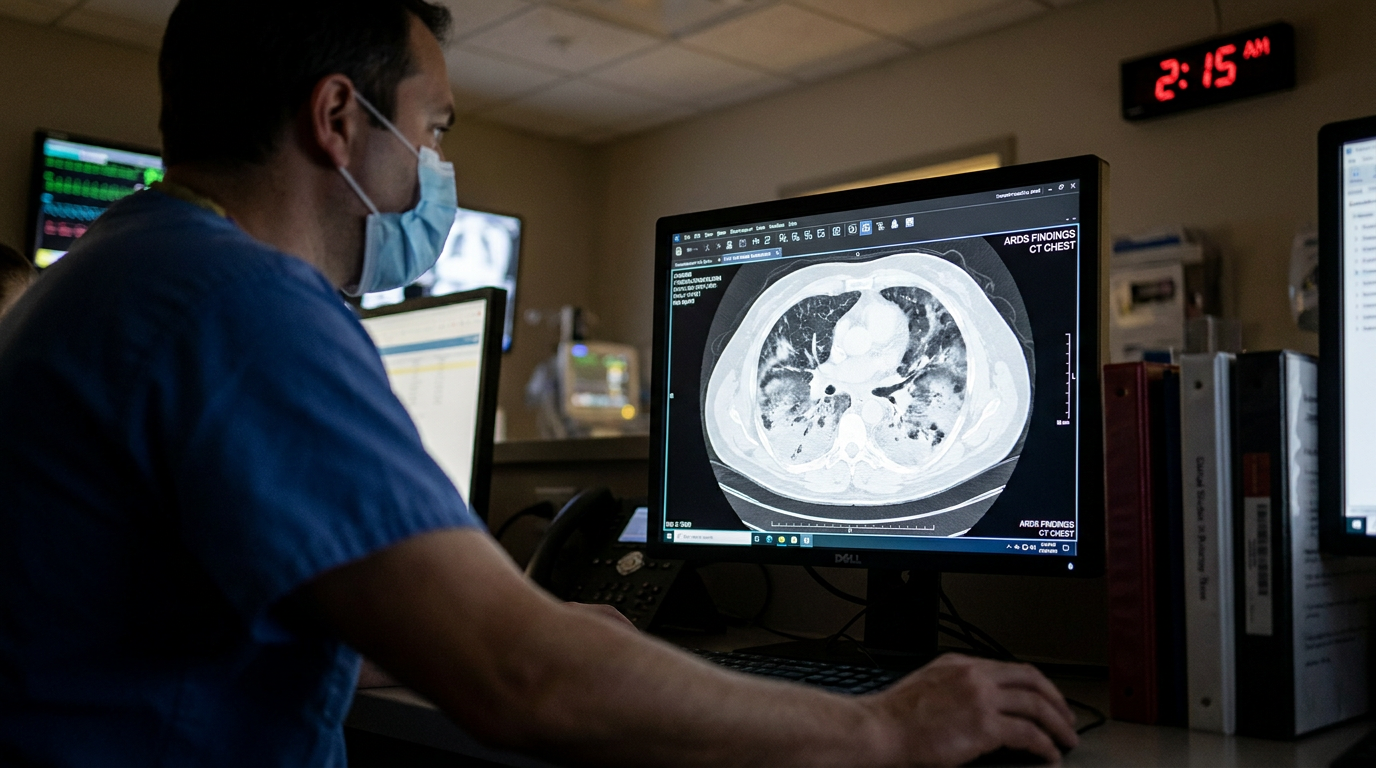
- The study addressed whether acute respiratory distress syndrome biological subphenotypes can be identified in real-time.
- This prospective, observational cohort study enrolled 338 patients with ARDS or severe acute hypoxaemic respiratory failure.
- Real-time subphenotyping was successful in 74% (250 of 338) of enrolled patients, meeting the predefined feasibility threshold.
- The researchers concluded that rapid real-time biological subphenotyping for ARDS and severe AHRF is feasible.
- These findings support the feasibility of real-time precision trials targeting biological subphenotypes in ARDS management.
Unraveling Acute Respiratory Distress Syndrome Heterogeneity
Acute respiratory distress syndrome (ARDS) remains a formidable challenge in critical care, marked by high morbidity and mortality stemming from acute hypoxemic respiratory failure and diffuse pulmonary inflammation [1]. A primary obstacle to therapeutic progress is the syndrome's profound heterogeneity; it encompasses a wide range of etiologies and clinical presentations, leading to inconsistent responses to treatment and a history of negative randomized controlled trials [2, 3, 4]. Retrospective research has consistently identified at least two distinct biological subphenotypes, often termed hypoinflammatory and hyperinflammatory, based on levels of biomarkers like interleukin-6 (IL-6) and soluble tumor necrosis factor receptor 1 (TNFR1) [5, 6, 7]. These subphenotypes are associated with significantly different mortality rates and treatment responses, yet the inability to identify them prospectively and rapidly has prevented the translation of this knowledge into clinical practice, leaving clinicians to manage a biologically diverse condition with a uniform approach [8, 9, 10].
Addressing the Need for Real-Time Classification
While retrospective data have established the existence of distinct biological subphenotypes in acute respiratory distress syndrome (ARDS), the capacity to identify them at the bedside in a clinically relevant timeframe has remained an unproven concept. This gap has been a major barrier to designing and implementing precision medicine trials for ARDS. To address this, a prospective, observational cohort study was conducted across the multisite ISPY COVID Network. The primary objective was to evaluate the feasibility of using fresh plasma biomarkers and clinical variables to prospectively classify patients with ARDS and severe acute hypoxemic respiratory failure (AHRF) into hyperinflammatory or hypoinflammatory subphenotypes in real time.
Patient Selection and Subphenotyping Methodology
The study enrolled adults with ARDS or severe AHRF who required significant respiratory support, including mechanical ventilation, non-invasive positive pressure ventilation, or heated high flow nasal oxygen at rates of 30 L/min or higher. Severe AHRF was rigorously defined by an SpO₂ to FiO₂ ratio of 315 or less (with SpO₂ at or below 97%) or a PaO₂ to FiO₂ ratio below 300, with these criteria present for less than 48 hours. Exclusions included patients under 18, known pregnancy, ARDS from trauma, and rapidly improving hypoxemia. Upon enrollment, patients were categorized based on chest imaging: those with unilateral infiltrates were placed in the severe AHRF group, while those with bilateral infiltrates were classified as having ARDS. This initial stratification provided a baseline clinical grouping before biological assessment.
For the biological classification, a blood sample of up to 6 mL was drawn and immediately processed in the local hospital laboratory. The core of the subphenotyping method involved quantifying plasma concentrations of two key pro-inflammatory biomarkers, interleukin-6 (IL-6) and soluble tumor necrosis factor receptor 1 (TNFR1), in conjunction with clinical data. Based on the results of this rapid analysis, each participant was assigned to either the hypoinflammatory or hyperinflammatory subphenotype. This process was designed to deliver an actionable biological classification within hours of patient presentation.
Study Cohort Demographics and Enrollment
Conducted from June 15, 2023, to October 31, 2024, the study screened 844 patients across 17 hospitals in the ISPY COVID Network in the USA. After applying strict eligibility criteria, which resulted in 504 exclusions, and accounting for two withdrawals of consent, the final enrolled cohort consisted of 338 patients. Of these, 214 (63%) were classified with ARDS based on bilateral infiltrates, and 124 (37%) were classified with severe AHRF. The cohort had a median age of 64 years (interquartile range [IQR] 54-74) and was predominantly male (199 patients, 59%) and white (239 patients, 71%). These demographics reflect a typical population of critically ill patients with severe respiratory failure in the US.
Achieving Real-Time Feasibility
The study's primary feasibility endpoint was prospectively defined as successful real-time subphenotyping in over 75% of the final 100 participants. This goal was successfully met. Across the entire study, 250 of 338 patients (74%) were successfully subphenotyped using fresh plasma. More importantly, the process demonstrated a significant learning curve and optimization over time. The success rate for the first 100 enrolled patients was 59% (95% CI 49-69), but this increased to 82% (95% CI 73-89) for the last 100 patients, surpassing the predefined feasibility threshold. This improvement highlights the potential for integrating such a system into routine clinical workflows.
Speed of classification is paramount for clinical utility in the acute setting. The study achieved a median time from blood collection to subphenotype assignment of 2.2 hours (IQR 1.5-19.8) for the overall cohort. For the 250 successfully subphenotyped patients, the process was even more efficient, with a median turnaround time of 1.9 hours (IQR 1.3-2.3). This rapid result delivery confirms that biological subphenotyping can be performed within a timeframe that allows for timely clinical decision-making, such as patient selection for targeted therapeutic trials.
Subphenotype Distribution and Clinical Implications
The real-time classification provided valuable insights into the prevalence of the more severe inflammatory profile. The hyperinflammatory subphenotype was identified in 61 of 214 participants with ARDS (29%) and in 29 of 124 participants with severe AHRF (23%). This biological classification proved to be highly relevant prognostically. The study found that clinical outcomes, including mortality, organ support-free days, and ventilator-free days, were worse in patients with hyperinflammatory ARDS compared with those with hypoinflammatory ARDS. This finding reinforces the clinical importance of distinguishing between these biological subgroups.
In conclusion, this study demonstrates that rapid, real-time biological subphenotyping for ARDS and severe AHRF is feasible within a large, multisite US hospital network. The process not only improved over the course of the study but also delivered results within a clinically actionable window of approximately two hours. These findings provide crucial support for the design and implementation of real-time, precision-medicine clinical trials that can enroll patients into specific arms based on their underlying biology, potentially accelerating the identification of effective, targeted therapies for ARDS.
References
1. Ma W, Tang S, Yao P, et al. Advances in acute respiratory distress syndrome: focusing on heterogeneity, pathophysiology, and therapeutic strategies. Signal Transduction and Targeted Therapy. 2025. doi:10.1038/s41392-025-02127-9
2. Surabhi ER, Patel DJ, Kademane A, Nirala P. A comprehensive systematic review of the phenotypes and their role in improving medications and clinical results in the acute respiratory distress syndrome: exploring the potential of personalized therapy. Multidisciplinary Reviews. 2024. doi:10.31893/multirev.2023ss006
3. Sinha P, Spicer AB, Delucchi K, McAuley DF, Calfee CS, Churpek MM. Comparison of machine learning clustering algorithms for detecting heterogeneity of treatment effect in acute respiratory distress syndrome: A secondary analysis of three randomised controlled trials. EBioMedicine. 2021. doi:10.1016/j.ebiom.2021.103697
4. Santhakumaran S, Gordon A, Prevost AT, O’Kane C, McAuley DF, Shankar‐Hari M. Heterogeneity of treatment effect by baseline risk of mortality in critically ill patients: re-analysis of three recent sepsis and ARDS randomised controlled trials. Critical Care. 2019. doi:10.1186/s13054-019-2446-1
5. Delucchi K, Famous KR, Ware LB, Parsons PE, Thompson B, Calfee CS. Stability of ARDS subphenotypes over time in two randomised controlled trials. Thorax. 2018. doi:10.1136/thoraxjnl-2017-211090
6. Calfee CS, Delucchi KL, Sinha P, et al. Acute respiratory distress syndrome subphenotypes and differential response to simvastatin: secondary analysis of a randomised controlled trial.. The Lancet. Respiratory medicine. 2018. doi:10.1016/S2213-2600(18)30177-2
7. Sinha P, Neyton L, Sarma A, et al. Molecular Phenotypes of Acute Respiratory Distress Syndrome in the ROSE Trial Have Differential Outcomes and Gene Expression Patterns That Differ at Baseline and Longitudinally over Time. American Journal of Respiratory and Critical Care Medicine. 2024. doi:10.1164/rccm.202308-1490oc
8. Triché LR, Fosset M, Jabaudon M, et al. Temporal stability of inflammatory subphenotypes of acute respiratory distress syndrome: 28-day insights from the ICAR trial.. Anaesthesia, critical care & pain medicine. 2025. doi:10.1016/j.accpm.2025.101559
9. Gordon A, Alipanah N, Bos LDJ, et al. From ICU Syndromes to ICU Subphenotypes: Consensus Report and Recommendations for Developing Precision Medicine in the ICU. American Journal of Respiratory and Critical Care Medicine. 2024. doi:10.1164/rccm.202311-2086so
10. Gordon AC, Alipanah-Lechner N, Bos LD, et al. From ICU Syndromes to ICU Subphenotypes: Consensus Report and Recommendations for Developing Precision Medicine in the ICU. American Journal of Respiratory and Critical Care Medicine. 2024. doi:10.1164/rccm.202311-2086SO