For Doctors in a Hurry
- Clinicians require scalable, accessible screening tools to manage the increasing global burden of metabolic and endocrine diseases.
- Researchers developed a retinal imaging framework using 107,730 color fundus photographs from community and hospital cohorts to detect multiple systemic conditions.
- The model achieved an area under the curve of 0.833 for diabetes and 0.832 for gout in internal testing.
- The authors concluded that this oculomics (retinal-based systemic health assessment) tool provides a low-cost pathway for efficient, multidisease clinical screening.
- A clinical pilot demonstrated a 0.966 negative predictive value for diabetes, suggesting utility for rapid patient triaging in primary care.
The escalating prevalence of metabolic syndrome and its associated complications, including type 2 diabetes and hypertension, continues to drive global cardiovascular morbidity and mortality [1, 2]. Current clinical guidelines emphasize the necessity of early detection and intensive management of these risk factors to prevent major macrovascular and microvascular events [3, 4]. However, traditional screening often relies on invasive blood tests and complex diagnostic workflows that can be difficult to scale in resource-limited settings [5]. The retina offers a unique, non-invasive opportunity to visualize the microvasculature and neural tissue, which frequently mirror systemic pathological changes such as oxidative stress and lipid peroxidation [6, 7]. To address the need for accessible diagnostics, researchers have developed an artificial intelligence framework that leverages these retinal biomarkers to provide a rapid, multidisease screening tool directly at the point of care.
Multitask Architecture and Diagnostic Accuracy
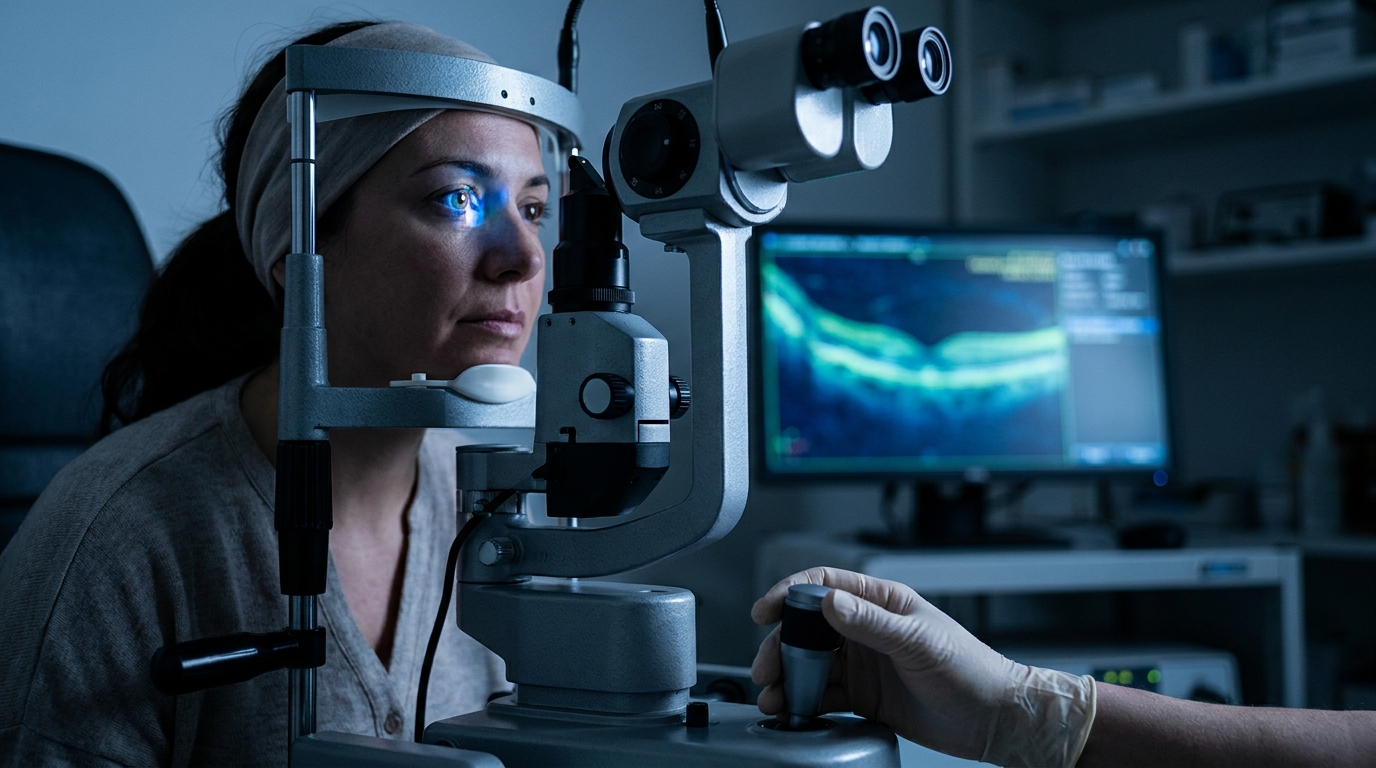
The researchers developed Reti-Pioneer, a multitask retinal imaging framework designed for the simultaneous detection of multiple systemic conditions. This system integrates quality-aware modules (algorithms that automatically assess the clarity and diagnostic utility of an image) with pre-trained foundation models (large-scale artificial intelligence architectures trained on vast datasets to recognize complex biological patterns). To build and refine the framework, the authors utilized a substantial dataset of 107,730 color fundus photographs obtained from both community-based and hospital-based cohorts. This large sample size provided the diverse clinical data necessary to train the model across various demographic and pathological presentations. In internal testing, the framework demonstrated consistent diagnostic performance across six distinct metabolic and endocrine diseases. The model achieved an area under the receiver operating characteristic curve (AUC) of 0.833 (95% confidence interval [CI] 0.810 to 0.856) for type 2 diabetes mellitus and an AUC of 0.832 (95% CI 0.799 to 0.866) for gout. For other systemic conditions, the diagnostic accuracy remained clinically relevant, with an AUC of 0.787 (95% CI 0.742 to 0.833) for osteoporosis, 0.740 (95% CI 0.726 to 0.755) for hypertension, and 0.736 (95% CI 0.721 to 0.751) for hyperlipidemia. The lowest performance was observed in the detection of thyroid disease, which yielded an AUC of 0.699 (95% CI 0.667 to 0.730). These values represent the model's ability to distinguish between patients with the disease and healthy controls based solely on retinal morphology. To ensure the model was identifying clinically relevant physiological changes rather than arbitrary image artifacts, the researchers investigated its biological interpretability. They found significant correlations between the model's outputs and plasma proteomics (the large-scale analysis of proteins circulating in the blood). By linking retinal imaging features to specific protein expressions associated with metabolic dysfunction, the study provides a biological basis for using the eye as a proxy for systemic health. For practicing physicians, this connection suggests that the artificial intelligence is capturing true microvascular and neural signatures that reflect the underlying proteomic profile of the patient, rather than relying on spurious correlations.
Validation Across Diverse Clinical Settings
To assess the real-world utility of the Reti-Pioneer framework, the researchers evaluated its performance across six external cohorts encompassing a wide range of clinical environments. These validation sites included both resource-limited and high-resource settings, ensuring that the model's diagnostic accuracy was not confined to the specific demographics or imaging equipment of the initial training sites. This generalizability is a critical metric for clinicians, as it suggests the tool can maintain its predictive value across diverse patient populations with varying degrees of access to specialized medical infrastructure. By demonstrating consistent performance in these varied external datasets, the study indicates that the artificial intelligence can reliably interpret retinal features regardless of the socioeconomic or technical context of the primary care facility. The practical efficiency of the system was further tested in a primary care silent trial (a prospective evaluation where the tool runs in the background of clinical operations without influencing immediate treatment decisions). During this trial, the framework completed the entire screening process in an average of 30.6 ± 6.0 seconds per case. This processing speed was notably faster than standard laboratory workflows, which typically require blood draws, sample transport, and chemical analysis that can take hours or days to return results. For a busy clinician, a 30-second turnaround time allows for the integration of multidisease screening directly into a standard consultation, providing immediate data that can inform the need for further diagnostic testing or specialist referrals before the patient even leaves the clinic.
Clinical Utility in Diabetes Screening
In a clinical pilot specifically focused on type 2 diabetes mellitus, the Reti-Pioneer framework demonstrated robust diagnostic performance, yielding an AUC of 0.776 (95% CI 0.710 to 0.842). For primary care physicians, the most significant metric from this pilot is the negative predictive value of 0.966 (95% CI 0.946 to 0.983). This high negative predictive value (the probability that a patient with a negative test result truly does not have the disease) indicates that the tool is highly effective at ruling out type 2 diabetes. Such a high degree of certainty is critical for a screening instrument intended to minimize unnecessary follow-up testing and focus clinical resources on patients at the highest risk. The diagnostic performance of the artificial intelligence in this clinical pilot surpassed the Finnish Diabetes Risk Score, a standard clinical instrument that estimates the probability of developing diabetes based on patient-reported data and physical measurements. Beyond its statistical accuracy, the framework achieved high acceptance from both clinicians and patients during the pilot phase. This qualitative success suggests that the integration of automated retinal analysis into the standard clinical workflow is feasible and well-received by those at the point of care, addressing potential barriers to the adoption of artificial intelligence in routine practice. These findings suggest that Reti-Pioneer provides a translatable, low-cost pathway from oculomics to actionable clinical screening. Oculomics (the use of the eye as a window into systemic health) leverages the unique visibility of the microvasculature and neural tissue in the retina to identify markers of systemic metabolic and endocrine dysfunction. By converting standard fundus photographs into immediate diagnostic insights, this framework offers a scalable method for identifying at-risk patients who require further clinical evaluation, potentially streamlining the path from initial screening to definitive diagnosis.
References
1. Members AF, Reiner Ž, Catapano AL, et al. ESC/EAS Guidelines for the management of dyslipidaemias: The Task Force for the management of dyslipidaemias of the European Society of Cardiology (ESC) and the European Atherosclerosis Society (EAS). European Heart Journal. 2011. doi:10.1093/eurheartj/ehr158
2. Pramacitra A. METABOLIC SYNDROME AND THE AGING RETINA: A SYSTEMATIC REVIEW. 2023. doi:10.53555/nnmhs.v9i4.1642
3. Patel A, Patel A, MacMahon S, et al. Intensive Blood Glucose Control and Vascular Outcomes in Patients with Type 2 Diabetes. New England Journal of Medicine. 2008. doi:10.1056/nejmoa0802987
4. Members ATF, Rydén L, Grant PJ, et al. ESC Guidelines on diabetes, pre-diabetes, and cardiovascular diseases developed in collaboration with the EASD. European Heart Journal. 2013. doi:10.1093/eurheartj/eht108
5. Song P, Yu J, Chan KY, Τheodoratou E, Rudan I. Prevalence, risk factors and burden of diabetic retinopathy in China: a systematic review and meta-analysis. Journal of Global Health. 2018. doi:10.7189/jogh.08.010803
6. Pacher P, Beckman JS, Liaudet L. Nitric Oxide and Peroxynitrite in Health and Disease. Physiological Reviews. 2007. doi:10.1152/physrev.00029.2006
7. Ayala A, Muñoz M, Argüelles S. Lipid Peroxidation: Production, Metabolism, and Signaling Mechanisms of Malondialdehyde and 4-Hydroxy-2-Nonenal. Oxidative Medicine and Cellular Longevity. 2014. doi:10.1155/2014/360438