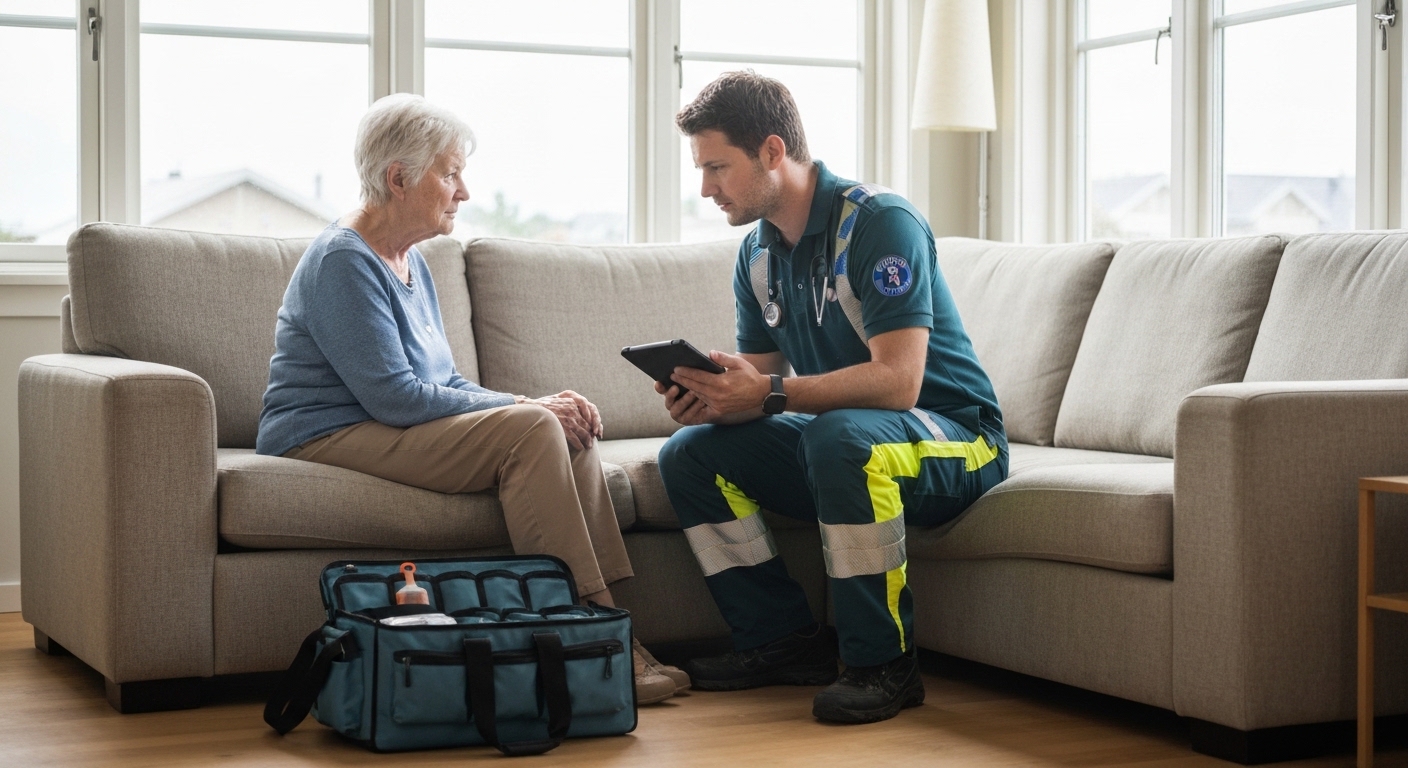
For Doctors in a Hurry
- Clinicians lack data on patient experiences with single-responder ambulance units that prioritize on-site treatment over hospital transport.
- The researchers conducted 12 observational shifts and 22 follow-up interviews to evaluate patient perspectives on this service.
- Patients consistently reported high satisfaction with on-site care, noting that the smaller vehicle reduced the perceived drama.
- The authors conclude that single-paramedic units effectively meet patient needs for help while fostering a calm, reassuring atmosphere.
- These findings suggest that on-site emergency management is a viable, patient-centered alternative to traditional hospital conveyance.
Redefining the Frontline of Prehospital Emergency Care
The increasing demand for prehospital emergency services has forced a reevaluation of traditional ambulance dispatch and transport models to ensure healthcare system sustainability [1, 2]. While rapid identification and intervention remain the standard for time-sensitive conditions like sepsis or acute coronary syndromes, the decision to not convey a patient to the hospital introduces complex clinical and safety considerations [3, 4, 5]. Paramedics now face expanded roles that require high-level decision-making and non-technical competencies to maintain patient safety in the out-of-hospital environment [6]. Despite the economic and operational benefits of community-based paramedic models, the patient’s subjective experience of receiving care without hospital transport remains under-researched [2, 5]. A recent study now provides a detailed look at how patients perceive these single-responder units during acute medical encounters.
Operational Structure and Observational Methodology
In early 2022, the Central Denmark Region implemented the Prehospital Visitation Unit (PVU) to address the rising demand for emergency medical services. This model utilizes a single-responder ambulance staffed by a single paramedic who operates independently. Unlike traditional ambulance crews focused on rapid transport, the PVU clinical mandate centers on completing patient treatment on-site or facilitating direct access to the most appropriate healthcare services, such as primary care or specialized clinics. This shift in operational focus aims to manage patients within their own environment when hospital admission is not clinically indicated, thereby optimizing resource allocation across the regional health system. To evaluate the efficacy and patient perception of this model, researchers conducted a qualitative study structured into two distinct stages of fieldwork. The preliminary fieldwork phase occurred between June 1 and August 31, 2022, followed by a main fieldwork phase from February 1 to March 30, 2023. The study design integrated participant observation and semi-structured interviews to capture the nuances of the patient-paramedic interaction. During these periods, the researchers observed 12 PVU shifts, documenting the clinical encounters through detailed fieldnotes to provide a primary record of the care delivery process. Beyond direct observation, the researchers conducted follow-up telephone interviews with 22 patients to gather longitudinal perspectives on their care experiences. The resulting data, comprising both interview transcripts and fieldnotes, underwent a rigorous two-cycle coding approach (a qualitative analysis method where data is first categorized into initial codes and then refined into broader, more abstract themes). This structured analysis allowed the authors to identify how the single-responder model influenced the atmosphere of the emergency call and the patient's sense of safety, providing a granular look at the psychological impact of non-conveyance.
Patient Perceptions of Non-Conveyance and Clinical Atmosphere
The qualitative analysis of follow-up interviews with 22 patients and observations from 12 clinical shifts revealed that when individuals contact Emergency Medical Services (EMS), their primary motivation is the immediate resolution of a health crisis rather than the specific mode of delivery. The researchers found that patients consistently emphasized they 'just needed help', expressing a fundamental indifference toward the specific type of EMS resource dispatched or the number of personnel who arrived on the scene. This finding suggests that the clinical priority for the patient is the availability of medical expertise rather than the scale of the physical response, as patients were unconcerned about whether a full ambulance crew or a single responder arrived. The study further identified that the Prehospital Visitation Unit (PVU) was perceived as less dramatic than traditional emergency responses, a sentiment attributed to the use of a smaller vehicle and the presence of a single paramedic. This streamlined operation appeared to mitigate the psychological stress often associated with high-intensity medical interventions. The researchers noted that specific interpersonal behaviors, including the paramedic's calm attitude, clear communication, and consistent use of eye contact, were instrumental in establishing a reassuring atmosphere. These clinical behaviors directly contributed to putting patients at ease during the encounter, creating a professional environment that prioritized patient stability over the urgency of transport. Ultimately, patients expressed high levels of satisfaction with the PVU model, specifically valuing the opportunity to receive definitive treatment on-site rather than undergoing transport to a hospital facility. By prioritizing localized care and completing treatment within the home, the PVU successfully met patient expectations and fostered a sense of safety. These results indicate that for a significant subset of the patient population, the single-responder model provides a clinical environment that is both effective and psychologically supportive, fulfilling the patient's core requirement for assistance while avoiding the disruption of unnecessary hospital conveyance.
References
1. Kruk ME, Gage A, Arsenault C, et al. High-quality health systems in the Sustainable Development Goals era: time for a revolution. The Lancet Global Health. 2018. doi:10.1016/s2214-109x(18)30386-3
2. Wilkinson-Stokes M, Tew M, Yap CYL, Crellin D, Gerdtz M. The Economic Impact of Community Paramedics Within Emergency Medical Services: A Systematic Review. Applied Health Economics and Health Policy. 2024. doi:10.1007/s40258-024-00902-3
3. Braunwald E, Antman EM, Beasley JW, et al. ACC/AHA Guidelines for the Management of Patients With Unstable Angina and Non–ST-Segment Elevation Myocardial Infarction: Executive Summary and Recommendations. Circulation. 2000. doi:10.1161/01.cir.102.10.1193
4. Evans L, Rhodes A, Alhazzani W, et al. Surviving Sepsis Campaign: International Guidelines for Management of Sepsis and Septic Shock 2021. Critical Care Medicine. 2021. doi:10.1097/ccm.0000000000005337
5. Ebben RH, Vloet L, Speijers RF, et al. A patient-safety and professional perspective on non-conveyance in ambulance care: a systematic review. Scandinavian Journal of Trauma Resuscitation and Emergency Medicine. 2017. doi:10.1186/s13049-017-0409-6
6. Strandås M, Vizcaya-Moreno MF, Ingstad K, Sepp J, Linnik L, Vaismoradi M. An Integrative Systematic Review of Promoting Patient Safety Within Prehospital Emergency Medical Services by Paramedics: A Role Theory Perspective. Journal of Multidisciplinary Healthcare. 2024. doi:10.2147/jmdh.s460194