For Doctors in a Hurry
- The regional epidemiology and injury patterns of horse riding-related falls presenting to the emergency department remain poorly characterized.
- Researchers conducted a multicenter retrospective study of 669 patients presenting to six French hospitals after falling from a horse.
- Among the cohort, spinal (43%) and head (39%) injuries were most common, with 18% requiring hospitalization and 8.5% needing surgery.
- The authors concluded that equestrian falls frequently cause emergency visits, though high helmet use likely contributed to low rates of severe intracranial injuries.
- Implementing standardized imaging and discharge pathways can streamline hospital resource utilization while ensuring the detection of clinically significant injuries.
The Clinical Burden of Equestrian Trauma
Equestrian activities carry a notoriously high risk of severe trauma, frequently resulting in complex fractures and traumatic brain injuries [1, 2]. Because falls from horses often involve high velocity and significant height, riders are particularly vulnerable to cervical spine and head injuries that require immediate, specialized emergency care and careful immobilization according to Advanced Trauma Life Support protocols [3]. Furthermore, a systematic review of 41 studies involving 15,656 participants indicates that female athletes experience a greater symptom burden, higher pain intensity, and longer recovery times for gait abnormalities following mild traumatic brain injuries compared to male patients [4, 5]. Neuroimaging in these patients reveals that females sustain more extensive white matter alterations (structural damage to the brain's nerve fiber networks), whereas males display greater reductions in cerebral blood flow, highlighting the need for sex-specific diagnostic and rehabilitation strategies [4]. Despite the known dangers of the sport, detailed epidemiological data guiding emergency department resource allocation remains sparse, prompting this multicenter analysis of specific injury patterns and clinical management of patients arriving at the hospital after a fall from a horse.
Demographics and Incidence of Equestrian Injuries
To better understand the regional epidemiology of equestrian trauma, researchers conducted a multicenter retrospective analysis across six hospitals in the Manche Department of France. The study included all patients presenting to the emergency department after a fall from a horse between May 1, 2021, and October 31, 2024. Investigators utilized electronic medical records to extract comprehensive patient data, including demographics, initial clinical status, imaging findings, clinical management, and the use of protective equipment. Furthermore, the researchers categorized anatomical injuries using the Abbreviated Injury Scale (a standardized anatomical scoring system used by trauma clinicians to classify injury severity and predict patient survival). The final cohort included a total of 669 emergency department visits resulting from horse riding-related falls. To accurately reflect the regional burden, the incidence of emergency department visits was standardized according to the catchment population of each participating center. This analysis revealed an average annual incidence of 93.6 per 100,000 inhabitants, although the data showed substantial geographical variation across the region. The demographic profile of the injured riders was highly specific, as the majority of the patients were women, comprising 87% of the cohort, with a median age of 18 years. For practicing physicians, this distinct patient population highlights the need for targeted clinical pathways and prevention strategies tailored specifically to young female athletes presenting with equestrian trauma.
Anatomical Injury Patterns and Protective Equipment
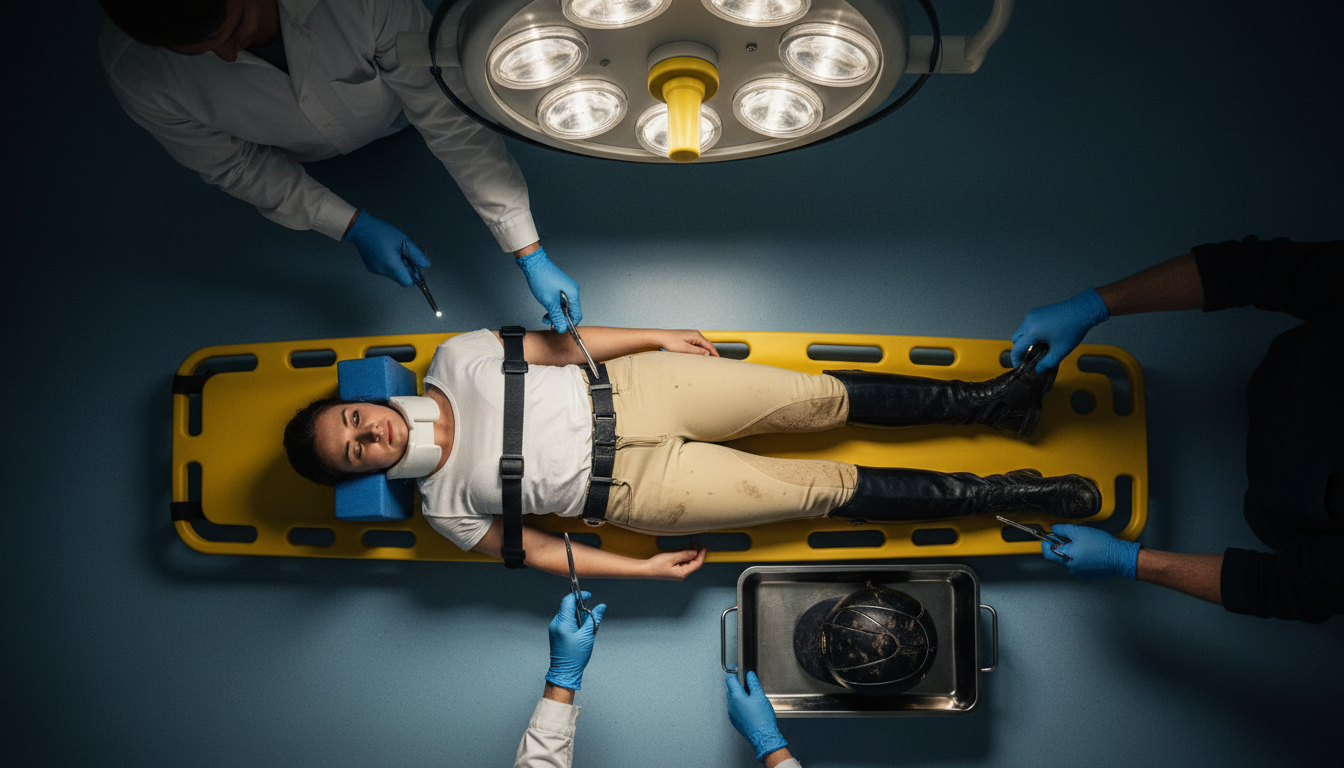
When analyzing the specific anatomical distribution of trauma within the cohort, the researchers found that the axial skeleton and cranium bore the brunt of the impact. Spinal injuries were the most common anatomical injury, occurring in 43% of patients. This high prevalence underscores the necessity for rigorous cervical and thoracolumbar immobilization protocols during the initial emergency transport and assessment of fallen riders. Following spinal trauma, head injuries were the second most common anatomical injury, affecting 39% of the cohort. Appendicular trauma was also highly prevalent, with upper limb injuries ranking as the third most common anatomical injury, occurring in 33% of patients. For emergency physicians, this triad of spinal, cranial, and upper extremity trauma dictates a clear priority for initial radiographic screening and physical examination. Despite the high frequency of head involvement, the severity of these injuries was mitigated by widespread adherence to safety practices. The study documented that helmet use among the patients was exceptionally high, reported at 97%. The researchers concluded that this high rate of helmet use likely contributed to a low rate of severe intracranial injuries observed in the emergency department. From a clinical perspective, this data reinforces the protective value of equestrian helmets in preventing catastrophic traumatic brain injuries, even when the absolute number of head impacts remains substantial.
Emergency Department Resource Utilization and Disposition
The high incidence of spinal and head trauma among fallen riders places a substantial diagnostic burden on emergency departments. To rule out severe structural damage, imaging was performed in 93% of the patients presenting to the emergency department. This extensive radiographic workup proved necessary, as 42% of the patients who underwent imaging showed abnormalities. For emergency physicians, this high yield of abnormal scans reinforces the need for a low threshold to image these patients, particularly given the high-velocity nature of equestrian falls. Despite the high rate of imaging abnormalities, the majority of equestrian injuries were ultimately managed on an outpatient basis. Most patients (80%) were discharged home directly from the emergency department. However, a notable subset required more intensive care, with hospitalization required for 18% of the patients. For those admitted, the median length of hospital stay was 2 days. Furthermore, surgery was required for 8.5% of the patients, primarily to treat fractures. This disposition profile indicates that while most riders sustain injuries that can be managed conservatively, nearly one in five will require inpatient observation or surgical intervention. Managing this influx of trauma patients requires balancing thorough clinical evaluation with efficient hospital operations. Based on the high volume of scans and the predictable patterns of injury and discharge, the authors suggest that implementing standardized imaging and discharge pathways can streamline resource utilization while ensuring the detection of clinically significant injuries. By establishing clear, evidence-based protocols for when to image and when to discharge, emergency departments can optimize patient flow and reduce unnecessary radiation exposure without compromising the safety of riders presenting with acute trauma.
References
1. Palmer J, Johnstone L, Deshpande A, Boyer O, Blanc T, Taghavi K. A Systematic Review for Guidelines: Sports and High‐Grade Kidney Injuries in Children With Solitary Kidneys. Acta Paediatrica. 2025. doi:10.1111/apa.70014
2. Loder RT, Walker AL, Blakemore LC. Injury Patterns and Associated Demographic Characteristics in Children with a Fracture from Equines: A US National Based Study. Children. 2024. doi:10.3390/children11121443
3. Bhamra J, Morar Y, Khan W, Deep K, Hammer A. Cervical Spine Immobilization in Sports Related Injuries: Review of Current Guidelines and a Case Study of an Injured Athlete. The Open Orthopaedics Journal. 2012. doi:10.2174/1874325001206010548
4. Arachchi S, Daly E, Dwivedi A, Ryan L. Sex Differences in Severity and Recovery Following Mild Traumatic Brain Injury: A Systematic Review. Brain Sciences. 2026. doi:10.3390/brainsci16010077
5. D’Alonzo BA, Schneider AL, Barnett I, et al. Associations of Sex and Sport Contact-Level with Recovery Timelines Among Collegiate Athletes with Sport-Related Concussion. Sports Medicine - Open. 2024. doi:10.1186/s40798-024-00742-4