For Doctors in a Hurry
- Clinicians lack data on how social anxiety influences automatic attentional responses to masked emotional facial stimuli.
- The researchers used eye-tracking to monitor 105 healthy women during tasks involving brief, masked emotional primes.
- Social anxiety correlated negatively with dwell time on happy faces preceded by angry or disgusted expressions.
- The authors conclude that social anxiety is associated with avoidance of stimuli following automatic threat perception.
- Physicians should recognize that avoidance of positive social cues may occur after subconscious exposure to threats.
Mechanisms of Attentional Bias in Social Anxiety
Social anxiety is characterized by a persistent fear of social evaluation and a heightened sensitivity to signs of disapproval, often leading to significant functional impairment. While traditional treatments like in-person exposure therapy remain a primary clinical standard, research into virtual reality and digital interventions highlights the ongoing need to refine our understanding of the mechanisms driving social avoidance [1, 2]. Cognitive models suggest that maladaptive patterns, such as rumination and biased attention, play a central role in maintaining these anxiety states across various environments [3]. Eye-tracking technology has emerged as a precise tool for evaluating these subtle social-cognitive processes, offering a non-invasive way to measure how individuals prioritize or avoid socially salient information [4]. Furthermore, the complex interplay between physiological systems and psychiatric symptoms underscores the importance of identifying specific behavioral biomarkers in anxiety disorders [5]. A new study now offers fresh insights into how subliminal threat perception influences sustained attention in social contexts.
Experimental Design and Subliminal Priming
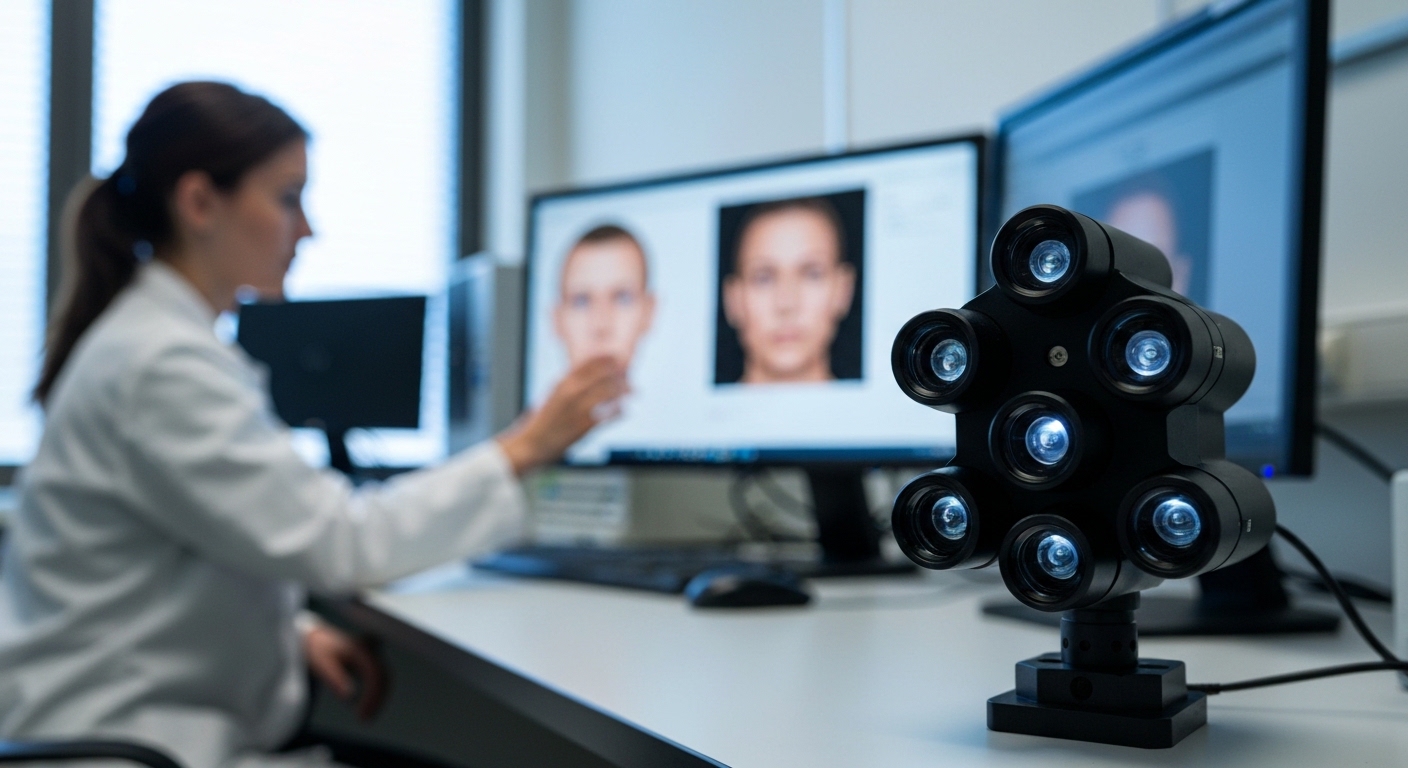
To investigate the mechanisms of avoidant behavior, the researchers recruited a cohort of 105 healthy women with varying levels of social anxiety. The study utilized eye-tracking technology, a tool that records the precise coordinates of a person's gaze to determine where their attention is focused, to measure gaze orientation toward pairs of happy faces. This methodology allowed the authors to quantify subtle shifts in visual engagement that might not be captured through self-reporting or manual response times alone. By focusing on a population with a range of social interaction anxiety scores, the study aimed to identify how individual differences in anxiety levels influence the processing of positive social stimuli when those stimuli are preceded by hidden emotional triggers. This focus on women is particularly relevant given the higher prevalence of anxiety disorders in this demographic and the potential for gender-specific manifestations of social avoidance.
Dissociation Between Initial Orientation and Sustained Attention
The experimental protocol centered on a subliminal priming mechanism where the target happy faces were preceded by masked emotional expressions, known as primes, of anger, disgust, happiness, or neutral expressions. Each prime was presented for a duration of 50 ms, a timeframe specifically chosen because it sits at the threshold of automatic processing (the brain's ability to register and react to information without conscious awareness). To confirm that the participants did not consciously perceive these brief images, the researchers conducted post-task interviews to assess subjective non-awareness. This verification ensured that the subsequent gaze patterns were a result of automatic perception rather than deliberate cognitive appraisal. Participants were then asked to make dichotomous authenticity choices regarding the happy facial expressions, a task requiring them to categorize the faces as either genuine or fake, allowing the researchers to determine if the underlying threat cues influenced conscious judgments or remained confined to behavioral avoidance patterns.
Clinical Implications for Social Withdrawal
The researchers evaluated whether subliminal threat cues influenced conscious perception by requiring the 105 participants to perform a task making dichotomous authenticity choices regarding the happy facial expressions. In this task, women had to decide whether the displayed positive emotion appeared genuine or forced. The data indicated that socially anxious tendencies were not correlated with authenticity judgments of the happy faces, suggesting that the underlying emotional primes did not distort the participants' conscious appraisal of social validity. Furthermore, the study found that socially anxious tendencies were not correlated with initial attention allocation toward happy faces as a function of prime emotion. This measurement of initial attention allocation (the very first location where a participant's eyes land after a stimulus appears) suggests that the reflexive, early stage of visual orienting remains unaffected by unconscious threat signals in this population. This finding is clinically significant as it suggests that the core deficit in social anxiety may not be a failure of initial social detection, but rather a problem with what happens after the first glance.
References
1. Wechsler TF, Kümpers FMLM, Mühlberger A. Inferiority or Even Superiority of Virtual Reality Exposure Therapy in Phobias?—A Systematic Review and Quantitative Meta-Analysis on Randomized Controlled Trials Specifically Comparing the Efficacy of Virtual Reality Exposure to Gold Standard in vivo Exposure in Agoraphobia, Specific Phobia, and Social Phobia. Frontiers in Psychology. 2019. doi:10.3389/fpsyg.2019.01758
2. Borghouts J, Eikey EV, Mark G, et al. Barriers to and Facilitators of User Engagement With Digital Mental Health Interventions: Systematic Review. Journal of Medical Internet Research. 2021. doi:10.2196/24387
3. Nolen–Hoeksema S, Wisco BE, Lyubomirsky S. Rethinking Rumination. Perspectives on Psychological Science. 2008. doi:10.1111/j.1745-6924.2008.00088.x
4. Jenner L, Farran EK, Welham A, Jones C, Moss J. The use of eye-tracking technology as a tool to evaluate social cognition in people with an intellectual disability: a systematic review and meta-analysis. Journal of Neurodevelopmental Disorders. 2023. doi:10.1186/s11689-023-09506-9
5. Cryan JF, O’Riordan KJ, Cowan CS, et al. The Microbiota-Gut-Brain Axis. Physiological Reviews. 2019. doi:10.1152/physrev.00018.2018