
- This study investigated whether direct anterior (DAA) or anterolateral (ALA) total hip arthroplasty approaches improve early gait restoration compared to the posterior approach (PA).
- A prospective cohort study evaluated 189 patients (DAA n=63, PA n=61, ALA n=65) undergoing unilateral THA at 3 months post-operatively.
- While clinical gains were similar, ALA showed greater step-length gain and lower energy cost, and DAA exhibited larger reductions in external work and better pendular recovery.
- The authors concluded that DAA and ALA confer earlier biomechanical benefits in gait efficiency compared with the PA approach.
- These findings support targeted rehabilitation strategies to optimize locomotor recovery after THA, considering approach-specific gait advantages.
Beyond Pain Relief: Optimizing Functional Recovery After Total Hip Arthroplasty
Total hip arthroplasty (THA) is the definitive treatment for end-stage hip osteoarthritis, reliably alleviating pain and improving patient-reported quality of life [1, 2]. As global life expectancy increases, the prevalence of this condition and the demand for THA are expected to rise [2]. Despite the procedure's success, a clinical challenge persists: many patients experience lasting gait abnormalities and functional limitations even with excellent radiological outcomes [3]. This has focused attention on surgical technique, particularly whether minimally invasive approaches like the direct anterior or anterolateral methods offer advantages over conventional techniques in the early postoperative period [4, 5]. A recent prospective study provides new data comparing the biomechanical and patient-reported outcomes of these distinct surgical approaches.
Investigating Surgical Approach and Early Functional Outcomes
While total hip arthroplasty is a highly effective procedure, the persistence of gait deficits after surgery suggests that standard clinical and radiological assessments may not capture the full picture of functional recovery. To address this, researchers have begun to focus on the potential influence of surgical technique. Minimally invasive methods, including the direct anterior approach (DAA) and the anterolateral approach (ALA), are theorized to facilitate a more rapid recovery compared to the conventional posterior approach (PA). A new prospective cohort study was designed to test this hypothesis directly by comparing the impact of these three distinct surgical approaches on both early gait restoration and broader patient-centered outcomes, aiming to provide a more complete understanding of postoperative recovery.
Study Design and Comprehensive Assessment Framework
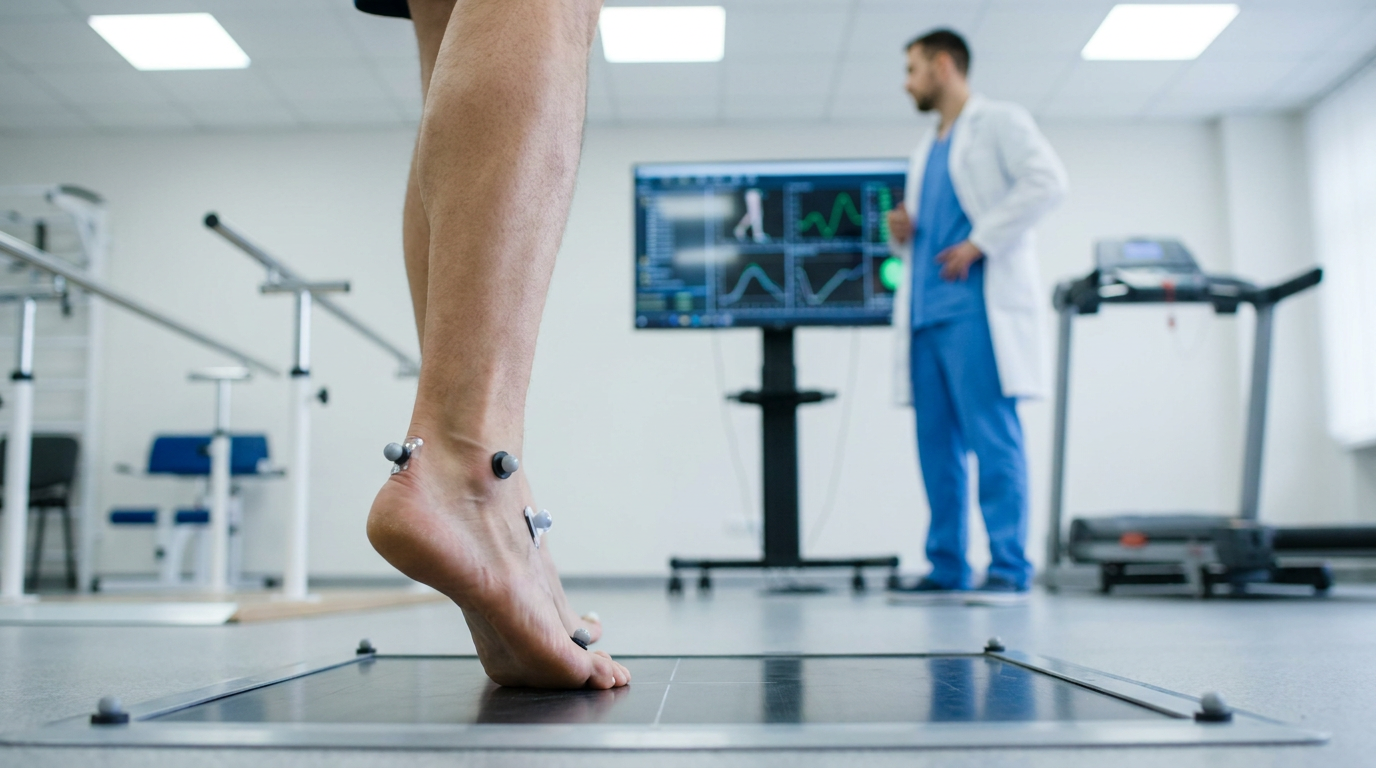
The investigation was a prospective cohort study that enrolled 189 participants undergoing primary unilateral THA for severe osteoarthritis. The cohort was divided into three groups based on surgical technique: 63 participants in the direct anterior approach (DAA) group, 61 in the posterior approach (PA) group, and 65 in the anterolateral approach (ALA) group. Each participant was assessed pre-operatively and again at 3 months post-operatively to evaluate early recovery. The study employed a comprehensive framework based on the World Health Organization's International Classification of Functioning, Disability and Health (WHO-ICF), which evaluates health from multiple perspectives. Body structure and function were assessed with radiographic parameters and the Oxford Hip Score (OHS). Activity was measured using 3-dimensional instrumented gait analysis, a technique using specialized sensors and cameras to precisely quantify walking patterns, including spatiotemporal parameters, joint motion (kinematics), joint forces (kinetics), mechanical work, and energy cost. Finally, participation in daily life was evaluated using the physical and mental component scores of the Short Form 36 Health Survey (SF-36). Paired-ANOVA was used to test for treatment effects and between-group differences (P <0.05), while principal-component analysis, a statistical method for identifying patterns in complex datasets, was used to explore relationships between biomechanical and clinical outcomes.
Universal Improvements and Approach-Specific Biomechanical Nuances
The findings confirmed that THA provides substantial benefits regardless of surgical approach. At 3 months, all groups showed significant improvements in patient-reported hip function via the Oxford Hip Score (P <0.05) and in quality of life via the Short Form 36 Health Survey scores (P <0.05). Objective gait analysis mirrored these gains, revealing significant improvements in step length, sagittal hip and pelvic motion (kinematics), and hip-flexion moment (all P <0.05). Furthermore, walking became more efficient across the board, evidenced by significant improvements in pendular recovery (P <0.05), a measure of how efficiently the leg swings forward, and significant reductions in both external mechanical work and the metabolic cost of walking (both P <0.05). These universal gains underscore the overall effectiveness of the procedure. Despite these shared benefits, a more nuanced picture emerged when comparing the surgical groups. Importantly, clinical and participation gains were similar across all three approaches, with patients reporting comparable levels of improvement. However, the detailed gait analysis uncovered distinct, approach-specific biomechanical advantages. The anterolateral approach (ALA) was associated with a greater gain in step length and a lower energy cost of walking. In contrast, the direct anterior approach (DAA) was associated with larger reductions in external work and better pendular recovery. These findings suggest that while patients may feel similarly improved at 3 months, their underlying gait mechanics recover along different trajectories depending on the surgical approach.
Clinical Implications for Targeted Rehabilitation
This study's results affirm that total hip arthroplasty markedly enhances function and quality of life, a consistent finding across the direct anterior, anterolateral, and posterior surgical approaches. The key clinical insight, however, lies in the divergence between patient-reported outcomes and objective biomechanical data. While patients reported similar satisfaction and functional gains at 3 months, the instrumented gait analysis revealed that the minimally invasive DAA and ALA approaches confer earlier biomechanical benefits in gait efficiency compared with the conventional PA. This discrepancy highlights the value of integrating objective measures with standard clinical scores to gain a more complete understanding of a patient's recovery. For the practicing physician, these findings suggest an opportunity to move beyond a uniform rehabilitation protocol for all THA patients. Understanding that an ALA patient may have a different early biomechanical profile (e.g., better step length) than a DAA patient (e.g., better swing efficiency) can inform more personalized physical therapy. The data support the development of targeted rehabilitation strategies designed to optimize locomotor recovery after THA, potentially allowing therapists to focus on specific deficits related to the surgical approach and accelerate a patient's return to full, efficient function.
References
1. Za P, Casciaro C, Papalia GF, et al. Hip resurfacing versus total hip arthroplasty: a systematic review and meta-analysis of randomized clinical trials.. International orthopaedics. 2024. doi:10.1007/s00264-024-06269-3
2. Silva GR, Neto LB, Oliveira LAD, et al. Comprehensive Management of Hip Osteoarthritis: A Systematic Review of Biomechanics, Total Hip Arthroplasty, and Rehabilitation Strategies. International Journal of Advanced Multidisciplinary Research and Studies. 2025. doi:10.62225/2583049x.2025.5.2.3949
3. Moyer R, Lanting B, Marsh J, et al. Postoperative Gait Mechanics After Total Hip Arthroplasty: A Systematic Review and Meta-Analysis. JBJS Reviews. 2018. doi:10.2106/JBJS.RVW.17.00133
4. Wang Z, Hou J, Wu C, et al. A systematic review and meta-analysis of direct anterior approach versus posterior approach in total hip arthroplasty. Journal of Orthopaedic Surgery and Research. 2018. doi:10.1186/s13018-018-0929-4
5. Kayani B, Konan S, Tahmassebi J, Ayuob A, Haddad FS. The direct superior approach versus posterior approach for total hip arthroplasty: study protocol for a prospective double-blinded randomised control trial.. Trials. 2020. doi:10.1186/s13063-020-04484-y