For Doctors in a Hurry
- Researchers investigated whether intraocular pressure fluctuations during musical performance are specific to instrument type or caused by the Valsalva maneuver.
- This cross-sectional study evaluated 63 young professional musicians, comparing 34 wind instrumentalists to 29 non-wind instrumentalists using tonometry and otoscopy.
- Wind instrumentalists showed significantly higher intraocular pressure during high-pitch playing compared to non-wind instrumentalists (p=0.007), despite no detectable Valsalva maneuvers.
- The authors concluded that intraocular pressure elevations are specific to wind instruments and correlate with the age musicians began their training.
- Clinicians should recognize that wind instrument performance induces pressure spikes independent of technique, potentially impacting long-term ocular health in these patients.
Ocular Pressure Dynamics in Professional Musicians
The physical demands of professional music performance extend beyond musculoskeletal strain to involve complex physiological stressors, including mechanical injuries from sustained high pressures within the oral, thoracic, and abdominal cavities [1]. Wind instrumentalists are particularly susceptible to these pressures, which have been linked to vocal tract changes and a higher prevalence of voice disorders [2]. While systemic effects are well documented, their specific impact on ocular physiology remains a clinical concern, particularly regarding the risk of glaucoma [3]. Clinicians have long questioned whether the repetitive strain of blowing against resistance mimics a Valsalva maneuver (forced expiration against a closed airway), potentially driving transient elevations in intraocular pressure [3]. A recent study of 63 young professional musicians found that intraocular pressure significantly increased during high-pitch playing (p=0.007), although the Valsalva maneuver was not detected as the underlying mechanism [3]. Furthermore, baseline intraocular pressure in wind instrumentalists positively correlated with the age at which they began playing (r=0.348, p=0.048), suggesting that cumulative exposure may influence resting ocular dynamics [3].
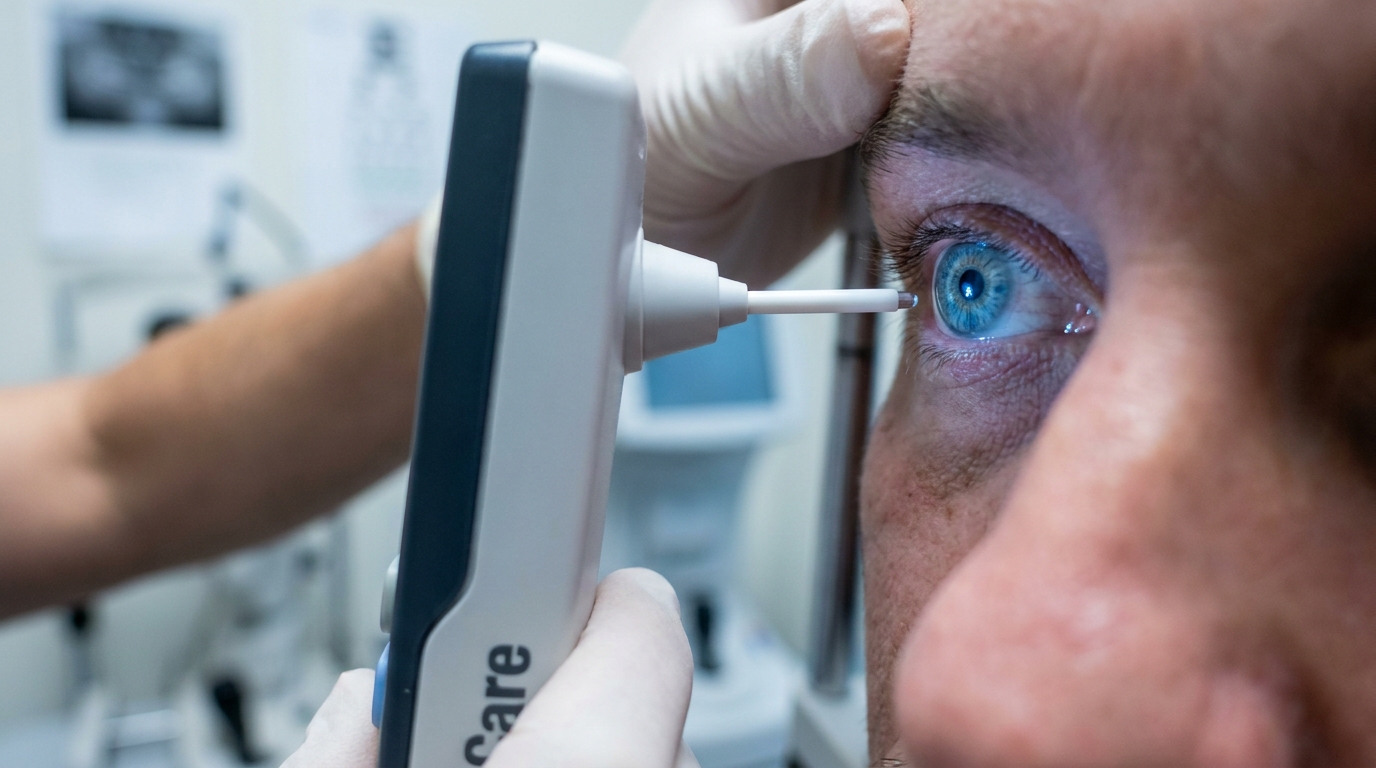
To investigate the physiological impact of musical performance on the eye, researchers conducted a cross-sectional study to determine if intraocular pressure fluctuations are specific to instrument type. The study initially enrolled 65 musicians, though the final sample consisted of 63 young professional musicians after two participants were excluded due to a history of glaucoma and an inability to tolerate intraocular pressure measurements. This cohort was divided into 34 wind instrumentalists and 29 non-wind instrumentalists, allowing for a direct comparison between musicians who utilize forced exhalation and those who do not. Beyond instrument type, the researchers evaluated potential relationships between intraocular pressure values and various demographic and environmental factors to identify other possible contributors to ocular strain. The measurement protocol was designed to capture real-time physiological changes during active performance. Participants underwent tonometry using the ICare IC100 device to measure fluid pressure inside the eye. Simultaneously, the researchers performed otoscopy using the Dino-Lite Basic EarScope to monitor for tympanic membrane movement. These procedures were performed at four distinct time points: before playing, while playing a low-pitched note, while playing a high-pitched note, and immediately after playing. By synchronizing these measurements, the study sought to clarify whether the physical act of playing triggered an involuntary Valsalva maneuver, a forced expiratory effort against a closed airway that can acutely elevate internal pressures.
Pitch-Dependent Pressure Elevations
The researchers found that at baseline, during low-pitch playing, and after the performance concluded, there were no significant differences in absolute intraocular pressure between wind and non-wind instrumentalists (Mann-Whitney U test, all p≥0.052). However, when analyzing the change in intraocular pressure relative to baseline (ΔIOP), a metric used to quantify the magnitude of pressure shifts within an individual, the study detected significant differences during low-pitch playing (Mann-Whitney U test, p≤0.025). This suggests that even lower-register performance induces a measurable physiological shift in ocular tension compared to the resting state of non-wind musicians. The most pronounced physiological changes occurred during the execution of high-pitched notes. The researchers observed that intraocular pressure differed significantly while playing high-pitched notes (Mann-Whitney U test, p=0.007). Specifically, both high-resistance wind instrumentalists (those playing instruments requiring high blowing pressure) and low-resistance wind instrumentalists exhibited higher intraocular pressure than non-wind instrumentalists during high-pitch performance (Mann-Whitney U test, both p≤0.041). This elevation was further confirmed by the ΔIOP measurements, which also revealed significant differences during high-pitch playing (Mann-Whitney U test, p≤0.025). When comparing subgroups within the wind category, the researchers found that the mechanical resistance of the instrument did not influence the degree of ocular hypertension. There were no differences in intraocular pressure between high-resistance and low-resistance instruments across any measurement condition (Mann-Whitney U test, all p≥0.323). Similarly, the analysis of ΔIOP showed no differences between these two groups (Mann-Whitney U test, all p≥0.112). For clinicians managing patients with glaucoma or ocular hypertension, these findings indicate that transient elevations in intraocular pressure are a generalized phenomenon across the wind instrument category during high-register play, regardless of the specific back-pressure characteristics of the instrument.
Mechanisms and Long-Term Considerations
A primary objective of the study was to investigate the role of the Valsalva maneuver as a potential underlying mechanism for the observed intraocular pressure elevations. To monitor for this, the researchers utilized simultaneous otoscopy to detect tympanic membrane movement, which serves as a clinical indicator of the pressure shifts associated with the maneuver. Despite the high physical demand of performance, the Valsalva maneuver was not detected for any instrument or under any measurement conditions via otoscopy. This finding is clinically significant because it suggests that the transient ocular hypertension experienced by wind players is not a result of a closed-airway strain. Instead, it is likely driven by other physiological factors, such as increased intrathoracic pressure or altered venous return during sustained exhalation. The researchers also evaluated whether individual patient characteristics or external variables influenced the magnitude of these pressure shifts. The analysis revealed that no relationships were found between demographic or environmental factors and intraocular pressure fluctuations (Pearson's or Spearman's correlation, all p≥0.273). However, the study did identify a specific correlation regarding the resting ocular state of these musicians. Baseline intraocular pressure positively correlated with the age at which wind instrumentalists began playing their instrument (Pearson's correlation, r=0.348, p=0.048). This indicates that musicians who started their training later in life exhibited higher resting pressures, a factor that may warrant consideration when assessing the cumulative ocular health of professional wind players over a career. For the practicing clinician, these results clarify that the intraocular pressure spikes associated with wind instruments are a direct consequence of the act of playing rather than an incidental breathing technique. Because the study found no correlation between pressure fluctuations and standard demographic variables (p≥0.273), physicians cannot rely on typical patient profiles to predict which musicians might experience the most significant elevations during high-pitch performance. Instead, the findings emphasize the importance of monitoring wind instrumentalists, particularly those with existing risk factors for glaucoma, because the repetitive nature of these pressure spikes occurs independently of the Valsalva maneuver and is intrinsic to the high-register demands of the profession.
References
1. Okoshi K, Minami T, Kikuchi M, Tomizawa Y. Musical Instrument-Associated Health Issues and Their Management. The Tohoku Journal of Experimental Medicine. 2017. doi:10.1620/tjem.243.49
2. El-Demerdash AM, Hafez N, Tanyous HN, Rezk KM, Shadi MS. Screening of voice and vocal tract changes in professional wind instrument players. European Archives of Oto-Rhino-Laryngology. 2024. doi:10.1007/s00405-024-08755-1
3. Noya-Padin V, Silva FD, Martingo Â, Matos V, Lira M, Pena-Verdeal H. Intraocular pressure fluctuations and the role of the Valsalva maneuver in young professional musicians.. Ophthalmology. 2026. doi:10.1016/j.ophtha.2026.04.018