For Doctors in a Hurry
- Researchers investigated whether a combined nutrition and exercise program improves physical functioning in ICU survivors.
- This single-center randomized controlled trial included 39 adult patients who stayed in the ICU for at least 48 hours.
- At 12 weeks, the intervention group demonstrated significant improvements in physical functioning (p=0.024) and increased daily protein intake from 82.3 to 116.7 g/kg (p=0.003).
- The authors concluded that a 12-week combined lifestyle intervention significantly enhances physical recovery and nutritional intake for these patients.
- Clinicians should consider prescribing structured exercise and dietary protein supplementation to accelerate functional recovery in post-ICU patients.
The Rehabilitation Gap in Post-Intensive Care Recovery
While structured lifestyle interventions combining physical activity and nutritional support are well-established cornerstones for managing chronic conditions in oncology and internal medicine [1, 2], their application in acute recovery settings remains less defined. Patients who survive prolonged intensive care unit admissions frequently face severe, lingering deficits in physical functioning and overall health-related quality of life. Although targeted exercise and dietary modifications have proven effective in mitigating physical decline across various complex comorbidities [3], standard post-intensive care aftercare often lacks this intensive, multimodal focus. Consequently, clinicians struggle to find evidence-based rehabilitation protocols that adequately address the profound muscle wasting and functional impairment seen in these survivors. A randomized controlled trial now offers objective data on whether a dedicated regimen of exercise and protein supplementation can bridge this critical gap in recovery.
Targeting Vulnerable Survivors in a Randomized Trial
To evaluate how targeted rehabilitation strategies can aid recovery, researchers conducted a single-center randomized controlled trial at Frisius Medical Centre Leeuwarden, a teaching hospital in the Netherlands. The primary objective was to assess the impact of a combined lifestyle intervention on perceived physical functioning and health-related quality of life after discharge. The investigators specifically targeted adult long-stay intensive care unit survivors, defined as patients admitted for 48 hours or more. To ensure the intervention reached individuals with significant functional deficits, included patients were required to have a baseline physical functioning score of less than 67 percent on the Dutch translation of the RAND-36 item Health Survey (a widely used questionnaire that quantifies patient-reported physical and mental health status). Ultimately, 39 patients completed the study, with 20 individuals assigned to the control group and 19 to the intervention group. The patient cohort was 26 percent female and had a median age of 61 years (interquartile range 46 to 72 years). These participants had experienced significant critical illness, reflected by a median intensive care unit stay of 7 days (interquartile range 4 to 14 days). Furthermore, the patients were severely ill during their acute phase, demonstrating a median Acute Physiology and Chronic Health Evaluation III score of 67 (interquartile range 50 to 89), a metric that underscores their high baseline disease severity and mortality risk. The researchers noted that despite some imbalances in intensive care unit characteristics, the baseline demographics and physical functioning scores were similar between groups prior to the start of the trial.
A Multimodal Approach to Post-ICU Care
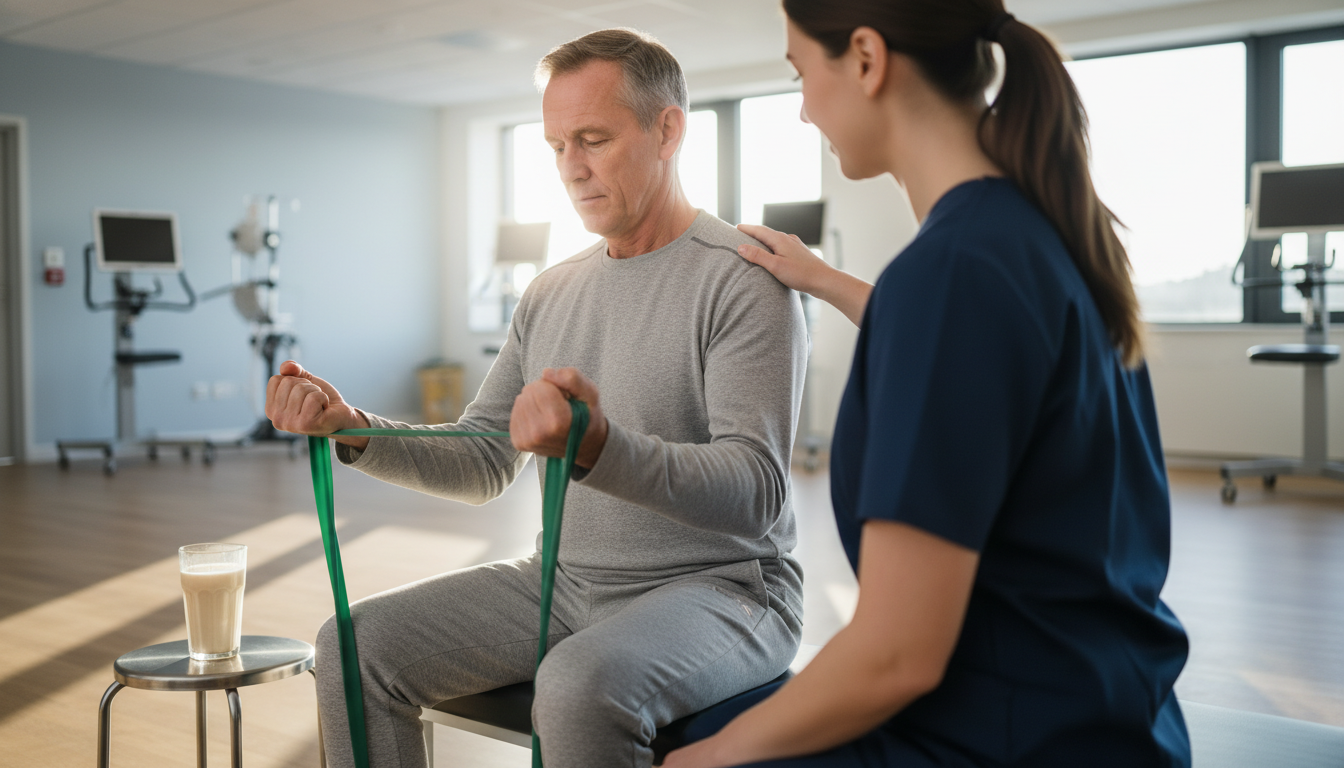
To address the profound functional deficits observed in these patients, the researchers designed an active intervention spanning 12 weeks. This multimodal regimen included twice-weekly group exercise, dietary advice, and targeted protein supplementation as needed to support muscle recovery. In contrast, patients assigned to the control group received standard aftercare according to local hospital protocols, allowing the investigators to isolate the clinical effects of the structured lifestyle program. To quantify the impact of this regimen, the researchers established the physical functioning score at 12 weeks as the primary outcome. Both this primary metric and all secondary outcomes were systematically assessed during clinic visits at baseline and after the 12-week period. This structured evaluation timeline ensured that any changes in patient-reported health status or nutritional intake could be accurately captured, providing clinicians with a clear comparison between the active intervention and standard care cohorts.
Measurable Gains in Function and Nutrition
At the conclusion of the study period, the structured rehabilitation approach yielded measurable clinical benefits. At 12 weeks, the intervention group showed a significant improvement in the physical functioning domain score (p = 0.024). For clinicians managing post-intensive care recovery, this objective increase in patient-reported physical capability underscores the utility of moving beyond standard aftercare to actively rebuild patient strength and mobility. Alongside these functional gains, the dietary advice and supplementation components of the program drove substantial changes in patient nutrition. Daily protein intake in the intervention group increased from 82.3 (67.5 to 97.9) to 116.7 (107.3 to 138.7) g/kg (p = 0.003). By the end of the trial, 68 percent of the intervention group met the minimal protein intake target of 1.2 g/kg/d. Reaching this nutritional threshold is highly relevant in clinical practice, as adequate protein consumption is essential for mitigating the severe muscle wasting typically observed after prolonged critical illness. Synthesizing these functional and nutritional outcomes, the authors concluded that a combined lifestyle intervention program can significantly improve physical functioning and protein intake in intensive care unit survivors with prolonged physical functioning scores below reference. These findings provide physicians with actionable evidence that pairing supervised exercise with aggressive nutritional support can effectively address the lingering deficits that complicate long-term recovery.
References
1. Kushi LH, Byers T, Doyle C, et al. American Cancer Society Guidelines on Nutrition and Physical Activity for Cancer Prevention: Reducing the Risk of Cancer With Healthy Food Choices and Physical Activity. CA A Cancer Journal for Clinicians. 2006. doi:10.3322/canjclin.56.5.254
2. Fong D, Ho J, Hui BPH, et al. Physical activity for cancer survivors: meta-analysis of randomised controlled trials. BMJ. 2012. doi:10.1136/bmj.e70
3. Lord S, Naidoo V, Mostert K. Lifestyle interventions in comorbid mental and physical illness: A systematic review protocol. South African Journal of Physiotherapy. 2023. doi:10.4102/sajp.v79i1.1848