For Doctors in a Hurry
- Researchers investigated how aging affects ghrelin receptor expression and neuronal responsiveness within the hypothalamic nuclei regulating metabolic homeostasis.
- This study utilized immunohistochemistry and electrophysiology to compare male Wistar rats at two, twelve, and twenty-four months of age.
- Ghrelin receptor expression in the dorsomedial nucleus rose from 4.0 percent in young rats to 24.8 percent in aged rats.
- The researchers concluded that aging significantly alters hypothalamic sensitivity to ghrelin, shifting neuronal responses from activation to inhibition in specific regions.
- These age-related changes in hormone receptor sensitivity may contribute to the development of metabolic syndrome and other endocrine-related pathologies.
The hypothalamus serves as the primary integration center for energy homeostasis, coordinating peripheral signals to regulate appetite and metabolic rate. As patients age, this balance often falters, contributing to metabolic syndrome, a cluster of abnormalities including central obesity and insulin resistance that are associated with decreased serum ghrelin concentrations [1]. In a cohort of 76 older adults, researchers found that an elevated ratio of acylated to unacylated ghrelin (the two primary circulating forms of the hormone) predicted the risk of sarcopenic obesity, defined as the co-occurrence of low muscle mass and obesity, five years later [2]. While the gut-brain axis undergoes significant shifts during senescence [3, 4], recent electrophysiological data show that aging alters the sensitivity of the growth hormone secretagogue receptor 1A (GHSR-1A), the primary receptor for ghrelin, within the tuberal area of the brain [5]. Specifically, the proportion of neurons in the dorsomedial hypothalamic nucleus inhibited by ghrelin increased from 7 percent in young subjects to 64 percent in aged subjects, suggesting a fundamental shift in how the central nervous system processes hunger signals over the lifespan [5].
Quantifying Receptor Density Across the Lifespan
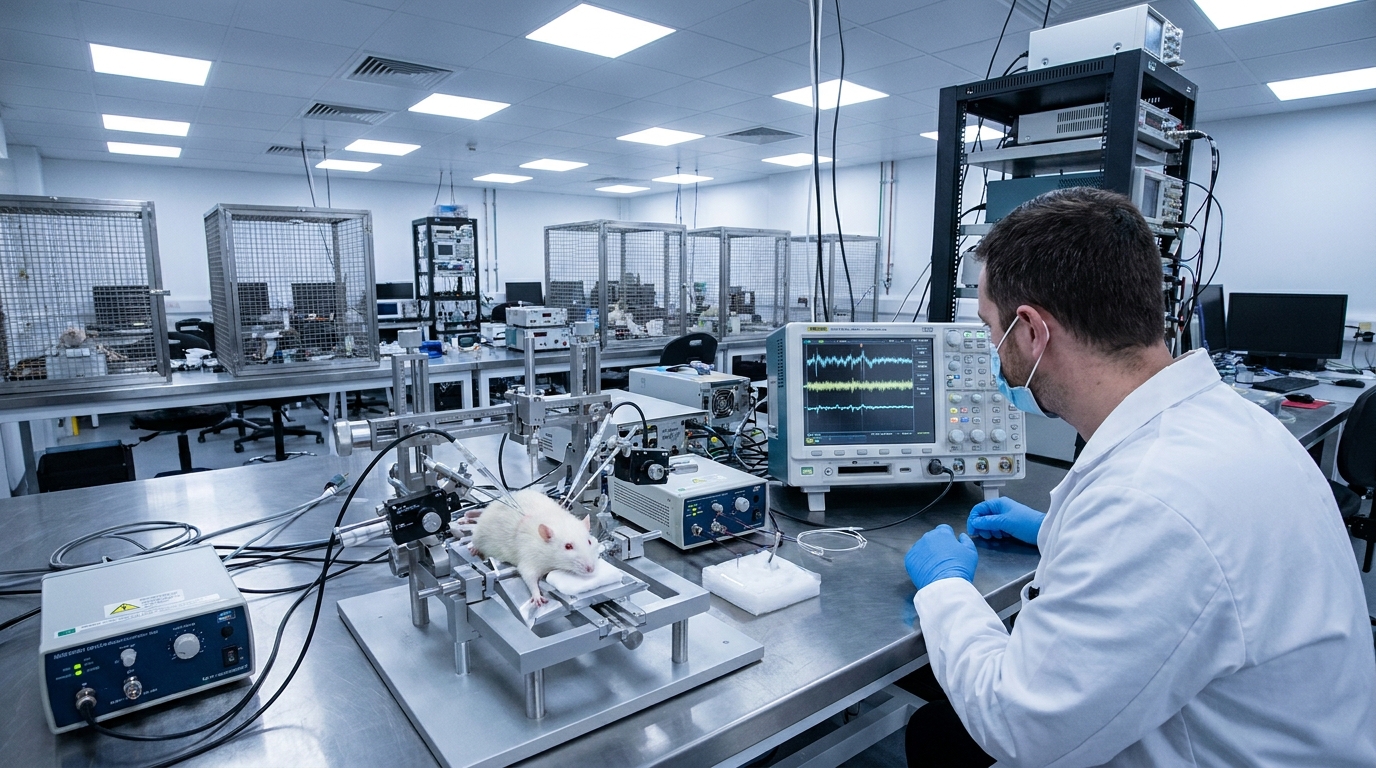
To investigate the mechanisms behind shifting metabolic responses, researchers examined the hypothalamic tissues of male Wistar rats at three distinct developmental stages: young (2 months), mature (12 months), and aged (24 months). The study utilized immunohistochemistry, a technique that employs specific antibodies to visualize and quantify the presence of proteins within tissue sections, to map the expression of GHSR-1A. This receptor is the primary site through which the hormone ghrelin exerts its effects on energy balance and growth hormone secretion. To complement these anatomical findings, the team also performed extracellular in vivo electrophysiology, a method of recording the electrical firing patterns of individual neurons within a living organism to determine how they respond to hormonal stimuli.
The findings revealed a stark contrast in receptor density between early life and maturity. In young rats, the presence of GHSR-1A was remarkably sparse, with GHSR-1A-immunoreactive neurons observed in only 4.0 ± 1.5 percent of the dorsomedial hypothalamic nucleus (DMN) and 2.3 ± 1.3 percent of the ventromedial hypothalamic nucleus (VMN). These two regions are critical for regulating satiety and glucose homeostasis. However, as the animals reached maturity, the expression of these receptors underwent a significant expansion. In mature rats, the percentage of GHSR-1A-immunoreactive neurons rose to 22.1 ± 2.8 percent in the DMN and 25.5 ± 4.4 percent in the VMN, representing a five-fold to ten-fold increase in receptor-positive cells compared to the younger cohort.
This elevated receptor density persisted into the latest stages of life without returning to baseline levels. In aged rats, the researchers found that the percentage of GHSR-1A-immunoreactive neurons remained high, measured at 24.8 ± 2.8 percent in the DMN and 26.5 ± 3.8 percent in the VMN. While the median firing rates of neurons in these nuclei did not change following ghrelin administration across any age group, the underlying cellular landscape was fundamentally altered. The significant increase in receptor expression from youth to maturity suggests that the hypothalamus may attempt to compensate for changing metabolic demands or declining hormone levels by upregulating its sensitivity to ghrelin signaling, a shift that could have profound implications for age-related metabolic dysfunction.
The researchers utilized extracellular in vivo electrophysiology to assess how ghrelin administration influenced neuronal activity within the DMN and the VMN. Despite the significant increase in receptor density observed in older animals, the median firing rate of DMN and VMN neurons did not change after ghrelin administration across all age groups. This stability in the overall frequency of neuronal discharges, however, masked a profound shift in the qualitative response of individual cells to the hormone. While the net output of these nuclei appeared constant, the internal signaling dynamics underwent a complete reversal as the rats aged.
In the DMN of young rats, ghrelin acted primarily as an excitatory signal, where the hormone predominantly activated 72 percent of neurons. In this same young cohort, only 7 percent of neurons were inhibited by ghrelin, suggesting a highly consistent stimulatory pathway in early development. This pattern shifted significantly as the animals reached maturity. In the DMN of mature rats, 50 percent of neurons were inhibited by ghrelin, marking a departure from the excitatory dominance seen in youth. By the time the animals reached senescence, this inhibitory trend became even more pronounced. In the DMN of aged rats, 64 percent of neurons were inhibited by ghrelin, representing a functional inversion of the hypothalamic response to this metabolic signal.
This transition from a predominantly excitatory to a predominantly inhibitory response in the DMN suggests that the aging brain processes hunger signals through a fundamentally different neural architecture. For the clinician, these findings imply that the orexigenic, or appetite-stimulating, effects of ghrelin may be blunted or altered in older patients, potentially contributing to the dysregulation of energy intake and the development of metabolic syndrome. The fact that the DMN, a region critical for integrating circadian rhythms with feeding behavior, shows such a dramatic shift in response type indicates that age-related metabolic decline is not merely a result of hormone deficiency, but rather a consequence of altered neuronal sensitivity and signal processing within the central nervous system.
The researchers observed a distinct functional pattern in the VMN, a region traditionally associated with satiety and glucose regulation, which contrasted with the findings in the dorsomedial nucleus. In the VMN of young rats, 52 percent of neurons were inhibited by ghrelin, establishing a baseline where the hormone primarily suppressed activity in this satiety-related center. This initial state reflects the complex interplay of ghrelin as it simultaneously stimulates hunger centers and inhibits those responsible for fullness. As the animals reached maturity, the functional response of the VMN began to shift toward a different signaling profile.
In the VMN of mature rats, the proportion of ghrelin-activated neurons increased and the percentage of ghrelin-inhibited neurons decreased to 40 percent. This trend continued into senescence, where in the VMN of aged rats, the percentage of ghrelin-inhibited neurons decreased to 33 percent. Despite these numerical changes across the lifespan, the researchers noted that the shift in the responsiveness of VMN neurons to ghrelin during aging was not statistically significant. This lack of statistical significance suggests that while the VMN undergoes age-related changes, the functional reorganization is less uniform or less robust than the inversion seen in the dorsomedial nucleus.
These findings highlight the regional specificity of hypothalamic aging, which has direct implications for understanding metabolic decline in older patients. The VMN, which plays a critical role in the sympathetic nervous system control of thermogenesis and glucose uptake, appears more resilient to the functional inversions seen in other hypothalamic regions. However, the gradual reduction in ghrelin-induced inhibition within the VMN may still contribute to the overall dysregulation of energy balance. Understanding that the sensitivity of hypothalamic neurons to ghrelin changes with aging provides a neurological basis for why elderly patients may experience altered appetite cues and a higher risk for metabolic syndrome, a cluster of conditions that increase the risk of heart disease, stroke, and type 2 diabetes.
The hypothalamus functions as a specialized neuroendocrine center responsible for the regulation of homeostasis, vital functions, and the biological process of aging. Within this regulatory hub, the hormone ghrelin exerts its effects on various hypothalamic nuclei, including the tuberal area, by binding to GHSR-1A. The researchers demonstrated that the sensitivity of hypothalamic neurons to ghrelin changes significantly with aging, a process characterized by a marked elevation in the expression of GHSR-1A within the DMN and the VMN. Specifically, immunohistochemistry revealed that while only 4.0 ± 1.5 percent of DMN neurons and 2.3 ± 1.3 percent of VMN neurons expressed these receptors in young rats at 2 months of age, these figures rose to 24.8 ± 2.8 percent in the DMN and 26.5 ± 3.8 percent in the VMN by the time the rats reached 24 months.
This increase in receptor density does not translate to enhanced physiological signaling; rather, aging is associated with distinct deviations in neuronal responses to ghrelin. In the DMN, the predominant response shifted from 72 percent activation in young rats to 64 percent inhibition in aged rats. These alterations in hormone receptor sensitivity, combined with the shift in the types of responses elicited by ghrelin, may serve as a primary substrate for the development of age-related diseases. Clinically, these neuroendocrine shifts are particularly relevant to the pathogenesis of metabolic syndrome, a cluster of conditions including hypertension, hyperglycemia, and abdominal obesity. For the practicing clinician, understanding that the aging brain may process orexigenic signals in an inverted or dysfunctional manner provides a neurological framework for managing the progressive endocrine dysfunction and metabolic instability frequently observed in geriatric populations.
References
1. Srikanthan K, Feyh A, Visweshwar H, Shapiro JI, Sodhi K. Systematic Review of Metabolic Syndrome Biomarkers: A Panel for Early Detection, Management, and Risk Stratification in the West Virginian Population. International Journal of Medical Sciences. 2015. doi:10.7150/ijms.13800
2. Cappellari GG, Semolic A, Zanetti M, et al. Sarcopenic obesity in free-living older adults detected by the ESPEN-EASO consensus diagnostic algorithm: Validation in an Italian cohort and predictive value of insulin resistance and altered plasma ghrelin profile.. Metabolism: clinical and experimental. 2023. doi:10.1016/j.metabol.2023.155595
3. Cryan JF, O’Riordan KJ, Cowan CS, et al. The Microbiota-Gut-Brain Axis. Physiological Reviews. 2019. doi:10.1152/physrev.00018.2018
4. Loh JS, Mak WQ, Tan L, et al. Microbiota–gut–brain axis and its therapeutic applications in neurodegenerative diseases. Signal Transduction and Targeted Therapy. 2024. doi:10.1038/s41392-024-01743-1
5. Masliukov PM, Spirichev AA, Anfimova PA, Moiseev KY, Salnikov EV, Pankrasheva LG. Age-related shifts in ghrelin responsiveness of dorsomedial and ventromedial hypothalamic neurons in rats.. Brain research. 2026. doi:10.1016/j.brainres.2026.150346