
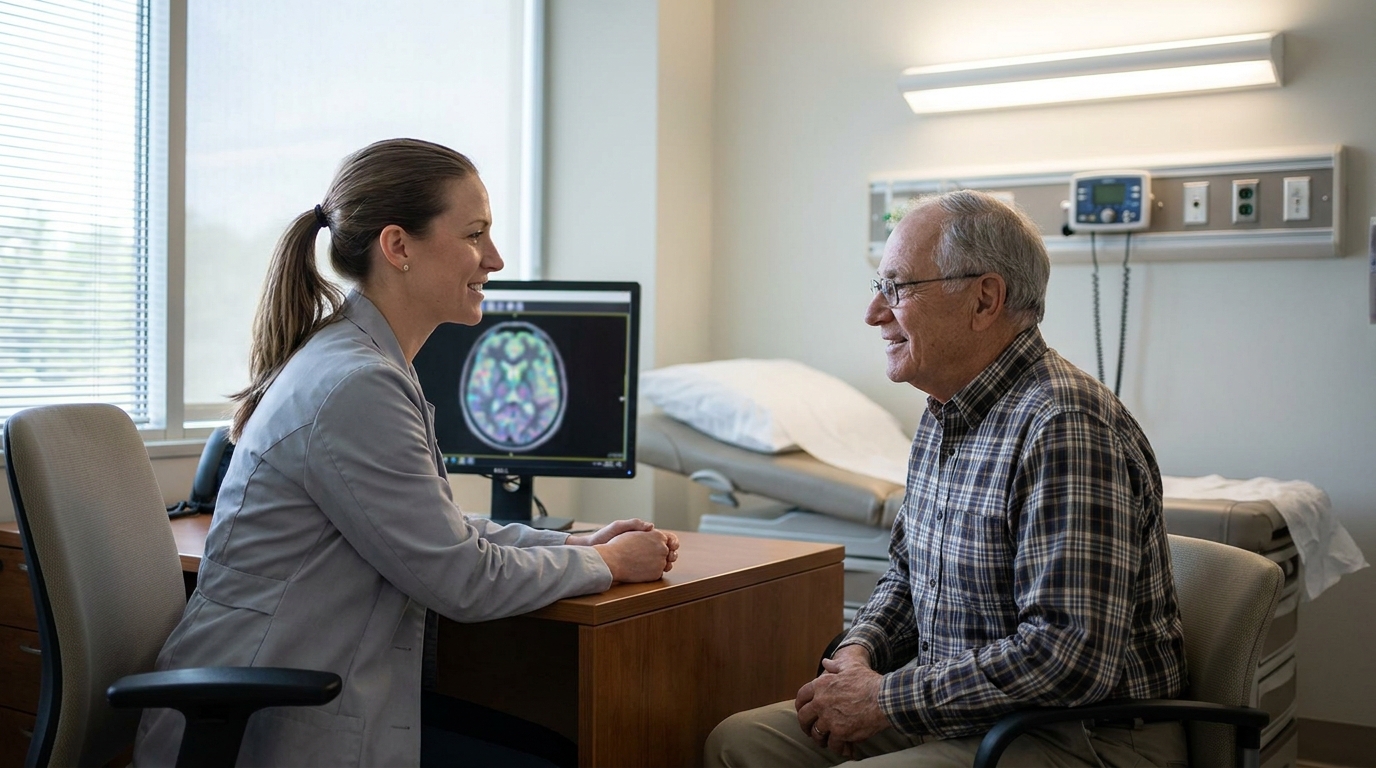
- Researchers investigated whether amygdala damage reduces the motivation to empathize, a trait distinct from the ability to accurately identify emotions.
- This study compared 21 patients with amygdala lesions to 22 patients with other brain damage and 24 healthy controls.
- Patients with amygdala damage showed similar levels of empathy motivation compared to both the brain-damaged and healthy control groups.
- The findings indicate that amygdala damage does not necessarily disrupt the drive to engage in affective or cognitive empathy.
- These results suggest that callousness and apathy in psychopathy may not stem primarily from dysfunction within the amygdala.
The Neurobiology of Social Engagement and Empathic Drive
The amygdala is traditionally characterized as a critical node in the neural circuitry of social cognition, specifically regarding the processing of threat and the identification of others' distress. Clinical observations in patients with mood disorders and disruptive behavior disorders frequently highlight how altered limbic and fronto-cingulate activity correlates with impaired social functioning [1, 2]. While therapist empathy is established as a moderately strong predictor of positive clinical outcomes across diverse patient populations [3], the specific structural requirements for maintaining the drive to connect with others remain debated. Recent meta-analytic evidence suggests that emotional categories may be constructed from distributed networks rather than isolated brain regions, raising questions about how focal lesions truly impact complex social behaviors [4]. Furthermore, persistent deficits in facial emotion recognition are often observed in remitted states of bipolar disorder, suggesting that social cognitive impairments can exist independently of acute psychiatric symptoms [5]. A recent study investigates whether the fundamental motivation to engage in empathy is preserved even when the amygdala is structurally compromised.
Distinguishing Empathic Accuracy from Social Motivation
Historically, clinical research has linked damage to the amygdala with significant impairments in empathy. These deficits are typically characterized by an inability to accurately identify the emotional experiences of others, a skill known as empathic accuracy. This impairment is especially pronounced when patients attempt to recognize fear in others, a finding that has led to theoretical models suggesting that amygdala dysfunction serves as a core feature of psychopathy. Because psychopathy is defined by a lack of emotional resonance and callousness, the amygdala has often been viewed as the primary engine for both the perception of and the motivation for social connection. However, emerging evidence suggests that the internal drive to engage with others, or empathy motivation, is a neurobiologically distinct process from empathic accuracy. While a patient may struggle to correctly label a facial expression, their desire to connect often remains intact. Clinical observations have noted a paradoxical behavior in patients with focal amygdala lesions. Despite their perceptual deficits, they frequently tend to approach rather than avoid empathic encounters with strangers. This suggests that the structural integrity of the amygdala is not a prerequisite for the social impulse to engage, even when patients have documented impairments in their ability to process emotional cues accurately. To investigate this distinction, researchers utilized a free-choice paradigm (a behavioral task where participants choose between engaging in empathy-related activities or neutral ones) to measure the willingness of participants to engage in social tasks. The study compared 21 patients with amygdala lesions against two control groups: 22 patients with brain damage outside the amygdala and 24 healthy individuals with no brain damage. The results demonstrated that damage to the amygdala was not associated with the avoidance of either affective empathy (the drive to share another person's emotional state) or cognitive empathy (the drive to understand another person's perspective). Patients with amygdala damage exhibited levels of empathy motivation similar to both control groups, suggesting that amygdala dysfunction may not be inherently linked to the callousness, apathy, or lack of caring often associated with psychopathy.
Quantifying the Drive to Connect in Lesion Patients
The researchers conducted a targeted investigation into empathy motivation by recruiting a specific cohort of 21 patients with focal amygdala lesions. To ensure the findings were specific to the amygdala rather than general neurological impairment, the study utilized two distinct control groups: 22 patients with brain damage localized outside the amygdala and 24 healthy individuals with no history of brain damage. This three-group design allowed for a rigorous comparison of social drive across different neurological profiles, providing a clear baseline for how localized damage affects the willingness to engage with others. To quantify the internal drive to connect, the researchers employed a free-choice paradigm, a behavioral assessment where participants are given the autonomy to choose whether to engage in an empathic activity versus a neutral one. This method bypasses the limitations of self-reporting by measuring actual behavioral preferences in real time. The assessment specifically distinguished between two facets of social engagement: affective empathy motivation, defined as the drive to share another person's emotional experience, and cognitive empathy motivation, which refers to the drive to understand another's perspective or mental state. The data revealed that damage to the amygdala was not associated with the avoidance of either affective or cognitive empathy motivation. Statistical analysis showed that the 21 patients in the amygdala lesion group exhibited similar levels of empathy motivation when compared to both the 22 brain-damaged controls and the 24 healthy participants. These findings indicate that while the amygdala is necessary for the accurate identification of emotions, it is not the primary driver of the desire to empathize. For clinicians, this suggests that amygdala dysfunction may not be the underlying cause of the callousness or lack of caring seen in psychopathy, as the fundamental motivation to engage socially remains intact despite structural damage.
Clinical Implications for Psychopathy and Personality Disorders
The observation that amygdala damage does not necessarily disrupt the motivation to empathize challenges long-standing neurobiological models that position this structure as the primary driver of social concern. While the amygdala is essential for the accurate identification of emotional cues, particularly fear, its destruction does not eliminate the internal desire to engage with the emotional states of others. In the study cohort, the 21 patients with focal amygdala lesions demonstrated a persistent drive to choose empathic engagement over neutral interactions, performing at levels comparable to both the 22 patients with damage localized outside the amygdala and the 24 healthy controls. This suggests that the neural architecture governing the intrinsic drive to empathize is distinct from the circuitry required for the cognitive or affective processing of emotional stimuli. These findings provide a critical refinement to the clinical understanding of psychopathy, a condition frequently characterized by callousness, apathy, and a lack of caring. Historically, amygdala dysfunction has been theorized as a core feature of psychopathy because of the observed deficits in fear processing and empathic accuracy. However, the current data indicate that amygdala damage or dysfunction may not be associated with traits such as callousness, apathy, or lack of caring, which are the hallmark interpersonal features often linked to psychopathy. Because the patients in this study maintained a normal motivation to empathize despite their neurological deficits, clinicians may need to look toward other neural networks, such as the ventromedial prefrontal cortex or the striatum, to explain the profound lack of social concern seen in psychopathic populations. For the practicing clinician, this distinction is vital for the differential diagnosis and management of personality and behavioral disorders. The evidence indicates a clear separation between an inability to recognize emotions and a lack of interest in them. Patients with isolated amygdala damage may struggle to read social cues but still possess a fundamental drive to connect, whereas those exhibiting psychopathic traits may possess the cognitive ability to recognize emotions but lack the intrinsic motivation to care about them. Recognizing that amygdala damage does not impair the motivation to empathize allows for more targeted behavioral therapies that focus on compensatory strategies for emotion recognition rather than attempting to instill a social drive that may already be present in patients with focal neurological lesions.
References
1. Cusi AM, Nazarov A, Holshausen K, MacQueen G, McKinnon MC. Systematic review of the neural basis of social cognition in patients with mood disorders. Journal of Psychiatry and Neuroscience. 2012. doi:10.1503/jpn.100179
2. Alegría AA, Raduà J, Rubia K. Meta-Analysis of fMRI Studies of Disruptive Behavior Disorders. American Journal of Psychiatry. 2016. doi:10.1176/appi.ajp.2016.15081089
3. Elliott R, Bohart AC, Watson JC, Murphy D. Therapist empathy and client outcome: An updated meta-analysis.. Psychotherapy. 2018. doi:10.1037/pst0000175
4. Lindquist KA, Wager TD, Kober H, Bliss‐Moreau E, Barrett LF. The brain basis of emotion: A meta-analytic review. Behavioral and Brain Sciences. 2012. doi:10.1017/s0140525x11000446
5. Samamé C, Martino DJ, Strejilevich S. Social cognition in euthymic bipolar disorder: systematic review and meta‐analytic approach. Acta Psychiatrica Scandinavica. 2011. doi:10.1111/j.1600-0447.2011.01808.x