
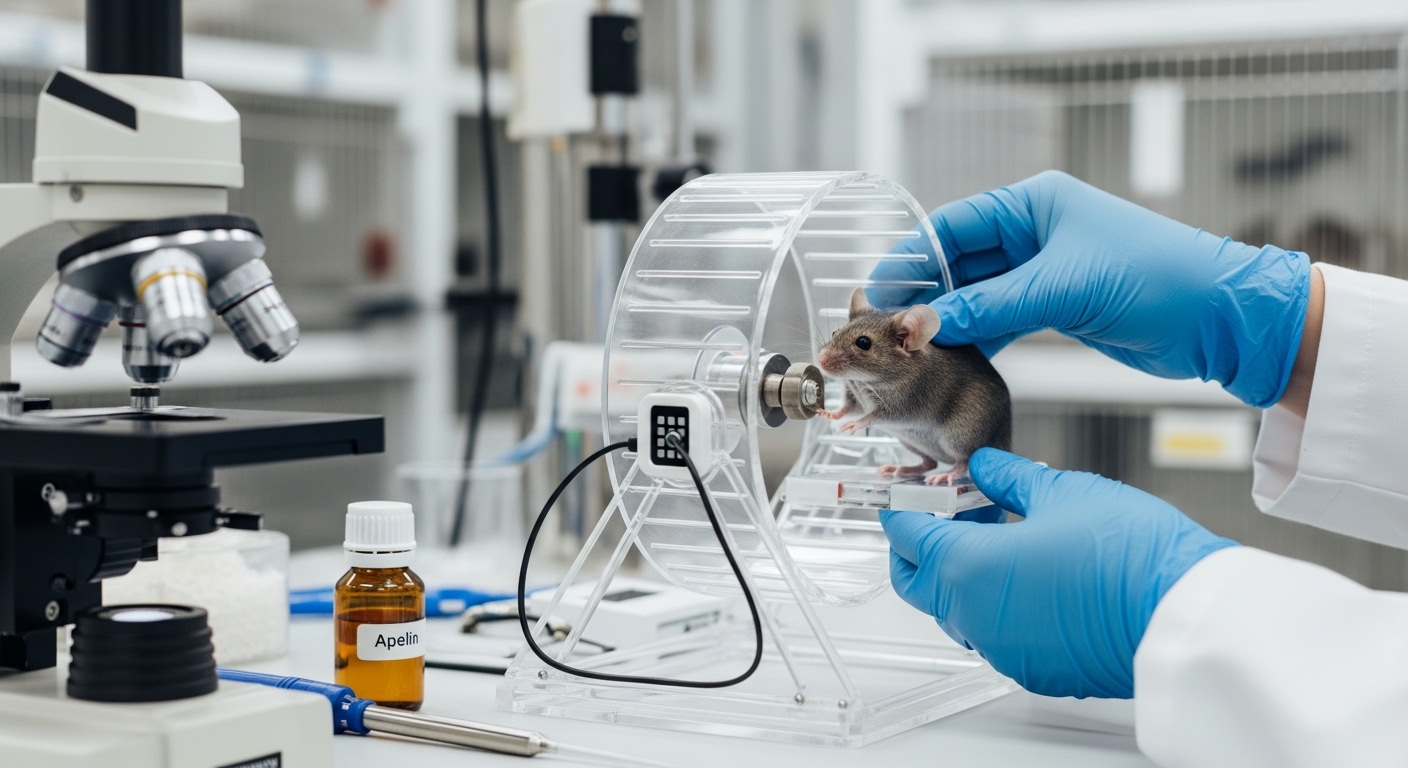
- The study investigated the unknown molecular mediators of physical exercise's antidepressant effects and hippocampal plasticity.
- Researchers used voluntary running for 4 weeks in mice, along with muscle-specific apelin knockout and overexpression models.
- Voluntary running increased serum and hippocampal apelin levels, with skeletal muscles as primary sources, and muscle-specific apelin knockout abolished antidepressant effects.
- The authors concluded that exercise-induced myokine apelin coordinates hippocampal neuroplasticity and antidepressant responses via APJ receptor signaling.
- These findings suggest apelin/APJ signaling as a potential therapeutic target for depression, warranting further investigation in humans.
Unraveling Exercise's Antidepressant Pathways
Depression remains a prevalent and debilitating condition, and while physical exercise is an established intervention for mitigating its symptoms across diverse patient populations, the biological mechanisms are not fully understood [1, 2, 3, 4, 5, 6]. Clinical guidelines advocate for physical activity to support mental health, yet the intricate molecular crosstalk between muscle and brain during exercise is still being mapped [7]. A recent study in mice provides new insight into a specific signaling pathway, originating in skeletal muscle, that may directly mediate the mood-elevating effects of exercise.
Apelin: A Key Muscle-Brain Messenger
To investigate a specific biological link between physical activity and mood, researchers focused on apelin, a peptide that can function as a myokine, which is a signaling molecule released by muscle fibers during contraction. The study found that voluntary running for 4 weeks alleviated depression-like behaviors in animal models. This behavioral improvement was accompanied by a significant increase in apelin levels in both the blood serum and the hippocampus, a brain region integral to memory, learning, and mood regulation. By tracing the origin of this peptide, the researchers identified the tibialis anterior and gastrocnemius muscles as the primary sources of the exercise-induced apelin, establishing a direct link between the activity of specific limb muscles and the availability of this signaling molecule to the brain.
Confirming Apelin's Role in Mood and Neuroplasticity
To test whether muscle-derived apelin was a necessary component for the benefits of exercise, the researchers used targeted genetic techniques. In models where apelin production was specifically disabled in muscle tissue, the antidepressant effects of running were lost. The study found that this muscle-specific apelin knockout abolished both the antidepressant and the pro-neurogenic effects of running, meaning that without this myokine, exercise failed to improve mood-related behaviors or stimulate the formation of new neurons in the hippocampus. This finding demonstrates that apelin from muscle is required for these specific benefits.
The Molecular Mechanism: Apelin, APJ, and NMDA Receptors
Having established apelin's central role, the investigation next explored the molecular cascade within the brain. The findings show that myokine apelin enhanced neurotransmission mediated by the N-methyl-D-aspartate (NMDA) receptor. It achieved this by binding to its specific receptor, APJ, which is located on the surface of glutamatergic neurons in the hippocampus. This binding event amplified the activity of NMDA receptors, which are critical for synaptic plasticity, the cellular basis for learning and memory. To confirm the importance of this receptor, a subsequent experiment showed that a specific knockdown of APJ diminished the pro-neurogenic and antidepressant effects of running. This result underscores that the APJ receptor is an essential link in the chain, required to translate the apelin signal into functional changes within the brain.
Downstream Signaling: Casein Kinase 2 and GluN2B
The researchers further traced the signaling pathway inside the hippocampal neurons after apelin binds to its APJ receptor. They determined that this apelin/APJ signaling activated casein kinase 2, a protein kinase that modifies other proteins by phosphorylation. The activated casein kinase 2 then acted on a specific target: it phosphorylated the GluN2B subunit of the NMDA receptor at a specific site, serine 1480. This precise chemical modification is functionally significant, as it was found to enhance NMDA receptor function and subsequently activate downstream calpain-2 signaling, a pathway involved in synaptic remodeling. This detailed cascade illustrates how a signal originating from contracting muscle ultimately fine-tunes the activity of key receptors in the brain to promote neuroplasticity.
Clinical Implications for Depression Management
These findings significantly advance the understanding of how physical activity confers its mental health benefits. The study delineates a complete muscle-brain axis, showing that exercise-induced apelin from skeletal muscle travels to the brain and, via APJ receptor signaling, enhances NMDA receptor function in the hippocampus to produce antidepressant and neurogenic effects. In a complementary experiment that reinforces the pathway's importance, the researchers demonstrated that muscle-targeted apelin overexpression mimicked the benefits of running in mice, suggesting the peptide is not only necessary but also sufficient to drive these changes. For clinicians, the identification of this pathway holds relevance for patients who cannot engage in sufficient physical activity due to frailty, comorbidity, or disability. The apelin/APJ signaling cascade presents a potential therapeutic target. Pharmacological agents that mimic or amplify this pathway could one day serve as an adjunctive treatment for depression, effectively leveraging an intrinsic exercise-mimicking mechanism to support hippocampal plasticity and improve mood.
References
1. Hughes K, Bellis MA, Hardcastle KA, et al. The effect of multiple adverse childhood experiences on health: a systematic review and meta-analysis. The Lancet Public Health. 2017. doi:10.1016/s2468-2667(17)30118-4
2. Wu P, Chen X, Wang S, Chen X, Liu J. Effects of exercise on depression and anxiety in patients with chronic pain: A systematic review and meta-analysis of randomized controlled trials.. Journal of affective disorders. 2025. doi:10.1016/j.jad.2025.119630
3. Zhang Y, Li G, Zhang S, et al. Effects of Exercise on Depression and Anxiety in Breast Cancer Survivors: A Systematic Review and Meta-Analysis of Randomized Controlled Trials.. Cancer medicine. 2025. doi:10.1002/cam4.70671
4. Zhao C, Tao X, Lei B, et al. Effects of Exercise on Depression and Anxiety in Lung Cancer Survivors: A Systematic Review and Meta-Analysis of Randomized Controlled Trials.. Current oncology (Toronto, Ont.). 2025. doi:10.3390/curroncol32060304
5. Correia ÉM, Monteiro D, Bento T, et al. Analysis of the Effect of Different Physical Exercise Protocols on Depression in Adults: Systematic Review and Meta-analysis of Randomized Controlled Trials.. Sports health. 2024. doi:10.1177/19417381231210286
6. Bridle C, Spanjers K, Patel S, Atherton NM, Lamb SE. Effect of exercise on depression severity in older people: systematic review and meta-analysis of randomised controlled trials.. The British journal of psychiatry : the journal of mental science. 2012. doi:10.1192/bjp.bp.111.095174
7. Bull F, Al-Ansari SS, Biddle S, et al. World Health Organization 2020 guidelines on physical activity and sedentary behaviour. British Journal of Sports Medicine. 2020. doi:10.1136/bjsports-2020-102955