For Doctors in a Hurry
- Predicting neurological outcomes after cardiac arrest requires electroencephalography interpretation, which is often subjective and delayed in the intensive care unit.
- Researchers validated a deep learning system using electroencephalography data from 522 development, 219 internal validation, and 167 external validation comatose patients.
- In external validation, the system predicted poor outcomes with 98.4% specificity (95% CI 91.3-99.7%) and 36.8% sensitivity (95% CI 28.2-46.3%).
- The authors concluded that continuous, real-time artificial intelligence prognostication is technically feasible when integrated directly into routine intensive care infrastructure.
- This automated bedside tool could provide clinicians with objective, continuously updated prognostic data to guide critical care decisions for comatose patients.
The Challenge of Early Neuroprognostication in the ICU
Predicting neurological recovery in comatose patients following cardiac arrest remains a critical challenge in intensive care medicine, where early and accurate prognostication directly influences decisions regarding life-sustaining therapy [1]. While clinical examinations and biomarkers provide valuable data, electroencephalography (EEG) has emerged as a cornerstone for detecting early cortical activity and predicting outcomes [2, 3]. However, the clinical utility of continuous EEG monitoring is frequently bottlenecked by high resource demands and the need for specialized, subjective interpretation [4]. Furthermore, transient fluctuations in brain activity can confound manual assessments, leading to delayed or uncertain prognostic conclusions [5]. To address these limitations, researchers have developed an artificial intelligence system designed to automate real-time EEG analysis directly at the bedside, providing continuous prognostic data without requiring immediate expert neurological consultation.
Continuous Trajectories and the Lock-In Rule
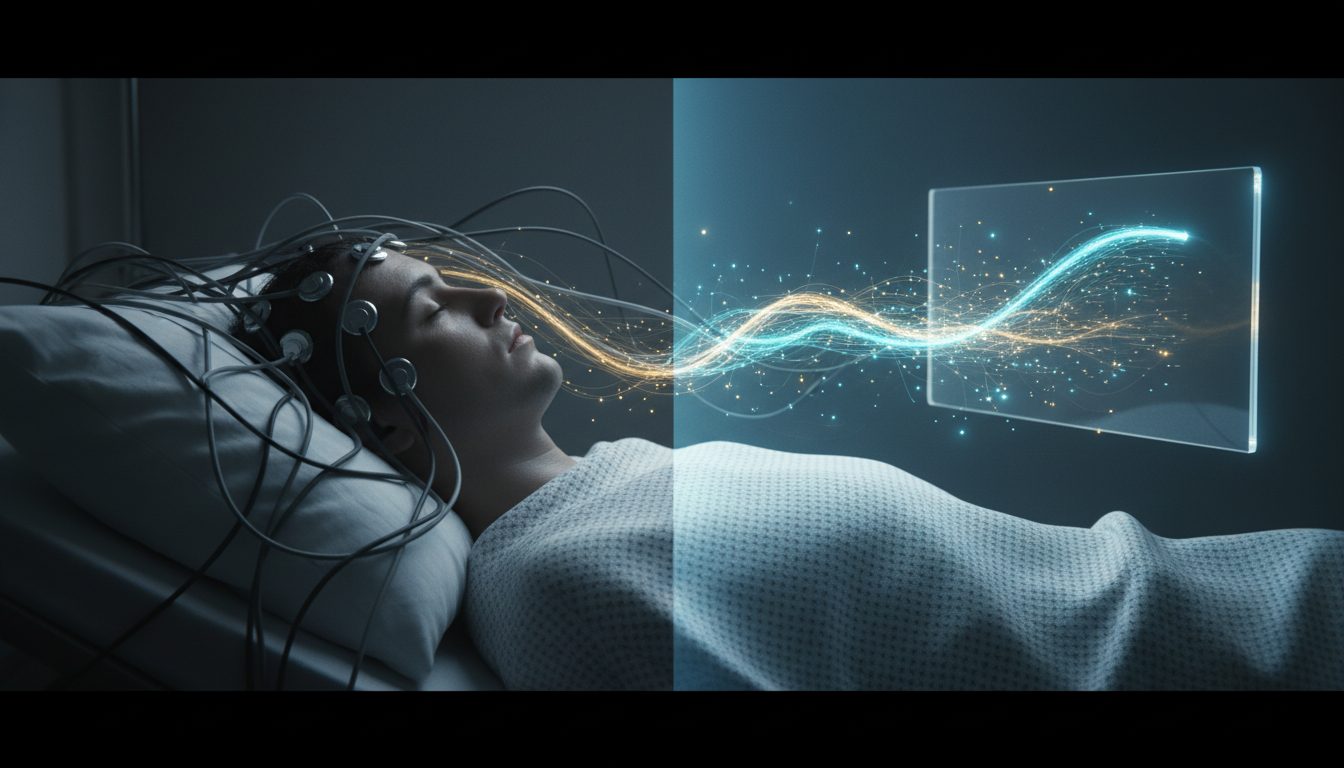
To address the limitations of manual electroencephalography interpretation, researchers developed DeepCRI, a bedside-integrated deep learning system (an advanced artificial intelligence model trained to recognize complex patterns in large datasets) designed to automate analysis directly at the point of care. Rather than relying on isolated snapshots of brain activity, DeepCRI produces continuously updated prognostic trajectories during the first 36 hours after cardiac arrest. This continuous monitoring allows clinicians to track a patient's neurological recovery in real time during the most critical window for intensive care decision-making. To categorize these trajectories, the system uses time-dependent decision boundaries to define good-, poor-, and gray-zone regions over time. By mapping the electrical data against these dynamic thresholds, the algorithm accounts for the natural evolution of brain activity following anoxic injury. A major clinical challenge in automated analysis is the risk of false predictions caused by temporary artifacts or brief fluctuations in brain waves. To mitigate this risk, DeepCRI applies a lock-in rule that fixes classification only after sustained, concordant high-confidence evidence within a compact temporal window. This built-in safeguard ensures that the lock-in rule prevents transient threshold crossings from driving decisions, protecting patients from premature or inaccurate prognostic labels based on fleeting electrical changes. By embedding DeepCRI into routine ICU EEG infrastructure, the researchers demonstrate the technical feasibility of continuous, real-time AI-driven prognostication for comatose patients after cardiac arrest. For practicing intensivists, this integration offers a practical pathway to obtain objective, continuous prognostic data to guide family discussions and treatment plans.
Internal Validation and High Specificity for Poor Outcomes
To build the predictive model, the researchers first trained the algorithm using a large retrospective sample. DeepCRI was developed on a multicenter EEG dataset of 522 comatose patients after cardiac arrest. Following this initial training phase, the investigators tested the system's accuracy to ensure it could reliably generalize to new data. DeepCRI was evaluated in an independent internal validation cohort of 219 patients. When applied to this new group, the algorithm successfully reached a definitive prognostic conclusion for the vast majority of cases. Specifically, in the internal validation cohort, DeepCRI provided lock-in classifications in 179 of 219 patients (81.7%). The system is designed to withhold a prediction if the electroencephalography data does not meet strict confidence thresholds. Consequently, in the internal validation cohort, 40 of 219 patients (18.3%) remained in the gray zone. Clinically, this indeterminate category serves as a crucial safety mechanism, preventing the algorithm from forcing a potentially inaccurate prediction when a patient's neurological trajectory remains ambiguous. The validation phase revealed distinct performance profiles depending on whether the system predicted neurological recovery or severe impairment. For patients who ultimately recovered, DeepCRI had a sensitivity of 94.7% (95% CI 90.0-97.6%) and specificity of 81.9% (95% CI 73.5-88.1%) for good outcome. This high sensitivity indicates the tool is highly effective at identifying patients who are on a trajectory toward meaningful neurological recovery. Conversely, the metrics for predicting severe brain injury prioritized diagnostic certainty over broad detection. DeepCRI had a sensitivity of 49.5% (95% CI 40.2-58.9%) and specificity of 100.0% (95% CI 96.7-100.0%) for poor outcome. For practicing intensivists, this perfect specificity is the most critical metric. When considering the withdrawal of life-sustaining therapies, avoiding false pessimism is paramount. A specificity of 100.0% means the algorithm did not generate any false predictions of a poor outcome in this cohort, ensuring that patients with a chance of recovery were not incorrectly flagged as having a dismal prognosis.
External Validation and the Impact of Artifacts
To determine if the algorithm could generalize beyond the data used for its initial development, DeepCRI was evaluated in an external validation cohort of 167 patients. Testing an artificial intelligence tool on outside data is a critical step to ensure it performs reliably across different hospital systems and patient populations. In this independent group, the system reached definitive prognostic conclusions at a lower rate than in the internal testing phase. Specifically, in the external validation cohort, DeepCRI provided lock-in classifications in 100 of 167 patients (59.9%). The remaining patients stayed in the indeterminate gray zone, meaning the algorithm did not detect the sustained, high-confidence electroencephalography patterns required to make a definitive prediction. For the patients who received a definitive classification, the researchers analyzed the accuracy of the predictions. In the external validation cohort, DeepCRI had a sensitivity of 67.2% (95% CI 54.7-77.7%) and specificity of 82.1% (95% CI 73.7-88.2%) for good outcome. While the sensitivity for detecting neurological recovery dropped compared to the internal cohort, the system maintained a high specificity for predicting severe neurological deficits. In the external validation cohort, DeepCRI had a sensitivity of 36.8% (95% CI 28.2-46.3%) and specificity of 98.4% (95% CI 91.3-99.7%) for poor outcome. For clinicians making end-of-life care decisions, this near-perfect specificity remains the most vital metric, as it minimizes the risk of inappropriately withdrawing life-sustaining therapy from a patient who might otherwise recover. Despite the high specificity for severe brain injury, the algorithm did generate a small number of inaccurate pessimistic predictions in the external group. To understand why the system occasionally failed, the investigators conducted a post hoc analysis (a retrospective review of the data), which indicated residual electromyography (EMG) artifacts contributed to false poor-outcome predictions. Muscle activity from the scalp or face can create high-frequency electrical noise that mimics or obscures underlying cortical patterns on an electroencephalogram. This finding highlights a known clinical challenge in automated neuroprognostication, emphasizing that physicians must still account for physiological interference when interpreting artificial intelligence outputs at the bedside.
References
1. Rajajee V, Muehlschlegel S, Wartenberg KE, et al. Guidelines for Neuroprognostication in Comatose Adult Survivors of Cardiac Arrest.. Neurocritical care. 2023. doi:10.1007/s12028-023-01688-3
2. Scholefield BR, Tijssen J, Ganesan SL, et al. Prediction of good neurological outcome after return of circulation following paediatric cardiac arrest: A systematic review and meta-analysis.. Resuscitation. 2025. doi:10.1016/j.resuscitation.2024.110483
3. Sandroni C, D’Arrigo S, Cacciola S, et al. Prediction of poor neurological outcome in comatose survivors of cardiac arrest: a systematic review. Intensive Care Medicine. 2020. doi:10.1007/s00134-020-06198-w
4. Lin J, Ji Z, Lin X, et al. cEEG and rEEG detection rates of prognostic indicators in cardiac arrest patients: a systematic review and diagnostic meta-analysis.. Frontiers in neurology. 2026. doi:10.3389/fneur.2026.1760363
5. Perera K, Khan S, Singh S, et al. EEG Patterns and Outcomes After Hypoxic Brain Injury: A Systematic Review and Meta-analysis.. Neurocritical care. 2022. doi:10.1007/s12028-021-01322-0