
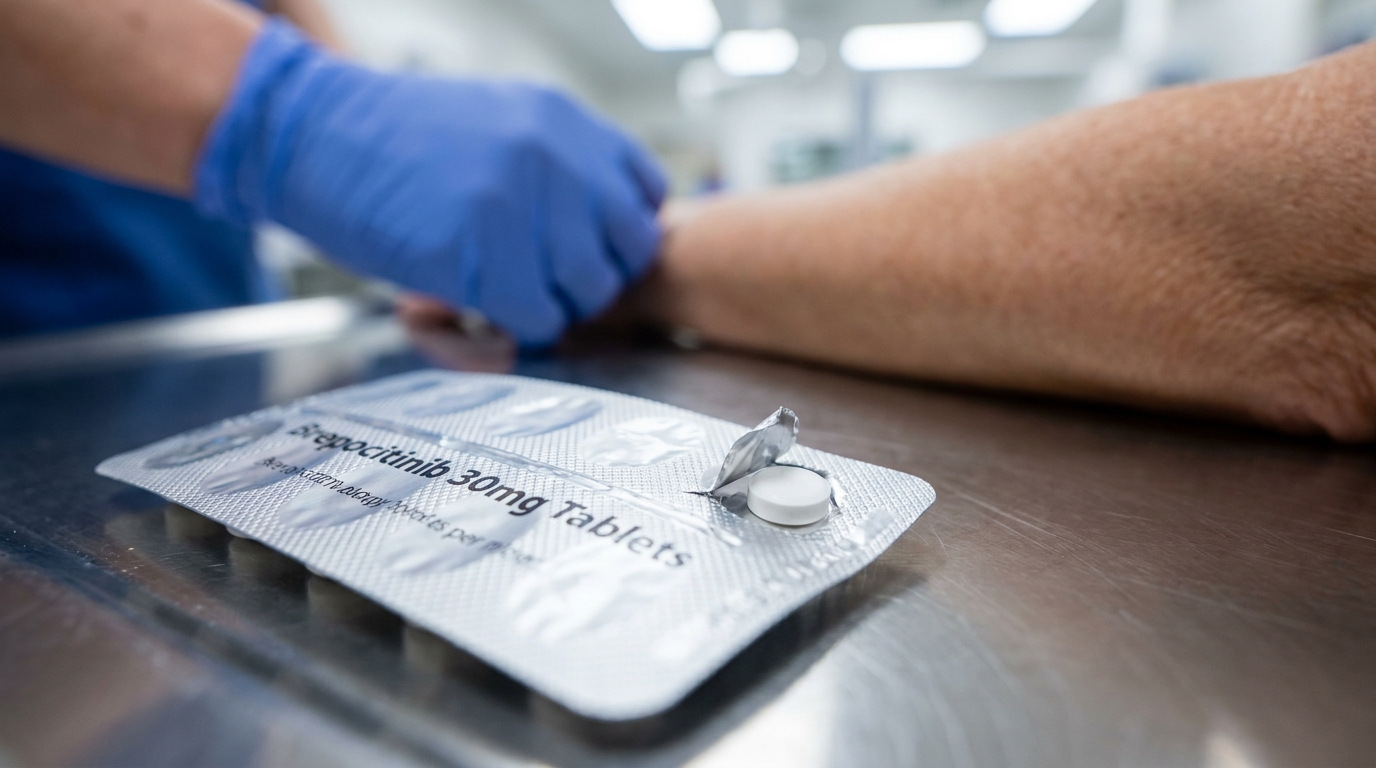
- This study investigated brepocitinib, a TYK2-JAK1 inhibitor, for treating adults with dermatomyositis.
- The phase 3, randomized, placebo-controlled trial included 241 patients over 52 weeks.
- Brepocitinib 30 mg yielded a Total Improvement Score difference of 15.3 (95% CI, 6.7 to 24.0; P<0.001) versus placebo.
- The researchers concluded that brepocitinib 30 mg significantly benefited dermatomyositis, unlike the 15 mg dose.
- This suggests brepocitinib 30 mg could improve myositis, skin disease, and reduce glucocorticoid use in patients.
Advancing Care for Dermatomyositis: A Targeted Approach
Dermatomyositis is a complex systemic autoimmune disease characterized by distinct cutaneous manifestations and progressive muscle weakness, with potential involvement of the lungs and joints [1, 2, 3]. Many patients experience refractory disease despite conventional immunosuppressive therapies, and the long-term use of glucocorticoids carries a significant burden of adverse effects, highlighting a substantial unmet need for more effective treatments [4, 2, 5]. Research has increasingly implicated cytokine dysregulation and type I interferon signaling in the pathogenesis of dermatomyositis, making the Janus kinase (JAK) pathway an attractive therapeutic target [6, 7, 8]. While several JAK inhibitors have shown potential in smaller trials [9, 10, 6], a new phase 3 study provides rigorous evidence on a selective oral therapy for this challenging condition.
Brepocitinib: A Targeted Oral Inhibitor
Brepocitinib is a first-in-class, oral, selective inhibitor of both tyrosine kinase 2 (TYK2) and Janus kinase 1 (JAK1). This dual mechanism is designed to modulate specific inflammatory pathways central to dermatomyositis by blocking the signaling of key cytokines, including type I interferons and interleukins 6, 12, and 23. By disrupting these specific signaling cascades, the therapy aims to provide a more precise intervention for the immune dysregulation driving the disease, compared to broader immunosuppressants. The rationale for its use is grounded in evidence that these particular cytokine pathways are overactive in patients with dermatomyositis. As an oral agent, brepocitinib also offers a practical administration route that may improve patient convenience and adherence over the long term.
Trial Design and Patient Cohort
To evaluate its efficacy and safety, brepocitinib was studied in a phase 3, double-blind, randomized, placebo-controlled trial involving adults with dermatomyositis resistant to previous therapies. A total of 241 patients were randomized in a 1:1:1 ratio to receive once-daily oral brepocitinib 30 mg (n=81), brepocitinib 15 mg (n=81), or placebo (n=79) for 52 weeks. Patients continued their standard therapies, and glucocorticoids were tapered according to a predefined protocol, mirroring a common clinical goal. The primary endpoint was the change in the Total Improvement Score at week 52, a validated composite myositis index that integrates multiple clinical measures of disease activity into a single score from 0 to 100, where higher scores signify greater improvement. Key secondary endpoints, including skin disease activity, glucocorticoid tapering, and physical function, were tested using a multiplicity-controlled sequence, a statistical method that rigorously tests multiple outcomes in a specific order to prevent false-positive conclusions.
Significant Clinical Improvements Observed
The trial met its primary endpoint for the higher dose of brepocitinib. At week 52, the mean Total Improvement Score was 46.5 in the 30 mg brepocitinib group, compared to 37.5 in the 15 mg group and 31.2 in the placebo group. The 30 mg dose demonstrated a statistically significant improvement over placebo, with a mean difference of 15.3 points (95% confidence interval [CI], 6.7 to 24.0; P<0.001). In contrast, the 15 mg dose did not show a significant benefit over placebo for this primary measure (difference, 6.3; 95% CI, -2.4 to 14.9). The clinical benefit of the 30 mg dose extended broadly, as it was superior to placebo across all nine key secondary endpoints. These included clinically meaningful improvements in skin disease activity, systemic glucocorticoid tapering, and functional disability. Notably, these improvements were observed as early as week 4, suggesting a relatively rapid onset of therapeutic effect.
Safety Profile and Clinical Implications
While the 30 mg dose of brepocitinib proved effective, its safety profile requires careful consideration. Serious infections were more frequent in the brepocitinib 30 mg group (10%) compared to the placebo group (1%). This finding underscores the need for vigilant patient monitoring. No deaths occurred during the trial. From a clinical management perspective, the demonstrated ability to facilitate glucocorticoid tapering is a major potential benefit, as reducing long-term steroid exposure can mitigate a host of well-known adverse events. The study's findings clearly indicate that the 30 mg daily dose of brepocitinib provides substantial benefits across multiple domains of dermatomyositis, whereas the 15 mg dose did not. For practicing physicians, this suggests that brepocitinib 30 mg may be a valuable option for patients with treatment-resistant disease, provided the increased risk of infection is carefully weighed in the risk-benefit assessment for each individual. The study was funded by Priovant Therapeutics and is registered at ClinicalTrials.gov (NCT05437263).
References
1. Paik JJ, Vencovský J, Charles‐Schoeman C, et al. Brepocitinib, a potent and selective TYK2/JAK1 inhibitor: scientific and clinical rationale for dermatomyositis. Clinical and Experimental Rheumatology. 2024. doi:10.55563/clinexprheumatol/eeglsa
2. Ali H, On A, Xing E, Shen C, Werth VP. Dermatomyositis: focus on cutaneous features, etiopathogenetic mechanisms and their implications for treatment. Seminars in Immunopathology. 2025. doi:10.1007/s00281-025-01054-9
3. Cassard L, Seraly N, Riegert M, Patel A, Fernandez AP. Dermatomyositis: Practical Guidance and Unmet Needs. ImmunoTargets and Therapy. 2024. doi:10.2147/itt.s381472
4. Raaphorst J, Gullick N, Shokraneh F, et al. Targeted immunosuppressive and immunomodulatory therapies for idiopathic inflammatory myopathies. Cochrane Database of Systematic Reviews. 2025. doi:10.1002/14651858.cd015854
5. Bax CE, Aghdasi C, Fiorentino D. Novel therapeutic targets in dermatomyositis. The Journal of Dermatology. 2024. doi:10.1111/1346-8138.17170
6. Wallwork R, Paik JJ, Kim H. Current evidence for janus kinase inhibitors in adult and juvenile dermatomyositis and key comparisons. Expert Opinion on Pharmacotherapy. 2024. doi:10.1080/14656566.2024.2392021
7. Morand E, Merola JF, Tanaka Y, Gladman D, Fleischmann R. TYK2: an emerging therapeutic target in rheumatic disease.. Nature reviews. Rheumatology. 2024. doi:10.1038/s41584-024-01093-w
8. Baráth S, Nagy‐Vincze M, Kun Z, et al. Disease Activity-Dependent Siglec-1 Expression on Monocyte Subsets of Patients with Idiopathic Inflammatory Myopathies. International Journal of Molecular Sciences. 2025. doi:10.3390/ijms26104950
9. Harada H, Shoda H, Tsuchiya H, Misaki M, Sawada T, Fujio K. Baricitinib for anti-melanoma differentiation-associated protein 5 antibody-positive dermatomyositis-associated interstitial lung disease: a case series and literature review on Janus kinase inhibitors for the disease. Rheumatology International. 2024. doi:10.1007/s00296-024-05551-2
10. Azari AE, Creamer D, Gordon P, Jones A. P056 A case of refractory dermatomyositis responding to upadacitinib. Rheumatology Advances in Practice. 2025. doi:10.1093/rap/rkaf111.085