
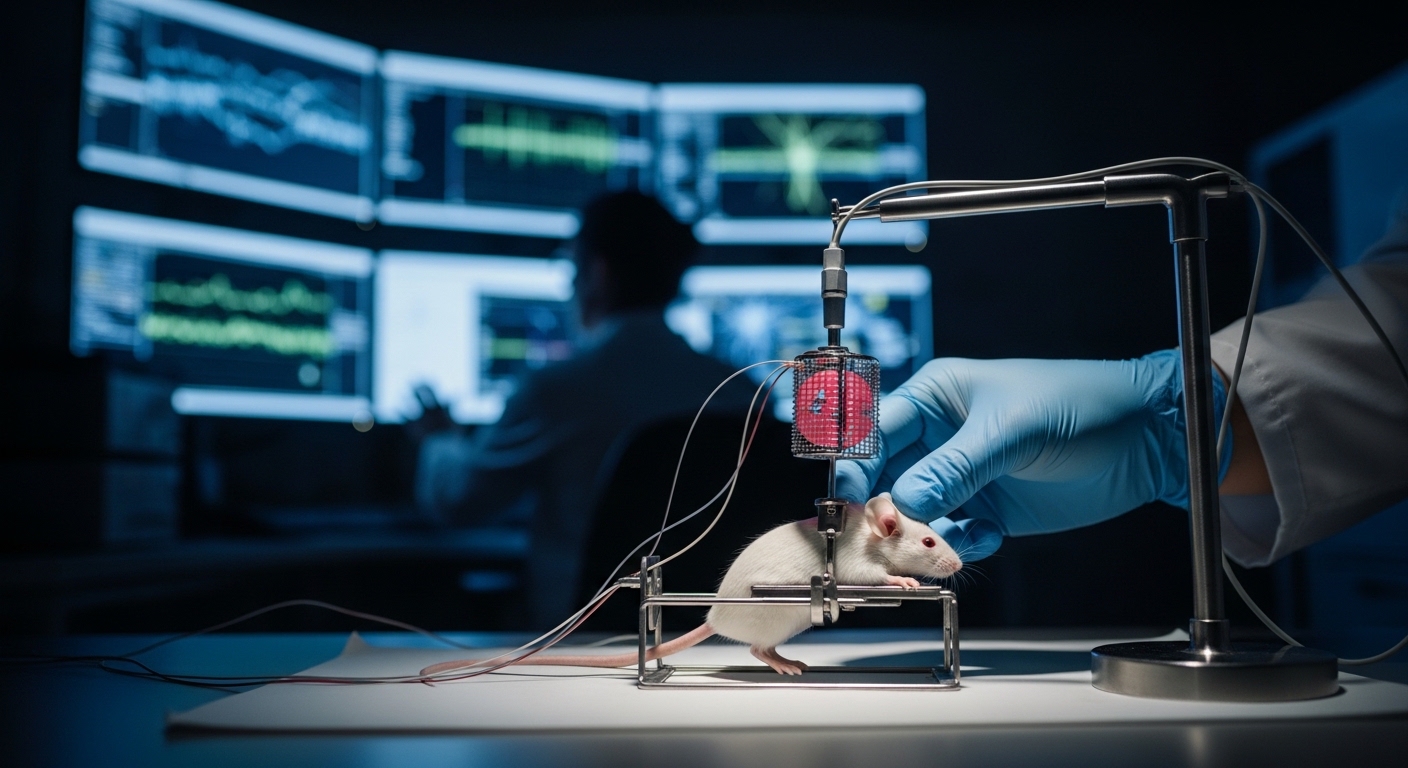
- The study investigated the neural circuit mechanisms underlying intermittent theta-burst stimulation's cognitive benefits in post-stroke cognitive impairment.
- Researchers utilized a photothrombotic stroke mouse model, assigning animals to five groups for intermittent theta-burst stimulation and chemogenetic interventions.
- After 21 days, intermittent theta-burst stimulation significantly improved Y-maze performance in mice, alongside increased theta band power and enhanced interregional coherence.
- The authors concluded that cerebellar intermittent theta-burst stimulation improves post-stroke cognition by modulating the dentate nucleus-ventromedial thalamus circuit.
- This suggests the dentate nucleus-ventromedial thalamus pathway could serve as a neuromodulatory target for post-stroke cognitive impairment.
Unraveling Neuromodulation's Impact on Post-Stroke Cognition
Post-stroke cognitive impairment (PSCI) is a frequent and disabling outcome, affecting up to half of stroke survivors and diminishing their quality of life and functional independence [1, 2]. While various interventions are used, consistently effective treatments for PSCI remain an area of intensive clinical research [1]. Non-invasive brain stimulation, specifically intermittent theta-burst stimulation (iTBS), has shown efficacy for improving global cognitive function, attention, and activities of daily living in patients with PSCI [3, 1, 4]. However, the specific neural circuits through which iTBS confers these cognitive benefits have been poorly understood, limiting efforts to optimize and target the therapy more effectively [5, 6].
Mapping the Cerebellar-Thalamic Link in Post-Stroke Recovery
To illuminate the mechanisms of iTBS, a recent study in an animal model investigated whether its cognitive benefits are mediated by a specific pathway: the cerebellar dentate nucleus-contralateral ventromedial thalamus (DN-VM) circuit. This circuit connects a key output nucleus of the cerebellum, a brain region increasingly recognized for its role in cognition, with a thalamic hub involved in relaying information to the cortex. The researchers induced PSCI in mice using photothrombotic stroke, a method that creates a precise, localized ischemic lesion. The animals were then assigned to one of five groups to systematically isolate the circuit's function: a Sham group, a PSCI group with no intervention, a group receiving iTBS after stroke, and two groups in which the DN-VM circuit was manipulated using chemogenetics, a technique that uses engineered receptors to allow for precise remote control of neuronal firing with a chemical agent. One of these groups received iTBS alongside chemogenetic inhibition of the DN-VM circuit, while the other received only chemogenetic excitation of the circuit.
Assessing Cognitive and Electrophysiological Changes
The study's evaluation of treatment effects was twofold, combining behavioral tests of cognitive function with direct measurement of underlying neural activity. Before and after the 21-day intervention period, cognitive performance was assessed using tasks such as the Y-maze, which measures spatial working memory. In parallel, the researchers recorded local field potentials (LFPs), which reflect the synchronized activity of neuronal populations, from two critical cognitive hubs: the medial prefrontal cortex (mPFC), essential for executive function, and the ventral hippocampus (vHPC), central to memory formation. This in vivo electrophysiology allowed for analysis of oscillatory power, or the strength of rhythmic brain waves, within each region. It also enabled measurement of how these two regions communicate, by quantifying interregional coherence (the degree of synchronization between them) and theta-gamma coupling, a specific interaction between slow and fast brain waves known to be critical for encoding and retrieving memories.
iTBS Improves Cognition and Brain Activity in Mouse Model
The results demonstrated a direct link between cerebellar iTBS, cognitive recovery, and restored brain circuit function. After 21 days of treatment, PSCI mice that received iTBS showed significant improvements in Y-maze performance, indicating a recovery of spatial working memory. These behavioral gains were mirrored by distinct electrophysiological changes. The researchers observed increased theta band power in both the medial prefrontal cortex and the ventral hippocampus. This increase in the 4-12 Hz frequency band, which is fundamental for memory processes, suggests a normalization of activity in these key cognitive regions. Furthermore, the data revealed enhanced interregional coherence and theta-gamma coupling between the mPFC and vHPC. This indicates that iTBS not only boosted activity within these areas but also improved their functional communication, restoring a neural dynamic essential for effective information processing.
The Dentate Nucleus-Ventromedial Thalamus Circuit as a Key Mediator
The study's chemogenetic experiments provided strong evidence that the DN-VM circuit is not merely correlated with recovery but is a critical mediator of the iTBS effect. When the researchers applied iTBS while simultaneously using chemogenetics to suppress the DN-VM circuit, the cognitive and electrophysiological benefits of iTBS were markedly reduced. This loss-of-function experiment demonstrates that an intact and active DN-VM pathway is necessary for iTBS to improve post-stroke cognition. In a complementary gain-of-function experiment, the authors found that 21 days of direct chemogenetic excitation of the DN-VM circuit, without any iTBS, produced behavioral and electrophysiological effects comparable to those seen in the iTBS group. By showing that activating this circuit alone is sufficient to drive cognitive recovery, the findings confirm its central role in the therapeutic mechanism.
Clinical Implications: A New Target for Post-Stroke Cognitive Impairment
These findings establish a clear mechanistic link between cerebellar stimulation, a specific subcortical circuit, and cognitive recovery in a preclinical model of stroke. The study demonstrates that the therapeutic effects of iTBS are mediated through the modulation of the dentate nucleus-ventromedial thalamus (DN-VM) circuit, which in turn restores coordinated activity in the prefrontal-hippocampal network. For practicing physicians, this work provides a neurobiological rationale for the benefits of iTBS in PSCI. More importantly, it suggests that the DN-VM pathway itself may serve as a specific and direct target for future neuromodulatory therapies. This moves the field toward developing more precise interventions that are not just applied to a general brain region but are designed to restore function in the specific circuits identified as being critical for cognitive recovery after stroke.
References
1. Daoud A, Elsayed M, Alnajjar AZ, et al. Efficacy of intermittent theta burst stimulation (iTBS) on post-stroke cognitive impairment (PSCI): a systematic review and meta-analysis.. Neurological sciences : official journal of the Italian Neurological Society and of the Italian Society of Clinical Neurophysiology. 2024. doi:10.1007/s10072-023-07267-w
2. Wang Y, Wang L, Ni X, Jiang M, Zhao L. Efficacy of repetitive transcranial magnetic stimulation with different application parameters for post-stroke cognitive impairment: a systematic review.. Frontiers in neuroscience. 2024. doi:10.3389/fnins.2024.1309736
3. Zhu M, Huang S, Chen W, Pan G, Zhou Y. The effect of transcranial magnetic stimulation on cognitive function in post-stroke patients: a systematic review and meta-analysis.. BMC neurology. 2024. doi:10.1186/s12883-024-03726-9
4. Wang Y, Feng H, Dai J, Wang Q. Intermittent theta-burst stimulation for post-stroke cognitive impairment: a double-blind randomized controlled trial.. Topics in stroke rehabilitation. 2025. doi:10.1080/10749357.2025.2605295
5. Hara T, Shanmugalingam A, McIntyre A, Burhan AM. The Effect of Non-Invasive Brain Stimulation (NIBS) on Attention and Memory Function in Stroke Rehabilitation Patients: A Systematic Review and Meta-Analysis. Diagnostics. 2021. doi:10.3390/diagnostics11020227
6. Zheng B, Chen J, Cao M, et al. The effect of intermittent theta burst stimulation for cognitive dysfunction: a meta-analysis.. Brain injury. 2024. doi:10.1080/02699052.2024.2344087