For Doctors in a Hurry
- This study assessed if integrated community care could manage HIV, diabetes, and hypertension as effectively as standard facility-based care in sub-Saharan Africa.
- The cluster-randomized trial included 1864 adults in Tanzania and Uganda assigned to either monthly community group care or integrated facility care.
- Community care showed no significant difference in blood pressure or glucose control (55.2% vs 53.2%) and was non-inferior for HIV viral suppression.
- The authors concluded that integrated community care for diabetes or hypertension can achieve high standards without negatively affecting outcomes for patients with HIV.
- This community-based model could be a viable strategy for managing multiple chronic diseases while potentially reducing the burden on primary care facilities.
Managing Multimorbidity Beyond the Clinic
The rising prevalence of non-communicable diseases alongside HIV in sub-Saharan Africa presents a significant challenge to health systems historically structured around single-disease programs [1, 2]. Integrated care models, which aim to manage multiple conditions simultaneously, are increasingly seen as a necessary strategy to address this multimorbidity (the co-occurrence of two or more chronic conditions in a single patient) [2]. However, evidence supporting the effectiveness of these models, particularly for cardiometabolic conditions in low- and middle-income countries, has been limited and often of very low certainty [3]. While shifting care from clinics to community settings may improve access and efficiency, questions remain about whether clinical outcomes can be maintained outside of traditional facilities [4]. A recent cluster-randomized trial (a study design where groups of people, rather than individuals, are assigned to an intervention to prevent treatment contamination) in Tanzania and Uganda now provides direct comparative data on this critical question.
A Tale of Two Models: Study Design
To directly compare care models, researchers conducted an open-label, multicountry, cluster-randomized trial across 14 primary care facilities in Tanzania and Uganda. The study, registered as ISRCTN15319595, aimed to compare integrated community-based care with integrated facility-based care for patients with HIV, type 2 diabetes, and hypertension. Eligible participants were adults aged 18 or older who were clinically stable, meaning they had no acute complications and had received regular care at their facility for at least six months. Investigators grouped patients into clusters of 8 to 14 individuals, which were then randomly assigned in a 1:1 ratio to either the community or facility care arm. To analyze the data, the researchers used generalized estimating equation models (a statistical method that accounts for the correlation between patients within the same cluster to ensure that group-level similarities do not bias the results). This approach is essential in cluster trials where patients in the same neighborhood or clinic may share similar environmental or social influences.
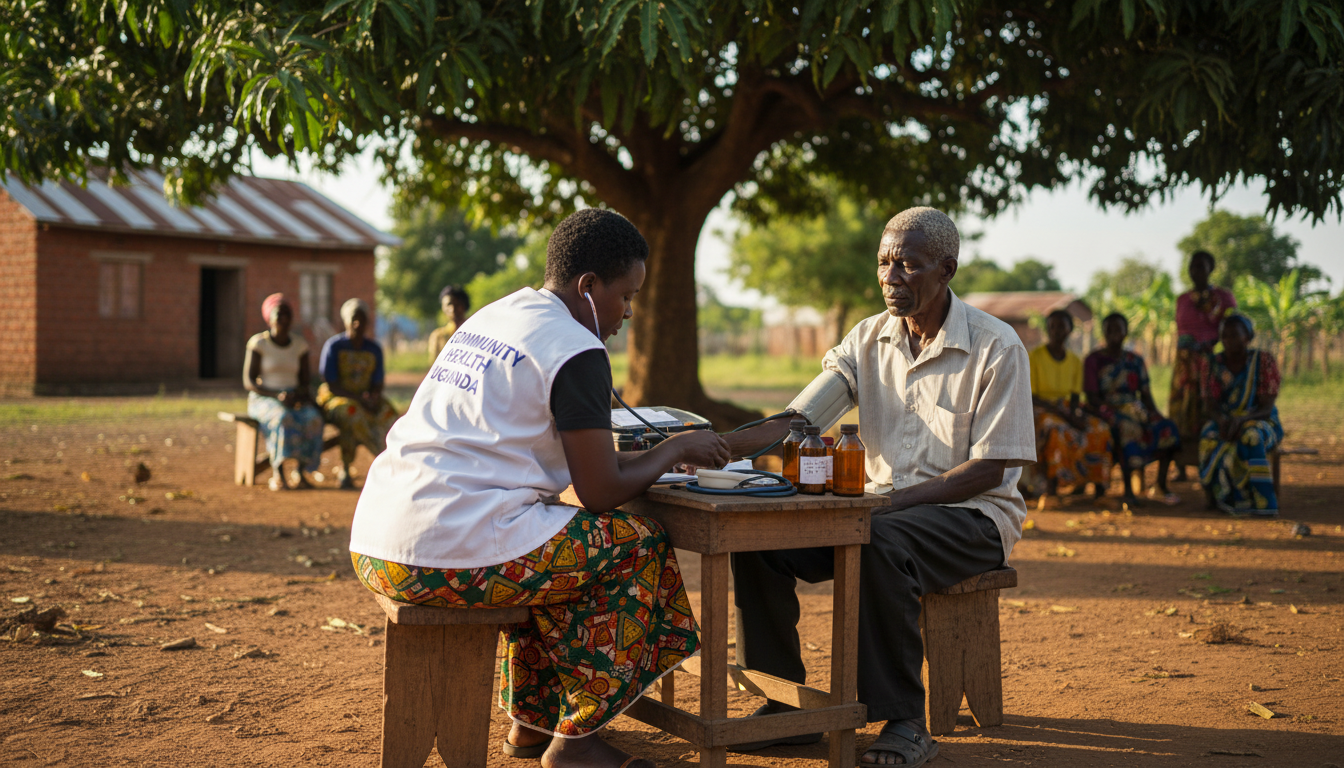
The two arms of the trial represented distinct models of integrated care. Participants in the facility-based group continued to receive standard integrated care, sharing registration and waiting areas, being managed by the same physicians and healthcare workers, and using the same pharmacy and laboratory services. In contrast, the community care group received support from a nurse and a trained lay worker at designated focal points within their community, with the groups meeting once per month. The follow-up period for all participants was 12 months. The study evaluated two co-primary endpoints in an intention-to-treat population (an analysis that includes every participant according to their original group assignment, regardless of whether they completed the study, to preserve the integrity of the randomization). For patients with hypertension or diabetes, the endpoint was a composite of cardiometabolic control, defined as a blood pressure below 140/90 mm Hg, a fasting glucose below 7.0 mmol/L, or both. For participants with HIV alone, the endpoint was plasma viral load suppression, defined as a viral load of less than 1000 copies per mL or an undetectable level.
Patient Population and Randomization
Between January 30 and October 6, 2023, the researchers identified 2940 patients with HIV, diabetes, or hypertension who had scheduled appointments at the participating facilities in Tanzania and Uganda. Of these identified individuals, 2175 (74.0%) underwent screening for eligibility, while 765 (26.0%) were not screened. Among those who were screened, 203 (9.3%) did not meet the eligibility criteria, four (0.2%) declined to provide consent, and 104 (4.8%) could not be organized into viable clusters due to geographical or logistical constraints. Ultimately, 1864 (63.4%) patients were assigned into 124 groups and randomized, with 62 groups assigned to the community care arm and 62 groups assigned to the facility care arm. The study population was predominantly female, with 1302 (76.6%) of 1700 participants being women compared to 398 (23.4%) men, a distribution that reflects the demographic profile of patients actively seeking chronic disease management in these regions.
To ensure the integrity of the analysis, the researchers tracked exclusions for each primary endpoint. For the cardiometabolic endpoint analysis, 38 (6.3%) of 602 participants in the community care group and 43 (7.1%) of 609 in the facility care group were excluded. In the analysis of the HIV endpoint, nine (3.7%) of 242 participants in the community care group and ten (4.0%) of 247 in the facility care group were excluded. These low exclusion rates across both arms suggest high levels of data completeness and participant retention throughout the 12-month follow-up period, which strengthens the validity of the comparative findings.
The study evaluated the effectiveness of community-based care compared to traditional facility-based care using a composite primary endpoint of blood pressure or fasting glucose control. Among participants with hypertension, diabetes, or both, the researchers found that the composite of blood pressure or fasting glucose control did not significantly differ between the two groups. Specifically, 317 (55.2%) of 574 patients in the community care group achieved control, compared to 304 (53.2%) of 571 patients in the facility care group. This resulted in an adjusted risk difference of 1.80 (95% CI -4.52 to 8.12; p=0.58), indicating that managing these chronic conditions in a community setting yielded results equivalent to those achieved in a clinic.
Regarding HIV management, the trial demonstrated that community care was non-inferior to facility care for HIV viral suppression. Non-inferiority is a statistical standard used to demonstrate that a new treatment is not significantly worse than the established standard by more than a small, pre-specified margin. High rates of suppression were maintained in both arms: 227 (99.1%) of 229 participants in the community care group reached viral suppression, compared to 229 (98.7%) of 232 participants in the facility care group. The adjusted risk difference was 0.44 (95% CI -1.12 to 1.99), with a highly significant p-value for non-inferiority (p < 0.0001). Safety outcomes further supported the viability of the community-based model, as the researchers recorded seven deaths in the community care group and seven deaths in the facility care group. This identical mortality rate across both study arms suggests that the transition to community-based integrated care did not introduce additional clinical risks for this stable patient population.
Implications for Decentralizing Chronic Care
In sub-Saharan Africa, the burden of diabetes and hypertension is high, occurring alongside a high prevalence of HIV. This dual challenge of infectious and non-communicable diseases places immense pressure on healthcare infrastructure. While single-disease programs have historically managed these conditions in isolation, it was previously unknown whether HIV, diabetes, and hypertension could be managed in an integrated way in the community. This trial provides evidence that a decentralized approach, which moves management from the clinic to the neighborhood, does not compromise the quality of care for stable patients. The researchers interpret these findings to mean that integrated community care can reach a high standard of care for people with diabetes or hypertension without adversely affecting outcomes for people with HIV.
For the practicing physician, the clinical relevance of these data lies in the potential to decongest primary care facilities while maintaining rigorous treatment targets. The study found that 317 (55.2%) of 574 patients in the community care group achieved the composite endpoint of blood pressure or fasting glucose control, compared to 304 (53.2%) of 571 in the facility care group (adjusted risk difference 1.80; 95% CI -4.52 to 8.12; p=0.58). Furthermore, viral suppression was maintained in 99.1% (227 of 229) of the community group versus 98.7% (229 of 232) in the facility group (adjusted risk difference 0.44; 95% CI -1.12 to 1.99; p < 0.0001 for non-inferiority). These results suggest that for patients who are clinically stable, the community-based model, supported by nurses and trained lay workers, offers a safe and effective alternative to traditional facility-based management. This strategy may improve long-term adherence and access to care by bringing essential services closer to the patient's home, allowing clinic resources to be reserved for more complex clinical presentations.
References
1. Trachunthong D, Tipayamongkholgul M, Chumseng S, Darasawang W, Bundhamcharoen K. Burden of metabolic syndrome in the global adult HIV-infected population: a systematic review and meta-analysis. BMC Public Health. 2024. doi:10.1186/s12889-024-20118-3
2. Otieno P, Agyemang C, Wao H, et al. Effectiveness of integrated chronic care models for cardiometabolic multimorbidity in sub-Saharan Africa: a systematic review and meta-analysis.. BMJ open. 2023. doi:10.1136/bmjopen-2023-073652
3. Rohwer A, Nicol JU, Toews I, Young T, Bavuma CM, Meerpohl J. Effects of integrated models of care for diabetes and hypertension in low-income and middle-income countries: a systematic review and meta-analysis.. BMJ open. 2021. doi:10.1136/bmjopen-2020-043705
4. Chen L, Xu S, Xu L. Community-based management strategies for adults with multimorbidity: a systematic review of clinical and patient-centred outcomes. 2026. doi:10.1136/bmjph-2025-004156