
- The study investigated structural and functional changes in the prefrontal cortex-hippocampus circuit in temporal lobe epilepsy.
- Researchers used a kainic acid-induced TLE mouse model, analyzing structural connectivity with diffusion tensor imaging and electrophysiology in brain slices.
- Epileptic slices showed enhanced low-frequency oscillations and impaired cross-frequency coupling; cortical stimulation at 60μA normalized hippocampal action potential dynamics.
- The authors concluded that TLE involves PFC-HPC circuit remodeling and cortical electrical stimulation modulates pathological hippocampal activity.
- These findings offer insights for developing non-invasive deep neuromodulation strategies to manage temporal lobe epilepsy.
Targeting Aberrant Brain Activity in Temporal Lobe Epilepsy
Temporal lobe epilepsy (TLE) is the most common form of focal epilepsy in adults and frequently proves resistant to conventional drug therapies, creating a significant treatment gap for many patients [1]. This medical intractability has driven investigation into alternative modalities, particularly neuromodulation [2, 3]. While techniques such as responsive neurostimulation and transcranial magnetic stimulation have demonstrated utility, their application can be limited by broad targeting or procedural invasiveness [4, 2, 5]. The prefrontal cortex-hippocampus circuit is a critical network known to undergo structural and functional remodeling in TLE, contributing to seizure generation and propagation [6, 3]. A recent preclinical study investigated whether targeted, low-intensity electrical stimulation of the cortex could precisely modulate pathological activity deep within the hippocampus, offering a potential path toward less invasive interventions.
Investigating the Prefrontal Cortex-Hippocampus Circuit in TLE
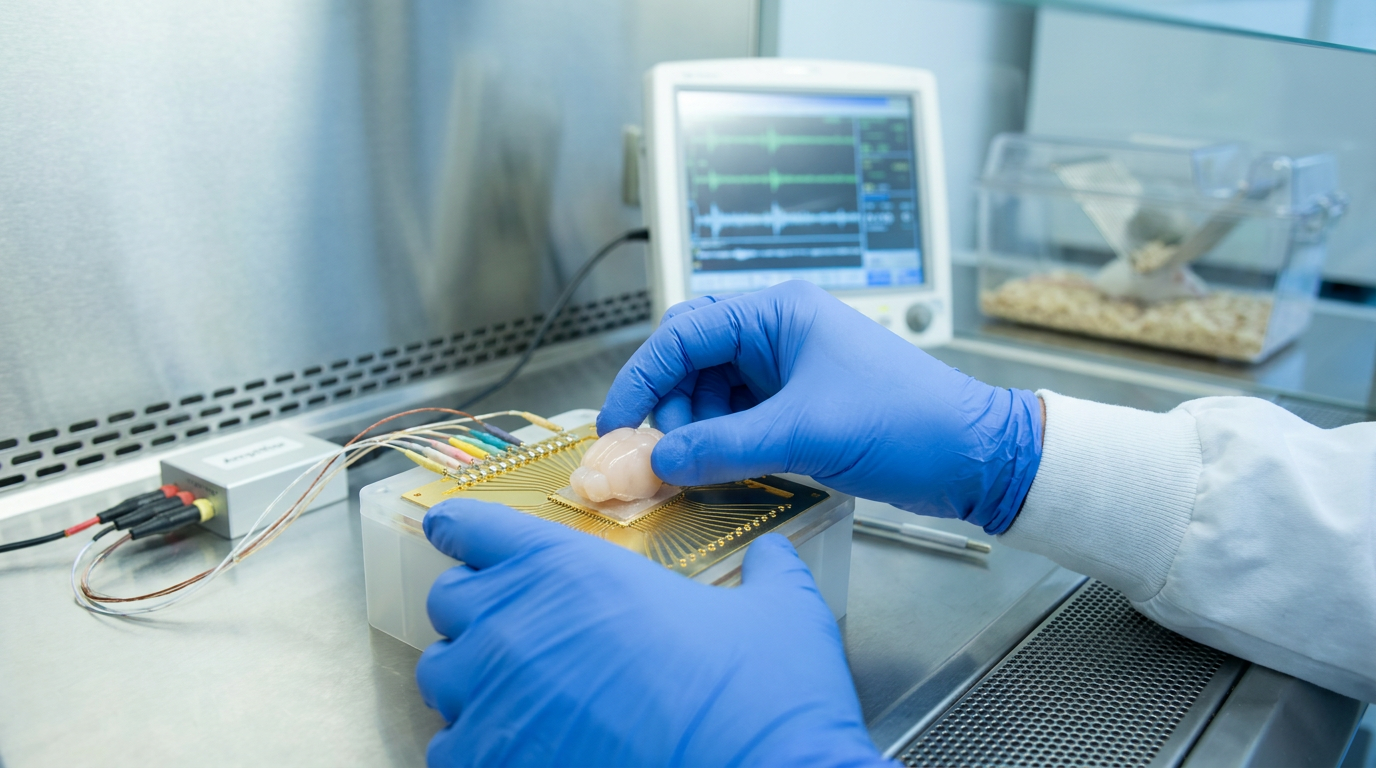
The study was designed to characterize structural and functional changes within the prefrontal cortex-hippocampus (PFC-HPC) circuit, a network strongly implicated in TLE, and to assess how cortical electrical stimulation might regulate hippocampal activity. To model the condition, the researchers used a kainic acid-induced TLE mouse model, a standard method for replicating key features of human epilepsy. Structural integrity of the PFC-HPC connection was evaluated using diffusion tensor imaging (DTI), an MRI technique that maps white matter tracts by measuring the directional flow of water molecules. For functional analysis, the team prepared brain slices containing the PFC-HPC circuit and recorded electrical activity using high-density microelectrode arrays (HD-MEAs). These arrays provide a detailed, high-resolution view of network-level electrical behavior. During these recordings, the researchers applied cortical electrical stimulation at several distinct intensities to determine its effect on downstream hippocampal function.
Structural and Functional Dysregulation in TLE
The investigation revealed significant pathology in the prefrontal cortex-hippocampus (PFC-HPC) circuit of the epileptic mice. Diffusion tensor imaging (DTI) analysis uncovered abnormal diffusion metrics, indicating compromised white matter. Specifically, the study found altered fractional anisotropy (FA), a measure of the directionality of water diffusion that reflects axonal organization, alongside changes in mean diffusivity (MD) and radial diffusivity (RD), which suggest damage to the myelin sheath and overall tissue structure. Furthermore, the researchers documented an abnormal number of whole-brain fiber tracts, pointing to widespread disruption of anatomical connectivity. These findings collectively demonstrate that TLE involves substantial structural degradation of the PFC-HPC circuit.
Electrophysiological recordings from brain slices then exposed the functional consequences of this structural damage. In the hippocampus of epileptic mice, there were enhanced low-frequency oscillations and reduced high-frequency oscillations, an imbalance that disrupts the rhythmic brain activity necessary for normal cognitive processing. Critically, the researchers observed impaired cross-frequency coupling (CFC), which is the coordination between different brain wave frequencies, a process vital for functions like memory consolidation. The study also documented disrupted neuronal firing patterns at the single-cell level. Together, these results confirm that TLE is associated with profound structural and functional remodeling of the PFC-HPC circuit, characterized by dysregulated neural oscillations, impaired network communication, and erratic neuronal activity.
Intensity-Specific Modulation of Hippocampal Activity
A central finding of the study is that applying electrical stimulation to the cortex can modulate pathological activity in the connected hippocampus in an intensity-specific manner. This suggests that different stimulation parameters can be used to target distinct aspects of neural dysfunction. The researchers found that lower and higher intensities had a similar effect on network-level activity. Specifically, cortical stimulation at both 20μA and 100μA primarily improved pathological neural oscillations and restored theta-gamma cross-frequency coupling in the hippocampus. This indicates that these stimulation levels can help re-establish the coordinated rhythmic activity that is impaired in the epileptic brain.
In contrast, a moderate stimulation intensity produced a different effect, targeting individual neuron behavior rather than network oscillations. Stimulation at 60μA specifically normalized the abnormal action potential dynamics of hippocampal neurons. This distinct outcome highlights the nuanced control that may be possible with neuromodulation. The ability to selectively influence either broad network oscillations (with 20μA or 100μA) or the firing patterns of individual neurons (with 60μA) provides a potential framework for tailoring interventions to the specific electrophysiological deficits present in TLE.
Implications for Non-Invasive Neuromodulation
These preclinical findings provide valuable insights for the development of non-invasive or minimally invasive neuromodulation strategies for temporal lobe epilepsy (TLE). By demonstrating that cortical stimulation can regulate activity in the deeply situated hippocampus, the study supports the concept of modulating dysfunctional brain networks without direct invasive targeting. The key clinical implication lies in the intensity-specific nature of the effects, which suggests a path toward highly personalized therapies for patients with medically refractory epilepsy.
The discovery that stimulation at 20μA or 100μA normalizes pathological oscillations, while 60μA specifically regulates abnormal action potentials, opens the possibility of tailoring treatment to a patient's unique electrophysiological profile. For instance, a patient whose primary deficit is in network-level cross-frequency coupling might benefit from one stimulation intensity, while another with dysfunction primarily at the level of individual neuron firing might require a different setting. This approach could allow clinicians to fine-tune neuromodulation parameters to correct specific biological abnormalities, potentially improving therapeutic efficacy and minimizing off-target effects for individuals whose seizures are not controlled by standard treatments.
References
1. Krook‐Magnuson E, Armstrong C, Oijala M, Soltész I. On-demand optogenetic control of spontaneous seizures in temporal lobe epilepsy. Nature Communications. 2013. doi:10.1038/ncomms2376
2. Geller E. Responsive neurostimulation: Review of clinical trials and insights into focal epilepsy.. Epilepsy & Behavior. 2018. doi:10.1016/j.yebeh.2018.06.042
3. Schwaderlapp N, Paschen E, LeVan P, Elverfeldt DV, Haas CA. Probing hippocampal stimulation in experimental temporal lobe epilepsy with functional MRI. bioRxiv. 2023. doi:10.3389/fnimg.2024.1423770
4. Lefaucheur J, Alemán A, Baeken C, et al. Evidence-based guidelines on the therapeutic use of repetitive transcranial magnetic stimulation (rTMS): An update (2014–2018). Clinical Neurophysiology. 2020. doi:10.1016/j.clinph.2019.11.002
5. Rossi S, Antal A, Bestmann S, et al. Safety and recommendations for TMS use in healthy subjects and patient populations, with updates on training, ethical and regulatory issues: Expert Guidelines. Clinical Neurophysiology. 2020. doi:10.1016/j.clinph.2020.10.003
6. Dick AS, Tremblay P. Beyond the arcuate fasciculus: consensus and controversy in the connectional anatomy of language. Brain. 2012. doi:10.1093/brain/aws222