For Doctors in a Hurry
- Researchers investigated whether early oxytocin administration could mitigate episodic memory deficits and hippocampal synaptic dysfunction in Fragile X syndrome models.
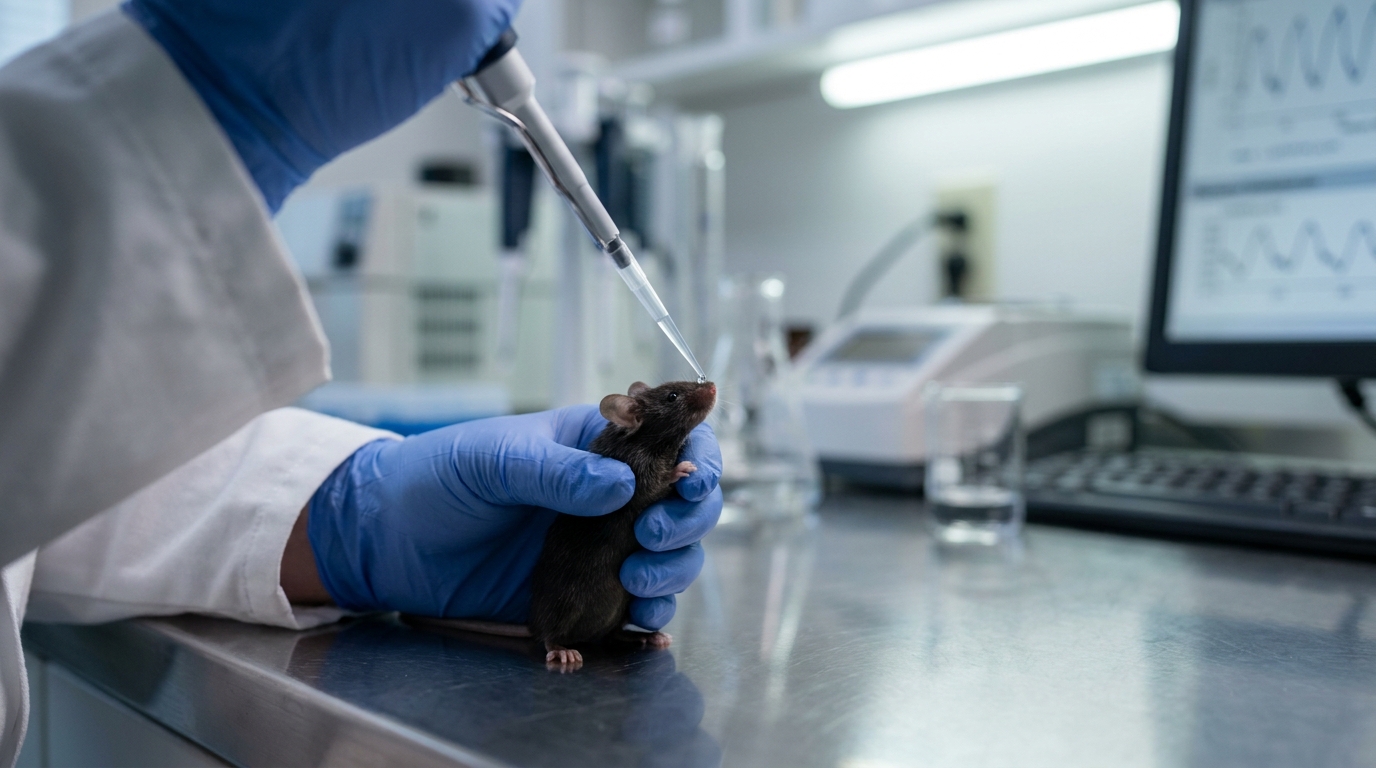
- The study utilized male knockout mice receiving daily intranasal oxytocin or saline during the second or fifth postnatal weeks.
- Second-week oxytocin restored CA3-CA1 long-term potentiation and N-methyl-D-aspartate receptor currents, whereas fifth-week treatments failed to produce lasting improvements.
- The authors concluded that early oxytocin intervention corrects cognitive and synaptic deficits by targeting a critical developmental window for hippocampal function.
- These findings suggest that early postnatal oxytocin administration represents a potential strategy for normalizing cognitive development in Fragile X syndrome.
Targeting Cognitive Deficits in Fragile X Syndrome
Fragile X syndrome remains a leading genetic cause of inherited intellectual disability and autism spectrum disorder, yet clinical management is largely limited to treating associated symptoms like irritability and anxiety [1, 2, 3]. While oxytocin has demonstrated efficacy in improving social-emotional recognition in some clinical trials, its impact on the debilitating cognitive impairments of the disorder remains poorly defined [4, 5, 6]. Clinicians currently face a lack of validated biomarkers and disease-modifying therapies that can address the core neurodevelopmental disruptions in synaptic communication [7, 8, 9]. Recent research into the timing of pharmacological interventions suggests that the therapeutic window for modulating brain development may be narrower than previously thought [7, 10]. To address this gap, researchers investigated whether early-life oxytocin treatment can provide lasting restoration of memory function and hippocampal plasticity into adulthood, potentially offering a targeted strategy for cognitive rescue.
Defining the Critical Window for Intervention
To evaluate the impact of oxytocin on cognitive function, researchers utilized male Fmr1-knockout mice, a standard genetic model that mimics the loss of the specific protein responsible for human Fragile X syndrome. The experimental protocol involved daily intranasal treatments with oxytocin or saline administered during two distinct developmental phases, specifically the second postnatal week or the fifth postnatal week. By comparing these two cohorts, the study aimed to determine if the timing of oxytocin exposure influenced the long-term stability of therapeutic effects on social behavior, spatial memory, and hippocampal synaptic plasticity in adult animals. The findings identified a critical developmental window, which is a specific period during which the nervous system is uniquely sensitive to pharmacological intervention. While administration during the second postnatal week led to lasting improvements, intranasal oxytocin treatments during the fifth postnatal week did not have enduring effects in either the knockout or wild-type genotypes. This lack of efficacy in the older cohort suggests that the neuroplasticity required for oxytocin to correct hippocampal deficits is restricted to early postnatal development. For pediatricians and child neurologists, these results underscore that the timing of administration may be as vital as the pharmacological agent itself when attempting to normalize cognitive trajectories in neurodevelopmental disorders.
Baseline Cognitive and Neurophysiological Impairments
Episodic memory deficits represent a debilitating feature of Fragile X syndrome and other congenital autism spectrum disorders. To establish a baseline, the researchers evaluated the cognitive profile of saline-treated Fmr1-knockout mice in adulthood. These animals exhibited profound deficits in social recognition, failing to demonstrate the typical preference for a novel social partner over a familiar one. The knockout mice also showed profound deficits in object location memory, indicating a failure in spatial processing. Most notably, the study identified profound deficits in the what-when-where components of episodic memory, which refers to the complex ability to remember specific events within their unique temporal and spatial contexts. These behavioral findings directly mirror the significant cognitive challenges faced by patients with Fragile X syndrome, particularly in tasks requiring the integration of multifaceted daily information. The observed cognitive impairments were accompanied by severe neurophysiological disruptions in hippocampal circuitry. Saline-treated Fmr1-knockout mice exhibited profound deficits in long-term potentiation, the primary cellular mechanism by which synaptic connections strengthen in response to activity. This failure occurred within both the CA3-CA1 system and the lateral perforant path system, two distinct neural circuits critical for memory formation. Furthermore, the researchers determined that N-methyl-D-aspartate receptor-mediated components of lateral perforant path responses were impaired in these animals. Because these specific receptors are essential for synaptic plasticity and learning, their dysfunction suggests a fundamental breakdown in the molecular signaling required for memory encoding. Together, these combined deficits provide a clear neurobiological basis for the broad range of cognitive impairments observed clinically in Fragile X syndrome.
Permanent Restoration of Memory and Synaptic Function
The researchers determined that the cognitive benefits of early intranasal oxytocin administration were not merely transient but persisted long after the treatment period concluded. When assessed in adulthood, the mice that received oxytocin during the second postnatal week demonstrated a complete reversal of the deficits observed in their saline-treated counterparts. Specifically, early oxytocin treatment normalized social recognition, object location memory, and the complex what-when-where components of episodic memory in the Fmr1-knockout mice. For clinicians, these findings suggest that intervention during a specific early developmental window might permanently reorganize the neural circuits responsible for high-level cognitive processing, potentially addressing the core intellectual challenges associated with Fragile X syndrome rather than just managing downstream symptoms. At the neurophysiological level, the study found that oxytocin treatments during the second postnatal week normalized long-term potentiation in both the CA3-CA1 and lateral perforant path systems when assessed in adulthood. The researchers specifically noted that the treatment restored the initial stages of CA3-CA1 long-term potentiation, which are critical for the immediate encoding of new information. By stabilizing these early phases of synaptic strengthening, the oxytocin intervention appears to correct the fundamental inability of the Fragile X hippocampus to sustain the changes required for memory formation. This restoration of cognitive function was further supported by changes in the molecular signaling of the dentate gyrus, a hippocampal region vital for distinguishing between similar memories. The study demonstrated that oxytocin treatments during the second postnatal week restored granule cell N-methyl-D-aspartate receptor-mediated currents in the Fmr1-knockout mice. Because these receptors are essential ion channels that facilitate the flow of calcium into neurons to drive synaptic plasticity, their normalization is a key factor in the recovery of hippocampal health. This restoration provides a clear biological mechanism for the observed improvements in episodic memory, indicating that early pharmacological intervention can successfully recalibrate the excitatory signaling pathways typically impaired in congenital autism spectrum disorders.
Acute Versus Developmental Mechanisms
Clinical interest in oxytocin stems from its established capacity to improve sociability in persons with autism spectrum disorders. To determine whether the cognitive improvements observed in this study were the result of permanent developmental changes or could be replicated through immediate pharmacological action, the researchers compared the effects of early-life administration with acute exposure in mature tissue. In hippocampal slices from naïve adult male Fmr1-knockout mice, bath-applied oxytocin treatment restored long-term potentiation in the CA1 region, the area of the hippocampus primarily responsible for the output of processed information. This finding suggests that certain synaptic pathways in the Fragile X brain remain responsive to the acute effects of the hormone even after the developmental window has closed. A critical distinction emerged, however, when examining the input pathways to the hippocampus. In the same hippocampal slices from adult mice, bath-applied oxytocin treatment did not restore long-term potentiation in the lateral perforant path, a circuit essential for the encoding of specific environmental cues. This failure to normalize the lateral perforant path through acute exposure in adulthood stands in direct contrast to the success of intranasal treatments administered during the second postnatal week, which corrected deficits in both systems. These results indicate that while acute oxytocin may offer pathway-specific benefits, it cannot overcome the established structural or functional deficits of the lateral perforant path in the mature Fragile X brain. For the practicing physician, this highlights a crucial therapeutic principle. Oxytocin may eventually serve as a disease-modifying strategy rather than a mere symptomatic treatment, provided it is administered during a specific early developmental phase to facilitate a comprehensive recalibration of hippocampal circuitry.
References
1. Siafis S, Çıray O, Wu H, et al. Pharmacological and dietary-supplement treatments for autism spectrum disorder: a systematic review and network meta-analysis. Molecular Autism. 2022. doi:10.1186/s13229-022-00488-4
2. Muhle R, Trentacoste S, Rapin I. The Genetics of Autism. PEDIATRICS. 2004. doi:10.1542/peds.113.5.e472
3. Steensel FJAV, Heeman EJ. Anxiety Levels in Children with Autism Spectrum Disorder: A Meta-Analysis. Journal of Child and Family Studies. 2017. doi:10.1007/s10826-017-0687-7
4. Preti A, Melis M, Siddi S, Vellante M, Doneddu G, Fadda R. Oxytocin and Autism: A Systematic Review of Randomized Controlled Trials. Journal of Child and Adolescent Psychopharmacology. 2014. doi:10.1089/cap.2013.0040
5. Bakermans‐Kranenburg MJ, IJzendoorn MHV. Sniffing around oxytocin: review and meta-analyses of trials in healthy and clinical groups with implications for pharmacotherapy. Translational Psychiatry. 2013. doi:10.1038/tp.2013.34
6. Kosaka H, Okamoto Y, Munesue T, et al. Oxytocin efficacy is modulated by dosage and oxytocin receptor genotype in young adults with high-functioning autism: a 24-week randomized clinical trial. Translational Psychiatry. 2016. doi:10.1038/tp.2016.152
7. Frye RE, Vassall SG, Kaur G, Lewis C, Karim M, Rossignol DA. Emerging biomarkers in autism spectrum disorder: a systematic review. Annals of Translational Medicine. 2019. doi:10.21037/atm.2019.11.53
8. Jiang C, Lin L, Long S, et al. Signalling pathways in autism spectrum disorder: mechanisms and therapeutic implications. Signal Transduction and Targeted Therapy. 2022. doi:10.1038/s41392-022-01081-0
9. Budimirovic DB, Berry‐Kravis E, Erickson CA, et al. Updated report on tools to measure outcomes of clinical trials in fragile X syndrome. Journal of Neurodevelopmental Disorders. 2017. doi:10.1186/s11689-017-9193-x
10. Costanzo F, Mongiovì VM, Alfieri P, et al. Efficacy of bumetanide for cognitive improvement in children and adolescents with Down syndrome: study protocol of a randomised, double-blind, placebo-controlled trial. BMJ Open. 2026. doi:10.1136/bmjopen-2025-112826