For Doctors in a Hurry
- Researchers investigated whether the heartbeat evoked potential, a measure of how the brain processes cardiac signals, serves as a reliable clinical biomarker.
- This random effects multilevel meta-analysis synthesized evidence across all available clinical subpopulations to evaluate heartbeat evoked potential amplitude and various parameters.
- Subgroup analyses showed no difference in signal amplitude between clinical conditions and healthy comparisons, despite large negative effect estimates in neurological diseases.
- The researchers concluded that no firm conclusions can be drawn regarding the utility of this electrophysiological signal as a clinical biomarker.
- Physicians should await standardized research because substantial heterogeneity and methodological inconsistencies currently preclude the definitive clinical interpretation of these cardiac signals.
The Clinical Challenge of Mapping Heart-Brain Communication
Interoception, the process by which the nervous system senses and integrates internal bodily signals, is increasingly recognized as a critical regulator of emotional and physiological homeostasis [1]. Disruptions in these pathways are implicated in a broad spectrum of conditions, ranging from major depressive disorder to autonomic and cardiovascular diseases [2, 3]. While interventions like heart rate variability biofeedback and vagus nerve stimulation aim to recalibrate these heart-brain connections, clinicians still lack a standardized, objective tool to measure interoceptive processing in real time [4, 5]. The heartbeat evoked potential has emerged as a candidate electrophysiological marker for this internal sensing, yet its practical utility remains debated due to inconsistent reporting and varied recording protocols [6, 7]. A new meta-analytic review evaluates whether this signal can transition from a theoretical concept to a reliable clinical diagnostic tool.
Evaluating the Heartbeat Evoked Potential as a Biomarker
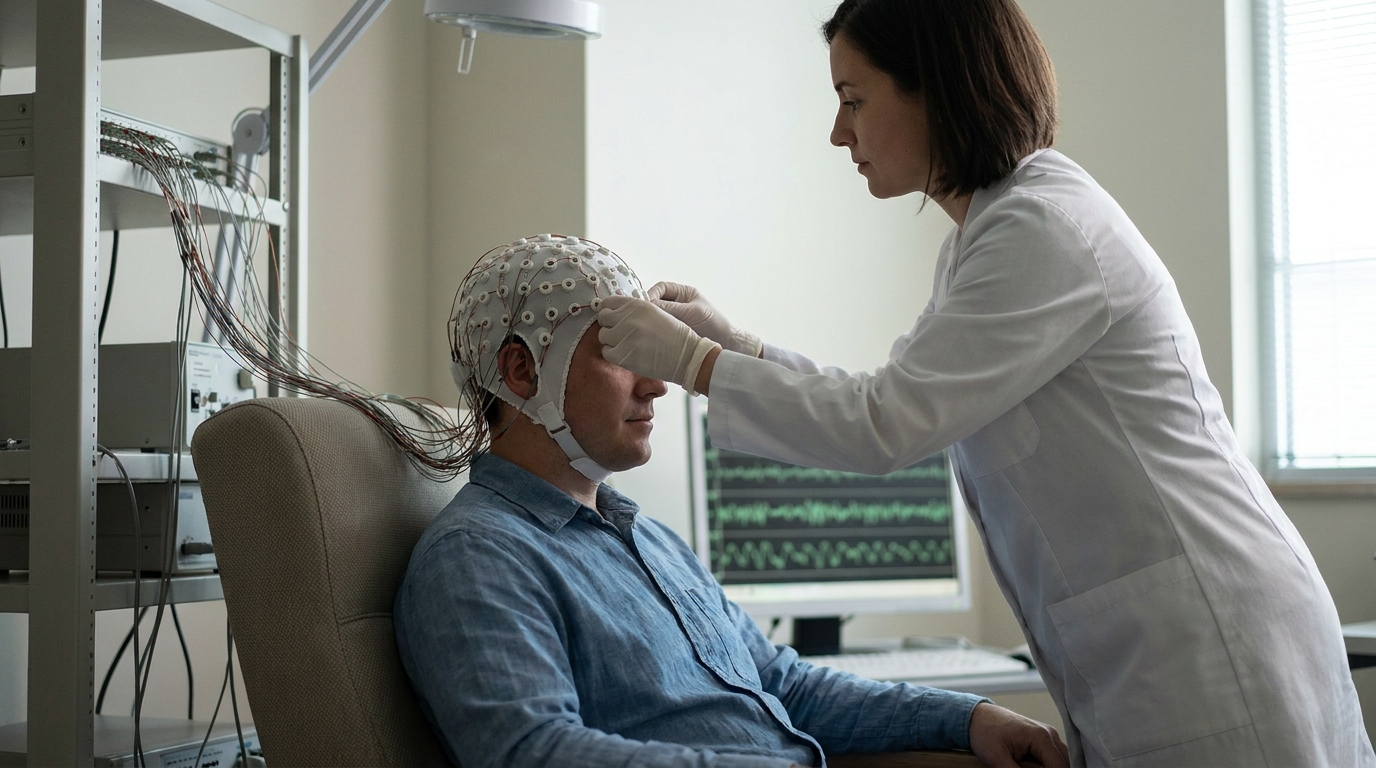
The heartbeat evoked potential (HEP) is an electrophysiological indicator of the cortical processing of cardiac signals, representing the brain's electrical response to each individual heartbeat. Clinicians and researchers have long viewed the HEP as a putative neural index of cardiac interoception, the conscious or unconscious sensing of internal bodily signals. Because various clinical conditions are associated with disrupted heart-brain communication, the HEP has been proposed as a potential biomarker for identifying and monitoring these physiological imbalances in practice. To determine if this signal is ready for clinical application, researchers conducted a comprehensive review of the current evidence, registering their study protocol on the Open Science Framework (identifier 10.17605/OSF.IO/TMQ3W) to ensure methodological rigor. The researchers synthesized evidence for HEP amplitude as a biomarker across all available clinical subpopulations to assess its diagnostic and prognostic utility. This investigation utilized a random-effects multilevel meta-analysis, a statistical framework that accounts for variability both within and between different studies while aggregating data from diverse patient groups. The study systematically characterized and quantitatively evaluated key HEP parameters to establish whether a consistent signal exists across different health conditions. These parameters included latency windows (the specific timeframes in which the brain reacts after a heartbeat), reference electrodes (the baseline sensors used to measure electrical potential), and scalp topographies (the physical mapping of electrical signals across the head). This rigorous approach was designed to move beyond individual study observations and provide a high-level overview of the signal's reliability in a medical context.
Inconsistent Findings Across Clinical Subpopulations
The meta-analysis revealed that the heartbeat evoked potential currently lacks the consistency required for broad clinical application. When the researchers conducted subgroup analyses for each specific condition, they found no difference in HEP amplitude between clinical conditions relative to healthy comparisons. This lack of a clear, statistically significant distinction suggests that the amplitude of the brain's response to cardiac signals does not yet function as a reliable diagnostic indicator across the diverse range of pathologies studied. While the signal is theoretically linked to interoceptive processing, these findings indicate that it does not consistently deviate from the norm in a way that allows clinicians to distinguish patients from healthy controls. Despite the overall lack of significance, the data highlighted specific areas of interest that warrant further investigation. The researchers observed large negative effect estimates for HEP amplitude in neurological diseases, as well as large negative effect estimates in cardiovascular diseases. These negative effect sizes suggest a potentially diminished cortical processing of cardiac signals in these specific patient populations. However, the authors emphasize that these findings were based on a small number of studies and require cautious interpretation. Because the sample of available research for these subgroups is limited, these large effect estimates may not be representative of broader patient populations and cannot yet be used to guide clinical decision-making, such as triaging patients or monitoring disease progression. To better understand the sources of variability in the data, the researchers employed a multivariate analysis (a statistical method used to examine how multiple independent variables simultaneously influence a single outcome). This analysis showed that clinical category partially explained the global variability in HEP parameters, indicating that the specific type of disease does influence the signal to some extent. Nevertheless, this relationship was not strong enough to overcome the substantial heterogeneity found across the literature. Consequently, the study concludes that HEP amplitude cannot currently serve as a valid clinical biomarker, as the signal remains too inconsistent to provide actionable diagnostic or prognostic information for practicing physicians.
Methodological Barriers to Clinical Implementation
Physicians recognize that various clinical conditions are associated with disrupted heart-brain communication, a physiological breakdown that theoretically makes the heartbeat evoked potential a candidate for diagnostic use. However, when the researchers systematically evaluated how key parameters were measured across the existing literature, they uncovered significant barriers to implementation. Variations in the chosen latency windows, the placement of reference electrodes, and the mapping of scalp topographies made it difficult to determine if a consistent pattern exists across different patient populations. Because of these discrepancies, the researchers concluded that no firm conclusions can be drawn regarding the utility of HEP amplitude as a clinical biomarker at this time. The primary obstacle is the substantial heterogeneity found between different studies, which makes it impossible to establish a reliable diagnostic baseline for patient care. The meta-analysis identified widespread methodological inconsistencies across the body of research, including variations in how the signal is processed and reported. These discrepancies preclude definitive interpretations of the data, as the lack of a unified protocol means that results from one clinical setting cannot be reliably compared to another. For the heartbeat evoked potential to transition from a research tool to a viable clinical instrument, the authors state that rigorous, standardized research is needed to harmonize data collection and analysis. Until such standardization occurs, the clinical value of this measure remains unestablished. Physicians should therefore exercise caution when interpreting studies that utilize this signal, as the current evidence base lacks the methodological cohesion required to support bedside decision-making or diagnostic screening.
References
1. Mulder J, Boelens M, Velde LAVD, Brust M, Jong JCK. The role of interoception in lifestyle factors: A systematic review. Neuroscience & Biobehavioral Reviews. 2025. doi:10.1016/j.neubiorev.2025.106018
2. Bednarek L, Harrison BJ, Davey CG, Steward T, Jamieson AJ. Neural correlates of altered interoception in depressive and anxiety disorders: a systematic review and meta-analysis. European Archives of Psychiatry and Clinical Neuroscience. 2026. doi:10.1007/s00406-026-02201-5
3. Pinna T, Edwards DJ. A Systematic Review of Associations Between Interoception, Vagal Tone, and Emotional Regulation: Potential Applications for Mental Health, Wellbeing, Psychological Flexibility, and Chronic Conditions. Frontiers in Psychology. 2020. doi:10.3389/fpsyg.2020.01792
4. Wareing L, Readman MR, Longo MR, Linkenauger SA, Crawford TJ. The Utility of Heartrate and Heartrate Variability Biofeedback for the Improvement of Interoception across Behavioural, Physiological and Neural Outcome Measures: A Systematic Review. Brain Sciences. 2024. doi:10.3390/brainsci14060579
5. Borges U, Knops L, Laborde S, Klatt S, Raab M. Transcutaneous Vagus Nerve Stimulation May Enhance Only Specific Aspects of the Core Executive Functions. A Randomized Crossover Trial. Frontiers in Neuroscience. 2020. doi:10.3389/fnins.2020.00523
6. Steinfath P, Azanova M, Kapralov N, et al. Heartbeat‐Evoked Responses in M/ EEG : A Systematic Review of Methods With Suggestions for Analysis and Reporting. Psychophysiology. 2026. doi:10.1111/psyp.70297
7. Quigley KS, Gianaros PJ, Norman GJ, Jennings JR, Berntson GG, Geus EJCD. Publication guidelines for human heart rate and heart rate variability studies in psychophysiology—Part 1: Physiological underpinnings and foundations of measurement. Psychophysiology. 2024. doi:10.1111/psyp.14604