For Doctors in a Hurry
- Clinicians lack a clear understanding of the molecular mechanisms linking neuroinflammation to the development of Major Depressive Disorder.
- The researchers performed single-nucleus RNA sequencing on the prefrontal cortex of mice lacking the interleukin-15 receptor subunit alpha.
- Deficiency of this receptor caused microglial activation and excessive synapse pruning through the CX3CL1/CX3CR1 signaling pathway in the brain.
- The authors conclude that this specific neuroimmune pathway drives depressive behaviors by disrupting essential neuron and microglial communication.
- Pharmacological inhibition of the CX3CR1 pathway reversed depressive behaviors, suggesting a potential target for future clinical depression therapies.
The Neuroimmune Architecture of Depressive Disorders
Major depressive disorder is increasingly recognized as a systemic illness driven by complex interactions between the immune system and central nervous system architecture [1, 2, 3]. While traditional theories focused on neurotransmitter depletion, contemporary evidence highlights the role of neuroinflammation and the activation of resident immune cells in the brain [4, 5]. These microglial cells, which normally maintain homeostasis and prune redundant connections, can become dysregulated under chronic stress, leading to aberrant synaptic remodeling [6, 7]. Recent transcriptomic analysis using single-nucleus RNA sequencing (a technique that identifies gene expression in individual cell nuclei) reveals that deficiency in the interleukin-15 receptor alpha (IL-15RA) subunit triggers excessive synapse pruning in the prefrontal cortex [8]. This pathological remodeling is mediated by the CX3CL1/CX3CR1 signaling pathway, and pharmacological inhibition of this axis has been shown to reverse depressive-like behaviors in animal models [8, 9]. Such structural changes in neural circuits are thought to underpin the persistent mood and cognitive deficits seen in clinical practice [10, 3].
Transcriptomic Mapping of the Prefrontal Cortex
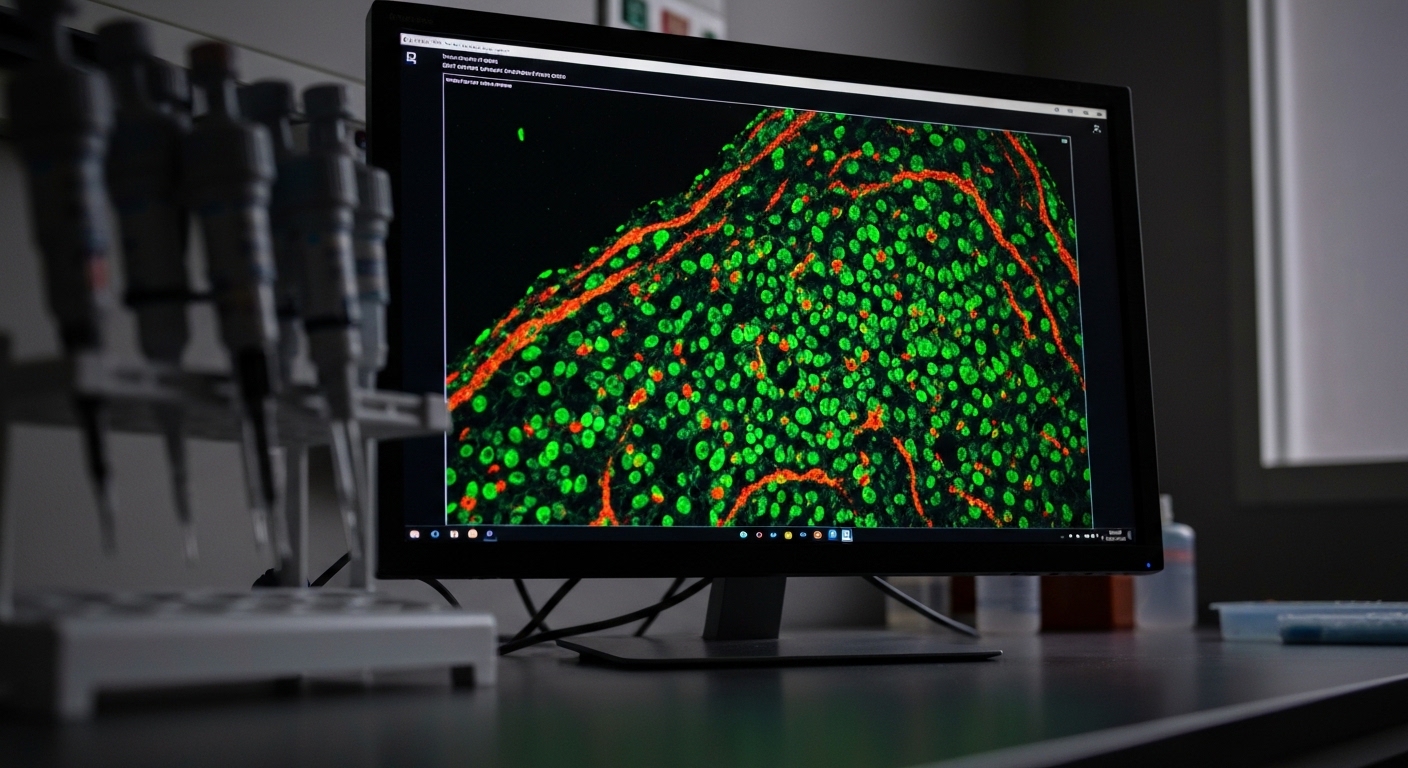
Major Depressive Disorder is a serious mental illness characterized by complex biological drivers, including neuroinflammation, which is increasingly recognized as a contributor to its pathogenesis. To investigate the molecular underpinnings of this condition, researchers utilized single-nucleus RNA sequencing, a high-resolution method to analyze gene expression in individual cell nuclei, to profile the transcriptomics of the prefrontal cortex. The study focused on interleukin-15 receptor subunit alpha knockout (Il15ra-/-) mice, an animal model that displays depressive-like behaviors. By examining the prefrontal cortex, a region central to executive function and mood regulation, the authors sought to identify how the loss of interleukin-15 receptor alpha signaling alters the cellular landscape of the brain. The analysis revealed that interleukin-15 receptor subunit alpha knockout mice exhibited cell-type-specific transcriptomic alterations, meaning the gene expression changes were not uniform but varied across different types of brain cells. These alterations particularly affected synapse assembly, the critical biological process of building and maintaining connections between neurons. To further understand these changes, the researchers employed co-expression network analysis (a statistical method used to identify groups of genes that function together in a coordinated manner). This analysis identified two specific gene clusters predominantly linked to synaptic pathways, providing a molecular link between immune receptor deficiency and structural brain changes. These synaptic gene clusters were not isolated to a single cell type but were located in microglia, excitatory neurons, and interneurons. Microglia are the resident immune cells of the brain, while excitatory neurons and interneurons are the primary cells responsible for transmitting and modulating neural signals. The presence of these dysregulated gene clusters across these diverse populations suggests that interleukin-15 receptor alpha deficiency disrupts essential neuron-microglial interactions. For the clinician, these findings are significant because they suggest that the depressive phenotype in this model is driven by a breakdown in the communication between immune cells and neurons, leading to the maladaptive remodeling of synaptic networks in the prefrontal cortex.
Microglial Activation and Pathological Synapse Pruning
The behavioral consequences of interleukin-15 receptor subunit alpha deficiency were characterized by a distinct phenotype, as the interleukin-15 receptor subunit alpha knockout (Il15ra-/-) mice displayed depressive-like behaviors during standardized testing. To determine the structural basis for these behavioral changes, the researchers conducted a morphological analysis (a detailed examination of the shape and structure of brain cells). This investigation revealed microglial activation in the prefrontal cortex of Il15ra-/- mice, indicating that the resident immune cells of the brain had shifted into a pro-inflammatory state. This activation was accompanied by significant synapse remodeling in Il15ra-/- mice, a process where the connections between neurons are physically altered or removed. For the clinician, these structural observations provide a cellular context for the depressive symptoms, suggesting that the loss of this specific immune receptor triggers a cascade of physical changes within the brain's mood-regulating circuitry. The study further clarified the relationship between these immune cells and neuronal health, as the findings suggest dysregulated neuron-microglial interactions in depression. In a healthy physiological state, microglia perform homeostatic functions, but in this model, the communication between neurons and microglia becomes pathological. The researchers determined that interleukin-15 receptor alpha deficiency contributes to depression onset by modulating microglia-mediated synaptic remodeling, specifically through the excessive pruning of functional connections. This mechanism was further localized to the CX3CL1/CX3CR1 signaling pathway, a primary communication line between neurons and microglia. When this pathway is overactive due to the lack of interleukin-15 receptor alpha, microglia begin to inappropriately engulf and eliminate synapses. These results highlight a specific neuroimmune pathway where the loss of immune regulation leads directly to the loss of synaptic integrity, offering a concrete biological target for potential therapeutic interventions in major depressive disorder.
The CX3CL1/CX3CR1 Pathway as a Therapeutic Target
The researchers identified the specific molecular mechanism responsible for the structural degradation observed in the prefrontal cortex. Their analysis confirmed that synapse remodeling was driven by enhanced neuron-microglia communication via the CX3CL1/CX3CR1 signaling pathway, a communication axis where the neuronal protein CX3CL1 (fractalkine) binds to the CX3CR1 receptor located on the surface of microglia. In the context of interleukin-15 receptor subunit alpha deficiency, this signaling becomes hyperactive, essentially signaling the brain's immune cells to over-prune healthy synaptic connections. This finding provides a precise biological explanation for how an immune receptor deficiency translates into the physical loss of neuronal architecture associated with depressive states. To determine if this process could be halted or corrected, the researchers used pharmacological inhibition of CX3CL1/CX3CR1 signaling using a CX3CR1 antagonist, a compound designed to block the receptor and prevent its activation. This intervention proved highly effective in the interleukin-15 receptor subunit alpha knockout (Il15ra-/-) mice. The data showed that CX3CR1 antagonist treatment reversed depressive-like behaviors caused by IL-15RA deficiency, restoring the animals to baseline behavioral levels. On a cellular level, the CX3CR1 antagonist treatment reversed microglia-mediated excessive synapse pruning caused by IL-15RA deficiency, demonstrating that the pathological loss of synapses is not an irreversible consequence of the genetic knockout but a dynamic process that can be pharmacologically managed. For the practicing clinician, these results shift the focus from broad neuroinflammation to a specific, targetable interaction between neurons and the innate immune system of the brain. The study concludes that the CX3CL1/CX3CR1 axis represents a targetable neuroimmune pathway for therapeutic interventions in Major Depressive Disorder, particularly for patients who may not respond to traditional monoamine-based therapies. By identifying a discrete signaling pathway that links immune signaling to the physical maintenance of synapses, this research opens a new avenue for drug development aimed at preserving synaptic integrity in the face of neuroimmune dysregulation.
References
1. Cui L, Li S, Wang S, et al. Major depressive disorder: hypothesis, mechanism, prevention and treatment. Signal Transduction and Targeted Therapy. 2024. doi:10.1038/s41392-024-01738-y
2. Sălcudean A, Popovici RA, Pitic DE, et al. Unraveling the Complex Interplay Between Neuroinflammation and Depression: A Comprehensive Review. International Journal of Molecular Sciences. 2025. doi:10.3390/ijms26041645
3. Nusslock R, Alloy LB, Brody GH, Miller GE. Annual Research Review: Neuroimmune network model of depression: a developmental perspective. Journal of Child Psychology and Psychiatry. 2024. doi:10.1111/jcpp.13961
4. Wang H, He Y, Sun Z, et al. Microglia in depression: an overview of microglia in the pathogenesis and treatment of depression. Journal of Neuroinflammation. 2022. doi:10.1186/s12974-022-02492-0
5. Wu A, Zhang J. Neuroinflammation, memory, and depression: new approaches to hippocampal neurogenesis. Journal of Neuroinflammation. 2023. doi:10.1186/s12974-023-02964-x
6. Calcia M, Bonsall DR, Bloomfield PS, Selvaraj S, Barichello T, Howes O. Stress and neuroinflammation: a systematic review of the effects of stress on microglia and the implications for mental illness. Psychopharmacology. 2016. doi:10.1007/s00213-016-4218-9
7. Colonna M, Butovsky O. Microglia Function in the Central Nervous System During Health and Neurodegeneration. Annual Review of Immunology. 2017. doi:10.1146/annurev-immunol-051116-052358
8. Tang Y, Huang Y, Pan J, et al. IL-15 receptor alpha deficiency triggers depressive-like behaviors via enhanced microglial synapse pruning.. Molecular psychiatry. 2026. doi:10.1038/s41380-026-03593-5
9. Stuart MJ, Singhal G, Baune BT. Systematic Review of the Neurobiological Relevance of Chemokines to Psychiatric Disorders. Frontiers in Cellular Neuroscience. 2015. doi:10.3389/fncel.2015.00357
10. Bartolomeis AD, Barone A, Vellucci L, et al. Linking Inflammation, Aberrant Glutamate-Dopamine Interaction, and Post-synaptic Changes: Translational Relevance for Schizophrenia and Antipsychotic Treatment: a Systematic Review. Molecular Neurobiology. 2022. doi:10.1007/s12035-022-02976-3