
- Randomized trials for systemic interleukin-6 inhibition in difficult-to-treat depression are scarce.
- This 4-week, double-blind, placebo-controlled randomized trial included 30 adults with moderate-to-severe depression.
- At day 28, tocilizumab showed a number needed to treat of 5 for remission and 4 for response.
- The authors concluded these findings support a large-scale efficacy trial for anti-interleukin-6 treatment in depression.
- This suggests systemic interleukin-6 inhibition may offer a future treatment option for difficult-to-treat depression.
Inflammation's Role in Refractory Depression
Depression, particularly its moderate-to-severe forms, often presents a significant challenge in clinical practice, with a substantial proportion of patients experiencing inadequate response to standard antidepressant therapies. A growing body of evidence suggests that chronic low-grade inflammation may contribute to the pathophysiology of depression in a subset of these individuals, characterized by elevated inflammatory markers such as C-reactive protein [1, 2]. This understanding has spurred interest in anti-cytokine treatments, which have demonstrated antidepressant effects in patients with chronic inflammatory conditions where depressive symptoms were measured as a secondary outcome [3, 4]. Interleukin-6 (IL-6), a key inflammatory cytokine, has emerged as a credible mechanistic candidate in this inflammatory hypothesis of depression [5, 6]. Consequently, researchers are now investigating whether directly targeting IL-6 signaling could offer a therapeutic benefit for patients with difficult-to-treat depression, potentially improving not only mood but also associated somatic symptoms and quality of life [7, 8].
Investigating IL-6 as a Therapeutic Target
Building on the understanding of inflammation's role, Interleukin 6 (IL-6) stands out as a keystone inflammatory cytokine and a credible mechanistic candidate for causing depression. Despite this strong biological rationale, randomized clinical trials specifically testing IL-6's treatment potential for depression remain scarce. This particular study aimed to address this gap, with the objective of identifying likely treatment-sensitive outcomes and estimating the effect size for systemic IL-6 inhibition in patients experiencing difficult-to-treat depression.
The researchers conducted a 4-week, proof-of-concept, double-blind, parallel-arm, placebo-controlled randomized clinical trial. Participants were adults diagnosed with moderate-to-severe International Statistical Classification of Diseases and Related Health Problems, Tenth Revision (ICD-10) depression who had also demonstrated poor antidepressant response to previous treatments. Key inclusion criteria further specified the presence of low-grade systemic inflammation, defined as a high-sensitivity C-reactive protein (hs-CRP) level of ≥0.3 mg/dL on two tests, and significant depression somatic symptoms, indicated by a Beck Depression Inventory II somatic symptoms score of ≥7. Recruitment for the trial occurred from primary and secondary care settings, as well as through self-referral, spanning from 2018 to 2022. Participants were randomized into minimization balanced groups, ensuring an even distribution based on depression severity and sex. Assessments were systematically conducted at baseline and then at 7, 14, and 28 days following the initial infusion.
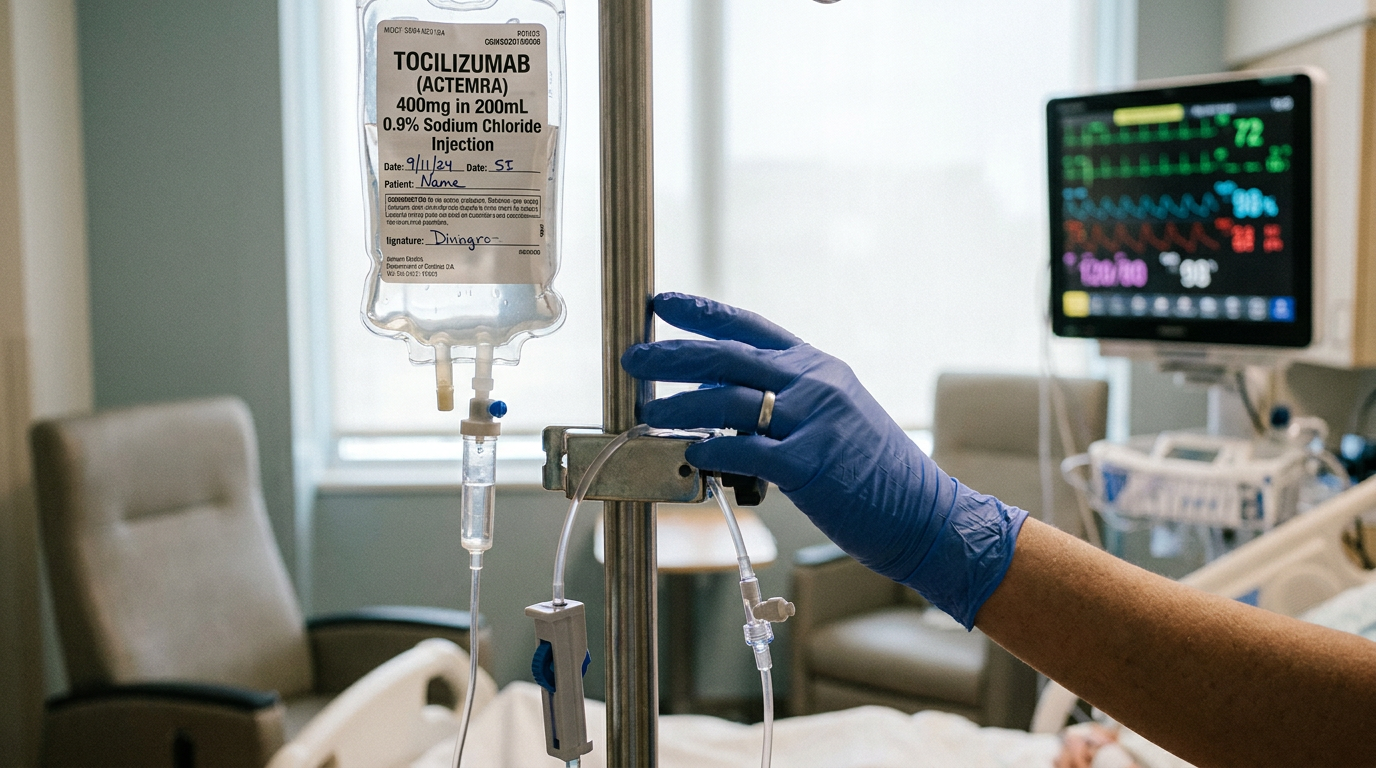
The intervention involved a single intravenous infusion of either the IL-6 receptor antagonist tocilizumab, administered at 8 mg/kg with a maximum dose of 800 mg per patient, or normal saline for the placebo group.
Measuring Clinical Response and Symptom Trajectories
To evaluate the intervention's impact, the researchers established specific endpoints. The primary outcome for the study was defined as depression somatic symptoms, assessed at 14 days after infusion. Total depression severity served as the secondary outcome. Additionally, a range of exploratory outcomes were investigated, including fatigue, anxiety, anhedonia, quality of life, and cognition. All outcomes were systematically assessed using validated scales, with their interpretation guided by established clinically meaningful thresholds.
The trial randomized 30 participants in total, with a mean age of 41.1 years (standard deviation 12.3 years). The cohort was predominantly female, comprising 24 participants (80.0%). Of these, 14 participants were assigned to the tocilizumab group, while 16 received placebo. Ultimately, 29 participants completed the assigned infusion and all follow-up assessments. As anticipated for a small proof-of-concept study, no results achieved statistical significance. This included the primary outcome, which showed only a small improvement in depression somatic symptoms at day 14, with an adjusted mean difference of −0.12 (95% CI, −2.51 to 2.28).
Emerging Signals of Benefit and Clinical Meaningfulness
Despite the absence of statistical significance in the primary outcome, the study revealed a discernible pattern of greater stepwise improvement over time with tocilizumab across multiple domains. This improvement was observed in somatic symptoms, overall depression severity, fatigue, psychological symptoms, state anxiety, and quality of life. Notably, the largest effects with tocilizumab were observed at the final follow-up, day 28. The researchers also noted that tocilizumab may improve a broader range of individual depressive symptoms. Crucially, the observed treatment effects were within ranges considered clinically meaningful for depression severity, fatigue, anxiety, and quality of life, suggesting potential real-world impact for patients.
Further analysis at the final follow-up on day 28 indicated favorable trends for tocilizumab compared with placebo in key clinical endpoints. Remission rates, defined by a significant reduction in symptoms, favored the tocilizumab group, with 7 participants (53.9%) achieving remission compared to 5 participants (31.3%) in the placebo group, resulting in a number needed to treat (NNT) of 5. Similarly, response rates, indicating a substantial improvement in symptoms, also favored tocilizumab, with 6 participants (46.2%) responding versus 3 participants (18.8%) in the placebo group, yielding an NNT of 4. Throughout the 4-week trial, tocilizumab was well tolerated, with no serious adverse events or withdrawals reported among participants.
Predictive Biomarkers for Immunotherapy Response
Beyond the observed clinical trends, the study also provided crucial insights into potential patient selection markers for IL-6 inhibition. The researchers investigated whether baseline inflammatory markers could predict treatment response. They found that baseline high-sensitivity C-reactive protein (hs-CRP) level, but not IL-6 level, tracked depression improvement. This indicates that individuals entering the trial with higher hs-CRP levels were more likely to experience a reduction in their depressive symptoms following tocilizumab administration.
This finding carries significant clinical implications, suggesting that hs-CRP may better predict immunotherapy response in depression than drug-specific biomarkers such as IL-6 itself. While IL-6 is the direct target of tocilizumab, hs-CRP, a downstream marker of systemic inflammation, appears to be a more effective indicator of which patients with difficult-to-treat depression might benefit from anti-IL-6 therapy. Identifying such a readily available and widely used biomarker like hs-CRP could streamline patient selection, allowing clinicians to more accurately identify individuals who are most likely to respond to IL-6 inhibition, thereby optimizing treatment strategies and improving patient outcomes in this challenging population.
Future Directions for IL-6 Inhibition in Depression
The findings from this proof-of-concept study provide crucial guidance for advancing the investigation of interleukin-6 (IL-6) inhibition in patients with difficult-to-treat depression. Specifically, the researchers highlight treatment-sensitive outcomes, such as depression severity, fatigue, anxiety, and quality of life, which demonstrated clinically meaningful effects in the tocilizumab group. The study also offers initial effect sizes for these outcomes, which are essential for power calculations in subsequent trials. Furthermore, the identification of baseline high-sensitivity C-reactive protein (hs-CRP) as a potential predictor of response suggests a valuable patient selection method for future studies testing systemic IL-6 inhibition in this challenging patient population.
These initial signals underscore the need for further investigation. The researchers explicitly call for a large-scale efficacy trial of anti–IL-6 treatment in depression to definitively assess the therapeutic potential of this approach. The data analysis for this initial study was conducted from 2023 to 2025, providing a recent foundation for these recommendations. For clinicians and researchers interested in the methodology and full scope of this work, the trial registration identifier is ISRCTN16942542.
References
1. Osimo EF, Baxter L, Lewis G, Jones PB, Khandaker GM. Prevalence of low-grade inflammation in depression: a systematic review and meta-analysis of CRP levels. Psychological Medicine. 2019. doi:10.1017/s0033291719001454
2. Zwiep J, Bet PM, Rhebergen D, et al. Efficacy of celecoxib add-on treatment for immuno-metabolic depression: Protocol of the INFLAMED double-blind placebo-controlled randomized controlled trial. Brain Behavior & Immunity - Health. 2022. doi:10.1016/j.bbih.2022.100585
3. Kappelmann N, Lewis G, Dantzer R, Jones PB, Khandaker GM. Antidepressant activity of anti-cytokine treatment: a systematic review and meta-analysis of clinical trials of chronic inflammatory conditions. Molecular Psychiatry. 2016. doi:10.1038/mp.2016.167
4. Baghdadi LR. Tocilizumab Reduces Depression Risk in Rheumatoid Arthritis Patients: A Systematic Review and Meta-Analysis.. Psychology research and behavior management. 2024. doi:10.2147/PRBM.S482409
5. Khandaker GM, Oltean BP, Kaşer M, et al. Protocol for the insight study: a randomised controlled trial of single-dose tocilizumab in patients with depression and low-grade inflammation. BMJ Open. 2018. doi:10.1136/bmjopen-2018-025333
6. Luo S, Liang Y, Wong THT, Schooling CM, Yeung SLA. Identifying factors contributing to increased susceptibility to COVID-19 risk: a systematic review of Mendelian randomization studies. International Journal of Epidemiology. 2022. doi:10.1093/ije/dyac076
7. Misra DP, Rathore U, Patro P, Agarwal V, Sharma A. Patient-Reported Outcome Measures in Takayasu Arteritis: A Systematic Review and Meta-Analysis. Rheumatology and Therapy. 2021. doi:10.1007/s40744-021-00355-3
8. Sweeney M, Adas M, Cope AP, Norton S. Longitudinal effects of affective distress on disease outcomes in rheumatoid arthritis: a meta-analysis and systematic review. Rheumatology International. 2024. doi:10.1007/s00296-024-05574-9