For Doctors in a Hurry
- Researchers investigated if individualized treatment using ultrasound-based criteria improves outcomes for acute Achilles tendon rupture compared to standard management strategies.
- This multicenter randomized controlled trial enrolled 300 patients, comparing individualized ultrasound-guided care against routine operative or non-operative treatment protocols.
- Individualized care reduced rerupture rates by 73 percent compared to non-operative treatment (3% versus 11%, p=0.03) without affecting functional work tests.
- The researchers concluded that individualized algorithms reduce reruptures and improve patient-reported outcomes while requiring 36 percent fewer surgeries than routine operative care.
- Clinicians may use ultrasound-based selection to optimize Achilles recovery, balancing surgical benefits against risks of rerupture in non-operative management.
Navigating the Management Dilemma in Acute Achilles Tendon Rupture
The management of acute Achilles tendon rupture remains a point of clinical contention, requiring a balance between the risks of surgical complications and the potential for higher rerupture rates in non-operative protocols [1, 2]. While surgical repair is often intended to limit tendon elongation and mitigate calf muscle atrophy, evidence is mixed regarding whether it provides superior long-term functional recovery or gait dynamics compared to modern rehabilitation [2, 3, 4]. International treatment strategies remain highly variable, with decisions frequently guided by individual surgeon preference or basic gap measurements rather than validated, evidence-based algorithms [5]. Persistent issues such as disorganized fiber alignment and permanent changes in tendon structure continue to complicate the return-to-sport trajectory for many patients [4, 6]. To address this gap, a multicenter randomized controlled trial has evaluated the Copenhagen Achilles Rupture Treatment Algorithm (CARTA), a protocol that uses ultrasonographic criteria (diagnostic ultrasound to assess tendon overlap and elongation) to individualize treatment selection [1, 7]. By tailoring the intervention to specific injury characteristics, this algorithm aims to optimize patient outcomes and clarify the indications for surgical repair.
The CARTA Protocol and Trial Design
To determine if individualized treatment is superior to default operative or non-operative strategies, researchers conducted a multicenter, three-arm, randomized controlled trial. Between May 2018 and June 2023, the investigators screened 970 patients, ultimately enrolling 300 adults who were randomized in a 1:1:1 ratio to receive the individualized CARTA protocol, routine non-operative management, or routine operative treatment. The randomized cohort had a mean age of 41 years (standard deviation of 1) and was composed of 76% male and 24% female participants, accurately reflecting the typical demographic profile for this injury in clinical practice.
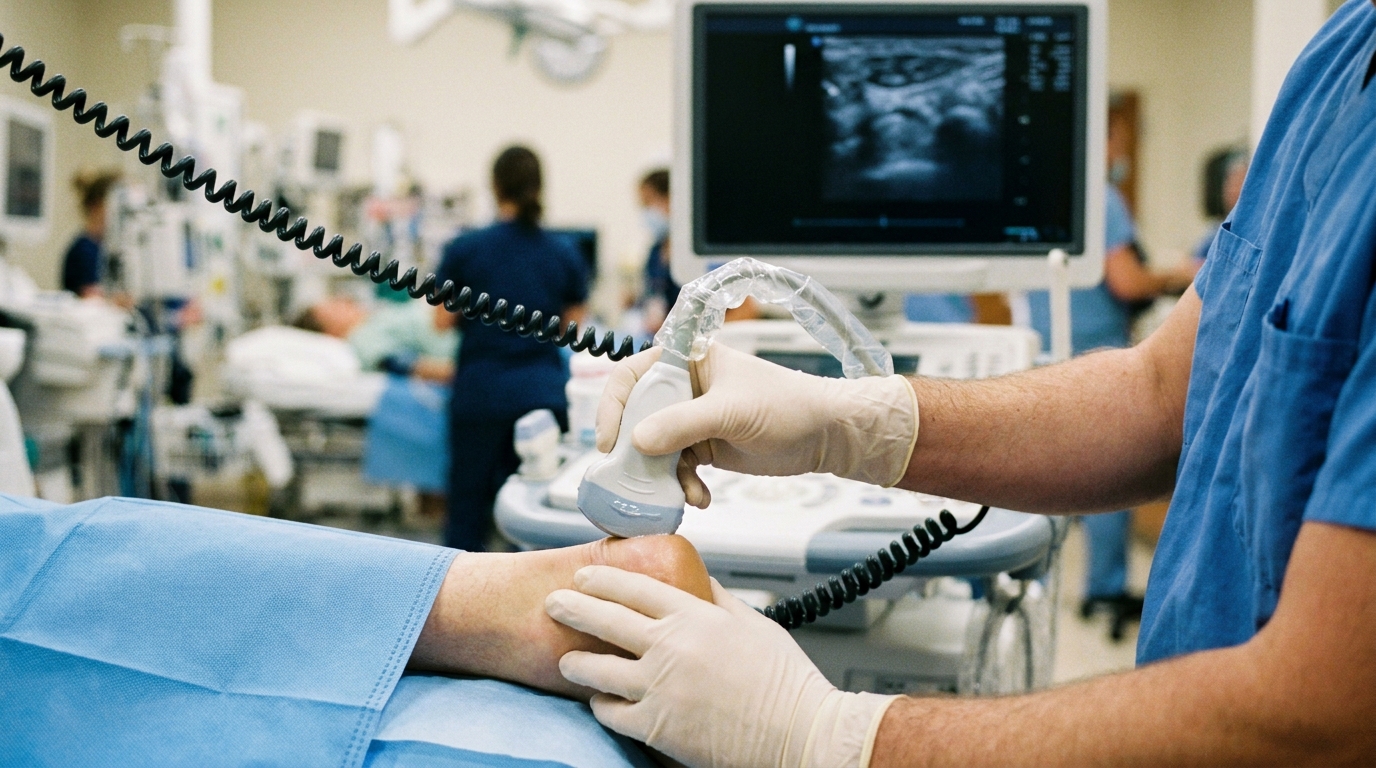
The CARTA protocol utilizes specific ultrasonographic criteria to triage patients into surgical or conservative pathways based on structural integrity. In the CARTA arm, surgery was indicated only if ultrasound imaging demonstrated less than 25% tendon overlap or 7% or greater elongation (the degree to which the tendon has stretched beyond its physiological length). By relying on these objective measurements of tissue displacement, the algorithm identifies the subset of patients most likely to require surgical stabilization while sparing those with sufficient tendon contact from unnecessary operative risks.
Primary Functional Outcomes and Patient Retention
The researchers established the Heel-Rise Work Test (HRWT) at 12 months as the primary outcome to evaluate the efficacy of the individualized algorithm. The HRWT is a validated clinical measure of calf muscle endurance and power, requiring patients to perform repetitive single-leg heel raises until exhaustion to quantify total work performed. At the 12-month follow-up, the study maintained high patient retention across all three treatment arms, with data available for 98 patients in the CARTA group, 100 patients in the non-operative group, and 97 patients in the operative group.
Despite the theoretical advantages of individualized care, the study found no significant between-group differences in the primary outcome of the HRWT at 12 months. This indicates that the overall functional capacity and muscle power of the affected limb were comparable at one year, regardless of the assigned treatment pathway. To provide a comprehensive view of recovery, the researchers also tracked several secondary outcomes, including the HRWT at six months, Heel-Rise Height (the maximum vertical displacement during the test), and the Achilles tendon Total Rupture Score (ATRS), a patient-reported instrument used to assess symptoms and physical activity limitations. Additional secondary measures included the Tegner activity scale (a grading system for work and sporting activity levels), the Copenhagen Achilles tendon Length Measure, and the Achilles Tendon Resting Angle (ATRA), which serves as an indirect clinical measure of tendon elongation and resting tension.
Reductions in Rerupture and Improved Patient-Reported Metrics
While primary functional power metrics were similar across all groups, the individualized CARTA approach demonstrated a significant clinical advantage in preventing treatment failure. The researchers found that CARTA reduced rerupture rates by 73% compared with non-operative treatment, reporting a rerupture rate of 3% (95% confidence interval 1 to 8) in the individualized group versus 11% (95% confidence interval 6 to 19) in the non-operative cohort (p=0.03). For the practicing clinician, this reduction represents a substantial mitigation of one of the most concerning risks associated with conservative management, proving that ultrasound-based selection can effectively identify patients who require surgical stabilization.
Beyond the reduction in mechanical failure, the individualized approach also translated to superior patient-reported outcomes and improved physiological tendon parameters. The study found that CARTA improved the ATRS by 8 points compared with non-operative treatment (95% confidence interval 1 to 15, p=0.02). This margin indicates a clinically relevant improvement in how patients perceive their recovery and their ability to return to daily activities. Furthermore, the protocol positively influenced the ATRA, showing a -2° improvement in the CARTA group compared with the non-operative group (95% confidence interval -4 to -1, p=0.01). This suggests that the individualized selection criteria more effectively preserved the optimal length-tension relationship of the healing tendon compared to a default non-operative strategy.
Optimizing Surgical Utilization
The clinical utility of the CARTA protocol lies in its ability to match the functional success of traditional surgery while sparing a significant portion of the patient population from invasive procedures. When comparing the individualized CARTA group directly to the routine operative treatment group, the researchers found no significant differences in functional outcomes at the 12-month follow-up. This parity in recovery indicates that the algorithm successfully identifies the specific physiological requirements of each rupture without sacrificing long-term physical performance.
By utilizing specific ultrasound markers to guide clinical decision-making, the protocol effectively triages patients toward the most appropriate intervention. Within the CARTA arm, 64% of patients eventually underwent surgical repair based on meeting the algorithm criteria of less than 25% tendon overlap or 7% or greater elongation. Despite nearly two-thirds of the individualized group requiring intervention, the CARTA protocol resulted in 36% fewer patients undergoing surgery compared to the routine operative treatment arm. For the practicing physician, these findings suggest that more than one-third of patients who would typically be scheduled for surgery under standard operative protocols can be safely managed conservatively, reducing the overall surgical burden and associated perioperative risks without compromising patient recovery.
References
1. Toft M, Hansen MS, Vestergaard JD, et al. Randomised three-armed trial investigation of the Copenhagen Achilles tendon Rupture Treatment Algorithm (CARTA) for individualised treatment of acute Achilles tendon rupture. British Journal of Sports Medicine. 2026. doi:10.1136/bjsports-2025-110210
2. Barfod KW, Overgård AB, Hansen MS, Haddouchi IE, Toft M, Hölmich P. Effect of the Copenhagen Achilles Rupture Treatment Algorithm (CARTA) on Calf Muscle Volume and Tendon Elongation After Acute Achilles Tendon Rupture: A Predefined Secondary Analysis of the First 60 Patients in a Randomized Controlled Trial.. Orthopaedic journal of sports medicine. 2023. doi:10.1177/23259671231211282
3. Hansen MS, Bencke J, Kristensen MT, Kallemose T, Hölmich P, Barfod KW. Achilles tendon gait dynamics after rupture: A three-armed randomized controlled trial comparing an individualized treatment algorithm vs. operative or non-operative treatment.. Foot and ankle surgery : official journal of the European Society of Foot and Ankle Surgeons. 2023. doi:10.1016/j.fas.2022.12.006
4. Green B, McClelland JA, Semciw AI, Schache AG, McCall A, Pizzari T. The Assessment, Management and Prevention of Calf Muscle Strain Injuries: A Qualitative Study of the Practices and Perspectives of 20 Expert Sports Clinicians. Sports Medicine - Open. 2022. doi:10.1186/s40798-021-00364-0
5. Vide J, Santos F, Dantas S, et al. A worldwide perspective on chronic Achilles tendon rupture: An ESSKA AFAS survey initiative. Knee Surgery Sports Traumatology Arthroscopy. 2026. doi:10.1002/ksa.70327
6. Paantjens MA, Helmhout PH, Martens MTAW, Lentjes G, Bakker EW. No short-term changes in tendon structure following temporary replacement of running with low-impact exercises in service members with midportion Achilles tendinopathy: a prospective cohort study. BMJ Military Health. 2025. doi:10.1136/military-2024-002918
7. Hansen MS, Vestermark MT, Hölmich P, Kristensen MT, Barfod KW. Individualized treatment for acute Achilles tendon rupture based on the Copenhagen Achilles Rupture Treatment Algorithm (CARTA): a study protocol for a multicenter randomized controlled trial.. Trials. 2020. doi:10.1186/s13063-020-04332-z