
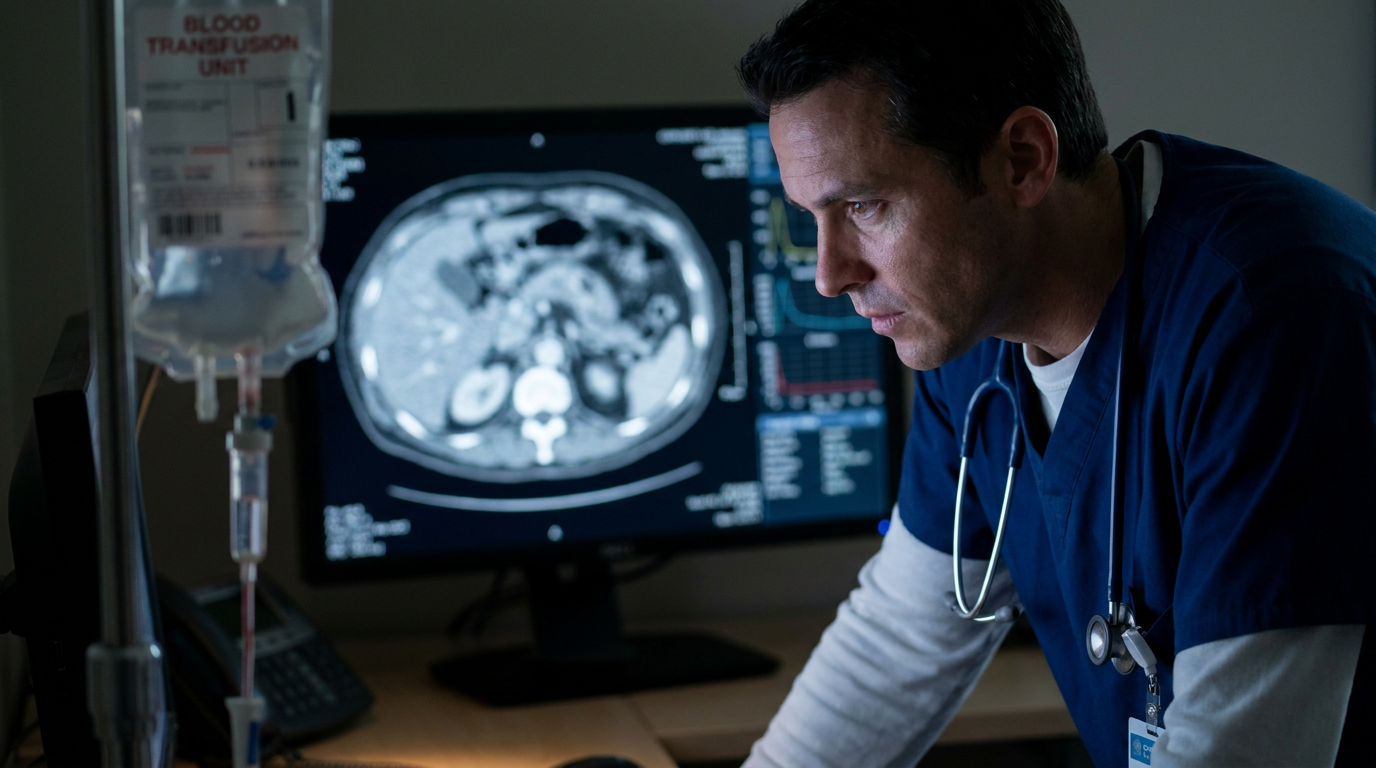
- Current guidelines lack definitive recommendations for prophylactic antibiotic redosing in trauma patients receiving blood transfusions.
- Researchers used a Sus Scrofa swine model to assess vancomycin bioavailability during hemorrhage and whole-blood resuscitation.
- Serum vancomycin levels significantly decreased immediately after hemorrhage and transfusion in 4, 6, 8, and 10-unit arms.
- The authors concluded that prophylactic vancomycin became subtherapeutic after four units of whole-blood resuscitation.
- Consider more frequent vancomycin redosing for patients receiving more than four to six units of blood.
Optimizing Antibiotic Prophylaxis in Severe Trauma
Prophylactic antibiotics are a cornerstone of care for patients with penetrating trauma, intended to prevent sepsis, a major driver of mortality after the initial 48 hours [1, 2]. However, the profound physiological shifts during massive hemorrhage and large-volume resuscitation can alter drug pharmacokinetics, potentially compromising antibiotic efficacy [3]. Current guidelines lack specific recommendations for redosing antibiotics in patients receiving massive transfusions, creating a critical knowledge gap for clinicians managing severely injured patients [2, 4, 1].
Addressing a Clinical Gap in Prophylactic Dosing
With sepsis identified as a significant contributor to mortality for trauma patients beyond 48 hours from their initial trauma and a major source of morbidity in the elective surgery population, the role of effective prophylaxis is clear. Yet, a persistent uncertainty in trauma care is how to maintain therapeutic antibiotic levels during massive hemorrhage. Current guidelines do not provide definitive recommendations on redosing for patients requiring blood transfusions, leaving a void in protocols for the most critically ill. To address this, researchers designed a study to characterize the bioavailability of prophylactic antibiotics in the setting of severe hemorrhage and whole-blood resuscitation, using a swine model to generate data that could directly inform clinical practice.
Experimental Design: Simulating Hemorrhage and Resuscitation
To investigate vancomycin pharmacokinetics under trauma conditions, the researchers utilized a Sus Scrofa swine model, which offers physiological responses to hemorrhage and resuscitation that are comparable to humans. All animals first received a standard weight-based dose of vancomycin. The study then divided the animals into two groups. Control animals did not undergo any intervention, establishing a baseline pharmacokinetic profile for vancomycin. In contrast, experimental animals were subjected to a controlled hemorrhage followed by a whole-blood resuscitation protocol. This resuscitation was administered incrementally, starting at 2 units and increasing in 2-unit increments up to 10 units. Throughout the 4-hour study period, investigators collected serum samples at regular intervals from all animals to track vancomycin concentrations.
Impact of Resuscitation on Vancomycin Levels
The study demonstrated a direct and clinically significant relationship between transfusion volume and antibiotic concentration. In animals receiving 4, 6, 8, and 10 units of whole blood, researchers observed a shorter time to reach subtherapeutic serum vancomycin levels compared to the control group. Moreover, the data showed a significant decrease in serum vancomycin level immediately following the hemorrhage and transfusion in these same experimental arms. The most critical finding was that prophylactic vancomycin dosing became subtherapeutic after just four units of whole-blood resuscitation. This rapid drop in concentration is likely driven by the combined effects of hemodilution, where the transfused blood expands the circulating volume and dilutes the drug, and an increased volume of distribution, where fluid shifts into extravascular tissues pull the antibiotic out of the serum, further lowering its effective concentration.
Clinical Considerations for Antibiotic Redosing
These findings from a porcine model translate into a direct and actionable consideration for the management of severely hemorrhaging patients. Based on the evidence that vancomycin levels fell below the therapeutic threshold after four units of whole blood, the authors conclude that redosing at more frequent intervals may be considered for patients who have more than four to six units of hemorrhage. While this study was not conducted in humans, the physiological principles of drug dilution and distribution during massive transfusion are fundamentally applicable to trauma resuscitation. The evidence is classified as Prognostic; Level II, suggesting it provides a strong basis to inform clinical judgment, pending further validation in human trials. This research, published in the Journal of Trauma and Acute Care Surgery (J Trauma Acute Care Surg. 2026;100:929-935), provides a compelling rationale for re-evaluating antibiotic redosing protocols in massive transfusion scenarios.
References
1. Livezey JB, Anklowitz A, Chow DR, et al. Antibiotic regimen optimization for severe exsanguination in a live swine model.. The journal of trauma and acute care surgery. 2026. doi:10.1097/TA.0000000000004880
2. Dellinger RP, Levy MM, Carlet J, et al. Surviving Sepsis Campaign: International guidelines for management of severe sepsis and septic shock: 2008. Intensive Care Medicine. 2007. doi:10.1007/s00134-007-0934-2
3. Park GH, Kim S, Kim MS, et al. The Association Between Cephalosporin and Hypoprothrombinemia: A Systematic Review and Meta-Analysis. International Journal of Environmental Research and Public Health. 2019. doi:10.3390/ijerph16203937
4. Weiss SL, Peters M, Alhazzani W, et al. Surviving Sepsis Campaign International Guidelines for the Management of Septic Shock and Sepsis-Associated Organ Dysfunction in Children. Pediatric Critical Care Medicine. 2020. doi:10.1097/pcc.0000000000002198