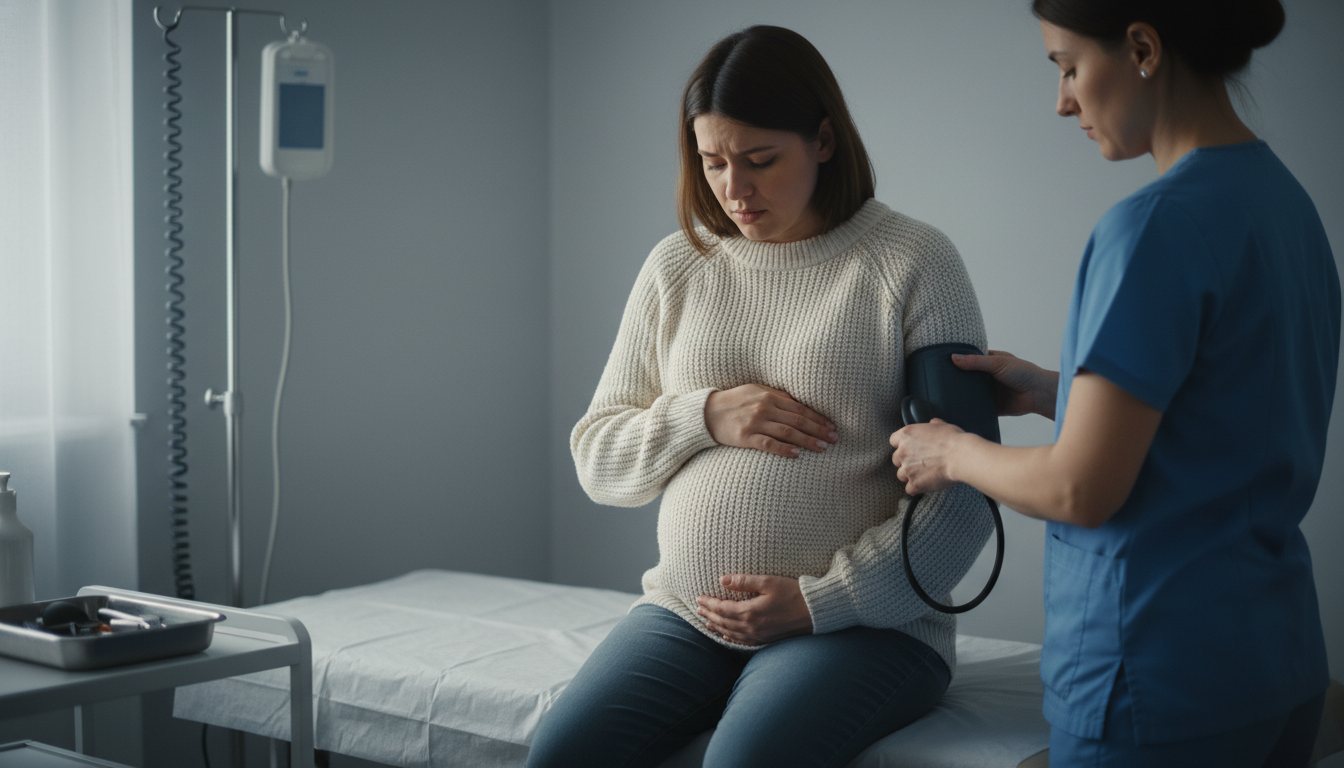
For Doctors in a Hurry
- Researchers investigated whether maternal depressive symptoms during pregnancy increase the subsequent risk of developing preeclampsia, addressing inconsistent findings from previous observational studies.
- This meta-analysis evaluated nine cohort studies including 44,559 pregnant women, of whom 6,934 experienced depressive symptoms before any preeclampsia assessment.
- Women with depressive symptoms faced a significantly higher preeclampsia risk (odds ratio 1.89, 95 percent confidence interval 1.17 to 3.03, p<0.001).
- The authors concluded that experiencing depressive symptoms during early pregnancy is a clear risk factor for the subsequent development of preeclampsia.
- Clinicians should prioritize routine screening and monitoring for depressive symptoms during early prenatal care to identify patients at risk for preeclampsia.
The Bidirectional Link Between Maternal Mood and Vascular Health
Hypertensive disorders of pregnancy and maternal depression are two of the most frequent and impactful complications encountered in routine obstetric care [1]. While clinicians have long recognized that a diagnosis of preeclampsia can precipitate significant psychological distress [2], the reverse relationship (whether maternal mental health directly influences vascular and obstetric outcomes) has remained clinically ambiguous. Previous reviews have suggested a possible link between depression, antidepressant use, and pregnancy-related hypertension, but distinguishing the effects of the underlying psychiatric illness from confounding variables has proven difficult [3]. Furthermore, shared risk factors such as poor sleep quality and environmental stressors frequently overlap with both mood disorders and preeclampsia, further complicating the clinical picture [4, 5]. Now, a comprehensive meta-analysis clarifies this relationship, offering precise data on how early psychiatric symptoms might forecast severe hypertensive complications later in gestation.
Quantifying the Risk of Hypertensive Complications
To evaluate the association between maternal depressive symptoms during pregnancy and the subsequent risk of developing preeclampsia, researchers conducted a systematic review (PROSPERO identifier CRD420251250417). The investigators systematically searched PubMed, Embase, and Web of Science for observational studies. To establish a clear temporal relationship, the included studies evaluated depressive symptoms during pregnancy measured before any assessment for preeclampsia, with all studies reporting clinically diagnosed preeclampsia as the primary outcome. The resulting meta-analysis included nine cohort studies involving a total of 44,559 pregnant women. Within this extensive population, 6,934 women (15.6 percent of the cohort) had depressive symptoms during pregnancy. This baseline prevalence underscores the frequency with which clinicians encounter mood disturbances in routine obstetric care. To quantify the risk, the researchers calculated pooled odds ratios and 95 percent confidence intervals using a random-effects model, a statistical method that assumes the true effect size varies from study to study, thereby accounting for clinical and methodological differences. The analysis demonstrated that maternal depressive symptoms were associated with a significantly higher risk of preeclampsia, yielding an odds ratio of 1.89 (95 percent confidence interval: 1.17 to 3.03; p < 0.001). The statistical heterogeneity for the main association was I² = 66 percent. For the practicing physician, these data indicate that early psychiatric symptoms nearly double the likelihood of a patient developing hypertensive complications later in gestation.
The Impact of Parity and Body Mass Index
The researchers evaluated whether the link between maternal depressive symptoms and preeclampsia varied among different patient populations or methodological approaches. They found that the association was consistent across study design, holding steady whether the data were prospective or retrospective (p for subgroup difference > 0.05). Furthermore, the elevated risk remained stable regardless of maternal age, showing no significant variation between patients younger than 29 years and those aged 29 years or older (p for subgroup difference > 0.05). The findings were also robust to the specific clinical criteria used for diagnosis. The association was consistent across preeclampsia definitions, whether the condition was identified by hypertension plus proteinuria or by hypertension plus organ involvement (p for subgroup difference > 0.05). While the primary association proved robust, the investigators noted critical nuances when accounting for confounding variables. Notably, stronger associations were observed in studies adjusting for parity, yielding an odds ratio of 3.42 compared to 1.35 in unadjusted studies (p for subgroup difference = 0.02). This suggests that a patient's history of previous pregnancies plays a significant role in modifying the psychiatric risk for hypertensive complications. Conversely, physical health markers also interacted with this risk profile. Adjustment for maternal body mass index attenuated the association, reducing the odds ratio to 1.43 compared to 2.93 in studies that did not adjust for this variable (p for subgroup difference = 0.05). This attenuation highlights the complex interplay between metabolic health, psychiatric symptoms, and vascular outcomes, reminding clinicians that obesity remains a powerful independent driver of preeclampsia that overlaps with mood disorders.
Integrating Psychiatric Screening into Obstetric Care
Based on the comprehensive data analysis, the researchers concluded that depressive symptoms during early pregnancy are associated with an increased risk of subsequent preeclampsia. For practicing obstetricians and primary care physicians, this establishes maternal mental health not merely as a secondary concern for psychiatric management, but as a direct, early warning indicator for severe vascular complications. Recognizing this link allows clinicians to stratify patient risk long before the clinical signs of hypertension, proteinuria, or organ dysfunction manifest. Consequently, the findings highlight the importance of screening and monitoring depressive symptoms in routine prenatal care. Integrating validated psychiatric evaluation tools into standard obstetric visits can help identify vulnerable patients early in gestation. By actively tracking maternal mood alongside traditional physical metrics like blood pressure and body mass index, healthcare providers can implement closer surveillance protocols for preeclampsia, ultimately improving both maternal and fetal outcomes through timely intervention.
References
1. Ke JXC, Bilan K, Vidler M, et al. Frequency and timing of complications within the first postpartum year in the United States and Canada: A systematic review and meta-analysis.. American Journal of Obstetrics and Gynecology. 2025. doi:10.1016/j.ajog.2025.04.060
2. Ernawati E, Wijayaningsih KS, Fajriansi A, et al. Randomized Controlled Trial of Mindfulness-Based Therapy on Psychological Distress and Clinical Outcomes in Preeclampsia. Media Kesehatan Politeknik Kesehatan Makassar. 2025. doi:10.32382/medkes.v20i2.1939
3. Youash S, Sharma V. Depression, Antidepressants and Hypertensive Disorders of Pregnancy: A Systematic Review.. Current Drug Safety. 2019. doi:10.2174/1574886314666190121144711
4. Raeisi S, Mirbalouchzehi A, Yazdandoust M. The Dual Burden of Air Pollution During Pregnancy: A Systematic Review of Physical and Psychological Consequences. Journal of Environmental Health and Sustainable Development. 2025. doi:10.18502/jehsd.v10i2.19005
5. Zhang Z, Lee J, Kiafar A, Pennestri M, Lugo-Candelas C. Sleep during pregnancy: A Systematic Review of Racial and Ethnic Disparities and Associations to Experiences of Discrimination.. American Journal of Obstetrics & Gynecology MFM. 2025. doi:10.1016/j.ajogmf.2025.101688