
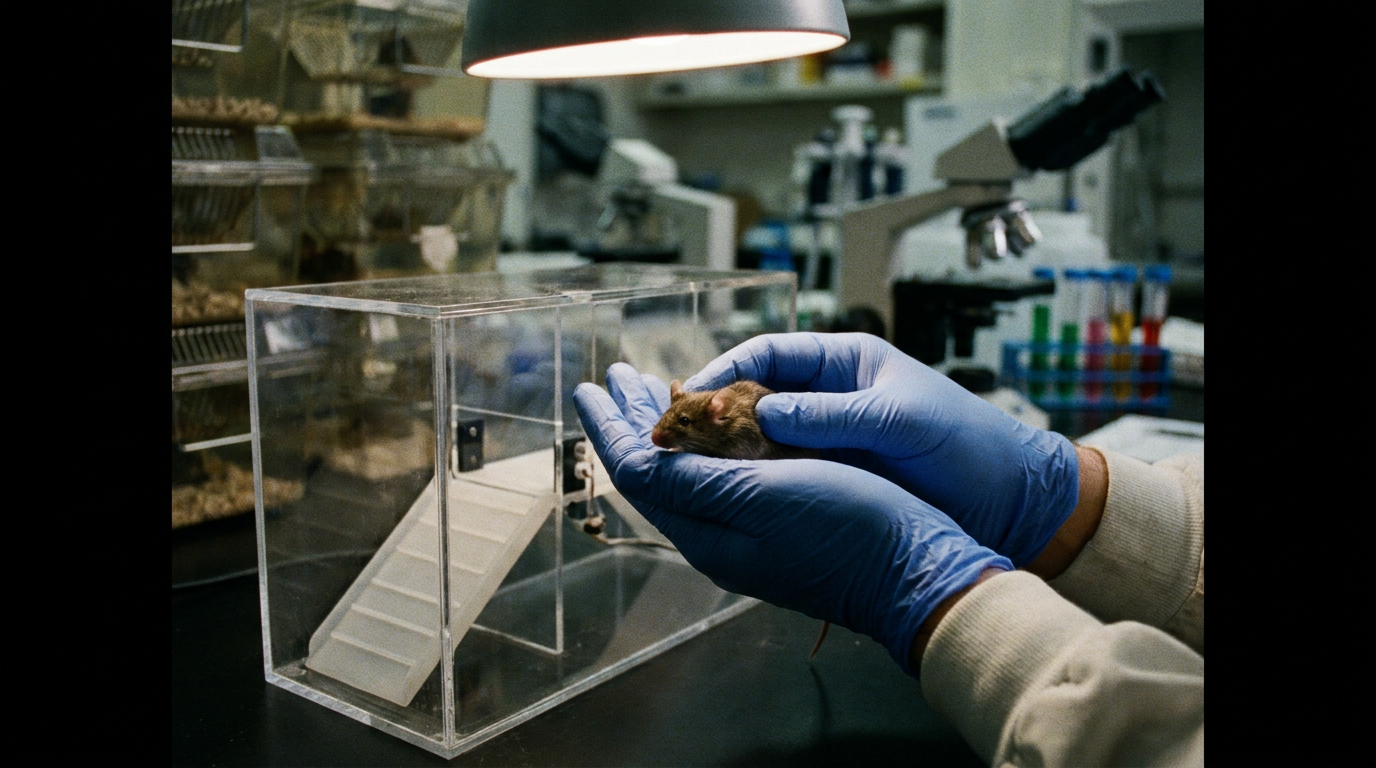
- The study investigated if maternal exposure to immunoregulatory microorganisms could provide intergenerational stress protection in offspring.
- Researchers administered heat-killed <i>Mycobacterium vaccae</i> ATCC 15483 T intragastrically to female C57BL/6 N mice.
- Their male offspring, never directly exposed, were protected against multiple adverse consequences of chronic stress in adulthood.
- The authors concluded that maternal <i>M. vaccae</i> exposure confers intergenerational stress protection, potentially via the fecal microbiome.
- These preclinical findings suggest a potential role for early life microbial interventions in mitigating stress-related disorders across generations.
Intergenerational Resilience: Exploring Microbial Influences on Stress Vulnerability
The rising prevalence of stress-associated disorders like depression and anxiety presents a persistent clinical challenge, with chronic stress contributing to significant morbidity [1, 2]. A leading theory, the 'Environmental Mismatch Hypothesis', suggests that modern urban living reduces exposure to diverse environmental microbes, potentially increasing this vulnerability [3, 4]. This concept is biologically grounded in the gut-brain axis, the complex communication network linking intestinal microbiota to mental health and immune function [5, 6]. Preclinical research has already identified certain immunoregulatory microorganisms, such as non-pathogenic mycobacteria, for their anti-inflammatory and stress-protective properties [7, 8]. A recent study now investigates whether these microbial influences can be transmitted from one generation to the next, offering a new perspective on preventative health.
The 'Old Friends' Hypothesis and Early Life Microbial Exposure
The 'Old Friends' hypothesis provides a compelling framework for the link between environment and stress vulnerability. It posits that the higher incidence of stress-related and inflammatory diseases in high-income countries stems partly from reduced contact with immunoregulatory microorganisms, microbes that co-evolved with humans and are essential for calibrating the immune system. Without this early and consistent exposure, the immune system may develop improperly, leading to dysregulation that can heighten susceptibility to stress. The timing of this microbial contact is critical, with the prenatal and postnatal periods representing a key window for establishing both immune competence and a healthy gut microbiome.
Previous preclinical work has substantiated this theory, demonstrating that repeated administration of non-pathogenic, rapid-growing mycobacteria, specifically Mycobacterium (M.) vaccae NCTC 11659 and M. vaccae ATCC 15483T, confers stress-protective effects. When administered before or during stressor exposure in animal models, these bacteria were found to regulate immune responses and buffer against the negative consequences of stress, setting the stage for the current investigation into their potential for intergenerational transfer.
Maternal Microbial Transfer: A New Avenue for Stress Protection
Building on this foundation, the new study demonstrates that maternal microbial exposure can indeed provide stress protection to the next generation. Researchers administered a heat-killed preparation of Mycobacterium vaccae ATCC 15483T via repeated intragastric gavage to female C57BL/6N mice. Using a heat-killed preparation ensures that only the immunological components of the bacterium are introduced, eliminating any risk of infection while still stimulating an immune response. The key finding was that the male offspring of these treated females were protected against multiple adverse consequences of chronic stress in adulthood, despite the offspring never directly receiving the mycobacterium themselves. This observation of intergenerational protection suggests a powerful mechanism for programming long-term resilience. For clinicians, this work points toward a potential preventative strategy where modulating the maternal microbiome, perhaps preconception or during gestation, could help fortify offspring against future stress-related pathology.
Microbiome Modulation: A Potential Mechanism of Intergenerational Effect
To understand how this stress protection was transmitted, the researchers examined the offspring's gut microbiota. Correlational analyses strongly implicated the fecal microbiome as a key mediator. Although the offspring were never directly exposed to the bacterium, their mothers' treatment induced significant and beneficial changes in their gut microbial composition. Specifically, maternal M. vaccae exposure intergenerationally facilitated alpha-diversity in the fecal microbiome of the male offspring. Alpha-diversity is a measure of the variety and abundance of different microbial species within a community; higher diversity is broadly considered a marker of a healthy and resilient gut ecosystem.
Furthermore, the maternal treatment intergenerationally increased the relative abundance of bacterial taxa known to be potent short-chain fatty acid producers. Short-chain fatty acids, such as butyrate and propionate, are metabolites produced when gut bacteria ferment dietary fiber. These molecules are not merely waste products; they are critical signaling molecules that maintain gut barrier integrity, modulate systemic inflammation, and directly influence brain function and behavior. The findings suggest that the maternal microbial intervention primed the offspring's gut to house a more diverse and functionally beneficial microbiota. From a clinical standpoint, this highlights a tangible biological pathway: enhancing maternal microbial exposure could promote offspring gut health, increase the production of beneficial metabolites, and thereby confer lasting protection against stress.
References
1. Moradi Y, Dowran B, Sepandi M. The global prevalence of depression, suicide ideation, and attempts in the military forces: a systematic review and Meta-analysis of cross sectional studies. BMC Psychiatry. 2021. doi:10.1186/s12888-021-03526-2
2. Bautista J, Hidalgo‐Tinoco C, Delgado MD, Viteri-Recalde J, Guerra-Guerrero A, López‐Cortés A. The gut–brain–circadian axis in anxiety and depression: a critical review. Frontiers in Psychiatry. 2025. doi:10.3389/fpsyt.2025.1697200
3. Longman DP, Shaw C. H omo sapiens , industrialisation and the environmental mismatch hypothesis. Biological reviews/Biological reviews of the Cambridge Philosophical Society. 2025. doi:10.1111/brv.70094
4. Longman DP, Todorova Y, Bailey SJ, et al. Outpaced by Industry: Industrial Environments Reduce Endurance, With Implications for Evolutionary Fitness. American Journal of Biological Anthropology. 2026. doi:10.1002/ajpa.70270
5. Khaledi M, Sameni F, Gholipour A, et al. Potential role of gut microbiota in major depressive disorder: A review. Heliyon. 2024. doi:10.1016/j.heliyon.2024.e33157
6. Groen RN, Clercq NCD, Nieuwdorp M, Hoenders R, Groen AK. Gut microbiota, metabolism and psychopathology: A critical review and novel perspectives. Critical Reviews in Clinical Laboratory Sciences. 2018. doi:10.1080/10408363.2018.1463507
7. Holbrook EM, Zambrano CA, Wright CTO, et al. Mycobacterium vaccae NCTC 11659, a Soil-Derived Bacterium with Stress Resilience Properties, Modulates the Proinflammatory Effects of LPS in Macrophages. International Journal of Molecular Sciences. 2023. doi:10.3390/ijms24065176
8. Reber SO, Siebler PH, Donner NC, et al. Immunization with a heat-killed preparation of the environmental bacterium Mycobacterium vaccae promotes stress resilience in mice. Proceedings of the National Academy of Sciences. 2016. doi:10.1073/pnas.1600324113