
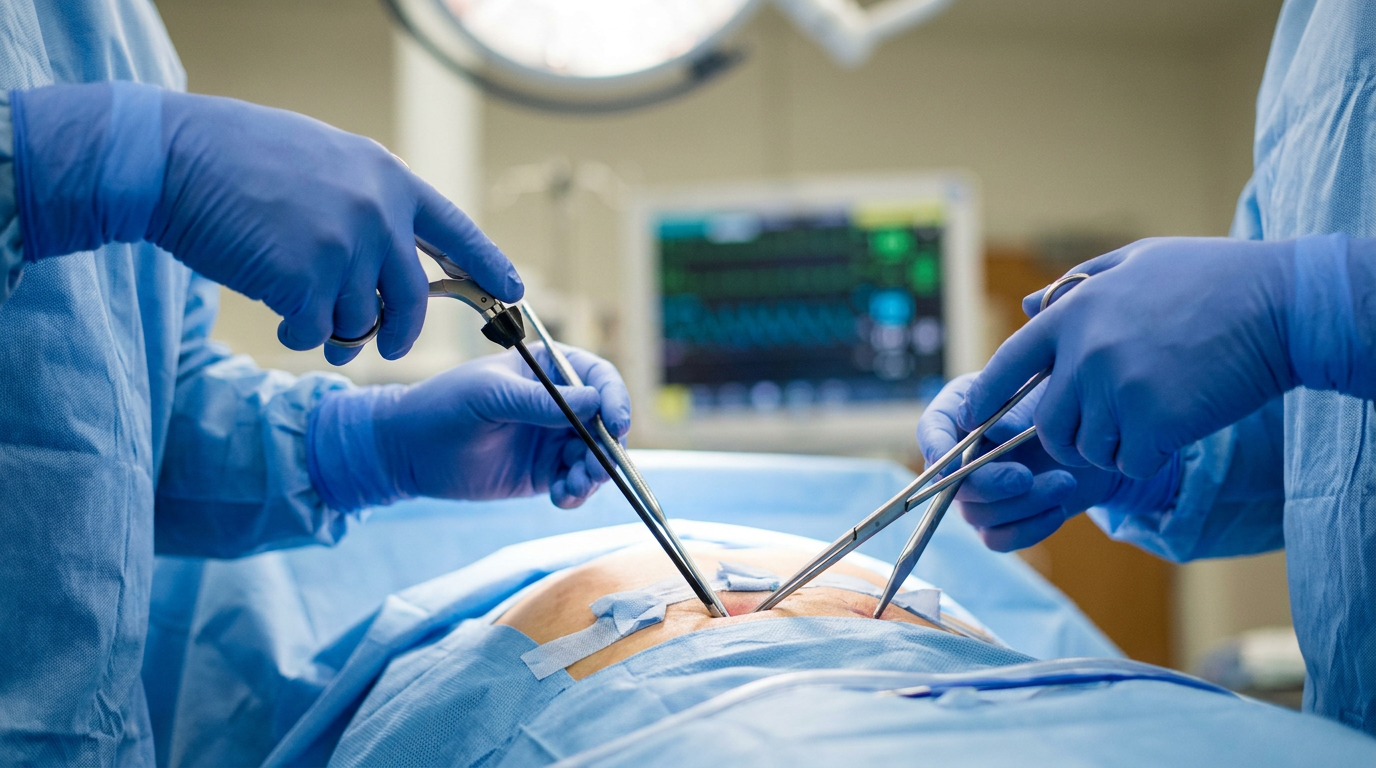
- The study addressed whether benefits of minimally invasive pancreatoduodenectomy extend beyond initial hospitalization.
- This international, multicenter DIPLOMA-2 randomized clinical trial included 288 patients with resectable pancreatic or periampullary neoplasm.
- At day 30, minimally invasive pancreatoduodenectomy patients had 659 more steps daily (95% CI, 79-1240; P = .03) and 9-millisecond higher heart rate variability (95% CI, 2-15; P = .006).
- The authors concluded that minimally invasive pancreatoduodenectomy led to increased physical activity up to 5 weeks and less physiological stress for 3 months.
- Future research should confirm these benefits in other clinical settings, such as lower-volume surgical centers.
Objective Recovery Metrics After Pancreatoduodenectomy
Pancreatoduodenectomy, a complex abdominal surgery often performed for pancreatic head or periampullary neoplasms, is associated with significant morbidity and a prolonged recovery period [1]. While advancements in surgical techniques and perioperative care, including immunonutrition and optimized reconstruction methods, have aimed to mitigate complications and shorten hospital stays [2, 3, 4, 5], the postoperative course remains challenging. Minimally invasive pancreatoduodenectomy (MIPD) has emerged as an alternative to open pancreatoduodenectomy (OPD), with some evidence suggesting benefits such as reduced blood loss, shorter hospital stays, and potentially faster functional recovery, though operative times may be longer [6, 7, 8]. However, the extent to which these benefits translate into improved objective patient activity and physiological well-being in the critical months following hospital discharge has remained less clear. A new study now offers fresh insights into these post-discharge recovery trajectories.
Study Design and Patient Cohort
The DIPLOMA-2 trial, a patient-blinded randomized clinical trial, sought to clarify whether the benefits of minimally invasive pancreatoduodenectomy (MIPD) extend beyond the initial hospital stay, building on the understanding that MIPD aims to improve postoperative recovery compared with open pancreatoduodenectomy (OPD). Conducted between 2022 and 2023, this international, multicenter study involved 14 high-volume centers across 6 European countries. The objective was to assess postoperative recovery after hospital discharge, specifically using activity tracking, in patients with upfront resectable neoplasm in the pancreatic head or periampullary region, comparing MIPD with OPD. Patients included in the analysis had suspected or proven upfront resectable neoplasm, meaning without vascular contact, in these regions. Participants were randomly assigned to undergo either MIPD or OPD in a 2:1 ratio. Data from the study were analyzed from January 2024 to January 2025, and the trial is registered with ISRCTN.org under Identifier: ISRCTN27483786.
To objectively measure recovery, patients wore an activity tracker, specifically a Fitbit Inspire 2 (Google), from two weeks before surgery until 90 days thereafter. This device monitored several key metrics: step count, active minutes, and heart rate variability (HRV). The researchers highlighted that high HRV reflects parasympathetic activity, which is an indicator of physiological relaxation and recovery. The main outcome measure for the study was postoperative physical activity during the first 90 postoperative days. A total of 288 patients were included in this analysis, with a mean (SD) age of 68.3 (9.9) years, and 168 patients (58.3%) were male. Activity tracker data were successfully collected and available from 236 of these 288 patients (82%), with 155 patients in the MIPD group and 81 patients in the OPD group contributing to the activity tracker data analysis.
Early Postoperative Activity and Physiological Stress
The DIPLOMA-2 trial's analysis of activity tracker data revealed significant differences in early postoperative recovery between patients undergoing minimally invasive pancreatoduodenectomy (MIPD) and open pancreatoduodenectomy (OPD). At postoperative day 30, patients in the MIPD group demonstrated notably higher physical activity levels. Specifically, they averaged 659 more steps daily (95% CI, 79-1240 steps; P = .03) compared with the OPD group. Concurrently, the MIPD cohort also recorded 22 more active minutes daily (95% CI, 3-40 minutes; P = .03) than those who underwent OPD. These metrics indicate a more robust return to physical activity within the first month following MIPD.
Beyond physical activity, the study also assessed physiological recovery through heart rate variability (HRV), a measure reflecting parasympathetic activity and thus physiological relaxation and recovery. On postoperative day 30, patients in the MIPD group exhibited a 9-millisecond higher HRV (95% CI, 2-15 milliseconds; P = .006) compared with the OPD group, suggesting reduced physiological stress and enhanced recovery. The benefits in physical activity extended beyond this single time point, with patients after MIPD maintaining a significantly higher step count between postoperative day 16 and 39, and more active minutes between day 14 and 37. These findings underscore a sustained period of improved physical and physiological recovery in the weeks immediately following MIPD, offering a clearer picture of its clinical advantages in the early post-discharge period.
Sustained Physiological Recovery and Clinical Implications
While the early postoperative period showed distinct advantages for minimally invasive pancreatoduodenectomy (MIPD), the DIPLOMA-2 trial also tracked patient recovery up to 90 days post-surgery. By postoperative day 90, the researchers observed that step count and active minutes were comparable between the MIPD and open pancreatoduodenectomy (OPD) groups, indicating that physical activity levels had largely equalized over time. However, a key distinction persisted: heart rate variability (HRV) remained higher in the MIPD group at the 90-day mark. This sustained elevation in HRV, a marker of parasympathetic activity and physiological relaxation, suggests a continued reduction in physiological stress for patients undergoing MIPD even three months after the procedure.
The study concluded that activity tracking up to 90 days revealed increased physical activity up to 5 weeks after MIPD and less physiological stress up to 3 months, as compared with OPD. These findings suggest that MIPD offers a period of enhanced physical activity and reduced physiological stress during the crucial early recovery phase, which could translate into improved patient well-being and potentially faster return to baseline function. For clinicians, this data provides a more nuanced understanding of the long-term recovery trajectory following pancreatoduodenectomy, informing patient counseling and surgical planning. However, the authors caution that future studies should confirm whether these relatively modest benefits persist in other settings, such as lower-volume centers, to ensure broader applicability of these observations.
References
1. Probst P, Hüttner FJ, Meydan Ö, et al. Evidence Map of Pancreatic Surgery–A living systematic review with meta-analyses by the International Study Group of Pancreatic Surgery (ISGPS). Surgery. 2021. doi:10.1016/j.surg.2021.04.023
2. Tang G, Zhang L, Tao J, Wei Z. Effects of Perioperative Probiotics and Synbiotics on Pancreaticoduodenectomy Patients: A Meta-Analysis of Randomized Controlled Trials. Frontiers in Nutrition. 2021. doi:10.3389/fnut.2021.715788
3. Shen Y, Jin W. Reconstruction by Pancreaticogastrostomy versus Pancreaticojejunostomy following Pancreaticoduodenectomy: A Meta-Analysis of Randomized Controlled Trials. Gastroenterology Research and Practice. 2012. doi:10.1155/2012/627095
4. Yu J, Yuan A, Liu Q, et al. Effect of preoperative immunonutrition on postoperative short-term clinical outcomes in patients with gastric cancer cachexia: a prospective randomized controlled trial. World Journal of Surgical Oncology. 2024. doi:10.1186/s12957-024-03348-y
5. Fan Y, Li N, Zhang J, Fu Q, Qiu Y, Chen Y. The Effect of immunonutrition in patients undergoing pancreaticoduodenectomy: a systematic review and meta-analysis. BMC Cancer. 2023. doi:10.1186/s12885-023-10820-7
6. Chen K, Pan Y, Liu X, et al. Minimally invasive pancreaticoduodenectomy for periampullary disease: a comprehensive review of literature and meta-analysis of outcomes compared with open surgery. BMC Gastroenterology. 2017. doi:10.1186/s12876-017-0691-9
7. Pędziwiatr M, Małczak P, Pisarska M, et al. Minimally invasive versus open pancreatoduodenectomy—systematic review and meta-analysis. Langenbeck s Archives of Surgery. 2017. doi:10.1007/s00423-017-1583-8
8. Yoon Y, Lee W, Kang CM, et al. Laparoscopic versus open pancreatoduodenectomy for periampullary tumors: a randomized clinical trial. International Journal of Surgery. 2024. doi:10.1097/js9.0000000000002035