For Doctors in a Hurry
- Researchers investigated whether pre-diagnostic plasma levels of carotenoids and tocopherols correlate with the risk of developing amyotrophic lateral sclerosis.
- This nested case-control study analyzed 154 participants diagnosed with amyotrophic lateral sclerosis across four United States cohorts using matched controls.
- Women with higher total beta-carotene showed lower incidence (RR 0.68, 95% CI 0.48-0.98, p=0.038), while men showed a positive association.
- The researchers concluded that higher beta-carotene and beta-cryptoxanthin in women may be associated with a reduced risk of amyotrophic lateral sclerosis.
- These findings suggest that antioxidant profiles may influence neurodegeneration risk differently in men and women, requiring further sex-specific investigation.
Oxidative Stress and the Search for Neuroprotective Biomarkers
The pathogenesis of neurodegenerative diseases is increasingly linked to an imbalance between reactive oxygen species (unstable molecules that damage cellular structures) and endogenous antioxidant defenses, leading to cumulative cellular damage [1, 2]. While oxidative stress is a recognized hallmark of conditions like Alzheimer's disease and multiple sclerosis, the clinical utility of systemic antioxidant levels as predictors of disease risk remains a subject of intense investigation [3, 4, 5]. Dietary carotenoids and tocopherols (lipid-soluble antioxidants) are of particular interest due to their ability to cross the blood-brain barrier and neutralize free radicals that would otherwise contribute to neuronal apoptosis (programmed cell death) [6, 2]. Despite the biological plausibility of nutritional neuroprotection, large-scale longitudinal data linking pre-diagnostic nutrient status to specific motor neuron pathologies have been limited [7, 5]. A new nested case-control study involving 154 participants across four cohorts now provides a detailed analysis of how plasma antioxidant profiles, measured years before symptom onset, correlate with the eventual risk of developing amyotrophic lateral sclerosis [8]. The researchers found that higher pre-diagnostic plasma levels of beta-carotene (RR 0.68; 95% CI 0.48 to 0.98) and beta-cryptoxanthin (RR 0.67; 95% CI 0.48 to 0.94) were associated with a significantly lower risk of amyotrophic lateral sclerosis in women, though these associations were less clear in men [8].
Longitudinal Cohort Design and Analytical Methods
To investigate these nutritional biomarkers, the researchers utilized a nested case-control design (an epidemiological approach where cases and controls are drawn from a pre-existing, larger population cohort) within four United States cohorts. This longitudinal framework allowed investigators to identify 154 participants who provided a pre-diagnostic blood-draw and were subsequently diagnosed with amyotrophic lateral sclerosis during the follow-up period. To ensure a robust comparison, the study matched controls in a 2:1 ratio based on specific clinical and demographic variables: cohort, sex, age, race or ethnicity, fasting status, and the specific time of the blood-draw. This rigorous matching process helps clinicians account for potential confounding factors that might otherwise skew the relationship between baseline nutrient levels and eventual disease onset.
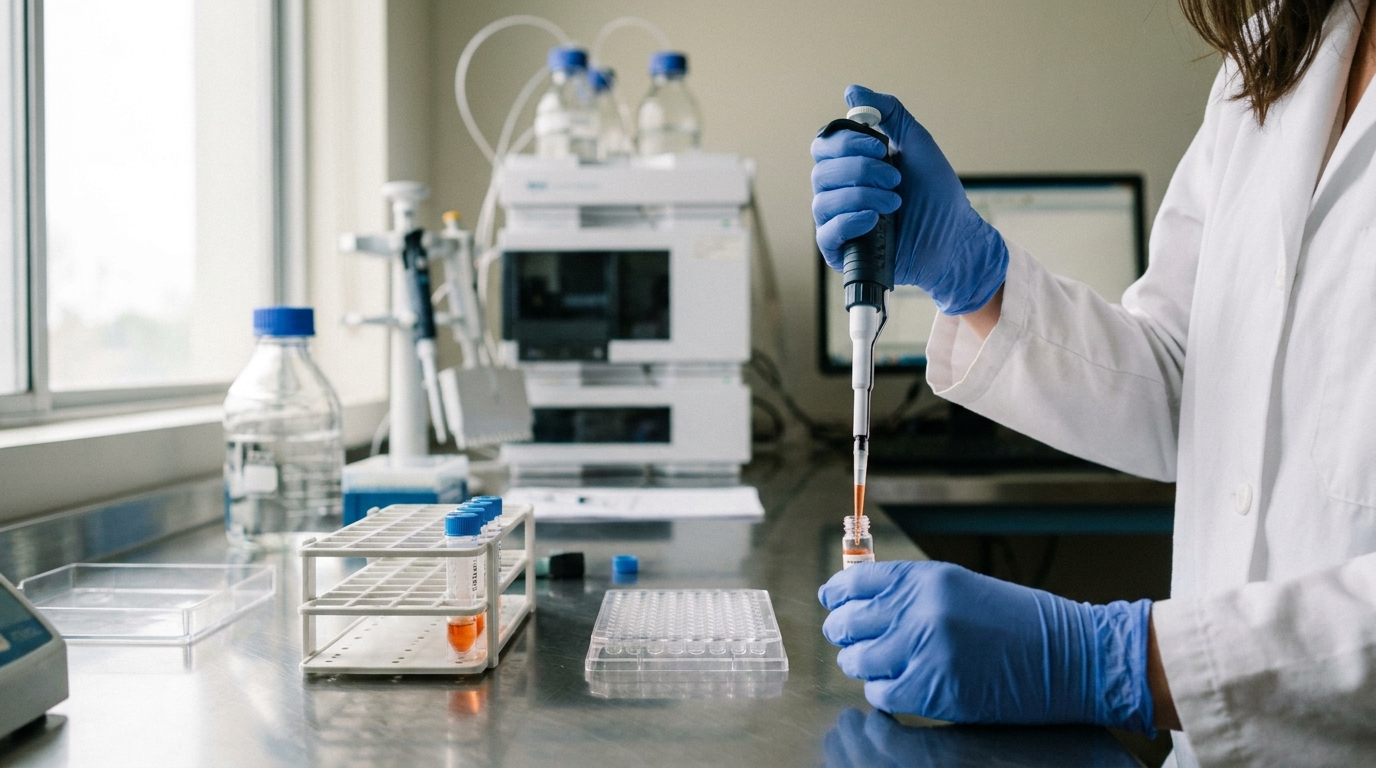
To determine the concentration of antioxidants, the researchers quantified plasma carotenoid and tocopherol levels using high-performance liquid-chromatography with a diode array-detector (a highly sensitive laboratory technique that separates and identifies specific chemical components in a liquid sample). The statistical analysis employed conditional logistic regression (a method used to estimate the association between an exposure and an outcome in matched case-control studies) to calculate incidence or death rate ratios (RR). This provided a measure of how the risk of amyotrophic lateral sclerosis changed relative to antioxidant levels. To isolate the specific impact of these nutrients, the multivariable models were adjusted for several clinical confounders, including body mass index, smoking status, physical activity, cholesterol, and urate levels. For the practicing physician, these adjustments are critical, as they account for metabolic and lifestyle factors that independently influence both systemic antioxidant status and neurodegenerative risk.
Sex-Specific Divergence in Beta-Carotene Associations
The analysis revealed that the relationship between pre-diagnostic plasma levels of beta-carotene and the risk of developing amyotrophic lateral sclerosis was not uniform across the study population. Instead, the researchers identified a significant interaction between sex and beta-carotene levels (p-for-interaction = 0.007), suggesting that the biological impact or predictive value of this antioxidant differs fundamentally between men and women. In the female cohort, higher concentrations of cis-beta-carotene, trans-beta-carotene, and total beta-carotene were consistently associated with a reduced incidence of the disease. Specifically, for every 1-standard deviation increase in total beta-carotene, women experienced a 32 percent reduction in risk (RR = 0.68; 95% CI: 0.48-0.98; p = 0.038). This finding suggests a potential neuroprotective role for these specific carotenoid isomers in women prior to the onset of clinical symptoms, which could eventually inform sex-specific risk stratification models.
In contrast, the initial data for male participants showed a divergent trend. Men with higher baseline beta-carotene levels appeared to have an increased risk of amyotrophic lateral sclerosis, with a 1-standard deviation increase corresponding to a rate ratio of 1.44 (95% CI: 1.03-2.01; p = 0.033). However, this positive association in men proved to be less robust than the protective effect observed in women. When the researchers performed further statistical adjustments to account for other correlated carotenoids (nutrients that often fluctuate together in the diet and bloodstream), the association in men was attenuated and lost its statistical significance. Conversely, the protective association in women remained significant even after these adjustments, reinforcing the specificity of beta-carotene as a potential sex-specific biomarker for amyotrophic lateral sclerosis risk.
Evaluating Other Carotenoids and Tocopherols
Beyond beta-carotene, the researchers identified beta-cryptoxanthin (a common carotenoid found in citrus fruits) as another potential sex-specific marker for amyotrophic lateral sclerosis risk. Among women, higher plasma concentrations of this antioxidant were associated with a significantly lower risk of developing the disease. Specifically, for every 1-standard deviation increase in beta-cryptoxanthin, women saw a 33 percent reduction in risk (RR = 0.67; 95% CI: 0.48-0.94; p = 0.02). While this protective trend was not observed in men, the statistical evidence for a sex-based difference was less definitive for this specific molecule than it was for beta-carotene, as the p-for-interaction for beta-cryptoxanthin by sex was 0.12.
The study also evaluated a broad panel of other fat-soluble antioxidants to determine if the observed protective effects extended to other nutrient classes. However, the researchers found that alpha-carotene, lutein-zeaxanthin, lycopene, retinol, and tocopherols were not associated with amyotrophic lateral sclerosis risk in the overall cohort. These results suggest that the potential neuroprotective associations are highly specific to certain carotenoid structures rather than reflecting a generalized benefit from all circulating antioxidants. One notable exception was gamma-tocopherol (a specific form of Vitamin E), which showed a borderline inverse association specifically in men (RR = 0.74; 95% CI: 0.54-1.01; p = 0.059), suggesting a possible, though statistically marginal, protective effect for this subgroup.
For the practicing clinician, these findings highlight the complexity of using plasma antioxidant profiles as early indicators of neurodegenerative risk. The data demonstrate that higher pre-diagnostic plasma levels of beta-carotene and beta-cryptoxanthin in women, and potentially gamma-tocopherol in men, are suggestively associated with lower amyotrophic lateral sclerosis risk. While other carotenoids and tocopherols did not demonstrate clear associations, the specificity of these results underscores the importance of considering sex as a biological variable when evaluating nutritional biomarkers and their long-term relationship with motor neuron health.
References
1. Ames BN, Shigenaga MK, Hagen TM. Oxidants, antioxidants, and the degenerative diseases of aging.. Proceedings of the National Academy of Sciences. 1993. doi:10.1073/pnas.90.17.7915
2. Uttara B, Singh A, Zamboni P, Mahajan R. Oxidative Stress and Neurodegenerative Diseases: A Review of Upstream and Downstream Antioxidant Therapeutic Options. Current Neuropharmacology. 2009. doi:10.2174/157015909787602823
3. Ashwani, Sharma A, Choudhary MK, et al. Epigenetic and Mitochondrial Metabolic Dysfunction in Multiple Sclerosis: A Review of Herbal Drug Approaches and Current Clinical Trials. Molecular Neurobiology. 2025. doi:10.1007/s12035-025-04868-8
4. Chang Y, Chang W, Tsai N, et al. The Roles of Biomarkers of Oxidative Stress and Antioxidant in Alzheimer’s Disease: A Systematic Review. BioMed Research International. 2014. doi:10.1155/2014/182303
5. Mullan K, Cardwell CR, McGuinness B, Woodside JV, McKay GJ. Plasma Antioxidant Status in Patients with Alzheimer’s Disease and Cognitively Intact Elderly: A Meta-Analysis of Case-Control Studies. Journal of Alzheimer s Disease. 2018. doi:10.3233/jad-170758
6. Teles RBDA, Diniz TC, Pinto TCC, et al. Flavonoids as Therapeutic Agents in Alzheimer’s and Parkinson’s Diseases: A Systematic Review of Preclinical Evidences. Oxidative Medicine and Cellular Longevity. 2018. doi:10.1155/2018/7043213
7. Ishihara L, Brayne C. A systematic review of nutritional risk factors of Parkinson's disease. Nutrition Research Reviews. 2005. doi:10.1079/nrr2005108
8. O'Reilly ÉJ, Bjornevik K, Furtado JD, et al. Pre-Diagnostic Plasma Carotenoids, Tocopherols and Retinol Levels, and Risk of Amyotrophic Lateral Sclerosis.. Annals of neurology. 2026. doi:10.1002/ana.78240