For Doctors in a Hurry
- Researchers investigated whether modulating the default mode network (a brain system active during rest) alters expectancy-driven mood responses in depression.
- This randomized trial analyzed 50 adults with depressive symptoms who received intermittent, continuous, and sham theta burst stimulation before MRI tasks.
- Intermittent stimulation increased dorsomedial prefrontal cortex activity (P = .01) and predicted stronger expectancy-related mood responses (β = 0.30; 95% CrI, 0.07-0.52).
- The researchers concluded that intermittent stimulation enhances neural modulation and amplifies placebo-induced mood improvements by targeting specific brain circuits.
- These findings suggest that modulating network plasticity may provide a clinical mechanism for augmenting antidepressant treatment response through expectancy effects.
Neuromodulation and the Biological Basis of Expectancy
Repetitive transcranial magnetic stimulation and its more time-efficient variant, intermittent theta burst stimulation, are established interventions for treatment-resistant depression [1, 2]. While these neuromodulation techniques demonstrate clear efficacy in reducing depressive symptoms, the degree of response often varies significantly between patients [3, 4]. Clinical outcomes in depression are frequently influenced by nonspecific factors, including the patient's expectations of improvement, which contribute to the observed placebo effect [5]. Identifying the specific neural circuits that mediate these expectancy-driven mood changes remains a challenge for clinicians seeking to optimize treatment protocols. A recent randomized clinical trial investigates how targeted stimulation of prefrontal regions may directly influence these internal belief systems and their subsequent impact on mood, offering insights into how physicians might eventually harness the placebo response to augment clinical care.
Trial Design and Neuromodulation Protocol
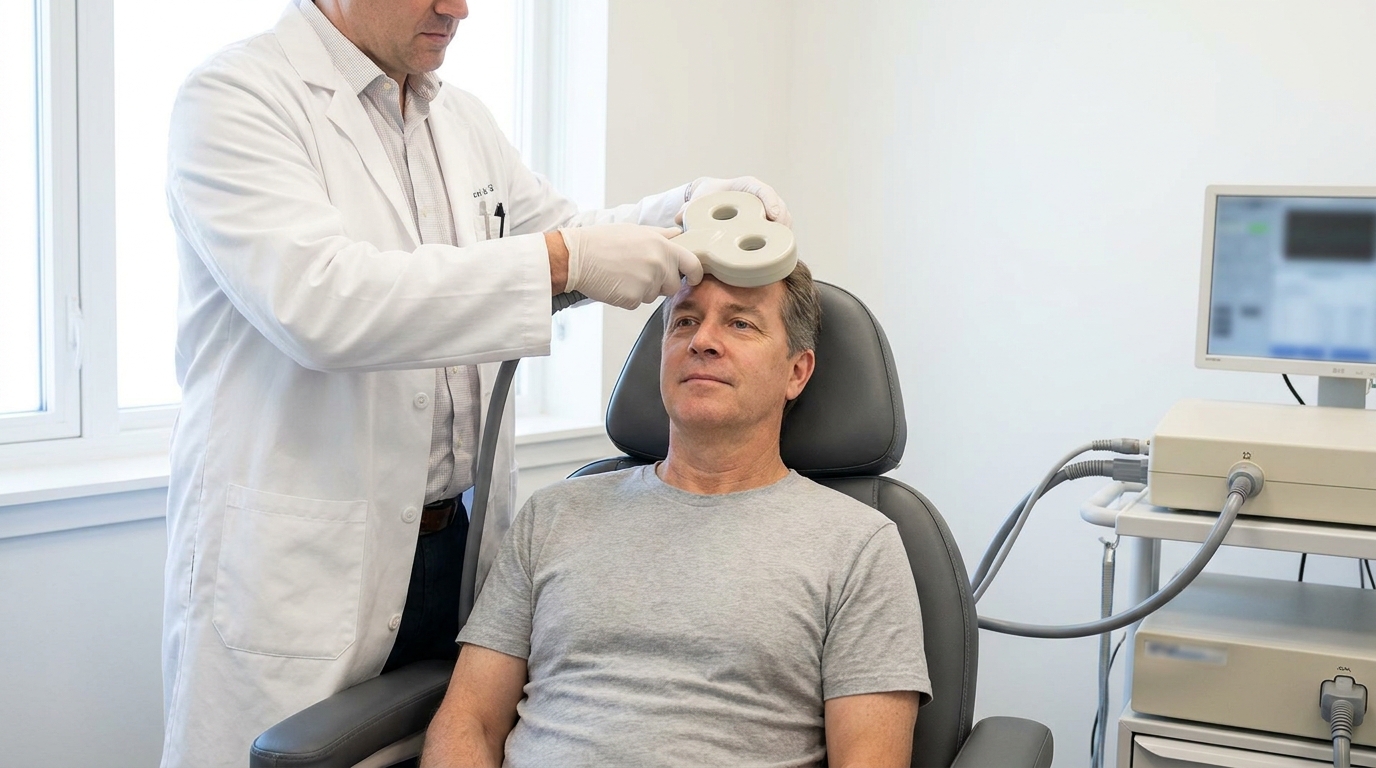
The researchers conducted a randomized clinical trial from October 2020 to March 2025, employing a within-person, counterbalanced design where each participant served as their own control to minimize individual variability. The study recruited adults aged 18 to 53 years with depressive symptoms from the University of Pittsburgh Medical Center. To ensure neural responses were not confounded by pharmacological agents, participants were not taking psychotropic medication at the time of the study. While 103 individuals were initially enrolled, 67 completed at least one session, and the final analytic sample consisted of 50 participants with a mean age of 28.3 years (standard deviation of 9.5 years), including 26 males (52.0%). The intervention protocol involved three distinct theta burst stimulation sessions, each spaced one week apart to prevent carryover effects. These sessions targeted the dorsomedial prefrontal cortex at the electroencephalogram coordinate F2, a scalp location corresponding to a brain region heavily involved in emotional regulation. The researchers utilized a stimulation intensity set at 80% of the resting motor threshold, defined as the minimum magnetic field strength required to elicit a visible muscle twitch in the hand. Each participant underwent three types of stimulation in a randomized order: intermittent theta burst stimulation (iTBS), continuous theta burst stimulation (cTBS), and sham theta burst stimulation (sTBS), which provided the physical sensation of stimulation without delivering a therapeutic magnetic pulse. One hour after each session, participants completed a functional magnetic resonance imaging (MRI) task designed to simulate an antidepressant placebo response. This task manipulated anticipatory beliefs using expectancy cues and sham neurofeedback, a procedure where participants view simulated brain activity that leads them to believe they are successfully modulating their own neural states. By measuring trial-by-trial expectancy and mood ratings during this task, the researchers quantified how different stimulation protocols altered the neural and behavioral components of the placebo response.
Modulating the Default Mode Network
The researchers investigated the activity of the default mode network (DMN), a large-scale brain system active during internal thought and self-reflection, as a potential mechanism underlying antidepressant treatment response. Specifically, the study focused on how expectancy processes contribute to the placebo effect, which often accounts for a significant portion of clinical improvement in depression trials. The primary objective was to determine whether modulating DMN function through theta burst stimulation applied to the dorsomedial prefrontal cortex could alter placebo-related neural activity and subsequent mood responses driven by patient expectations. To evaluate these effects, the investigators measured trial-by-trial expectancy and mood ratings alongside placebo-related neural activation within the DMN during functional MRI. Voxelwise analyses, a statistical method that examines data at the level of individual three-dimensional pixels in the brain, demonstrated that intermittent theta burst stimulation (iTBS) increased dorsomedial prefrontal cortex activity within the DMN compared to continuous theta burst stimulation (cTBS). This finding was supported by threshold-free cluster enhancement, a statistical technique used to identify significant spatial clusters of brain activity without relying on arbitrary cutoffs (corrected P = .98). Further cluster-based analyses confirmed a main effect of the stimulation protocol, revealing a significant monotonic pattern where iTBS produced the greatest activation, followed by sham stimulation (sTBS), and finally cTBS (F2,144 = 4.55; P = .01; η2 = 0.06). These results indicate that the specific modality of prefrontal stimulation directly dictates the magnitude of neural engagement within the DMN, providing a causal link between cortical modulation and the brain's internal expectancy circuits.
Linking Neural Activation to Clinical Mood Response
The researchers utilized statistical models to determine how neural activity translated into subjective clinical outcomes, focusing on the relationship between the DMN and patient-reported states. They found that greater activation within the DMN predicted stronger mood responses driven by patient expectancy specifically under the intermittent theta burst stimulation (iTBS) condition when compared to sham stimulation (β = 0.30; 95% credible interval [CrI], 0.07 to 0.52). This suggests that iTBS may sensitize the brain to the mood-lifting effects of positive treatment anticipation, effectively amplifying the physiological impact of a patient's belief in their recovery. When examining the relationship between neural activity and the expectancy ratings themselves, the study found that increased DMN activation predicted higher expectancy ratings following a treatment cue (β = 0.38; 95% CrI, 0.22 to 0.55). However, the strength of this association varied by stimulation type. The coupling between network activation and these expectancy ratings was most pronounced under continuous theta burst stimulation (cTBS) (β = -0.22; 95% CrI, -0.44 to 0). This interaction suggests that while cTBS strongly linked neural activity to the cognitive anticipation of improvement, the underlying mechanism likely involved different upstream regulatory regions compared to the iTBS group. From a behavioral standpoint, the researchers observed that cTBS increased patient expectancy ratings relative to both the intermittent and sham stimulation conditions. While cTBS appeared to boost the cognitive anticipation of benefit, the iTBS protocol was more effective at translating those expectations into actualized mood improvements. For the practicing clinician, these findings suggest that while different forms of prefrontal stimulation can modulate the placebo component of an antidepressant response, iTBS specifically enhances the physiological translation of hope into clinical symptom relief.
Clinical Implications for Treatment Augmentation
The results of this randomized clinical trial demonstrate that a single session of intermittent theta burst stimulation (iTBS) targeting the dorsomedial prefrontal cortex enhanced expectancy-related modulation of the DMN. By specifically targeting this prefrontal region, the researchers showed that this form of neuromodulation does not merely act as a direct antidepressant but also functions by sensitizing the neural circuits responsible for processing the anticipation of clinical benefit. This suggests that the DMN serves as a critical biological substrate for the placebo effect, and its activity can be exogenously tuned to improve patient outcomes. Beyond neural activation patterns, the study found that iTBS amplified placebo-induced mood improvement, providing a behavioral correlate to the observed changes in brain activity. These findings implicate DMN plasticity in the rapid shaping of antidepressant expectancy effects, suggesting that the brain's response to treatment anticipation is a dynamic process that can be modified within a single session. For the practicing clinician, these results identify a circuit-based mechanism that could potentially be leveraged to augment the overall efficacy of depression treatments. By understanding that prefrontal stimulation can enhance the physiological impact of a patient's positive expectations, physicians may eventually be able to optimize neuromodulation protocols to better harness the therapeutic power of the placebo response in daily clinical practice.
References
1. Eren Hİ, Takım U. Protocol-level moderators of antidepressant efficacy in prefrontal rTMS: A sham-controlled meta-analysis of randomized trials.. Journal of affective disorders. 2026. doi:10.1016/j.jad.2026.121805
2. Lefaucheur J, Alemán A, Baeken C, et al. Evidence-based guidelines on the therapeutic use of repetitive transcranial magnetic stimulation (rTMS): An update (2014–2018). Clinical Neurophysiology. 2020. doi:10.1016/j.clinph.2019.11.002
3. Kishi T, Ikuta T, Sakuma K, et al. Theta burst stimulation for depression: a systematic review and network and pairwise meta-analysis. Molecular Psychiatry. 2024. doi:10.1038/s41380-024-02630-5
4. Mutz J, Vipulananthan V, Carter B, Hurlemann R, Fu CH, Young AH. Comparative efficacy and acceptability of non-surgical brain stimulation for the acute treatment of major depressive episodes in adults: systematic review and network meta-analysis. BMJ. 2019. doi:10.1136/bmj.l1079
5. Wilkening J, Witteler F, Goya-Maldonado R. Suicidality and relief of depressive symptoms with intermittent theta burst stimulation in a sham-controlled randomized clinical trial.. Acta psychiatrica Scandinavica. 2022. doi:10.1111/acps.13502