For Doctors in a Hurry
- Clinicians currently lack disease-specific treatments for preeclampsia, a condition driven by placental secretion of soluble Fms-like tyrosine kinase 1.
- This single-arm, open-label trial evaluated extracorporeal apheresis in sixteen women with very preterm preeclampsia to selectively deplete circulating sFlt-1 levels.
- Multiple apheresis sessions reduced sFlt-1 by 16.7 ± 7.6% and mean arterial pressure by 4.1 ± 7.8 mmHg (R = 0.63).
- The researchers concluded that selective sFlt-1 removal is safe and well tolerated, extending pregnancy for a median of 10 days.
- Future controlled trials must confirm if this targeted protein depletion effectively delays delivery and improves neonatal outcomes in preterm patients.
The Clinical Challenge of Angiogenic Imbalance in Preeclampsia
Preeclampsia remains a leading cause of maternal and fetal morbidity, characterized by new-onset hypertension and end-organ dysfunction after 20 weeks of gestation [1, 2]. The condition is driven by an angiogenic imbalance, specifically an elevation in soluble fms-like tyrosine kinase 1 (sFlt-1), an anti-angiogenic protein that impairs vascular homeostasis, and a corresponding decrease in placental growth factor (PlGF), a protein that supports blood vessel health [3, 4]. While low-dose aspirin serves as a preventive measure, clinicians currently have no disease-modifying therapies available once the syndrome develops, leaving medically indicated delivery as the only definitive treatment [2, 5]. This clinical reality is particularly challenging in very preterm cases, where the risks of neonatal death and long-term neurodisability must be balanced against the dangers of expectant management [6, 5]. Recent investigations into therapeutic candidates, such as pravastatin 40 mg daily, have failed to significantly lower maternal sFlt-1 levels (mean difference 292 pg/ml; 95% CI -1175 to 592; p=0.5) or prolong gestation beyond a median of 9 days [7]. To address this underlying pathophysiology directly, researchers recently conducted a pilot trial investigating a targeted strategy to physically remove the offending anti-angiogenic proteins from maternal circulation.
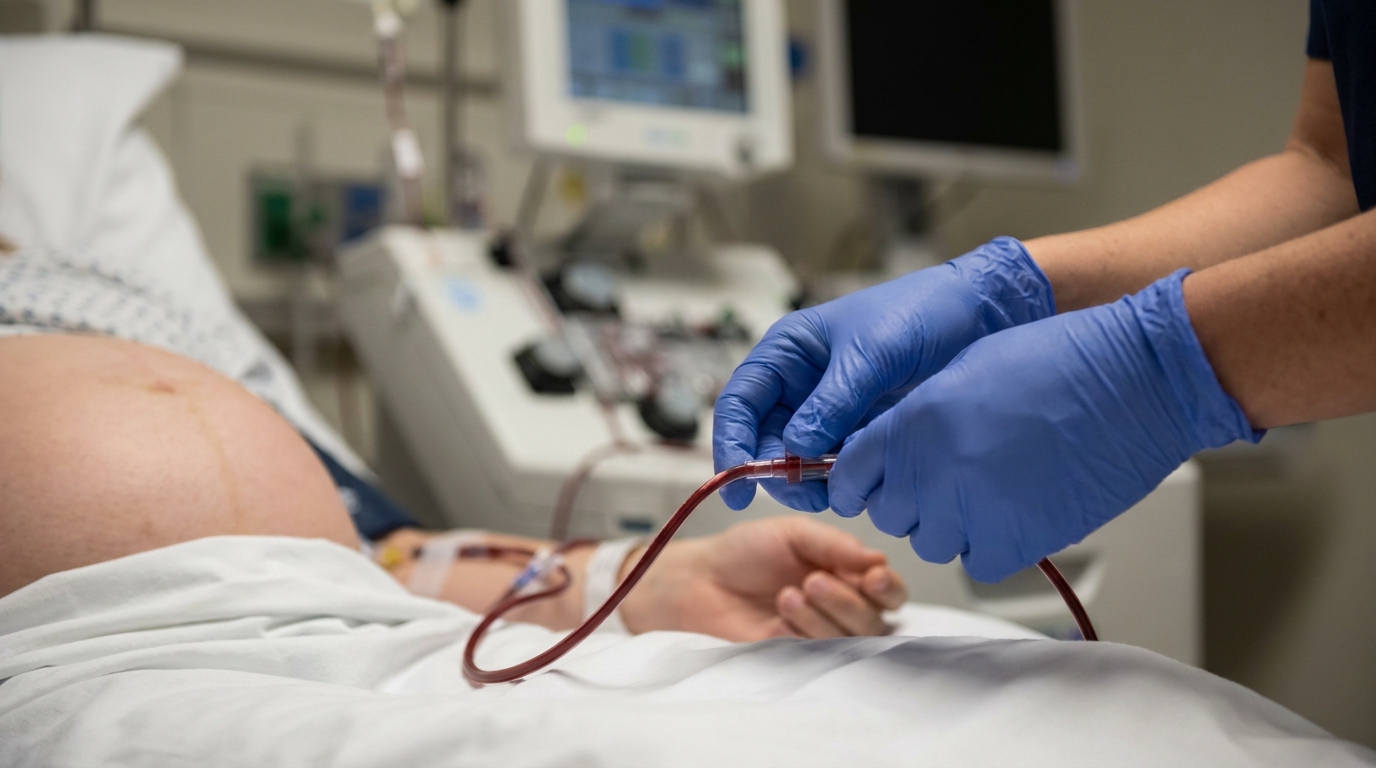
To selectively deplete circulating soluble Fms-like tyrosine kinase 1 (sFlt-1), researchers developed a targeted intervention utilizing extracorporeal apheresis (a procedure where a patient's blood is passed through an external device to filter out specific components before being returned to circulation). Because sFlt-1 plays a central role in the pathogenesis of preeclampsia by neutralizing pro-angiogenic factors and causing widespread endothelial dysfunction, removing it could theoretically halt disease progression. To achieve high specificity, the team utilized an adsorber containing high-affinity IgG1 antibodies specifically engineered to bind and extract circulating sFlt-1 from the plasma. Before initiating human trials, the investigators established the biological plausibility of this approach in a non-human primate model. In pregnant baboons, the use of this antibody-based apheresis system resulted in an approximately 50% reduction of circulating sFlt-1 levels. This significant decrease in the target anti-angiogenic protein provided the necessary proof of concept to proceed with clinical testing in pregnant women, raising the prospect that mechanical removal of sFlt-1 could mitigate the systemic vascular damage characteristic of severe preeclampsia.
Safety and Hemodynamic Stability in Phase A
Because extracorporeal treatments in pregnancy carry inherent risks of hemodynamic instability, the primary endpoints of the trial were safety and tolerability. The researchers conducted a single-arm, open-label trial (ClinicalTrials.gov: NCT02923206) targeting women with very preterm preeclampsia, beginning with a Phase A safety assessment. This initial phase included 7 women who were treated with single ascending doses of the antibody-based apheresis to determine if the mechanical removal of sFlt-1 could be performed without adverse maternal or fetal effects. The participants entered the study with significantly elevated biomarkers of disease severity, showing preapheresis sFlt-1 levels of 15,120 ± 4,484 pg/ml (mean ± standard deviation). Despite the high concentration of this anti-angiogenic protein and the complexity of the filtration process, the procedure did not trigger acute clinical deterioration. The researchers reported that maternal and fetal vital signs remained stable throughout the intervention. Furthermore, there were no significant fluctuations in umbilical artery pulsatility indices (a Doppler ultrasound measurement used to assess vascular resistance in the placenta and monitor fetal well-being). These indices remained consistent when comparing measures taken before, during, and after the apheresis sessions, indicating that the treatment does not acutely compromise uteroplacental blood flow or fetal oxygenation.
Clinical Outcomes and Blood Pressure Correlation in Phase B
Following the initial safety assessment, the researchers initiated Phase B to evaluate the physiological effects of repeated treatment. This phase included 9 women with very preterm preeclampsia who received multiple doses of the sFlt-1 apheresis treatment. At the time of enrollment, these participants had a median gestational age of 30.3 weeks, with an interquartile range of 29.3 to 30.9 weeks. The clinical profile of this cohort reflected severe disease, with baseline systolic and diastolic blood pressures of 146 ± 10 mmHg and 92 ± 5 mmHg, respectively. These participants also exhibited high biochemical disease activity, characterized by preapheresis circulating sFlt-1 levels of 11,960 ± 3,056 pg/ml. The therapeutic intervention demonstrated a consistent impact on both biochemical markers and clinical hemodynamic parameters. The researchers found that each apheresis session reduced circulating sFlt-1 levels by 16.7 ± 7.6%. This reduction in the anti-angiogenic protein was accompanied by a measurable decrease in systemic vascular resistance, as each session reduced mean arterial pressures by 4.1 ± 7.8 mmHg. Crucially, the reductions in mean arterial pressures after apheresis strongly correlated with the reductions in circulating sFlt-1, yielding a Spearman's correlation coefficient of R = 0.63. For practicing obstetricians, this correlation is highly relevant, as it suggests that the mechanical removal of sFlt-1 directly mitigates the hypertensive drivers of preeclampsia, providing a potential mechanism for stabilizing the maternal condition.
Pregnancy Extension and Neonatal Observations
The primary clinical objective of stabilizing maternal angiogenic balance in early-onset preeclampsia is to safely delay delivery, thereby reducing the severe morbidity associated with extreme prematurity. In this cohort of women with very preterm preeclampsia, the researchers observed that pregnancy continued from admission for a median of 10 days, with a range of 3 to 19 days. For clinicians managing preeclampsia before 32 weeks of gestation, securing an additional week or more in utero is clinically significant, as it allows critical time for administering antenatal corticosteroids and substantially improves neonatal lung maturation and overall survival. Beyond the extension of gestational age, the study monitored fetal growth to ensure that the maternal extracorporeal treatment did not inadvertently compromise placental perfusion or fetal development. The researchers found that neonatal birth weights generally remained stable or increased compared to antenatal estimated birth weights, particularly among the participants who achieved the longest pregnancy extensions. These findings provide a preliminary indication that the intervention may support both maternal stabilization and ongoing fetal maturation, allowing the fetus to continue growing despite the underlying preeclamptic environment.
Tolerability and Adverse Event Profile
The clinical utility of any extracorporeal therapy in a high-risk obstetric population depends heavily on its safety profile and the avoidance of maternal or fetal distress. In this trial, the researchers observed that the selective removal of sFlt-1 by apheresis appeared to be safe and well tolerated in women presenting with very preterm preeclampsia. Throughout the treatment sessions, maternal hemodynamic stability was maintained, and there were no reports of serious adverse events that necessitated the immediate cessation of the procedure or emergency delivery. Specific treatment-related adverse events were infrequent and generally mild in severity. The most common complication was mild hypocalcemia (low blood calcium levels), which occurred in 3 participants. Because citrate is commonly used as an anticoagulant in apheresis circuits and binds to free calcium, transient hypocalcemia is an expected side effect that can typically be managed according to standard calcium replacement protocols. Other localized and systemic effects included skin hemorrhage at the puncture site in 1 patient and one instance of false labor, characterized by uterine contractions that did not lead to cervical change or delivery. While these findings suggest a favorable safety profile for the targeted depletion of sFlt-1, the authors emphasize that the small sample size of this pilot study limits the ability to detect rare complications. Consequently, larger controlled trials are required to confirm the safety and efficacy of this approach before it can be integrated into routine clinical practice.
References
1. Nasir M, Asif AB, Waheed M, et al. Exploring Preeclampsia: A Comprehensive Overview. Discoveries. 2025. doi:10.15190/d.2025.13
2. Lee P, Gudino P, Umana CD, Tufail MU, Gallippi V, Jim B. Updates on Preeclampsia: Pathogenesis, Biomarkers, Diagnosis, and Management. Cardiology in Review. 2025. doi:10.1097/crd.0000000000000982
3. Rana S, Lemoine E, Granger JP, Karumanchi SA. Preeclampsia. Circulation Research. 2019. doi:10.1161/circresaha.118.313276
4. Lee P, Gudino P, Umana CD, Tufail MU, Gallippi V, Jim B. Updates on Preeclampsia: Pathogenesis, Biomarkers, Diagnosis, and Management.. Cardiology in review. 2025. doi:10.1097/CRD.0000000000000982
5. Plakhotina EN, Belousova TN, Bryancev EV, Chaplygina OV. Therapeutic Apheresis in Early-Onset Preeclampsia: Literature Review. 2025. doi:10.35401/2541-9897-2025-10-1-144-150
6. Smith GCS. The STRIDER trial: one step forward, one step back. The Lancet Child & Adolescent Health. 2017. doi:10.1016/s2352-4642(17)30176-1
7. Ahmed A, Williams D, Cheed V, et al. Pravastatin for early‐onset pre‐eclampsia: a randomised, blinded, placebo‐controlled trial. BJOG An International Journal of Obstetrics & Gynaecology. 2019. doi:10.1111/1471-0528.16013