For Doctors in a Hurry
- Clinicians lack effective interventions for managing the highly prevalent and disabling chronic pain experienced by patients with spinal cord injury.
- This randomized trial assigned 127 adults with spinal cord injury to receive either usual care or six weekly hypnosis sessions.
- The intervention group showed significantly lower pain intensity at twelve weeks compared to controls (-0.79, 95% CI -1.28 to -0.29).
- The researchers concluded that hypnotic cognitive therapy serves as an effective adjunctive treatment for reducing chronic pain and depression.
- Physicians may consider remote hypnosis as a viable non-pharmacological option for patients with neuropathic pain following spinal cord injury.
Addressing the Intractability of Post-Injury Neuropathic Pain
Chronic pain is a nearly universal complication following spinal cord injury, affecting approximately 80% of patients and significantly limiting functional recovery [1, 2]. Central neuropathic pain, which arises from direct damage to the somatosensory nervous system, is particularly prevalent and often refractory to standard care [3]. While clinicians frequently prescribe anticonvulsants or antidepressants, these pharmacological interventions often provide inadequate relief and may be complicated by comorbid depression or cognitive deficits [1, 4]. Current clinical practice guidelines recommend multimodal, non-pharmacological approaches, yet many behavioral and stimulation-based therapies lack standardized protocols or remain inaccessible to patients with significant mobility impairments [5, 6, 2]. To address this gap, a recent randomized controlled trial examined the utility of hypnotic cognitive therapy, a psychological intervention combining cognitive restructuring with hypnotic suggestions for pain modulation, delivered through remote telehealth platforms [7].
Trial Design and Remote Intervention Protocol
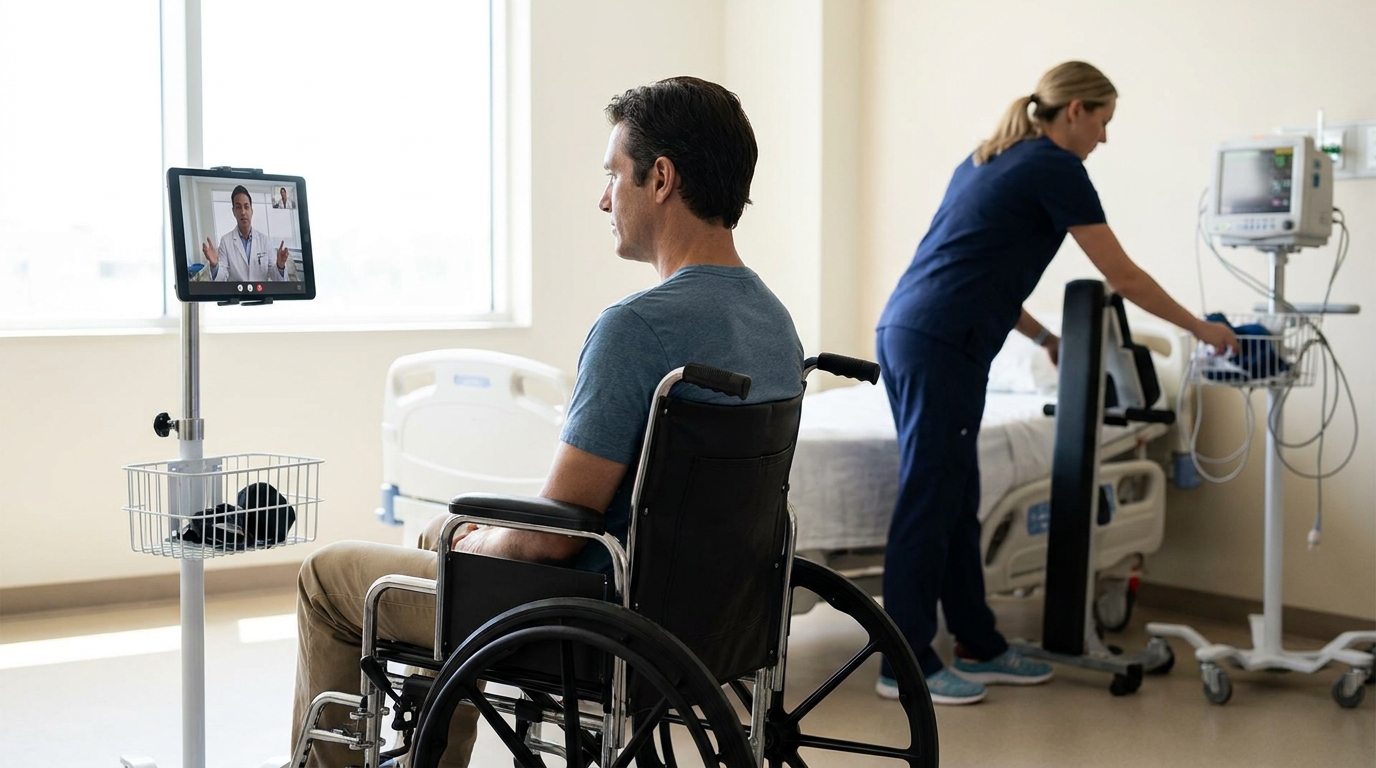
The researchers conducted a single-blind, randomized, parallel-group trial to evaluate the efficacy of hypnotic cognitive therapy (HYP-CT) in treating moderate-to-severe chronic pain among community-residing adults with spinal cord injury. Registered on ClinicalTrials.gov (NCT03857672) on February 28, 2019, the study began enrollment on April 24, 2019. A total of 127 participants were recruited nationwide through various spinal cord injury organizations. To ensure balanced groups, the researchers utilized computerized permuted block randomization, a statistical method that assigns participants in small, randomly ordered sequences to maintain equal group sizes throughout the trial, using variable block sizes. This randomization was further stratified by sex and the participant's worst pain type to account for potential confounding variables in treatment response. Participants were randomized in a 1:1 ratio, with 64 individuals assigned to the HYP-CT group and 63 individuals assigned to the usual care group. The HYP-CT intervention consisted of six weekly 60-minute sessions delivered by a psychologist via telephone or Zoom. In addition to these structured sessions, participants were instructed to practice self-hypnosis daily on their own by listening to audio recordings of their sessions. In contrast, those in the usual care control group were encouraged to continue their current pain management regimens or seek additional treatments as they normally would. This design allowed the researchers to compare the specific effects of the hypnotic cognitive protocol against the standard of care typically available to patients with spinal cord injury.
Patient Demographics and Assessment Methodology
The study enrolled a cohort of 127 adults who had been living with a spinal cord injury for an average of 15.4 years, representing a population with long-standing, established physical challenges. Chronic pain is highly prevalent, disabling, and difficult to treat in people with spinal cord injury, often persisting for decades after the initial trauma. The participants had a mean age of 51.3 years, and the sample was 42% female. At the start of the trial, these individuals reported significant suffering, with a mean baseline pain intensity of 5.93 on a 0 to 10 scale. Furthermore, the nature of the pain was predominantly neurological. The researchers noted that the worst pain was neuropathic in 57% of cases, a type of pain often resistant to traditional pharmacological interventions. To rigorously evaluate the efficacy of the hypnotic cognitive therapy, the researchers utilized a primary outcome of average pain intensity assessed 4 times per week using a 0 to 10 numerical rating scale. These individual reports were then averaged to provide a stable representation of the patient's experience. The primary end point was set at 6 weeks after randomization, coinciding with the completion of the active treatment phase, with a subsequent follow-up assessment at 12 weeks to determine the durability of the intervention. To minimize bias, all outcomes were assessed through structured telephone interviews performed by blinded assessors who were unaware of whether the participant had received the behavioral intervention or continued with usual care.
Significant Reductions in Pain and Depressive Symptoms
The primary analysis demonstrated that hypnotic cognitive therapy led to a statistically significant reduction in pain compared to usual care. At the 6 week primary end point, average pain intensity decreased more in the HYP-CT group compared with usual care controls, with a mean difference of -0.55 (95% CI -1.04 to -0.06). These improvements in pain management were not only maintained but appeared to strengthen over time. By the 12 week follow-up, the average pain intensity decreased more in the HYP-CT group compared with usual care controls by a margin of -0.79 (95% CI -1.28 to -0.29). This longitudinal benefit suggests that the skills acquired during the six sessions of hypnotic cognitive therapy, reinforced by independent daily practice, may provide durable relief for patients with chronic spinal cord injury pain. Beyond the reduction in physical pain, the intervention also addressed the psychological comorbidities frequently associated with spinal cord injury. The researchers found that depression declined significantly more in the HYP-CT versus usual care groups at 6 and 12 weeks, indicating a broader therapeutic impact on patient well-being. From a clinical standpoint, this study provides Class III evidence that, in patients with spinal cord injury, HYP-CT improves average pain intensity at 6 weeks compared with usual care. Class III evidence designates data derived from randomized trials with certain methodological limitations, such as the single-blind design necessitated by this behavioral intervention. Nevertheless, these findings suggest that hypnotic cognitive therapy is an effective adjunctive treatment for a patient population that often has limited success with conventional pharmacological management.
Delivery Modality and Pain Type Subgroup Analysis
The implementation of hypnotic cognitive therapy in this trial utilized two distinct telehealth platforms to facilitate patient access, with a psychologist delivering the intervention to 48% of the participants via telephone and 52% through Zoom video conferencing. This distribution allowed the researchers to conduct planned exploratory analyses to determine if the medium of delivery influenced the therapeutic outcome. The results indicated that the effect of HYP-CT on pain intensity was similar when delivered over the telephone versus through Zoom, suggesting that the clinical benefits of the intervention are not dependent on visual interaction or specific digital software. For the practicing clinician, this finding is significant because it validates the use of basic telephonic communication for delivering psychological pain interventions. This accessibility is particularly relevant for patients with limited high-speed internet access or those who find video interfaces cumbersome due to physical impairments. Further subgroup analysis focused on the specific etiology of the patients' chronic pain to identify which populations might derive the greatest benefit from this cognitive approach. At the start of the study, neuropathic pain was identified as the primary complaint in 57% of the participants. By the conclusion of the study, the researchers observed that pain intensity decreased more in those with all neuropathic pain versus those with mixed pain at 12 weeks. This differential response suggests that the cognitive and hypnotic techniques utilized in the protocol may be especially effective at modulating the maladaptive neural processing associated with pure neuropathic states following spinal cord injury. While the intervention remained effective across the broader cohort, these data provide a more nuanced understanding of treatment response, indicating that patients presenting with isolated neuropathic symptoms may experience more pronounced long-term relief compared to those with comorbid musculoskeletal or other mixed pain types.
References
1. Koukoulithras I, Alkhazi A, Gkampenis A, et al. A Systematic Review of the Interventions for Management of Pain in Patients After Spinal Cord Injury.. Cureus. 2023. doi:10.7759/cureus.42657
2. Williams T, Joseph C, Nilsson-Wikmar L, Phillips J. Guidelines for chronic pain in adult spinal cord injury population: Scoping review.. The South African journal of physiotherapy. 2024. doi:10.4102/sajp.v80i1.1931
3. Salehian F, Aarabi A, Firouzabadi SR, et al. Prevalence of neuropathic pain following spinal cord injury: An updated systematic review and meta-analysis.. Journal of clinical neuroscience : official journal of the Neurosurgical Society of Australasia. 2025. doi:10.1016/j.jocn.2025.111660
4. Hu Y, Li Y, Tao R, et al. Effects and mechanisms of a home-based action observation and motor imagery intervention on cognitive function and depression in spinal cord injury: a pilot randomized controlled trial protocol.. Frontiers in neurology. 2025. doi:10.3389/fneur.2025.1578323
5. Dowell D, Ragan K, Jones CM, Baldwin G, Chou R. CDC Clinical Practice Guideline for Prescribing Opioids for Pain—United States, 2022. MMWR Recommendations and Reports. 2022. doi:10.15585/mmwr.rr7103a1
6. Ehrlich-Jones L, Olsen E, Kudla A, et al. Behavioral/Physical and Stimulation Interventions for Chronic Pain Following Spinal Cord Injury: A Systematic Review.. Topics in spinal cord injury rehabilitation. 2025. doi:10.46292/sci24-00053
7. Bombardier CH, Mendoza ME, Thomas PA, Barber JK, Jensen MP. Hypnotic Cognitive Therapy for Chronic Pain in Spinal Cord Injury: A Randomized Controlled Trial.. Neurology. 2026. doi:10.1212/WNL.0000000000214836