
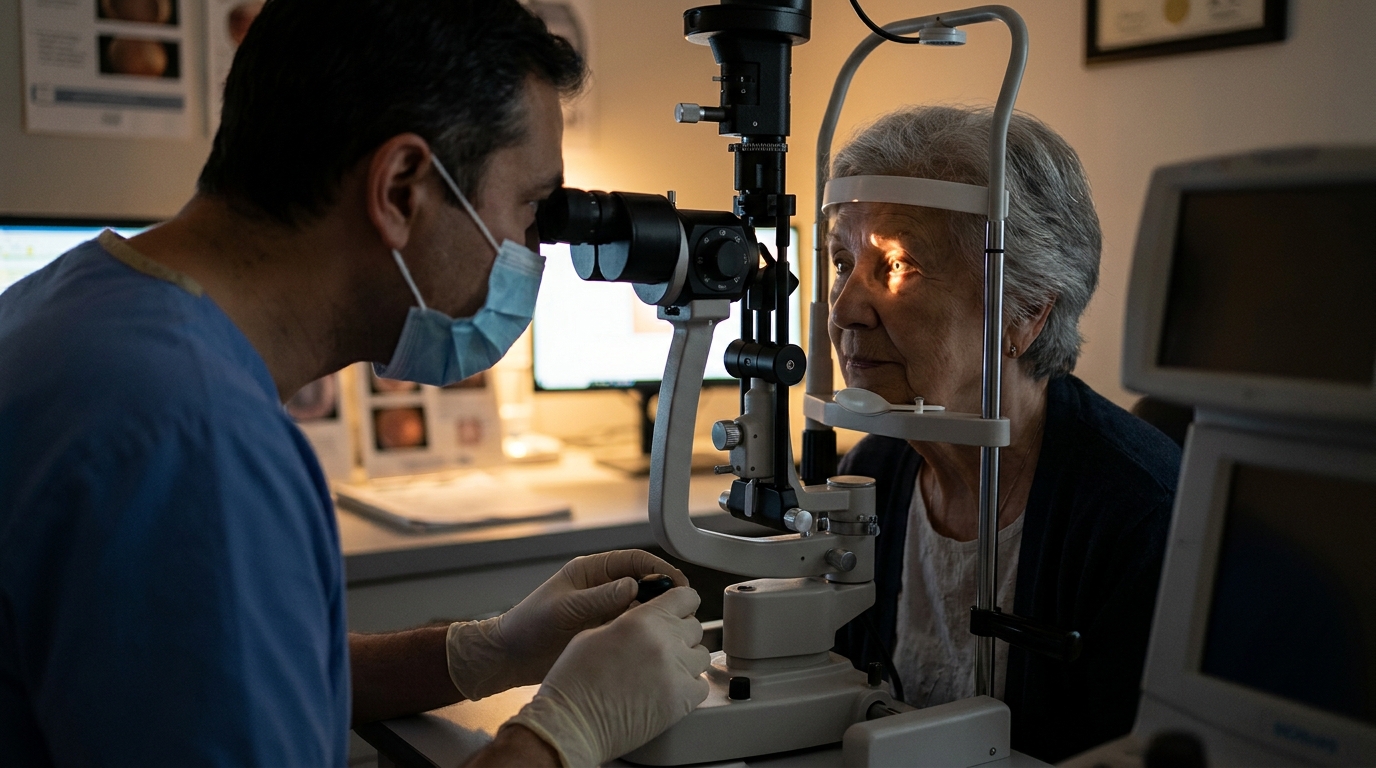
- Researchers evaluated if clobetasol propionate ophthalmic suspension 0.05% effectively manages inflammation and pain following uncomplicated cataract surgery.
- This pooled analysis of two Phase 3 randomized trials included 748 participants receiving either the steroid or a placebo.
- At day 15, 58.2 percent of treated patients achieved complete inflammation clearance compared to 17.3 percent of controls (p<0.001).
- The researchers concluded that twice-daily clobetasol propionate 0.05% safely reduces ocular pain and inflammation without increasing intraocular pressure.
- This potent corticosteroid provides a rapid recovery of visual acuity and sustained symptom relief for patients undergoing cataract extraction.
Optimizing Postoperative Recovery in Modern Cataract Surgery
Cataract extraction remains the most frequently performed surgical procedure globally, with an estimated 20 million cases annually, yet managing postoperative inflammation is essential to prevent complications such as cystoid macular edema and secondary glaucoma [1]. While topical corticosteroids and nonsteroidal anti-inflammatory drugs are the current standard of care, clinicians often face challenges with patient adherence due to complex dosing regimens and the potential for steroid-induced intraocular pressure elevations [1, 2]. Recent advances in nanotechnology have introduced drug delivery systems designed to improve bioavailability, the fraction of the drug that successfully reaches the target ocular tissue, and extend the residence time of active compounds on the ocular surface [3, 4]. These nanoparticle-based formulations aim to overcome physiological barriers like rapid tear turnover, potentially allowing for less frequent dosing without sacrificing therapeutic efficacy [5, 6]. Highlighting this potential, a recent systematic review of five randomized controlled trials involving 1,306 participants found that nanoparticle-based clobetasol propionate significantly increased the likelihood of achieving an anterior chamber cell grade of zero, indicating complete clearance of inflammatory cells, at both 8 days (RR 2.30, 95% CI, 1.81 to 2.92) and 15 days (RR 3.06, 95% CI, 2.29 to 4.09) postoperatively [5].
Phase 3 Trial Design and Dosing Protocol
To evaluate the efficacy and safety of clobetasol propionate ophthalmic suspension 0.05% for managing postoperative ocular inflammation and pain, researchers conducted two multicenter, randomized, double-masked, placebo-controlled Phase 3 trials. These studies, designated CPN-301 and CPN-302, utilized identical protocols with one exception: CPN-302 included a safety sub-study focusing on corneal endothelial cells, the innermost layer of the cornea responsible for maintaining tissue clarity. The trials enrolled patients who had undergone uncomplicated cataract surgery, resulting in a pooled study population of 748 participants. Within this cohort, 366 individuals were randomized to receive the 0.05% clobetasol suspension and 382 were assigned to the placebo group using a 1:1 randomization ratio. Demographic and baseline characteristics were well balanced between the two groups and were representative of the typical cataract surgery patient population.
The treatment regimen required patients to instill one drop of the assigned intervention twice daily into the operated eye for a 14-day course, a simplified schedule designed to improve adherence compared to traditional four-times-daily steroid tapers. To determine therapeutic success, the investigators established a primary efficacy endpoint defined as the percentage of participants achieving an Anterior Chamber Cell count of 0, representing the complete absence of white blood cells in the aqueous humor, at post-operative day 8 and maintained through day 15. A secondary efficacy measure focused on patient comfort, specifically the percentage of participants achieving an Ocular Pain grade of 0, or total absence of pain, at post-operative day 4 and maintained through day 15. These metrics allowed the researchers to track both the speed and durability of the anti-inflammatory response.
Safety assessments were integrated throughout the study period to monitor for known corticosteroid-related complications. Investigators utilized adverse event reports, ophthalmoscopy, and regular measurements of intraocular pressure, the fluid pressure inside the eye that frequently spikes in response to topical steroids. By evaluating these safety parameters alongside visual acuity and inflammation markers at post-operative days 4, 8, 15, and 22, the trials aimed to establish a comprehensive clinical profile for this twice-daily formulation.
Rapid Resolution of Inflammation and Pain
The pooled analysis demonstrated that the 0.05% clobetasol propionate ophthalmic suspension achieves a rapid and sustained reduction in postoperative inflammatory markers. By post-operative day 15, 58.2% of participants in the clobetasol group achieved an Anterior Chamber Cell count of 0, indicating a complete absence of inflammatory cells in the aqueous humor, compared to only 17.3% of those in the placebo group (p < 0.001). This objective resolution of inflammation was accompanied by a significant reduction in patient-reported discomfort. Specifically, 88.5% of participants treated with the clobetasol suspension reported an Ocular Pain grade of 0 at post-operative day 15, whereas only 45.8% of the placebo group reached the same level of comfort (p < 0.001).
Beyond the primary measures of cell clearance and pain cessation, the researchers tracked the longitudinal recovery of the eye, monitoring inflammation levels, pain grades, and visual acuity. A notable secondary finding was that visual acuity improved more rapidly in the clobetasol group than in the placebo group as early as post-operative day 4 (p < 0.001). For practicing ophthalmologists, this suggests that the potent anti-inflammatory effect directly translates to faster functional visual recovery for the patient. The clinical utility of the twice-daily regimen was further supported by the finding that significantly more participants in the placebo group required rescue medications to manage breakthrough symptoms compared to those in the clobetasol group (p < 0.001), reinforcing the viability of the 0.05% suspension as a standalone postoperative monotherapy.
Safety Profile and Absence of Steroid Rebound
The clinical utility of potent topical corticosteroids is frequently limited by concerns regarding secondary ocular hypertension and damage to the corneal endothelium, the specialized layer of cells responsible for maintaining corneal dehydration and clarity. In the pooled analysis of 748 participants, the 0.05% clobetasol propionate ophthalmic suspension was well-tolerated, demonstrating a safety profile similar to placebo. Safety assessments, which included ophthalmoscopy and specific monitoring of the anterior segment, showed that there were no meaningful intraocular pressure increases in participants treated with the clobetasol suspension. This finding is particularly relevant for clinicians managing postoperative patients who may be steroid responders, as the twice-daily regimen did not trigger the significant fluid pressure elevations often associated with high-potency topical steroids.
Further safety data from the CPN-302 sub-study focused on the health of the corneal endothelial cells to ensure that the formulation did not induce cellular toxicity or structural changes during the 14-day treatment course. The researchers reported that there were no meaningful corneal endothelial cell changes in the clobetasol-treated group, indicating that the suspension is compatible with the delicate internal architecture of the eye following surgical trauma. Finally, the study addressed the risk of inflammatory recurrence, a phenomenon known as steroid rebound where symptoms return after the abrupt cessation of treatment. Longitudinal monitoring confirmed that there was no rebound of efficacy parameters on post-operative day 22, which occurred one full week after the clobetasol drops were discontinued. This lack of recrudescence in inflammation or pain provides reassurance to surgeons that a fixed 14-day dosing schedule, without a complex tapering regimen, is sufficient to achieve stable clinical resolution.
References
1. Azhar SD, Shahid N, Sadiq A, Khan AW, Dar MS, Ahmad TKF. Clobetasol propionate for post-cataract surgery pain and inflammation. Annals of Medicine and Surgery. 2024. doi:10.1097/ms9.0000000000002619
2. Lesovaya EA, Chudakova D, Baida G, et al. The long winding road to the safer glucocorticoid receptor (GR) targeting therapies. Oncotarget. 2022. doi:10.18632/oncotarget.28191
3. Racaniello GF, Balenzano G, Arduino I, et al. Chitosan and Anionic Solubility Enhancer Sulfobutylether-β-Cyclodextrin-Based Nanoparticles as Dexamethasone Ophthalmic Delivery System for Anti-Inflammatory Therapy. Pharmaceutics. 2024. doi:10.3390/pharmaceutics16020277
4. Longo E, Giuliano E, Gagliardi A, et al. In Situ Forming Poloxamer-Based Thermo-Sensitive Hydrogels for Ocular Application: A Focus on the Derivatives 407 and 188. Gels. 2025. doi:10.3390/gels11090752
5. Alamoudi A, Aldahlawi A, Almufarriji N, et al. The Efficacy and Safety of Nanoparticle-Based Clobetasol Propionate in Managing the Inflammation and Pain in Post-Operative Cataract Patients: A Systematic Review and Meta-Analysis. Clinical ophthalmology. 2026. doi:10.2147/opth.s535477
6. Alnaim A. Nanocrystals in Dermal Drug Delivery: A Breakthrough for Enhanced Skin Penetration and Targeted Skin Disorder Treatments. Pharmaceutics. 2024. doi:10.3390/pharmaceutics16121561