

Nearly 45 Percent of Chinese Primary Teachers Report Anxiety Under New Policy
A cross-sectional study of 3,199 educators identifies advanced degrees and income dissatisfaction as key independent risk factors.

Modern Smartwatches Match Patient-Reported Sleep Duration Within Seven Minutes
Newer wearable models show high concordance with self-reported sleep duration but struggle to capture subjective sleep quality extremes.

One in Five Southern California College Students Report Human Trafficking
A 12-campus survey identifies high trafficking rates linked to sexually transmitted infections, food insecurity, and academic barriers.

Antipsychotics Rarely Cause Persistent QTc Prolongation in Children and Adolescents
A cohort study of 430 pediatric patients found no severe arrhythmias or QTc intervals over 500 ms during antipsychotic treatment.

Focused Ultrasound Reduces Alcohol Preference and Anxiety in Mice
Low-intensity focused ultrasound targeting the hippocampus mitigates neuronal degeneration and suppresses withdrawal symptoms in a mouse model.

Preclinical Review Links Kratom to Epigenetic Changes and Cardiac Risks
Systematic analysis of 20 studies identifies HDAC2 and Rab35 as markers of dependence while highlighting CYP450 and ion channel interference.

Blood-Brain Barrier Integrity Dictates Serum GFAP Accuracy in Cognitive Impairment
A study of 74 patients shows that serum biomarkers only strongly correlate with central pathology when the blood-brain barrier is disrupted.

C4A Complement Pathway Decouples from C1Q in First-Episode Psychosis
A study of 113 patients shows that C4A levels shift independently of C4B in the cerebrospinal fluid during early-stage psychosis.

Exogenous Hormones Associate With Reduced Dementia Risk in UK Biobank Cohort
Use of oral contraceptives and hormone replacement therapy correlates with lower rates of Alzheimer's disease and vascular dementia.

Clinical Criteria for LATE Distinguish Cognitive Trajectories from Alzheimer Disease
A study of 3,606 patients shows isolated LATE progresses slower than Alzheimer disease, while comorbid pathology accelerates decline.

Corticostriatal Connectivity Shifts as Putaminal Dopamine Depletion Reaches 50 Percent
A study of 326 patients identifies a critical threshold where compensatory motor circuits fail and clinical symptoms accelerate.
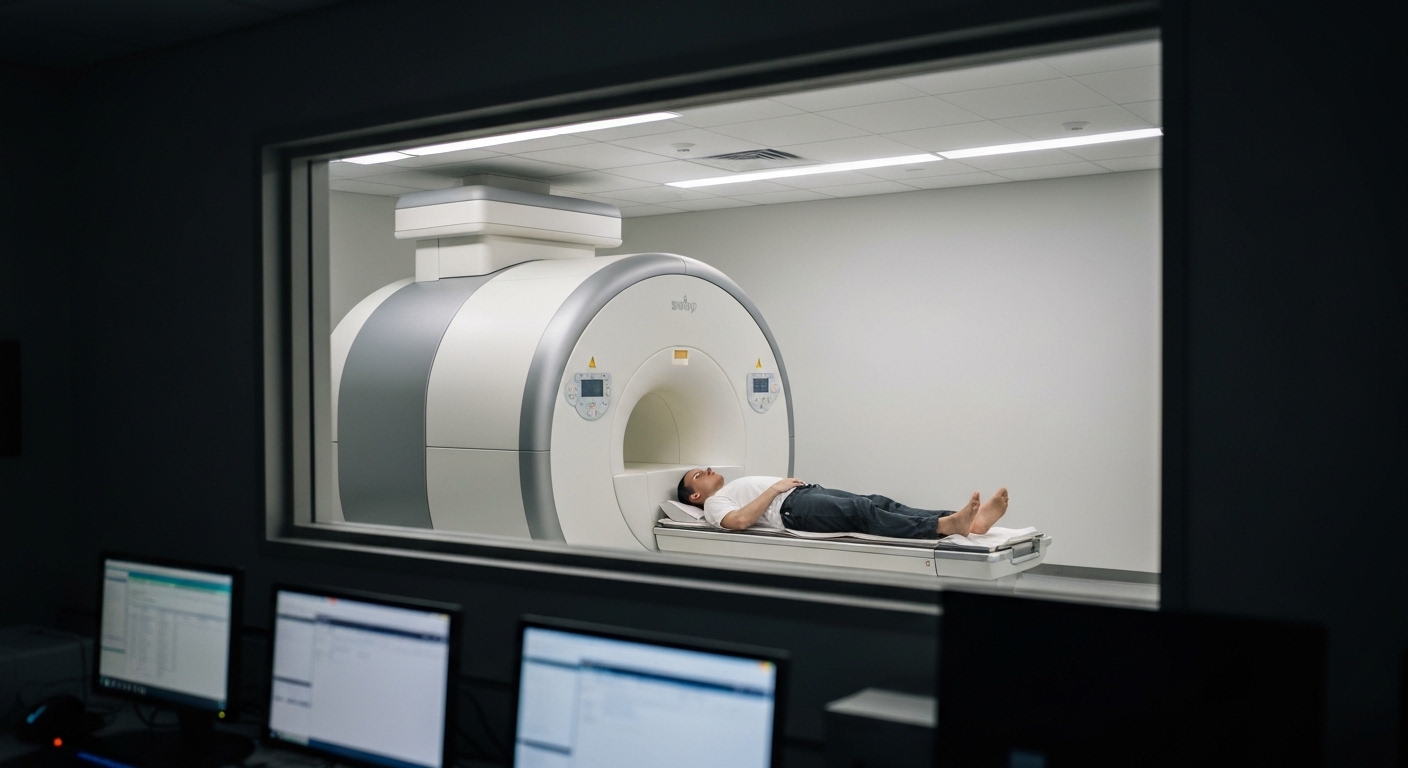
Distinct Cortical Thickness Patterns Define Positive and Negative Schizotypy
MRI analysis of 2730 healthy adults links subclinical traits to specific neurotransmitter systems and neurodevelopmental disorders.